Washroom cleaning fails in two directions at once. Daily soil - soap scum, body oils, uric acid deposits, paper dust and the film that builds on fittings - has to be removed every day, while mineral scale, effluent staining and biofilm in drains build up over weeks and cannot be removed by daily chemistry. Using one product for both jobs means daily cleaning that never quite removes the scale, and periodic descaling that is too aggressive to use every day.
This guide is written for facility managers and cleaning contractors specifying washroom chemistry across offices, retail, hotels, schools and healthcare sites. It separates the daily routine from the periodic restoration task, and it covers the products, doses and checks that keep a washroom presentable between restorations.
Commercial Washroom Cleaner Guide: Daily Soil and Periodic Scale
Daily soil is what visitors notice: smell, visible marks on bowls and urinals, water spots on chrome, dust and paper on the floor, and the general dullness that comes from a surface that is wiped but never rinsed. It is removed by a mild alkaline or neutral washroom cleaner applied to fittings and surfaces, agitated where needed and rinsed or wiped clean.
Periodic soil is what the site's reputation rests on in the long run: limescale on shower screens and tapware, mineral deposits in bowls and urinals, uric acid staining around fittings, soap scum on tile and grout, and odour that originates in the drain rather than in the room. Those need acidic descalers, dedicated urinal treatments and drain maintenance on a scheduled cycle rather than daily.
The distinction matters commercially because the products are different and their costs are different. A site that tries to control scale with a daily neutral cleaner will spend more labour scrubbing and still fail; a site that uses an acid every day risks damaging chrome, grout and sealant. The method that works is a daily product that protects the surface, plus a scheduled product that restores it.
Clarify the Required Result and the Acceptable Trade-off
Start with what the washroom has to deliver: a hygienic, odour-free, presentable facility at the frequency it is used. That sets the daily routine, and it usually sets the restoration interval as well, because high-use washrooms in stadiums, schools and shopping centres soil faster than a low-use office floor.
The trade-offs are worth stating explicitly. Aggressive descaling restores a bowl or a screen faster but shortens the life of grout, sealant and plated finishes over time. A softer chemistry protects the surfaces but requires more frequent application and more dwell. Scented products make a room smell fresher immediately but do not remove the source of the odour, which is generally organic material in a drain or a joint.
Where the site has hard water, the balance shifts: scale accumulates faster, so the periodic task becomes more frequent and the daily product may need to be paired with a water conditioner. Where the site is in a healthcare or childcare setting, the disinfection requirement may add a step, and that step has its own dilution and contact time rather than being combined with the cleaning chemistry by assumption.
Match Chemistry to Soil and Surface
Washroom chemistry divides into four working groups. Neutral and mildly alkaline cleaners remove daily soil from floors, walls, partitions and fittings without attacking finishes; these are the everyday products. Acidic descalers dissolve mineral scale and effluent staining on ceramics, chrome, stainless steel and glass, usually at a reduced dilution for maintenance and a stronger dose for restoration. Chlorine-releasing products destain grout, silicone and grout lines and provide a sanitising action where the procedure requires one. Drain treatments and enzyme products address odour at its source rather than masking it.
Surface compatibility runs the same way. Acid is unsuitable on marble, travertine and other acid-sensitive stone, on some plated fittings and on grout with a high lime content. Chlorine affects some metals and reacts with acid, so the two must never be combined. Abrasive powders scratch chrome, stainless steel and acrylic, and once scratched, those surfaces hold soil and show marks permanently.
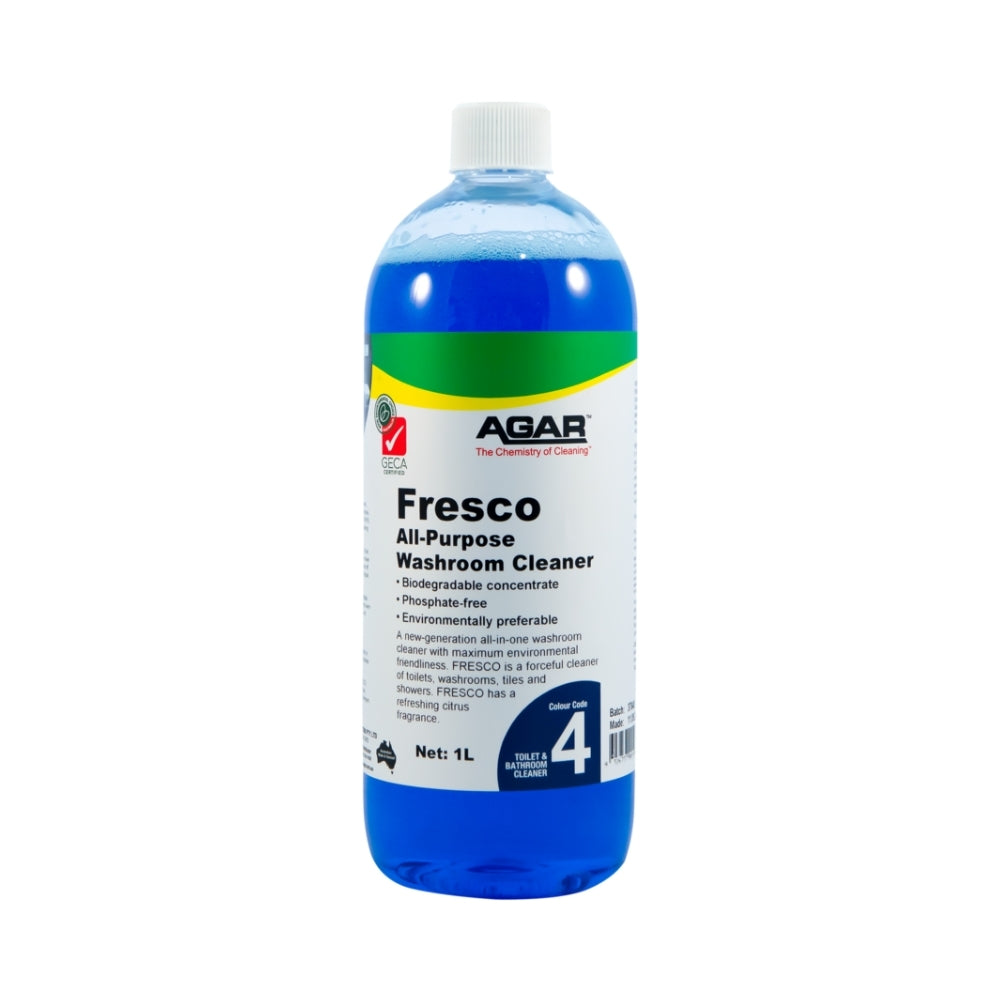
The practical result on most commercial sites is a three-product washroom kit: an everyday cleaner, a descaling product for scheduled work, and a drain or odour treatment for the source. Anything beyond that usually reflects a specific soil or a specific surface that the site can name. Freshway Supplies lists washroom and cleaning chemicals by task, and this guide to commercial washroom consumables and dispensers covers the products that sit alongside the chemistry.

Why Do Washroom Problems Come Back?
Because the soil being treated is not the soil being removed.
Odour that returns within a day is usually organic material in the drain or the joint between the bowl and the floor, scale that returns is dissolved minerals re-depositing from hard water, and staining that returns around fittings comes from effluent sitting in a place the daily clean does not reach.
The washroom problems that generate repeat complaints follow a short list. Urinal and bowl odour usually originates in the trap, the drain line or a scale layer that holds organic material, which is why an enzyme or drain treatment on a schedule does more than additional fragrance. Limescale reappears because the water is hard and the drying surface is wet; controlling it means descaling on a planned cycle and considering water treatment or drying squeegees on screens. Staining around fittings comes from urine and water sitting in inaccessible joints, which is a design and access problem as much as a cleaning one. And soap scum on screens persists because it is a fatty deposit that needs alkalinity and dwell, not a spray and wipe.
The useful response is diagnostic rather than reactive. When a washroom is still failing after a correct daily clean, the next step is to identify what is left and where it is, then schedule the product that removes it. Freshway Supplies stocks specific treatments for the harder jobs, including dedicated limescale removal chemistry.
Read the Label and the Current Australian SDS
Washroom products contain some of the most aggressive chemistry on a cleaning trolley, and the label and the safety data sheet are what keep them controlled. The label states the surfaces, the dilution, the contact time and any surfaces the product must not touch. The sheet states the hazards, the personal protective equipment and the first aid instructions.
Three washroom-specific rules are worth training explicitly. Never mix an acid descaler with a chlorine-based product, because the combination releases a hazardous gas. Never use an acid on acid-sensitive stone or on plated fittings whose coating may already be compromised. And never decant a concentrate into an unlabelled bottle, because the washroom is exactly where an unlabelled bottle gets used on the wrong surface by the next person on shift.
Australian chemical safety duties sit in the Work Health and Safety Regulations 2011, with practical guidance published by the regulators including WorkSafe Victoria's hazardous substances material and the resources at SafeWork NSW. Freshway Supplies publishes safety data sheets by brand through its SDS library.
Dilution, Dwell Time and Mechanical Action
Scale removal is a chemical process that needs time, not pressure. Dilute the descaler to the label, apply it to the surface, and leave it for the stated contact time so the acid can dissolve the deposit; scrubbing a scale layer that has not been softened simply polishes it. Where scale is heavy, two applications at the correct dilution are more effective and less damaging than one strong mix.
Daily cleaning is the opposite: fast, low-dwell work where the product lifts fresh soil and the agitation removes it. The risk on daily work is over-application, because detergent left on a surface - particularly a floor - attracts soil and creates the dull film that makes a washroom look unclean an hour after it was cleaned. Rinsing or wiping to remove residue is part of the daily method.
Mechanical action should be matched to the surface deliberately: colour-coded cloths for fittings and areas, a soft brush for grout and drains, and no abrasive pad on chrome, stainless steel or acrylic. Where the same cloth moves from a toilet to a basin, the cleaning becomes a contamination event, which is why colour coding is enforced in washrooms more strictly than anywhere else on site.

Products, Dispensers and Staff Training
Washroom chemistry sits inside a system, alongside dispensers, consumables, cloths and the trolley that carries them. The chemistry decision is therefore affected by the dispensing method: wall-mounted dispensers reduce dose drift for daily products, pre-measured capsules suit sites with high staff turnover, and spray bottles suit small areas where the operator can rinse and wipe in the same pass.
Training should be specific to the three products rather than general: which product for daily soil, which for scale, which for drains; the dilution for each in the unit the operator measures; the contact time the descaling work requires; the surfaces each product must not touch; and what must never be mixed. A washroom is a small space with concentrated chemistry, and the consequences of a mixing error are immediate.
Stock is part of the method as well. Where a site runs out of the descaling product, the operator either skips the periodic task or substitutes something stronger, and both outcomes are worse than the shortage. Setting a reorder point based on actual washroom cycle time is cheaper than the alternative.
Calculate Cost at the Approved Dose
Washroom cost is dominated by labour rather than by chemical, which is why the useful comparison is minutes per washroom per visit rather than price per bottle. A product that works with a shorter dwell and fewer passes saves money even at a higher unit price, and a product that fails leaves the site paying twice.
Build the calculation around the cycle: daily cleaning time, the interval and duration of the descaling task, the drain treatment schedule, and the consumables used in each visit. Then compare products on the same cycle. Where a site is spending extra labour on scale that a scheduled descale would have prevented, the fix is the schedule rather than a stronger daily product.
The other cost line is surface damage. Acids used too often on grout and sealant, abrasives used on chrome and acrylic, and chlorine left in contact with fittings all produce repairs that appear in the maintenance budget rather than the cleaning budget. Recording which products touched which surface is what makes that cost visible.
When Should the Selection Be Reviewed?
Review the washroom specification when the water, the fixtures or the usage changes. A change in water hardness affects scale control; a refurbishment that introduces stone, matt finishes or a new sealant changes the compatibility of the acid products; and a change in traffic, such as a building returning to full occupancy, changes how often the restoration task has to run.
The symptoms that justify a review are specific: scale returning faster than the descaling cycle can handle, odour that persists despite daily cleaning, dull or damaged finishes, chlorine or acid smells that linger in the room, or consumables running out before the next delivery. Each points to a different part of the system, and reviewing the three products together - daily cleaner, descaler and drain treatment - is faster than changing one and waiting to see what happens.
Questions we get asked most
- How often should washrooms be deep cleaned?
- It depends on use, water hardness and the surfaces. The daily routine keeps a washroom presentable, while descaling and drain treatment run on a cycle - weekly or fortnightly in hard-water areas and high-use facilities, less often in low-use offices. The signal to shorten the cycle is scale returning before the next scheduled descale.
- What removes limescale from toilets and urinals?
- An acidic descaler, applied at the label dilution and left for the stated contact time so the acid dissolves the deposit rather than being scrubbed off. Acid must not be used on acid-sensitive stone, and it must never be mixed with chlorine-based products, so descaling is a scheduled task with its own product rather than an addition to the daily clean.
- Why does the washroom still smell after cleaning?
- Because the source is usually organic material in the trap, the drain line or a scale layer that holds it, not the visible surfaces. An enzyme or drain treatment on a schedule addresses that material, while fragrance masks it temporarily. Where odour persists after both, the drainage itself needs inspection.
- Can one product clean both the washroom and the floor?
- Sometimes, but the soils are different and so are the surfaces. Washroom scale and effluent need acidic chemistry on ceramics and metals, while most floors need neutral or mildly alkaline products that protect the finish. Separate products with separate doses are more reliable than one compromise used everywhere.
Conclusion
Washroom cleaning works when daily soil and periodic scale are treated as different jobs. An everyday cleaner that protects surfaces, a scheduled descaler that removes mineral deposits, and a drain or enzyme treatment that addresses odour at its source will outperform any single product used harder.
Control the dose, respect the contact time on scale work, keep the cloths colour coded, never mix acid with chlorine, and review the specification when the water or the fixtures change. The chemistry is the smaller half of the cost; the schedule and the method are what keep a washroom presentable all week.
Manufacturer technical information: Agar cleaning chemicals. Discharge conditions: Sydney Water.
Compare washroom cleaners, descalers and drain treatments with the safety data sheets you need on site in the Freshway chemical range.