A commercial toilet-roll dispenser that runs out during the busiest hour creates more than a supply problem. It brings a cleaner into an occupied cubicle, interrupts the route and often leads to a second roll being left loose on the floor. Preventing run-outs without creating waste starts with the roll format, dispenser capacity, lock and service rule.
This guide is for facilities managers, cleaners and procurement teams responsible for commercial toilet paper in offices, schools, hospitality, healthcare and public amenities. It explains standard, mini-jumbo and jumbo systems, compares single and twin holders, and sets out how to inspect, load and replace rolls without creating pilferage or excess paper waste.
Set the Operating Constraint Before Building a Shortlist
Measure the cubicle count, traffic, servicing hours and distance from the store before choosing a dispenser. A small office may be served by a standard roll, while a transport hub or shopping-centre washroom can exhaust a conventional roll during a peak period. Record how often cleaners currently find an empty holder and whether replacements are being stored loose in the cubicle.
The dispenser is a long-term fixture and the roll is a recurring consumable. Choose the system first, then the compatible refill. If the building has several dispenser types, group them by model and measure the cost of keeping separate stock. The Work Health and Safety Regulations 2011 provide the workplace framework for safe access and manual handling during servicing.
Compare Standard, Mini-Jumbo and Jumbo Rolls
Standard rolls suit low-traffic washrooms where a familiar wall holder is already installed. Mini-jumbo offers a larger roll on a compact core and is often the next step where refills are frequent. Full jumbo rolls use a large core and need a dedicated dispenser; they suit high-traffic sites where the labour to change a roll is more expensive than the paper itself.
The roll geometry, not the brand name, determines compatibility. Core diameter and roll width have to match the holder. A jumbo roll will not fit a standard cabinet, and a standard roll can fall out of a jumbo spindle. The Freshway guide to jumbo, mini-jumbo and standard toilet rolls explains this format difference in more detail.
Use Traffic to Set Capacity
Count users by gender-neutral washroom or cubicle group, not by building population alone. Record the busiest hour and the weekend pattern. Estimate the average number of uses per roll from the sheet count or roll length, then allow for paper taken for other purposes. The calculation should show whether the site needs one full spare, a twin holder or a more frequent inspection.
A dispenser that holds a working roll and a spare can reduce service calls because the washroom can continue after the first roll ends. The Freshway washroom supplies guide notes that a twin jumbo holder can pay for itself through reduced intervention on a busy site. The right choice is the one that prevents a run-out between the scheduled checks the site will actually complete.
Match the Refill to the Installed Dispenser
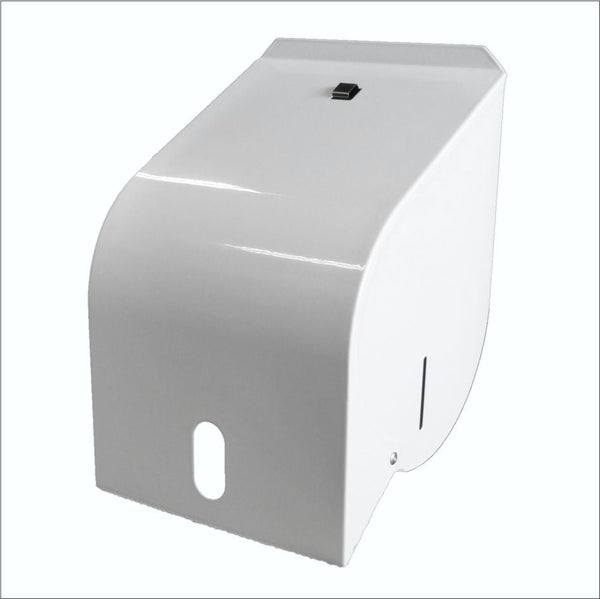
Record the dispenser model, core size, roll width and approved refill. The Single Jumbo Toilet Roll Dispenser 33047 is listed by Freshway as accepting rolls from 300 metres to 600 metres. That range is product information, not a universal rule for every jumbo cabinet. A different model may accept a different core or width.
Check the refill before ordering a carton. Paper length alone does not establish fit. Confirm the roll diameter, core and width with the supplier and test one roll in the actual holder. A roll that rubs on the cover can tear or fail to turn; a loose roll may spin and deliver too much paper.

Control Loose Rolls, Pilferage and Waste
A lockable dispenser protects the roll and prevents a spare being stored informally inside the cubicle. The lock should still allow the cleaner to open and reload it quickly with a labelled key. If users repeatedly remove a roll, check that the holder turns freely and that the paper tail is visible. A perceived jam can encourage tampering even when the dispenser is sound.
Waste control is not only about the roll price. Two rolls left open, a loose reserve on the cistern and paper pulled onto the floor all increase consumption. Standardise the holder, keep a defined spare position and train cleaners to remove damaged rolls rather than leaving them in place. A locked unit can reduce theft but will not compensate for a poor inspection route.
Make the loading direction visible. A roll installed the wrong way can fail to turn, encourage users to pull harder and leave unused paper on the floor. Put a small diagram inside the cabinet and include the correct orientation in the cleaner's induction. Check that the spindle is seated and the cover closes without pinching the paper.
Where pilferage is a recurring issue, compare the cost of lost rolls with the cost of a locked cabinet and a controlled spare. A lock does not remove the need for a pre-peak check, and a key that is missing from the cleaning trolley turns a controlled unit into a delay. Keep two labelled keys in the site's key system and record who holds them.
Plan Service Access and Loading
Mount the dispenser where the cleaner can open it without reaching over a toilet or blocking the doorway. Confirm the cabinet has enough clearance for the roll diameter and that the cover can be removed in the available space. Keep the key labelled by dispenser model and give each cleaner the correct loading sequence.
Check the mounting. A full jumbo cabinet can be heavy, and repeated opening and pulling can loosen an inadequate anchor. Repair loose fixings before the unit falls or damages the wall. The roll should turn without excessive force and the paper should release from the correct side of the holder. The SafeWork NSW and WorkSafe Victoria resources can support the general washroom cleaning and handling controls.
Check the height of the outlet and the space around the toilet. The roll should be usable without the user having to stand awkwardly or touch the floor. Do not place the cabinet where it blocks the accessible transfer space or where an opening door can strike the cover. If the building is refurbished, review the location rather than reusing the old fixing holes by habit.
Record the wall type and fixing method with the dispenser code. A replacement must use anchors suitable for the same substrate. A cabinet that loosens from the wall is a maintenance and safety issue, not a reason to add a second loose spare roll.
Inspect at the Right Time
Place the toilet-roll check before the busy period, not only at the end of the shift. A holder that is half full at 07:00 may be empty by lunchtime. Include a visual check of the paper level, the feed and the mounting during every washroom service. Where the cabinet has a transparent cover, use it as a prompt, but still open the unit at the scheduled interval.
Record refill date, dispenser location and any jam. A recurring empty holder at the same floor points to traffic or capacity. A recurring loose roll points to user behaviour or a holder that is difficult to use. A recurring jam points to refill compatibility or a damaged mechanism. Treat each as a different correction.
Where a twin holder is used, inspect both positions. A working roll can hide an empty spare until the last moment, and a cleaner may close the cabinet without checking the reserve. Mark the spare position and record which roll was used at each service. If the site cannot manage a twin system, a single high-capacity holder with a reliable pre-peak check may be the simpler and safer choice.
Keep a small replacement stock in a dry cupboard, but do not turn the cubicle into a storage room. Loose rolls are exposed to splash, dust and tampering, and they make consumption impossible to track. A controlled spare in the cleaning store is easier to rotate and protects the paper.
Keep Paper Stock Dry and Rotated
Store rolls in a dry, clean area away from water, chemicals and floor-level dust. Rotate older stock first and keep cartons closed where practical. Do not unload a whole delivery into a small washroom cupboard; the humidity and congestion can damage paper and make stock control harder.
Dispose of wet or contaminated rolls instead of returning them to the cabinet. Clean the holder and surrounding wall at the washroom cleaning interval. The NSW Environment Protection Authority water guidance is relevant where washroom wash water or spills can enter a drain or stormwater path. The NSW Health environmental health guidance is useful in food, accommodation and public settings.
Questions We Get Asked Most
- Should a commercial washroom use jumbo or standard toilet rolls?
- Jumbo rolls suit high traffic and reduce refill frequency, but they require a dedicated dispenser and suitable core. Standard rolls can suit low-traffic washrooms where the installed fixtures already match that format.
- Why does a jumbo roll not fit the dispenser?
- The core diameter, roll width or outside diameter may differ. A large paper length does not guarantee fit. Measure the holder and confirm the exact roll specification before ordering.
- Are lockable toilet-roll dispensers worth the extra cost?
- A lock can reduce pilferage and protect the roll from splash or tampering. It is useful where loose rolls and theft are recurring problems, but it must remain easy for the cleaner to service and hold the correct refill.
- How often should toilet-roll dispensers be checked?
- Include them in every washroom service, with a pre-peak check in high-traffic sites. A visual level check is not a substitute for opening the holder and confirming the feed and mounting at the scheduled interval.
Use a Site Trial and Record the Result
Install a sample holder in one representative cubicle group and use the actual roll for at least a week. Record refill count, service time, jams, loose rolls and user complaints. Check that the cleaner can open the locked cover without kneeling or reaching over the toilet. Inspect the wall fixing and the paper tail after repeated use.
Measure cost per user and minutes per refill rather than comparing carton price. A lower-cost roll that reduces capacity or jams can create more labour than a more expensive compatible roll. Use the cleaning equipment range to coordinate dispensers and bins, compare a compatible standard toilet tissue for lower-use fixtures, and review the washroom cleaning guide for the surrounding routine.

Conclusion
Prevent run-outs by matching the roll format to the dispenser and the service route. Use traffic to set capacity, locks to protect the supply and a pre-peak check to catch the holder before it empties. Do not treat every empty dispenser as a reason to buy a larger cabinet; find out whether the refill, route or user behaviour is causing the failure.
A standardised system should leave the right paper in the right holder, with a clear spare and a service record. That is how a washroom avoids both the empty cubicle and the pile of half-used rolls.
Use the site trial to confirm the roll turns freely after repeated use and that the cleaner can complete the change without removing the cover from a cramped space. If the unit passes those checks, standardise the code and include the model in the building's washroom asset register.
Review that register whenever a washroom is refurbished or a roll format changes, because an apparently minor fixture change can invalidate both the refill order and the service interval.
Update the photograph, core size and dispenser model at the same time, then remove the obsolete code from the ordering list so staff cannot choose it by habit.