A commercial paper towel dispenser can reduce hand-drying time, control paper use and keep a washroom presentable, or it can jam every second day and leave wet hands wiping the door. The difference is usually the match among paper format, dispenser mechanism, peak demand and the person who has to service it.
This guide is for facility managers, cleaning contractors and procurement teams selecting hand towel dispensers for offices, kitchens, healthcare, retail and public washrooms. It compares folded and roll formats, manual and automatic delivery, capacity and service access, then sets out a controlled site trial for a commercial installation.
Identify the Failure Mode Before the Product
Start with how the current dispenser fails. A unit that runs empty every lunchtime has a capacity or inspection problem. One that releases a long loop of paper has a delivery-control problem. A dispenser that jams after a refill may have the wrong roll width, a damaged feed path or staff loading it incorrectly. A unit that is never refilled on weekends points to the route and ownership of the task.
Write down the failure and the time it occurs. Include the distance to the cleaning store, the number of washrooms, the access hours and who holds the key. This evidence prevents a product change that fixes the brochure comparison but leaves the service problem unchanged. The Work Health and Safety Regulations 2011 also make the broader work environment and manual-handling controls relevant when staff reach, lift cartons and service wall units.
Compare Folded and Roll Towel Formats
Folded towels are easy for users to take and suit lower-capacity cabinets where the paper is protected from splash. Multifold and interleaved formats differ in loading and dispensing, so the pack must match the cabinet. A folded system can be simple to refill, but free-fall can encourage users to take several sheets and increase waste.
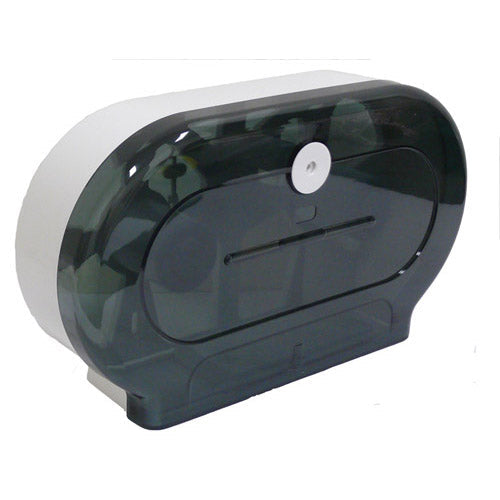
Roll towel systems can suit higher traffic because the paper is continuous and the cabinet can hold more metres before intervention. Manual roll units need a controlled feed; autocut units release a measured length when the user pulls the exposed tail. The Royal Touch Jaws Autocut is listed by Freshway with an approximate 28 cm cut and a mechanical action that does not require batteries or sensors. That architecture may suit a busy kitchen or public washroom where users should not need to touch a button, but the feed still depends on correct loading and a sound cutter.
Match the Refill to the Installed Cabinet
The roll width, core, outside diameter and paper length all have to fit the dispenser. A roll that fits the cabinet but is too wide can rub against the side and tear; a narrow roll may wander off the feed path. Keep the dispenser model and refill code together in the purchasing record. Photograph the inside of the cabinet because two white roll dispensers can look identical from the front.
For the Royal Touch Jaws system, Freshway lists the 2-ply multipurpose roll towel at 80 metres per roll and 16 rolls per carton. Do not assume that any 80-metre roll is compatible. Confirm the core, width, paper strength and cutter requirement with the dispenser specification. A cheaper roll that breaks at the perforation or wraps around the drive can cost more in service time than it saves.

Use Peak Demand to Size Capacity
Count the hand-drying events in the busiest hour and across the full day. A washroom serving a 200-person office may have a sharp lunch peak, while a shopping centre unit can have steady weekend use. Multiply the events by the average number of pulls or sheets and compare that with the refill capacity. Add a reserve for events, seasonal traffic and staff training days.
Capacity should prevent run-outs between planned inspections, not merely reduce refill visits. If a dispenser holds enough paper for four days but the site checks it weekly, the specification is wrong. Either add capacity, shorten the inspection interval or change the route. A visible paper-level window helps, but it is not a substitute for the task.
Assess Manual, Sensor and Mechanical Delivery
Manual dispensers are simple and have fewer electronic parts. Sensor units can reduce contact with the cabinet, but they depend on power, settings and sensor cleanliness. Mechanical autocut units use the action of pulling the paper to cut a length. Each approach creates a different maintenance profile. Choose one the site can support with the available staff, tools and spare parts.
For an automatic unit, confirm the power source, standby consumption and replacement interval. Test the sensor with the lighting and traffic in the actual washroom. For a manual or autocut unit, test the force needed to pull the paper and the clearance around the outlet. Users should not have to pull against a jammed roll or search for a loose tail.
Plan Mounting and Service Access
Mount the dispenser where a user can dry both hands without stepping across a wet floor. Keep the outlet clear of the basin splash zone and away from doors that can strike it. Check the wall substrate and fixing method. A heavy cabinet filled with paper can pull out of plasterboard if the anchor is inadequate.
The cleaner must be able to unlock, open and reload the unit in the space available. Confirm the key, latch and refill direction during the trial. Keep a spare key labelled by cabinet type. If the cabinet is mounted too high, staff may load it incorrectly or leave the cover unlatched. If it is behind a partition, they may postpone the check.
Measure the reach from the drying position to the outlet. A dispenser can be within the building code and still require a user to step across a wet floor or turn awkwardly. The paper should release without a second hand touching the cabinet, and the user should be able to reach the waste bin after drying. Check the installation around handrails, mirrors and accessible fixtures, because the usable width may be smaller than the wall suggests.
Service access should be checked with a full roll, not an empty display unit. A cabinet that opens easily when empty may bind once the paper expands against the feed. Load and unload it twice during the trial, then ask the cleaner whether the task can be completed at the normal service point without removing surrounding items.
Control Waste and Cross-Contamination
The dispenser should release enough paper for drying without allowing a continuous free-fall. Observe users rather than relying on the mechanism alone. A sheet that is too short encourages double pulls; a sheet that is too long increases waste and bin volume. Place the waste bin where the user can reach it after drying, not beside the clean paper outlet.
Touch-free paper delivery reduces one contact point, but the washroom still needs clean hands, running water and a clean dispenser surface. Clean the exterior with a compatible product and avoid spraying into the feed slots. Keep the roll in its wrapper until loading and do not place a partly used roll on the floor. The SafeWork NSW and WorkSafe Victoria resources support the chemical-handling side of the washroom routine.
Place the bin so a user can dry both hands before stepping away. A cabinet that delivers a long sheet into an undersized bin creates floor litter even when the paper itself is suitable. Empty the bin before it is full and check the floor around the mounting point during each service. If the dispenser is beside a door, confirm that the paper tail cannot be caught as the door opens.
Set Inspection and Refill Triggers
Include the dispenser in every scheduled washroom service. Check the paper level, feed tail, cutter, latch and mounting. During peak periods, the first midday check is often more useful than a second late-evening refill because it catches a run-out before users create a complaint.
Record the refill date and the number of spare rolls used. A sudden increase can indicate jams, excessive sheet length, a change of paper or increased traffic. If a roll is repeatedly loaded incorrectly, put a simple instruction label inside the door and train the cleaner. The commercial washroom cost guide explains how refill labour can outweigh the carton price.
Store Paper and Spares Correctly
Keep rolls in a dry, clean store away from water, chemicals and floor-level dust. Rotate stock so the oldest carton is used first. Do not remove the wrapper from a roll long before it is loaded. Store one spare roll or refill pack in the washroom cupboard only where the space is dry and secure; bulk stock belongs in the main store.
Dispose of damaged or contaminated paper rather than using it to finish a carton. Wash paper dust from the floor and wipe the cabinet exterior without pushing dirt into the outlet. The NSW Environment Protection Authority water guidance applies when washroom cleaning water or spills could reach a drain or stormwater path.
Questions We Get Asked Most
- Are roll or folded paper towels better for a commercial washroom?
- Roll systems often suit higher traffic and longer service intervals, while folded systems can be simple for smaller or lower-use washrooms. Compare capacity, paper waste, cabinet space, refill compatibility and the cleaner's loading time.
- Do sensor towel dispensers need less maintenance?
- They reduce contact but add batteries, sensors and electronic settings. The maintenance burden may move rather than disappear. Confirm the power source, sensor behaviour and spare-part support before selecting a sensor unit.
- Why does the roll towel keep jamming?
- A wrong width, damaged cutter, incorrect loading or weak paper can all cause jams. Check the approved refill code, the feed path and the cutter before blaming the paper. Record when and where the jam occurs.
- How often should paper towel dispensers be inspected?
- Include them in every washroom service and add a peak-period check where traffic is high. Set refill triggers from measured daily use rather than waiting for an empty cabinet or a complaint.
Run a Site Trial Before Standardising
Install the candidate dispenser in one representative washroom for at least a week. Record refills, jams, paper used, user comments and the time taken to load. Measure the length of paper delivered and compare it with the site's drying need. Inspect the wall fixing and cabinet exterior after the trial.
Use the cleaning equipment range to coordinate dispensers, bins and washroom hardware, compare the compatible roll towel and review the commercial washroom cleaning guide. The NSW Health environmental health guidance is useful for food, accommodation and public-facility washrooms.
Include the cleaner's loading time in the comparison. A cabinet that requires the cover to be held open while a roll is threaded can take twice as long as one with a simple drop-in refill, especially when the washroom is crowded. Test the task at the actual mounting height and with the lighting available during the service round. A neat dispenser that is awkward to reload will be neglected.

Conclusion
Choose a paper towel dispenser by failure mode, peak demand, refill format and service access. Test the complete system with the cleaner who will load it and the users who will pull the paper.
A high-capacity cabinet does not fix a poor route, and a touch-free mechanism does not guarantee a clean washroom. The operational routine, compatible refill and maintenance record complete the specification.
Before rolling the choice out, photograph the installed unit and record the refill code, fixing method and service interval. That record makes replacement and replenishment consistent across every building in the contract.
Review the record after the first month of use so a low jamming rate is not confused with a cabinet that has simply not yet reached its peak demand.
Check the refill code at that review as well.