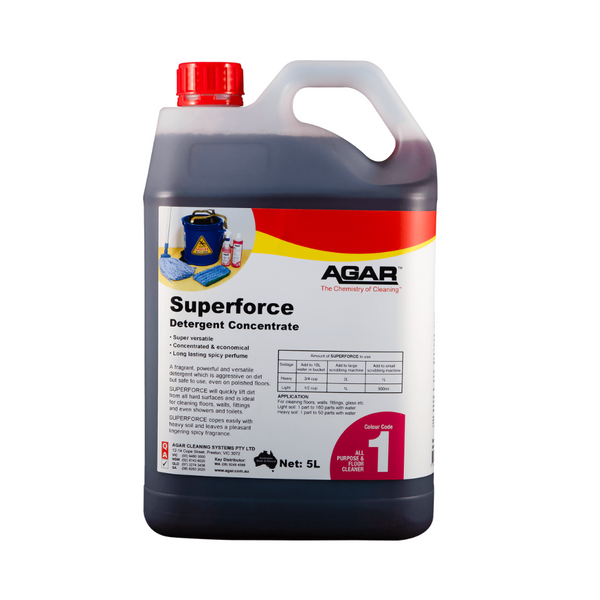
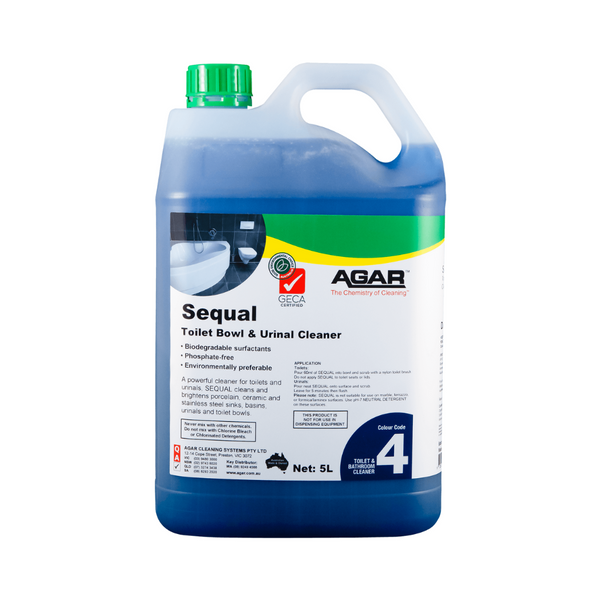
A restaurant is not cleaned; it is cleaned in three different regimes at once. Food-contact surfaces need a food-safe product and a sanitising step. Grease in the kitchen, the extraction and the bins needs alkaline chemistry and heat. The front of house needs a product that leaves no film on a table a guest will touch. A restaurant cleaning supplies checklist that treats those as one task produces a kitchen that fails a food-safety inspection and a dining room that smells of degreaser.
This guide is for restaurant owners, venue managers and cleaning contractors specifying supplies for Australian restaurants, cafes, bars and commercial kitchens. It covers the three task families, the zones, food-contact sanitising, grease control, storage and the documentation a venue needs when an environmental health officer visits.
Restaurant Cleaning Supplies Checklist: Separate the Three Task Families
The first family is food-contact cleaning and sanitising. Benches, chopping boards, utensils, fridges, display cases and anything that touches food need a detergent that removes soil and a sanitiser applied at the labelled dilution and contact time. The product has to be suitable for food-contact surfaces, and the method has to include the rinse or the contact time the label requires.
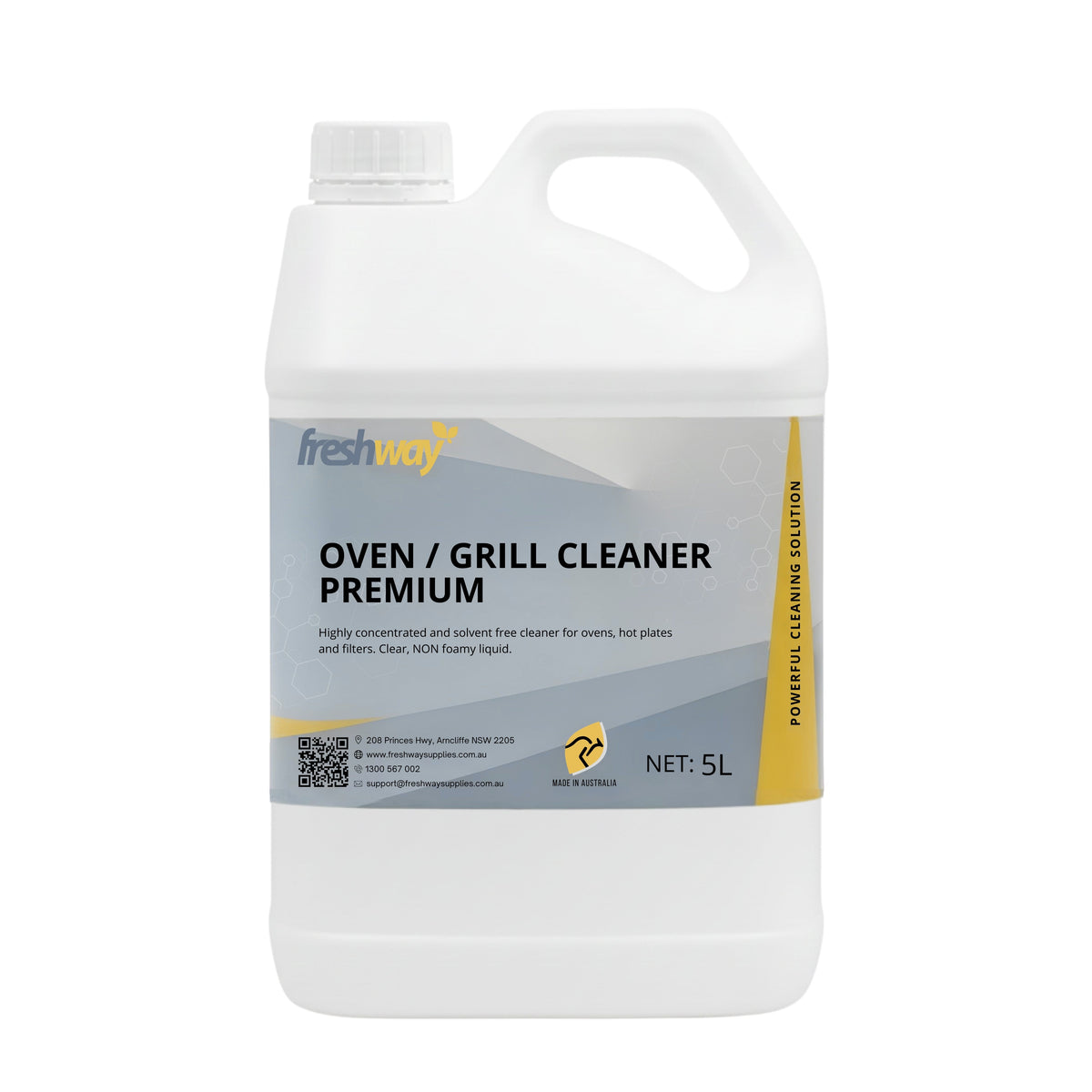
The second family is grease and heavy soil. Kitchen floors, walls, canopies, filters, ovens, grills and bin areas need alkaline degreasers, often with heat and dwell, and the method has to remove the fat rather than spread it. Those products are stronger and need more careful handling and rinsing than the food-contact chemistry.
The third family is front-of-house presentation. Tables, chairs, glassware, menus, high chairs and floors need products that clean without leaving a film or an odour that a guest will notice. Front-of-house chemistry is usually milder and is applied with colour-coded cloths that never travel to the kitchen.
Buying one product for all three is the most common mistake. A food-safe sanitiser will not cut kitchen grease, and a heavy degreaser will leave a film on a dining table. The list should separate the families explicitly, and so should the trolley.
Define the Site Condition That Changes the Answer
The menu decides the soil. A bakery, a steakhouse, a sushi bar and a cocktail bar produce different fats, sugars, proteins and starches, and the chemistry that suits one may be wrong for another. A venue with a fryer and a chargrill has more grease than a cafe with a sandwich press, and a venue with a coffee machine has milk residue that needs its own product.
The service model decides the timing. A venue with a single dinner service can clean after close; a venue open all day needs cleaning between services and a front-of-house routine that does not disturb guests. A shared kitchen or a food truck has different constraints again, because water, drainage and storage may be limited.
The building decides the surfaces. A heritage venue with timber floors, marble bars and brass fittings limits the chemistry; a modern fit-out with stainless steel and tile tolerates more. The cleaning method has to suit the finish the owner has paid for, not just the soil.
Map Products to Zones and Risk Levels
A restaurant divides into food preparation, cooking, dishwashing, storage, waste, front of house and amenities. Food preparation and cooking are the highest-risk zones for cross-contamination and grease, waste is the highest-risk zone for odour and pests, and front of house is the highest-visibility zone.
Each zone gets a set. Food preparation needs a food-safe detergent and sanitiser, colour-coded boards and cloths, and a hand-wash station that is stocked. Cooking needs a heavy-duty degreaser, a grill and oven product, and a floor method that removes fat without leaving a slip hazard. Dishwashing needs the machine chemistry and a manual sink routine. Front of house needs a neutral cleaner, a glass cleaner and a floor method that can be used around guests.
The mapping should be on the wall, not in a folder. A colour-coded chart in the kitchen and a trolley with defined positions is what makes the separation work during a busy service.
Food-Contact Surfaces and Sanitising
Food-contact cleaning is a two-step process: clean, then sanitise. The detergent removes the soil that would otherwise protect organisms, and the sanitiser reduces what remains on the surface. Skipping the clean and going straight to the sanitiser is the most common failure, because a sanitiser applied to a soiled bench does not deliver the claim.
The sanitiser must be suitable for food-contact surfaces, mixed at the labelled dilution and left for the labelled contact time. Where the label requires a potable water rinse, the rinse is part of the method. Where the venue uses a no-rinse product, the label will say so, and the dilution becomes even more important because there is no rinse to remove an overdose.
Chopping boards, knives and utensils need their own routine. Boards should be cleaned and sanitised between proteins and ready-to-eat food, and the colour-coding of boards should match the venue's food-safety program. Cloths used on food-contact surfaces should be single-use or laundered at a temperature that sanitises them, and they should never be stored in a bucket of sanitiser that is not at the correct concentration.
Grease, Extraction and Back-of-House
Grease is the defining soil of a commercial kitchen and the cause of most of its cleaning failures. It builds on canopies, filters, walls, floors, the sides of equipment and the space behind it, and it becomes sticky, then hard, then a fire risk if the extraction is neglected. The method has to remove it on a schedule rather than when it becomes visible.
Canopies and filters need a degreasing product, dwell time and, where the filter is removable, a soak. The extraction duct is a specialist task and should follow the venue's fire-safety arrangements rather than a general cleaning schedule. Floors need a degreaser that cuts the fat and a rinse that removes the residue, because a degreaser left on a quarry tile floor becomes a slip hazard.
Behind and under equipment is where the program is judged. A kitchen that looks clean at eye level but has grease behind the fryer is a kitchen that will fail an inspection and attract pests. The schedule should name those areas and give them a frequency, even if the equipment has to be moved to reach them.
Waste and bin areas close the loop. Grease and food waste in a warm bin room produce odour and pests quickly, so the bin area needs its own degreasing and sanitising routine, a hose-down where the drainage allows, and a collection schedule that matches the venue's volume.
Front of House and Guest Areas
Front-of-house cleaning is a presentation task with a food-safety edge. Tables, chairs, banquettes, menus, high chairs, glassware and floors are touched by guests and inspected by them, and a sticky table or a smeared glass is a complaint that no kitchen standard will offset.
The chemistry should be mild and the method should be quick, with food-contact sanitising kept to the surfaces that actually touch food. This guide to cleaning chemicals for commercial kitchens covers the kitchen side in more detail. A neutral surface cleaner for tables and chairs, a glass cleaner for glassware and mirrors, and a floor method that can be used while the venue is trading. Where the venue uses a sanitiser on tables between guests, it should be food-safe and used at the correct dilution, because the table is a food-contact surface in practice.
Front-of-house cloths should be a separate colour from the kitchen and should not travel between the two. Menus and high chairs need a routine, because they are handled by many guests and rarely appear on a cleaning schedule. Where the venue has a bar, the bar top, the taps and the floor behind the bar need their own method.
Guest areas also include toilets, which are part of the venue's food-safety and reputation. They need a washroom cleaner, a descaler on a schedule and a check during service, not just a clean at closing.
Storage, Colour Coding and Cross-Contamination
Storage in a restaurant is a food-safety control. Chemicals must be stored away from food, in labelled containers, separated by family, with the safety data sheets accessible. Decanting into unlabelled bottles is particularly dangerous in a kitchen, where a bottle can be mistaken for an ingredient or used on a food-contact surface.
Colour coding is the visible control. Kitchen, front of house, washroom and floor cloths should be separate colours, stored separately and laundered separately. Boards should follow the venue's food-safety colour system. Where the venue uses a commercial laundry, the contract should specify separation and the temperature required.
Cross-contamination also comes from equipment: a mop used in the kitchen and then in the dining room, a bucket that is not emptied, or a cloth that wipes a bench and then a table. The store and the trolley should make the correct choice the obvious one, and the supervisor should be able to see at a glance whether the colours are complete.
Training and Documented Procedures
A restaurant's cleaning records are part of its food-safety program. The documents that matter are the cleaning schedule with frequencies and responsibilities, the chemical list with dilutions, the sanitiser concentration checks, the colour coding chart and the safety data sheets. Where the venue has a food-safety plan, the cleaning schedule is part of it.
Training should cover the difference between cleaning and sanitising, the contact time, the dilution, the colour coding and what must never be mixed. It should also cover what to do when a sanitiser runs out, when a fridge is cleaned, and how to handle a body-fluid or chemical spill in a kitchen.
Records should be practical. A daily sheet that the chef or the duty manager signs is more useful than a binder nobody completes, and a sanitiser concentration check is worth more than a tick box. Where the venue is audited, those records are what show the program was followed.
Supplier Continuity and Approved Substitutions
Restaurants run on consumables and cannot afford to run out mid-service. The list should set reorder points for sanitiser, degreaser, dishwash chemistry, cloths, bin liners and paper, and keep a buffer for busy periods. A venue that runs out of sanitiser on a Friday night either skips the step or improvises, and both are worse than the cost of a buffer.
Substitution is risky where the product contacts food. A different sanitiser may not be approved for food-contact surfaces, and a different dilution changes the contact time. The chef or the food-safety lead should approve any change to food-contact chemistry, and the change should be recorded with the new dilution and contact time.
Equipment continuity matters as well. Dishwasher chemistry, glasswasher salt and rinse aid, floor machine pads and vacuum bags all have to match the machines in the venue. Where a machine is serviced, confirm that the parts and chemistry supplied are the ones the machine was set up for.


Questions we get asked most
- What cleaning chemicals does a restaurant need?
- At minimum: a food-safe detergent and sanitiser for food-contact surfaces, a heavy-duty degreaser for the kitchen and extraction, a washroom cleaner and descaler, a neutral cleaner and glass cleaner for front of house, and dishwash and glasswash chemistry. The exact list follows the menu, the equipment and the food-safety plan.
- How do I sanitise food-contact surfaces correctly?
- Clean the surface first with a detergent to remove soil, then apply a food-contact sanitiser at the labelled dilution for the labelled contact time. Where the label requires a potable water rinse, rinse. A sanitiser applied to a dirty surface, or wiped off immediately, has not delivered the claim.
- How often should kitchen extraction and canopies be cleaned?
- Canopies and filters need regular degreasing on a schedule that matches the cooking volume, and the duct requires a specialist clean under the venue's fire-safety arrangements. Grease that is visible on the canopy is already overdue, and behind the filters is where the risk accumulates.
- Can the same cloth be used in the kitchen and the dining room?
- No. Kitchen, front-of-house, washroom and floor cloths should be different colours, stored separately and laundered separately. A cloth that moves from a kitchen bench to a dining table moves soil and organisms with it, which is the cross-contamination the colour system exists to prevent.
Conclusion
Separate food-contact, grease and front-of-house tasks in the supply list, the schedule and the trolley. Each family has its own chemistry, its own method and its own record, and mixing them produces a kitchen that fails inspection and a dining room that feels unclean.
Then protect the program with colour coding, sanitiser checks, training and approved substitutes. In a restaurant the cleaning record is part of the food-safety record, and the supplies are only as good as the method they support.
Food safety and public health guidance: NSW Health environmental health. Manufacturer information: Agar cleaning chemicals. Chemical safety: Work Health and Safety Regulations 2011, SafeWork NSW and WorkSafe Victoria.
Compare food-safe sanitisers, degreasers and kitchen cleaning chemicals in the Freshway range.