Strata cleaning covers the parts of a building nobody owns individually: lobbies, lifts, corridors, stairwells, bin rooms, car parks, gardens and shared laundry. That is also why strata supply lists grow without limit. Each committee member notices a different area, each contractor proposes a different product, and the store ends up with four mops, three glass cleaners and no clear method. A strata cleaning supplies checklist should cover the common areas without duplicating every product.
This guide is for strata managers, building managers and cleaning contractors specifying supplies for residential and mixed-use buildings in Australia. It covers zoning the common property, high-touch surfaces, surface compatibility, storage and the documentation that keeps a building consistent between committees and contractors.
Strata Cleaning Supplies Checklist: Cover Common Areas
Start with the common property schedule. Most strata plans list the common areas, and the cleaning specification should map those areas to tasks, frequencies and products. The list is usually longer than expected: lobbies, foyers, letterbox areas, lifts and lift lobbies, corridors, stairwells, fire stairs, bin rooms, recycling areas, car parks, storage cages, gardens, paths, shared laundry and any pool or gym.
The second input is the building's usage. A residential tower with a concierge and a high foot count needs a different frequency from a small walk-up with eight units. A mixed-use building with retail at ground level adds shopfront glazing, loading areas and public footpath responsibilities that the residential schedule does not cover.
The third input is who does the work. Some buildings use a contract cleaner, some use a caretaker, and some rely on a committee member or a resident for small tasks. The supply list has to be usable by the actual workforce, with instructions that do not assume a trained commercial cleaner for every task.
Start With the Decision This Searcher Is Trying to Make
Most strata buyers are deciding between a full contract clean, a caretaker with a defined task list, and a hybrid where the contractor does the machinery work and the caretaker handles daily attention. The decision affects the supply list: a contract cleaner brings their own chemistry and equipment, while a caretaker model usually requires the building to own the products and the machines.
The second decision is the standard. Committees often want a building that looks clean and a bin room that does not smell, but the contract needs to state the frequency and the tasks. A standard expressed only as an outcome is difficult to price and difficult to audit, and it usually leads to disputes about what was included.
The third decision is storage. Many buildings have a small cleaners' room, a cupboard under a stair or a cage in the car park, and the supplies have to fit the space. A specification that assumes a full store room will fail in a building with a cupboard, and the products end up in corridors.
Map Products to Zones and Risk Levels
Common areas divide into entry and circulation, vertical transport, waste areas, parking and external areas, and amenity areas such as a gym, pool or laundry. Each has a different soil and a different risk. The bin room is the highest-risk area for odour and pests, the lifts are the highest-touch area, and the car park is the highest-debris area.
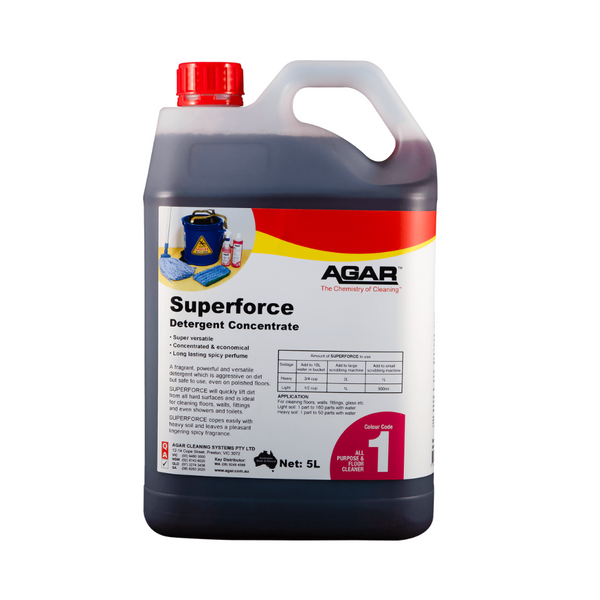
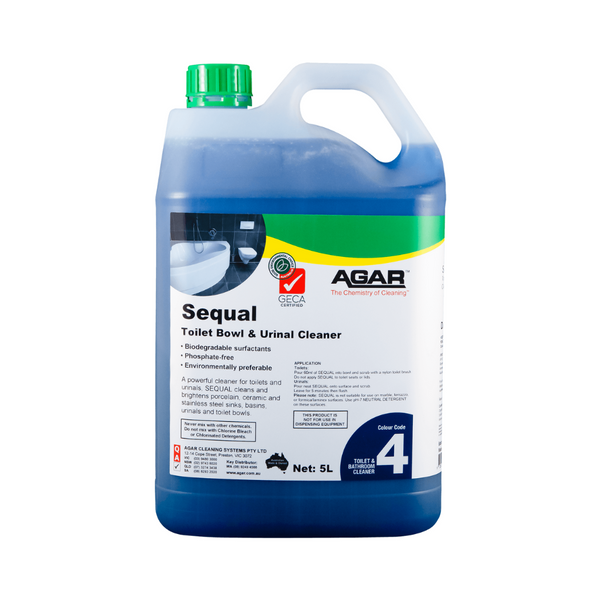
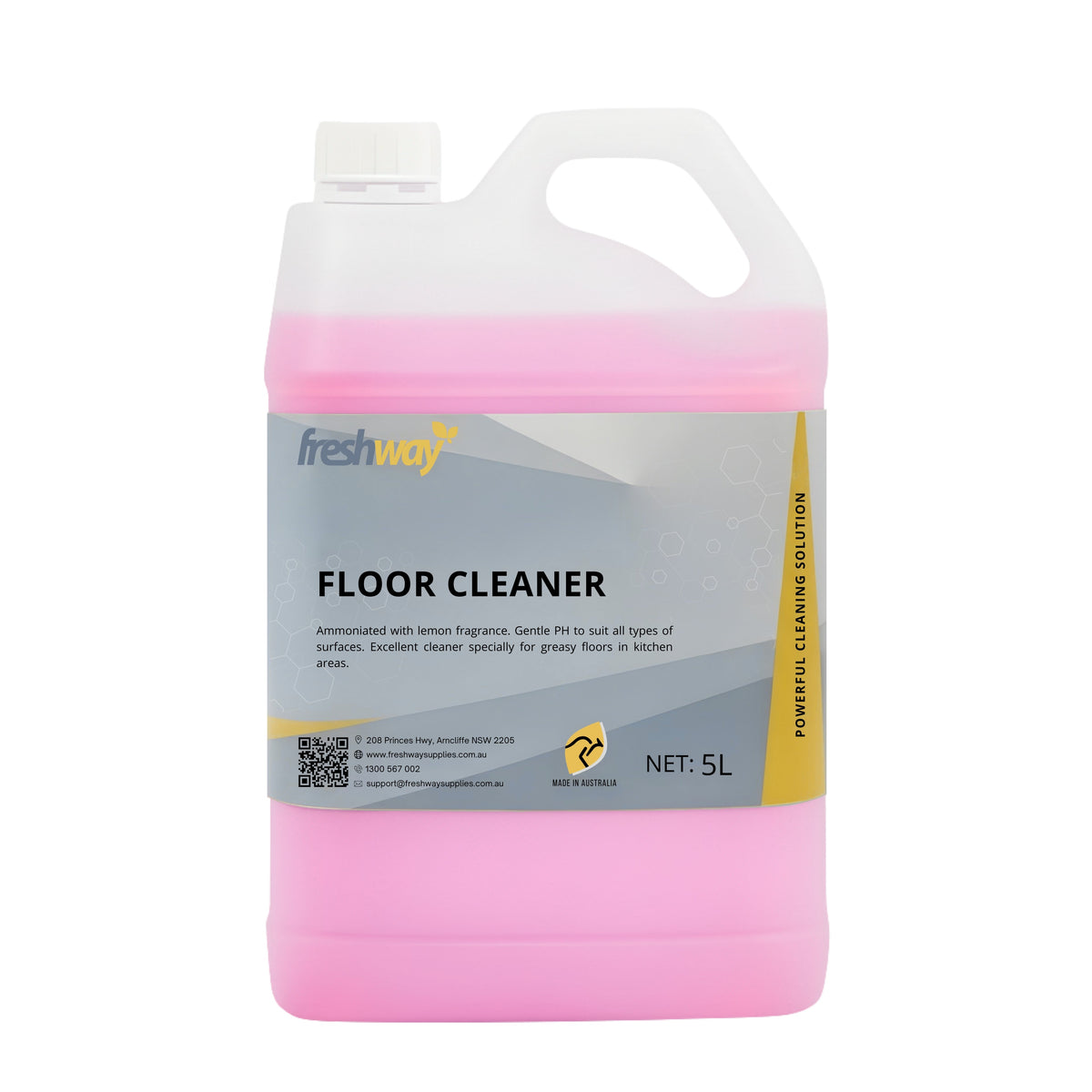
Each zone gets a small set. Entry and circulation need a neutral floor cleaner, a glass cleaner for doors and partitions, and a cloth system for handrails and buttons. Lifts need a surface cleaner, a stainless-steel product where the finishes require it, and a high-touch routine. Bin rooms need a washroom or degreaser product, a disinfectant where the procedure requires it, and a hose or scrubber depending on the drainage. Car parks need a sweeper or blower and a scrubber for oil and tyre film.
The mapping prevents duplication. A building with four glass cleaners for four areas usually needs one glass cleaner, one cloth system and a schedule. A building with three mops for the same corridor needs one mop system and a colour code.
High-Touch Surfaces and Cleaning Frequency
Strata high-touch surfaces are concentrated where residents and visitors pass: entry doors and handles, intercom and access panels, lift buttons and handrails, letterbox handles, stair rails, bin room doors and shared laundry controls. In a building with a gym or pool, the equipment and change areas add more.
The frequency should reflect the number of residents and the building's pattern. A tower with hundreds of residents and a concierge needs lift and entry touchpoints cleaned more often than a small block. Where the building has a daily caretaker, a short high-touch routine is often the most valuable task in the schedule, because it is the one residents notice.
The task description should distinguish cleaning from disinfecting where the building's procedure requires it. A wipe with a detergent removes soil and marks; a disinfectant at its labelled contact time delivers a claim. Where the committee has not specified which is required, the cleaning contractor and the strata manager should agree it in writing.
Surface Compatibility and Contact Time
Common areas mix surfaces that react differently: polished stone and tiles in the lobby, stainless steel in lifts, glass and aluminium at entries, painted walls and ceilings, carpet in corridors, sealed concrete in car parks and timber or composite in gardens. A product that suits one can damage another, and the damage usually appears after repeated use.
Polished stone and terrazzo are sensitive to acids and to high alkalinity, and they can be etched or dulled by a product chosen for the bin room. Stainless steel shows streaks and fingerprints and responds to a specific product and a dry cloth. Glass and aluminium need a cleaner that does not attack the frame or the seal. Car park concrete tolerates stronger chemistry than the lobby but needs a method that handles oil without spreading it.
Contact time matters where the building's procedure includes a disinfecting step. A product sprayed on a handrail and wiped immediately has cleaned the rail, not disinfected it. The schedule should allow the dwell, and the cleaner should know which surfaces require the claim and which simply need a clean.
Where a surface is unknown, a neutral product and a test patch are the safe default. For heritage or imported stone, the building's stone contractor or the manufacturer's guidance should be consulted before any new product is introduced.
Storage, Colour Coding and Cross-Contamination
Strata storage is usually the weakest part of the program. A cleaners' cupboard shared with gardening equipment, paint and spare tiles is not a chemical store, and products left in a car park cage are exposed to heat and moisture. Where the building has a proper room, it should be locked, ventilated and organised; where it does not, the specification should use smaller containers and a locked cabinet.
Colour coding should separate washrooms and bin rooms from general areas, and it should be simple enough for a caretaker who cleans alone. Cloths and mops should be stored by colour and laundered separately, or replaced with disposable alternatives where laundering is not practical. A building with a shared laundry should never wash cleaning cloths in the residents' machines.
Cross-contamination also comes from equipment. A mop used in the bin room and then in the lobby, a bucket that is not emptied, or a vacuum used in the car park and then in the carpeted corridor all spread soil and odour. The equipment should be assigned by zone and stored with that assignment visible.
Training and Documented Procedures
Strata cleaning is often done by one person, sometimes with limited cleaning training. The documentation has to be simple, visual and short: a building plan with the common areas, a task list with frequencies, a product list with dilutions, and the safety data sheets. A one-page schedule on the store wall is more useful than a folder in the strata manager's office.
Training should cover the building's specific risks: the bin room and its drainage, the lift finishes, the car park and its traffic, and any pool or gym equipment. It should also cover what to do when something is damaged or when a resident reports a problem, because the caretaker is often the first person to see it.
Where the building uses a contractor, the induction should cover the same points, and the contractor's colour system should match the building's or be documented as equivalent. Residents notice when the cleaning changes with the contractor, and a written method is what keeps the standard consistent.
Supplier Continuity and Approved Substitutions
Strata buildings consume consumables steadily: bin liners, paper towels, hand soap, toilet paper, cloths and floor pads. A shortage in a bin room or a shared laundry is visible within a day, so the supply list should set reorder points and keep a small buffer in the building rather than relying on a monthly order.
Substitution is most visible in consumables. A different bin liner that tears, a different hand soap, or a different paper towel in the common laundry generates complaints. Cleaning chemistry is less visible but more consequential: a different product on the lobby stone can dull it, and a different disinfectant changes the contact time the schedule was built around.
Approved substitutes should be named in the specification, with the product, dilution and any change to the method recorded. The strata manager should approve changes to consumables and the cleaning supervisor should approve changes to chemistry, so the decision does not fall to whoever is ordering that month.
Car Parks, Gardens and External Areas
Car parks and external areas are where strata cleaning most often stops being a cleaning task and becomes a maintenance one. Oil stains on concrete, leaf litter in drains, moss on paths, graffiti on walls and rubbish in garden beds all need a method and a frequency, and some of them need a different contractor.
The practical approach is to separate what the building's cleaning team can do from what needs a specialist. Sweeping, litter collection, bin area hosing and basic spot cleaning can be done on a schedule. Oil removal, drain clearing, pressure washing of large areas, graffiti removal and garden maintenance may need equipment the building does not own, and the specification should say who does them.
External areas also carry safety obligations. Wet paths, moss, uneven surfaces and car park traffic all create risks for residents and visitors, and the cleaning schedule should include the checks that keep them safe: clearing leaves from drains before rain, removing moss from walkways, and reporting damaged surfaces rather than cleaning around them.
Where the building has a basement car park, ventilation and drainage matter. A wash-down that leaves water standing creates a slip and odour problem, and a car park with poor drainage needs a method that uses less water rather than more.
Approval Checklist for the Final Specification
Before a strata supply list is approved, confirm the following so the building's program survives a change of committee or contractor.
- Common property: every area mapped to a task and a frequency, including bin rooms, car parks and gardens.
- Standard: the tasks and frequencies written down, not just the outcome.
- Products: cleaner, disinfectant and specialist product per surface, with dilutions and contact times.
- Colour coding: zones, storage positions and laundry separation.
- Storage: a locked, ventilated position that fits the building, with the data sheets accessible.
- Consumables: reorder points and a buffer held in the building.
- Records: the task sheet, incident reporting and the review date.
That checklist is also the tender document. Where a committee asks three contractors to quote, the same list produces comparable prices and a standard the building can audit.


Questions we get asked most
- What cleaning supplies does a strata building need?
- Usually a neutral floor cleaner, a glass cleaner, a washroom or degreaser product for bin rooms, a disinfectant if the procedure requires one, colour-coded cloths and mops, bin liners and paper products. Car parks and gardens add a sweeper, blower or scrubber depending on the surfaces.
- How often should common areas be cleaned?
- Daily for entries, lifts and bin rooms in a busy building, with high-touch points cleaned more often than floors. Smaller buildings may clean common areas two or three times a week. The frequency should be written into the contract rather than left as an outcome.
- Who supplies cleaning products in a strata building?
- It depends on the model. A contract cleaner usually brings their own chemistry and equipment, while a caretaker model requires the building to own the products. Either way, the building should hold the safety data sheets and the written method.
- Can residents' laundry machines be used for cleaning cloths?
- No. Cleaning cloths and mops should be laundered separately from residents' laundry, ideally by the contractor or in a dedicated machine. Shared laundry should never be used for washroom or bin-room cloths.
Conclusion
Cover the common property without duplicating every product. Map each area to a task and a frequency, choose one product for each surface family, and keep the bin room, the lifts and the entry touchpoints as the priorities residents notice.
Then protect the program with simple documentation, colour-coded equipment and named substitutes. A strata building does not need a large chemical cupboard; it needs a small, consistent method that survives the next committee meeting.
Manufacturer information: Agar cleaning chemicals. Work health and safety: Work Health and Safety Regulations 2011, SafeWork NSW and WorkSafe Victoria. Public health: NSW Health environmental health.
Compare colour-coded mops, cloths, cleaning chemicals and janitorial supplies for strata buildings in the Freshway range.