A bin liner that is too small tears at the lip and drops waste into the bin body. One that is too large wastes film, hides the fill level and can be pulled into a compactor or lifting mechanism. Commercial garbage bag sizing is therefore a fit decision across five variables: the bin, the load, the collection method, the storage system and the person handling the bag.
This guide is for facilities managers, cleaning contractors and procurement teams buying liners for offices, kitchens, washrooms, hotels and public venues. It explains how to measure a bin, compare bag dimensions with nominal capacity, select film and closure for the load, and build a replenishment system that reduces shortages without overstocking.
Measure the Bin Instead of Trusting Its Label
Start with the bin's usable volume and actual geometry. Measure the height, the widest point around the opening and the distance around the rim. A square or rectangular bin needs enough bag width to cross the opening and enough length to reach the base with an overhang for tying. A round bin is easier, but taper, internal fittings and a foot pedal can still change the fit.
Nominal volume is a guide, not a guarantee that a bag with the same litre rating will fit. A tall 73-litre bin and a wide 73-litre bin can require different bag dimensions. If the bin has a liner-retaining ring, measure inside the ring. If the bag will be tied before removal, add the length needed for the closure. Record these measurements for each bin type rather than relying on a cleaner's memory. Take a photograph of the bin with its lid open and write the location beneath it, because two bins with the same litre rating may have different pedal housings or internal dividers.
Check how the bag behaves when the bin is empty as well as when it is full. An oversized liner can slip from the rim before any waste is added, while an undersized liner may appear to fit until the weight pulls the corners inward. Fasten the liner the way the route procedure requires and observe whether a lid, swing top or foot pedal catches the film. These small fit failures are often the reason a site reports that its bags are "the wrong size" even when the litre rating matches.
Compare Listed Bag Dimensions With the Bin
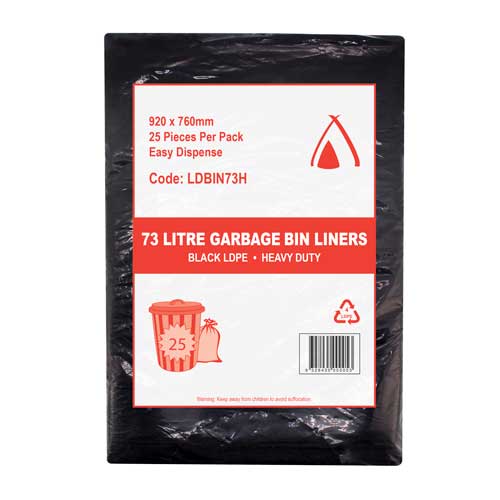
Use the supplier's stated dimensions as part of the fit check. Freshway lists the Tailored 240-litre heavy-duty LDPE liner at 1,140 mm by 1,450 mm, designed for a standard 240-litre wheelie bin. The 73-litre LDPE liner is listed at 760 mm by 920 mm for a standard 73-litre bin and supplied as a carton of 250 pieces in ten rolls of 25.
A larger liner is not automatically safer. Excess film can sag into the bin, trap air, interfere with a lid or be drawn into a lifting mechanism. A smaller liner may fit the opening but fail at the corners when the bag is lifted. Trial one or two bags with the actual load and collection process before ordering a carton. The Work Health and Safety Regulations 2011 frames the manual-handling and workplace-risk controls that should be considered when changing bag size or load weight.
Match Film and Closure to the Waste Stream
General office waste needs a bag that resists tearing and stays on the bin during the shift. Kitchen and hospitality waste may include wet food, packaging and sharp items, so puncture resistance and a secure base matter more. Heavy-duty low-density polyethylene is often chosen for stretch and tear resistance, while higher-density film can feel crisper and may suit lighter loads. Use the supplier's stated film and application, then test with the site's actual waste.
Closure depends on the handling method. A drawstring can speed removal but may fail if the load is heavy or wet. A star-sealed base spreads stress and can reduce leakage at the bottom. Tie handles need enough overhang and a knot that will not slip when lifted. Do not ask a cleaner to carry a bag by its rim when a trolley or a two-person lift is required by the site procedure.
Plan for Collection Method and Compaction
The bag must survive the way the site collects waste. A cart, chute, service lift, compactor or kerbside wheelie bin imposes different forces. Confirm whether the liner stays inside the bin during collection or is removed and carried. For a compactor, use only the liner type approved for the equipment and the waste stream. A bag that is too large may catch in a mechanism; a bag that is too thin may split before it reaches the truck.
Ask the waste contractor about restrictions on bag material, colour, maximum weight or the use of loose waste. Some collection systems require the bag to be removed, while others tip the entire bin. The wrong choice can create contamination, extra labour or a rejected load. Keep the contractor's requirements with the purchasing specification rather than in an old email.

Build a Size Register for Every Bin Type
Create a register with a photograph, location, bin volume, measured dimensions, lid or pedal type, liner product code, normal load and collection route. Give each bin type a simple ID that appears on the storage shelf and the cleaning schedule. When a bin is replaced, update the register before the old stock is ordered again.
This register prevents a common failure: several bags look similar on a shelf, but only one fits the 73-litre bin in a kitchen and another fits the 120-litre bin in a public area. Staff should not have to compare packaging in a dark storeroom while waste is waiting. Use labels with the bin size and product code, and remove obsolete stock when the bin fleet changes.
Use Colour and Labelling Deliberately
Colour can separate waste streams, but colour alone is not a label. If the site uses black bags for general waste, clear or natural bags for recycling and another colour for a controlled stream, document the rule and confirm that the collection contractor accepts it. Do not use a coloured bag for a hazardous or clinical stream unless the relevant waste specification requires it and the bag meets that standard.
Keep the bag roll or carton labelled with product name, size and film type. Store bags away from sharp edges, chemicals and direct sunlight. A bag contaminated with chemical residue should not be used for a different waste stream. The WorkSafe Victoria hazardous substances guidance helps with the separation and information controls when a waste stream involves chemical contamination.
Control Storage, Replenishment and Stock Rotation
Choose a storage format that matches the route. A carton of ten rolls may be economical for a large site but awkward for a small vehicle. A roll-sized pack reduces handling and makes it easier to keep one spare in each cleaning cupboard. Use first-in, first-out rotation and keep the opening instructions visible. Bags should not be stored on a damp floor or compressed under heavy equipment.
Set a minimum and maximum stock level for each bin size. Track the number of bags issued against the number of bins serviced and look for a sudden change in consumption. A spike may mean that staff are double-bagging without authorisation, using the wrong size or wasting bags during removal. A decline may mean that bins are not being lined or that the route has changed.
Assess Handling and Cleaning-Area Risk
Wet waste increases weight and leakage risk. Sharp objects can puncture film even when the nominal load is within the bag's stated capacity. Provide gloves, hand-washing facilities and a bin-cleaning method. If the bag must be carried, limit the load to what the operator can handle safely and use a trolley where available. Never press waste down with a foot or hand in a way that risks a cut or a splash.
Clean the bin body when a bag leaks. Odour and pests can persist in the base and lid even after the bag is replaced. The NSW Environment Protection Authority water guidance is relevant when washing bins or managing runoff near drains. Keep wash water away from stormwater and follow the property's trade-waste arrangements.
Audit Consumption and Recurring Shortages
Run a short monthly audit in the cleaning store and on the route. Count the bags remaining, check the bin register, ask cleaners which sizes run out first and inspect several lined bins. Record misfits, split bags and double-bagging. Compare the result with purchase history and the number of service days.
If shortages recur, the cause may be the reorder point rather than the bag itself. If splits recur, check load and film before buying a heavier product. If bags fall into the bin, check the dimensions and retaining ring. The audit should produce one corrective action, not just a list of complaints.
Use a Site Trial Before Changing Supplier
Test a new liner in the actual bin with the same waste and collection method for at least one week. Inspect the base, seams, lip and tie after removal. Ask the collection team whether the bag behaves differently. Compare the number of bags used, the time taken to change the bin and the number of leaks or splits. Include a wet-load day where the site produces food or beverage waste, because a liner that passes a dry-office trial may fail when the base is exposed to liquid.
Keep the incumbent product as a control during the trial. If the new product is cheaper per bag but requires double-bagging, the working cost is different. If it saves storage space but tears at the lip, it is not a suitable substitution. The SafeWork NSW resources can support the manual-handling and chemical-storage side of the review.
Questions We Get Asked Most
- Does a bag with the same litre rating always fit the same bin?
- No. Litres describe nominal capacity, not the bag's shape or dimensions. Measure the bin opening, height and rim, then compare the supplier's width and length. Test the bag with the actual load and collection method.
- Is a thicker bag always better?
- Not necessarily. The film, seal, dimensions and load all matter. A thick bag that is the wrong size can still fail. Use the lightest liner that passes the site's leakage, puncture and handling test.
- Can I use 240-litre liners in a 120-litre bin?
- They may fit the opening but leave excessive film that interferes with the lid, lifting or compaction. A liner should fit the bin and the collection method, not merely cover the rim. Use the correct size or a documented alternative approved by the site.
- How many bags should a commercial site keep in stock?
- Base the reorder point on normal use, service frequency, delivery lead time and a reasonable safety margin. Track the count by bin type rather than total bags, because a shortage of one size can stop a route even when another size is plentiful.
Write the Specification for the Buyer
The purchasing specification should include bin type, measured dimensions, nominal volume, film, seal, colour, closure, pack count, storage format and collection restrictions. Add a photograph of the bin and a sample product code. Require the supplier to state whether the liner is intended for general waste, food waste, recycling or another stream.
Use the cleaning equipment range to coordinate bins, trolleys and liners, and compare the 73-litre heavy-duty liner, the 36-litre office and kitchen liner and the garbage bag selection guide against the site register.
The waste hierarchy still applies after the liner is chosen. Reduce unnecessary packaging, separate recyclable material and use the collection system specified by the site. The NSW Health environmental health guidance can help with waste and cleaning controls in food, accommodation and public settings.
Conclusion
Commercial garbage bag size is a measured fit, not just a litre number. Match the bag dimensions to the bin, film and seal to the load, and closure to the lifting method. Standardise by bin type and audit the result with the people who change the liners.
A clear bin register, sample trial and reorder point turn a low-cost consumable into a controlled part of the cleaning operation.