Microfibre versus cotton is the oldest argument in commercial mopping, and most of it is settled by habit. Cotton mops are cheap, familiar and hold a lot of water. Microfibre mops lift fine soil, use less solution and dry faster, but they need a different laundering routine and they cost more per head. The right answer depends on the floor, the soil, the labour model and the laundry, which is why a microfibre vs cotton mop decision should be made as a system rather than as a product.
This guide is for cleaning supervisors, facility managers and contractors choosing mop systems for offices, schools, healthcare, retail and industrial floors. It compares soil removal, solution control, laundering, manual handling and cost, and sets out how to trial both systems on the same floor.
Microfibre vs Cotton Mops: Start With the Decision
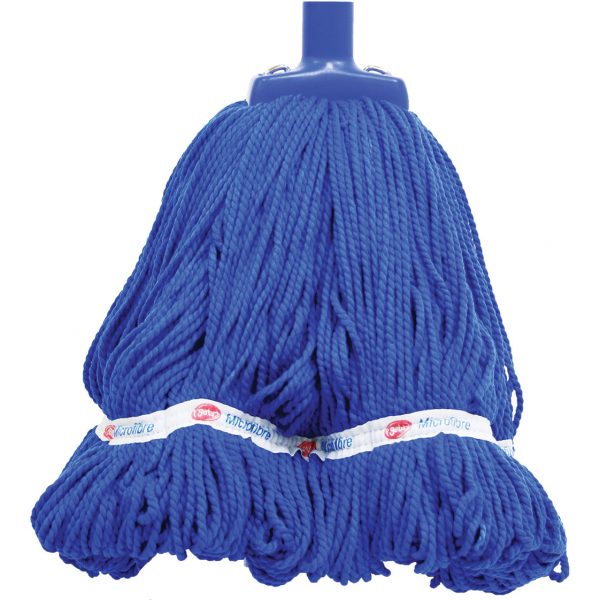
The decision is not which mop is better. It is which mop system fits the site's floor, soil, labour and laundry. A hospital corridor with a smooth vinyl floor and a high hygiene standard suits microfibre flat mops and a controlled solution method. A workshop with coarse soil, oil and a rough concrete floor may suit a cotton string mop that holds more solution and can be wrung hard.
The second decision is the labour model. Microfibre flat mops are usually part of a system with pre-soaked pads, a bucket with a wringer or a trolley with a press, and the labour saving comes from the method rather than the cloth. Cotton string mops are labour-intensive to wring and to launder, and the cost shows up in time rather than in the purchase price.
The third decision is the laundry. Microfibre needs a wash without softener and a drying method that protects the fibre; cotton tolerates hotter washing and rougher handling but takes longer to dry. A site without a reliable laundry should not choose a system that depends on one.
Match the Mop System to Floor and Soil
Floor type sets the first constraint. Smooth vinyl, sealed concrete, terrazzo and polished tiles suit flat microfibre pads, which glide and pick up fine soil. Textured quarry tiles, grouted surfaces and rough concrete suit a string mop or a microfibre mop with a scrubbing edge, because the pad needs to reach into the texture. Safety flooring and matt finishes need a mop that does not leave a film, which usually means microfibre and a controlled dose.
Soil type sets the second. Fine dust, body oils and light traffic soil are microfibre's strength. Heavy grease, spilled food, mud and grit need more solution and more mechanical action, which suits a string mop or a scrubber. Where the site has both, the practical answer is a scrubber for the heavy areas and a flat mop for the daily work, not one mop asked to do everything.
The finish sets the third. Microfibre leaves less residue, which matters on sealed and polished floors where a film shows. Cotton can leave lint and requires more rinsing, but it holds more solution for a dry, porous surface that needs wetting.
Which Mop Removes More Soil?
Microfibre removes more fine soil per pass, cotton holds more liquid.
Microfibre's split fibres trap fine dust and film that a cotton mop pushes around, while cotton's absorbency suits heavy wet soil, spills and rough surfaces where the mop needs to carry solution into the texture.
The difference is most visible on smooth floors with fine soil, where a microfibre flat mop lifts the film that makes a floor look dull. On a rough or greasy floor, the cotton mop's extra solution and mechanical action remove more of the soil, although it leaves more water and more residue behind.
Both systems depend on the method. A microfibre pad that is overloaded with soil stops lifting and starts spreading, and a cotton mop that is not wrung properly leaves a film of dirty water. The soil removal figure in a trial is therefore a measure of the system - mop, solution, wringing and change frequency - not just the cloth.
Solution Control and Wringing Method
Solution control is where the two systems diverge most. A flat microfibre system usually uses a pre-soaked pad, a spray bottle or a bucket with a press, and the amount of solution on the floor can be controlled closely. A string mop depends on the wringer and the operator's technique, and it is easy to leave too much water on the floor.
Too much solution creates three problems: longer drying, a slip risk, and residue that attracts soil. Too little leaves the soil on the floor and encourages the operator to scrub harder. The practical control is a measured dose per bucket or per pad, a wringer that works, and a rule about how often the solution is changed rather than topped up.
Where the site uses a bucket system, a dual-bucket or a press wringer is worth the cost because it separates clean solution from dirty and makes wringing consistent. Where the site uses flat mops, a trolley with a press and a defined number of pads per area keeps the method repeatable.
Colour Coding and Cross-Contamination
Both systems can be colour coded, but the practicalities differ. Microfibre flat pads are easy to colour code and to store flat, and a trolley can hold several colours without much space. Cotton mop heads are bulkier, and a site with several colours needs more storage and a clear labelling system.
Colour coding has to survive laundering. Microfibre pads should be washed by colour, and cotton mops should be laundered separately by zone, or the colour system is only cosmetic. Where the site uses a commercial laundry, the contract should specify separation and the return of the mops in their colour groups.
The mop handle and bucket are part of the system. A handle that moves between colours, or a bucket that is used for washrooms and then for kitchens, defeats the coding regardless of the mop head. Assign handles and buckets by colour as well, and store them together.
| Factor | Microfibre flat mop | Cotton string mop |
|---|---|---|
| Fine soil removal | High - traps dust and film | Moderate - can push fine soil |
| Heavy or wet soil | Lower - pad loads quickly | High - holds more solution |
| Solution control | Close - pre-soak, spray or press | Depends on wringer and technique |
| Drying time | Faster - less water left | Slower - more water left |
| Laundering | No softener, moderate heat, careful drying | Tolerates hotter wash, slower to dry |
| Best fit | Smooth floors, hygiene areas, daily maintenance | Rough floors, heavy soil, spills |
Handle Fit and Manual Handling
Mopping is a repetitive manual task, and the handle decides how much of the strain the operator carries. A handle that is too short forces the operator to stoop, and one that is too long reduces control. The right length lets the operator work with a straight back and a relaxed grip, and a telescopic or adjustable handle helps where several people share the equipment.
Flat mops usually have a swivel head, which lets the operator reach under furniture and around fixtures without twisting. String mops rely more on the operator's wrist and shoulder, particularly when wringing. Where the site has a high mopping workload, the manual handling difference matters more than the difference in purchase price.
Handle material and grip matter in wet work. A metal handle with a poor grip becomes slippery, and a wooden handle that is stored damp can swell or split. Where the site uses chemicals, the handle should tolerate them, and the grip should stay secure with gloves on.
Laundering, Drying and Replacement
Microfibre needs a wash without fabric softener, at a moderate temperature, with a thorough rinse and a drying method that does not scorch the fibre. Cotton tolerates a hotter wash and a rougher drying cycle, but it holds more water and takes longer to dry, which matters where the site has limited drying space.
Drying is the part that is often overlooked. A mop stored damp grows odour within a shift, and a mop head that stays wet between uses spreads odour and bacteria. The store should have a drying position for mops, whether that is a rack, a hook or a well-ventilated area, and the mop should be dry before it is used again.
Replacement follows performance. A microfibre pad is retired when it stops lifting soil, sheds lint or loses its colour; a cotton mop is retired when the yarn is matted, the head is uneven or the mop leaves lint and streaks. Both should be replaced before they fail, because a worn mop costs more in labour than a new one costs to buy.
Measure Labour and Consumable Cost
Mop cost is mostly labour, so the useful comparison is minutes per area and cost per clean, not price per mop head. A microfibre system that reduces the number of passes and the drying time can be cheaper than a cotton system even when the heads cost more, because the labour saving compounds across every shift.
Build the comparison on four inputs: the time to mop a defined area, the solution used, the laundering cost per use, and the number of uses before replacement. Add the cost of the bucket or trolley system, because a flat mop system usually requires a press or a trolley that a string mop does not.
Measure it on the same floor with the same operator. The differences between mop systems are small enough that a change in operator or floor condition can hide them, and a trial on a representative area is the only reliable comparison. The guide to commercial mops and buckets covers the equipment side of the same decision.
Approval Checklist for the Final Specification
Before a mop system is approved, confirm the following so the choice survives staff changes and supplier variation.
- Floor and soil: the floor types and the dominant soil in each area, with the mop type that suits them.
- Solution control: the wringer or press, the measured dose and the change frequency.
- Colour coding: the zone colours, the handles and buckets assigned to each, and the storage positions.
- Laundry: the wash method, prohibition on softener for microfibre, colour separation and the drying position.
- Manual handling: handle length, grip and weight for the operators and the route.
- Cost: time per area, solution per area, laundry cost and replacement interval.
- Replacement: the performance test and the reorder point per colour.
That list is the difference between buying mops and specifying a mopping system. The system is what produces a consistent floor, and it is what makes the comparison between microfibre and cotton meaningful.


Questions we get asked most
- Is microfibre better than cotton for mopping?
- Microfibre removes more fine soil and leaves less residue, which suits smooth floors and daily maintenance. Cotton holds more solution and suits rough floors and heavier soil. The better choice depends on the floor, the soil and the laundry rather than on the cloth alone.
- How often should mop heads be laundered?
- After every use, or at the end of each shift at the latest. Microfibre should be washed without softener, and both types should be dried before reuse. Mops that are stored damp develop odour and spread it on the next floor.
- Can microfibre and cotton mops be washed together?
- They can, but colour separation matters more than fibre separation. Wash by zone colour, avoid softener with microfibre, and dry both thoroughly. Where a commercial laundry is used, specify colour separation and the return of the mops in their groups.
- How long should a commercial mop last?
- Until it stops performing: a microfibre pad when it sheds lint, stops lifting soil or loses its colour, and a cotton mop when the yarn mats, the head becomes uneven or it leaves lint. Replace on performance rather than on a calendar.
Where the site has both smooth and rough floors, the practical answer is usually a mixed system: microfibre flat mops for the smooth daily routes and a string mop or scrubber for the rough or heavy areas, with separate colour-coded equipment and a clear method for each zone. That costs more in stock than a single mop type, but it costs less in labour and rework than forcing one tool to do both jobs.
Conclusion
Microfibre and cotton are different tools for different floors. Microfibre wins on smooth floors, fine soil and residue control; cotton wins on rough floors, heavy soil and spill pick-up. Most commercial sites are better served by choosing the system for each zone than by standardising on one mop for the whole building.
Then control the solution, colour the equipment, dry the mops and measure the labour per area. That is what turns a mop purchase into a floor standard that holds across shifts.
Manufacturer information: Agar cleaning chemicals. Work health and safety: Work Health and Safety Regulations 2011, SafeWork NSW and WorkSafe Victoria. Public health: NSW Health environmental health.
Compare microfibre and cotton mops, handles and buckets in the Freshway mopping range.