Van Loading Commercial Vacuums: Safe Transport Between Sydney Sites
Empty tanks, strap machines, and pack harnesses so they survive the trip.
Shop now
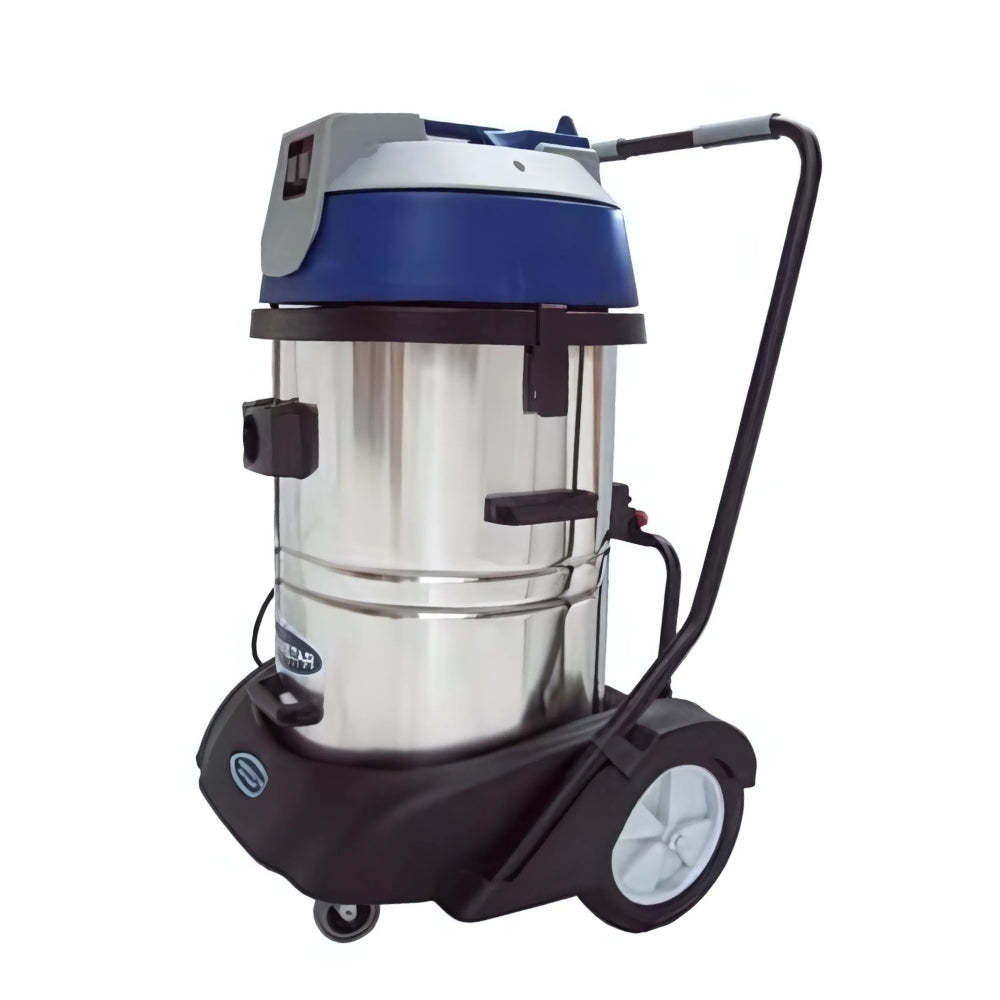
A Cleanstar VC60L is listed with a 60 litre stainless steel tank. Move that tank still full of water and you are transporting about 60 kilograms of liquid alone, because one litre of water weighs about one kilogram, and that mass can surge when the van brakes. Empty it first through the listed external drain hose, and the water stays at the site's approved disposal point. A smaller wet-and-dry unit does not change the rule; it only changes how much weight you were about to take down the road on a Sydney run.
How do you transport commercial vacuums safely between sites?
Transport commercial vacuums between sites by emptying wet tanks before you load, restraining every machine so it cannot tip or slide, and protecting backpack harnesses from being crushed under other kit. Load chemicals so they cannot leak onto motors, and do a morning check before the first site, not after a claim starts.
This is for cleaning contractors running multi-site rounds. The aim is to get the same machines to the next job in working order, without a spill in the van or a manual-handling injury on the tailgate.
Why do vans destroy unsecured vacuums?
An unrestrained barrel or backpack becomes a moving weight as soon as the van brakes, turns or hits a speed hump. Heads crack, hoses pull out, motors take a side impact, and a wet tank that was only "nearly empty" paints the cargo floor. The same trip also injures people: SafeWork NSW's page on hazardous manual tasks includes lifting, lowering, pushing, pulling, carrying and restraining things among the tasks that must be managed, and it becomes hazardous when high or sudden force, awkward posture or repetitive movement is involved. A 60 litre tank that shifts as you lift the handle is exactly that kind of sudden force.
WorkSafe Victoria tells employers to provide appropriate mechanical aids and to reduce the size and weight of objects being lifted. Emptying the tank, using a ramp or trolley, and stopping the machine from sliding are the aids that belong in a van, not a harder lift at the next kerb.
Empty tanks before you transport them
The VC60L listing is useful because it names both the problem and a listed way to deal with it: a 60 litre tank, and an external drainage hose so operators can empty wastewater into a drain without lifting the drum. Use that hose at the site's approved disposal point, then rinse and drain before the machine goes up a ramp. Do not invent a weight for the empty machine; the Freshway page does not list one. The water alone is already about 60 kg if you skip this step.
A smaller comparison still holds. Freshway lists the Numatic Charles CVC370 at 7.1 kg, with a 15 litre dry capacity and a 9 litre wet capacity, plus a safety float that shuts off suction when the wet tank is full. If that 9 litre wet tank travels full, you have added about 9 kg of water that can spill in a hard stop. Empty it anyway. The WVD570 is listed at 15.8 kg, with 23 litres dry and 15 litres wet; a full wet tank is about 15 kg of water on top of the machine. None of those figures is a reason to travel wet.
| Machine (Freshway listing) | Listed tank or weight facts | Water mass if transported full (1 L of water ≈ 1 kg) |
|---|---|---|
| Cleanstar VC60L | 60 L stainless tank; external drain hose | About 60 kg of water |
| Numatic Charles CVC370 | Machine 7.1 kg; 9 L wet capacity | About 9 kg of water |
| Numatic WVD570 | Machine 15.8 kg; 15 L wet capacity | About 15 kg of water |

Racks, straps and soft bags
Give each machine a home in the van so it is not leant against a chemical drum. A simple rack or a marked floor position, plus a strap over the tank or through a handle that is rated for that use, stops the slide. Soft bags or a wrap around motors, lids and wand sets stop chips from neighbouring kit. Do not rely on a loose bungee over a wet tank, and do not trap hoses in a door.
WorkSafe Victoria's injury hotspots for cleaning page lists ramps among the aids that minimise lifting, and mentions backpack vacuums as a mechanical aid in the right context. A ramp or tail lift is the right way to load a 60 litre barrel; a backpack should be lifted by the designed carry points or worn on, not swung in by the hose.
How do you protect a backpack harness in transit?
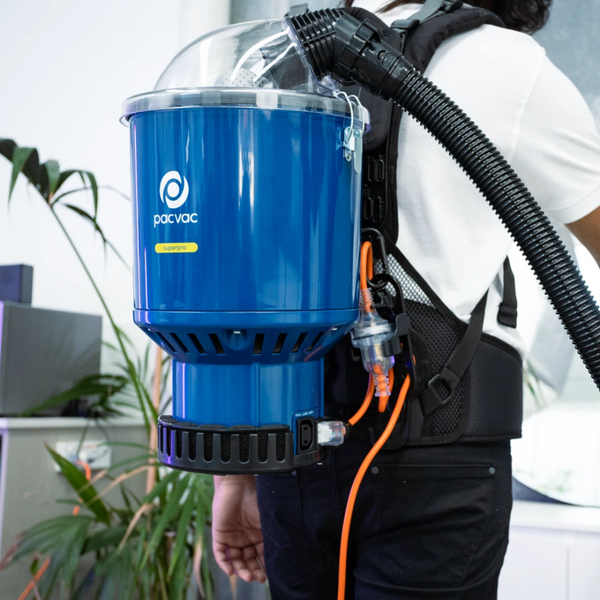
The harness is the part that fails first when a backpack is thrown under a wet-dry or a box of bins. Freshway lists the Pacvac Superpro 700 at 5.4 kg excluding the cord and hose, with a 5 litre dust capacity, a 1000 W motor, and an Ecoharness that is described as transferring weight to the hips. That 5.4 kg is easy to carry and just as easy to crush if the padded straps sit under a drum. Empty the bag, coil the 18 metre cord so it cannot snag, and stand or hang the unit so the harness is not folded under a load. A 66 dBA listed noise figure does not tell you how to pack it, but it is a reminder that the same machine has to arrive ready for indoor work, not with a cracked lid or a torn strap.

Backpacks, canisters and wet-dry machines are in the backpack vacuums, canister and barrel vacuums and wet and dry vacuums collections. Choose the format that matches the sites, then pack that format so it survives the trip.
Prevent wet-dry spills, and load chemicals last
Spills in transit start with a lid that was not seated, a drain cap that was not closed, or a recovery tank that was left "for later". After you drain the VC60L or any other wet machine, check the hose cap, the head seal and the tool ends. Stand the machine upright and strap it so a bump cannot tip the tank. Keep wet tools in a tub, not loose on a dry backpack.
Chemicals travel in the same van, and they should not travel on top of motors or cloth bags. WorkSafe Victoria's cleaning hotspot page tells employers to treat chemicals as potentially dangerous unless the SDS or label says otherwise, to keep SDS access, and to re-seal containers. SafeWork NSW's hazardous chemicals page records injuries from poor handling and storage of workplace chemicals, including cleaners. Load sealed, labelled containers in a contained tray, upright, after the machines are strapped, so a leak runs into the tray and not into a motor intake. The WorkSafe Victoria safety data sheets page sets out what an SDS must tell you about safe storage and handling.
Loading vacuum kits for multi-site work across Sydney
A typical contractor morning is several short sites, not one long job. That means the load is packed and unpacked more than once, which is when straps get skipped. Set a fixed order: empty and cap every wet tank, bag or hang backpacks so harnesses are clear, strap barrels against a wall or rack, load wands and heads in a crate, then seat the chemical tray. Leave a walk path to the first machine you will need, rather than burying it under bins.
If a site leaves you with a full recovery tank and no approved drain, do not invent a kerbside dump into a stormwater inlet. Carry the machine to a proper disposal point, or book the next stop where you can empty it, rather than driving with 60 kg of dirty water unrestrained.
Morning kit checks and fewer damage claims
Do the check before the first ignition, not in the client's car park:
- Every wet tank is empty, rinsed if needed, and the drain cap is closed.
- Every machine is strapped or seated in its rack, upright.
- Backpack harnesses are clear of other loads, and cords are coiled.
- Heads, wands and spare bags are in a crate, not loose.
- Chemical containers are sealed, labelled, upright and in a tray.
- A ramp or trolley is on board for the barrel machines.
- Filters and bags that were meant to be changed yesterday were actually changed.
Claims drop when the same broken part stops appearing after every rough road. A cracked head, a torn harness or a corroded motor from a chemical leak is usually a packing failure, not a mystery defect. Freshway's service and repairs team in Sydney works on commercial vacuums when something does fail; packing the van correctly still prevents most of the damage that never needed a workshop.
Frequently asked questions
Can I travel with a wet-dry tank half full if I am going straight to the next site?
No. Even a partly filled tank adds moving weight and can spill in a hard stop. Empty it at the site's approved point before you load, and close the drain cap.
Is a bungee over the handle enough to restrain a barrel vacuum?
Usually not. Use a strap or a rack that holds the tank upright and stops it sliding, and do not pinch hoses or the head under the strap.
Should backpacks be stacked under other machines to save space?
No. The harness and lid fail first when a backpack is used as packing. Stand or hang it so the straps stay clear, and strap the heavier barrels separately.
Where should chemicals sit in the same van?
In a sealed, labelled tray, upright, after the machines are restrained, so a leak cannot run into a motor or a cloth bag. Keep the SDS available to the crew.
Next steps with Freshway
Empty every wet tank before it goes in the van, give backpacks and barrels a fixed, strapped position, and run the morning checklist before the first site. Freshway can help you match a wet-dry, canister or backpack vacuum to the work, and advise on repairs if a machine has already taken a knock; contact the team with the models you run.
Delivery Across Sydney
Order online for same-day delivery across Sydney, including Western Sydney contractor routes. Click & collect is also available from our Arncliffe warehouse. See the wet and dry vacuums collection to specify a unit that can be drained and loaded safely.