Stairwell Lift and Landing Vacuum Protocols for Multi-Storey Sites
Keep fire stairs clear with a backpack or cordless vacuum and a managed cord or spare battery.
Shop now
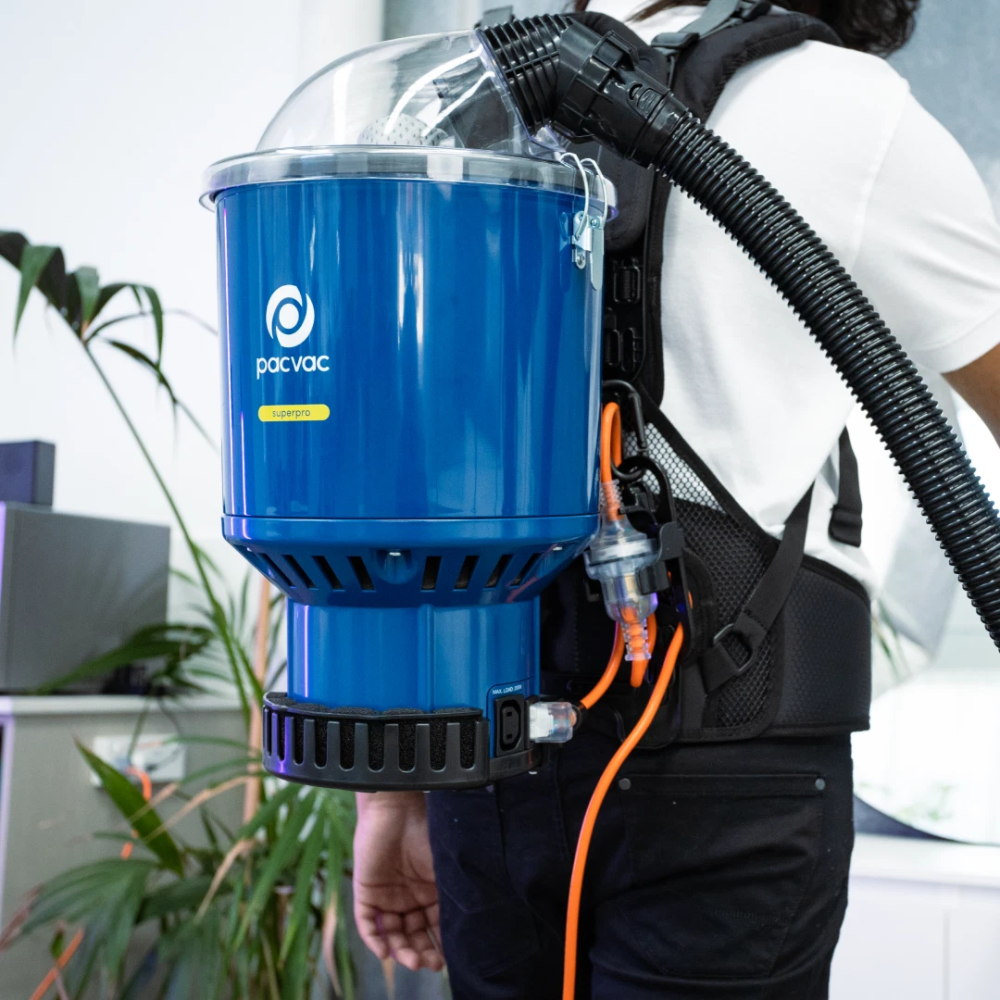
18 metres. That is the power-cord length Freshway lists for the Pacvac Superpro 700 backpack vacuum, which also weighs 5.4 kg excluding the cord and hose and carries a 5 litre dust bag. On a multi-storey stairwell that cord can cover a useful run from one landing outlet, but it still has to be managed so it does not lie across an egress path. That is the real choice Sydney facility buyers are making: corded reach versus cordless runtime, without blocking the fire stair.
What is a practical stairwell vacuum protocol for commercial cleaning?
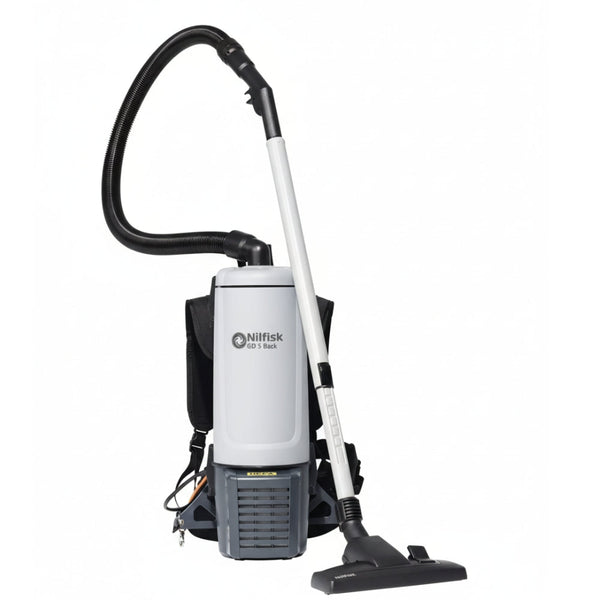
A practical stairwell vacuum protocol for commercial cleaning uses a backpack or compact cordless machine, keeps fire stairs and landings clear during work, details lift carpets and thresholds, and stages spare batteries or a managed cord so the operator is not in the travel path. Canisters belong on the flat, not dragged up a flight.
This article is for facility managers setting a method for stairs, lifts and landings. Freshway's guides to corded versus battery backpacks in multi-storey buildings and to buying commercial vacuum fleets cover format choice and fleet purchasing; this piece is the protocol on the stair itself.
Why stairs punish canisters
A barrel or canister vacuum asks the operator to lift or bump a machine, a hose and a head up every riser, then park it on a tread or landing. That blocks width, snags handrails and turns a simple change of floor into a manual handling task. WorkSafe Victoria's guidance on hazardous manual handling includes lifting, lowering, carrying, pushing and pulling among the tasks that must be managed. A backpack keeps the motor and bag on the operator, leaves one hand free for the rail, and keeps the tread clear of a parked drum.
SafeWork NSW's information on the safe design and use of stairs says work activity should allow workers to have a free hand to grab a handrail, and that items must not be stored on stairs. A canister sitting on a flight, even "just for a minute", is storage in the travel path.
Backpack and cordless choices
The trade-off is power-point access and runtime against an uncluttered stair. Freshway lists the Pacvac Superpro 700 at 1000 W, 38 litres per second airflow, 22 kPa, 66 dBA, a 5 litre capacity and an 18 metre cord, at 5.4 kg excluding cord and hose. The Pacvac VELO corded backpack is listed at 3.9 kg, 900 W, 65.3 dB(A), a 2.5 litre capacity and the same 18 metre cord, which suits narrower flights where mass matters more than bag size.
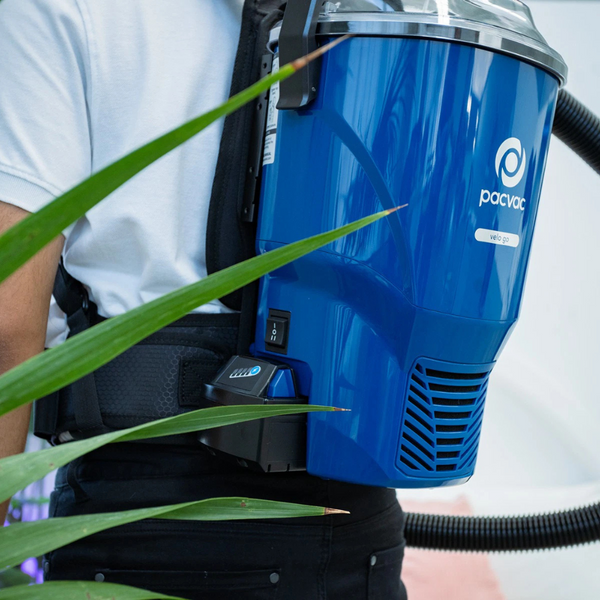
Where outlets are scarce, or a trailing lead would cross a landing that people still use, cordless is the cleaner protocol. Freshway lists the PacVac Velo Go at 4.5 kg with batteries, a 2.5 litre capacity, noise under 69 dB, and up to 50 minutes of runtime from dual 18 V batteries, with a charge cycle of 1 hour 45 minutes. That 50 minute figure is the number to plan around, not an invitation to guess how many floors it will cover. Machines in the backpack vacuums and cordless vacuums collections should be chosen for the stair first, and for the floor plate second. A stick vacuum can finish a small lift lobby, but it is a poor way to work a full flight of fire stairs.

Keeping egress clear during work
Fire stairs and exits have to stay available as a way out. That is a workplace duty, not a courtesy. SafeWork NSW's code of practice on managing the work environment and facilities says the means of entry and exit must be safe, including for emergency evacuation, and that aisles and walkways should be kept free of furniture or other obstructions at all times. The same code's housekeeping section repeats that walkways should be kept clear of obstructions. The stairs guidance already quoted says not to store items on stairs.
In practice that means: do not park a trolley, bag of rubbish or vacuum head on a tread; work one side or one flight at a time so people can still pass; keep the cord off the nosing as far as possible; and stop and stand aside if someone is using the stair as an exit. Use a cleaning trolley on the floor plate or a service landing, not on the flight.
Lift carpet and threshold detail
Lift lobbies collect grit that then tracks onto the car threshold and the landing edge. Vacuum the landing, the threshold tracks and the lift carpet or matting as a set, not as an afterthought on the way to the next floor. A crevice tool and a dusting brush, both listed in the Superpro 700 kit, are the right detailing tools for tracks and edges. Do not leave the car door held open with the vacuum body while you work a landing; finish the car, then the threshold, then move.
Noise in residential towers
Listed noise figures for these backpacks sit well below many workshop machines: 66 dBA for the Superpro 700, 65.3 dB(A) for the VELO, and under 69 dB for the Velo Go. They are still audible in a residential stair at night. Agree an access window with the building, start at the top or as the site requires, and avoid running boost modes in enclosed concrete stairs after hours unless the contract allows it. The Velo Go listing gives a normal 250 W mode and a 400 W boost mode; use boost for a dirty entry mat, not as the default on every landing.
Battery staging by floor
Do the arithmetic from the listed runtime, then add a spare rather than stretching a pack until it dies mid-flight. The Velo Go is listed at up to 50 minutes of runtime and 1 hour 45 minutes to charge. If a building needs more than one continuous stair-and-landing pass, stage a second charged battery set on a service floor or in the cleaners' room, not on a tread. Freshway does not list a runtime for every cordless backpack, so do not invent one; use the figure on the product page you actually buy, and log real minutes on your first week in the building.

Signage and wet-stair risks
Dry vacuuming should not wet a stair. The risk appears when a spill, weather tracked in at a ground landing, or a mopped mid-landing is still damp. SafeWork NSW says to clean up spills, wet spots or debris on stairs as soon as possible. Its slips, trips and falls page lists liquids, water and loose cords among common hazards, and its guide to preventing slips, trips and falls says signs alone do not keep pedestrians off a floor that is not yet dry; use temporary barriers, provide an alternate route, or work in strips so a safe path remains. On a fire stair, an alternate route may not exist, so delay wet work, or control access until the tread is dry. WorkSafe Victoria's page on slips, trips and falls likewise treats stairs, spills and clear walkways as part of the same problem.
| Protocol choice | Listed figure to plan from | What it means on the stair |
|---|---|---|
| Corded Superpro 700 | 18 m cord, 5.4 kg, 5 L bag, 66 dBA | Useful reach from one landing outlet; manage the lead so it is not a trip line across the flight |
| Corded VELO | 18 m cord, 3.9 kg, 2.5 L bag, 65.3 dB(A) | Lighter carry on long climbs; empty the smaller bag more often |
| Cordless Velo Go | Up to 50 min runtime, 4.5 kg, 2.5 L, under 69 dB | No trailing lead; stage a charged spare if the run will exceed the listed runtime |
Productivity expectations that are realistic
Stairwells are not measured like an open floor. Time goes into landing edges, lift tracks, door closers and waiting for people to pass. Set a method and a quality standard — nosings, corners, under the rail, lift tracks — rather than a square-metre rate copied from a foyer. If the building only allows a short night window, specify cordless machines and staged batteries so the crew is not hunting for a locked riser outlet.
Frequently asked questions
Can we just drag a canister vacuum up the fire stair?
It is a poor protocol. The machine blocks treads, ties up a hand that should be free for the rail, and becomes stored equipment on the stairs. Use a backpack or a compact cordless unit instead.
If we put a wet-floor sign on the landing, is that enough?
No. SafeWork NSW says signs alone do not keep people off a surface that is not yet dry. Use a barrier or an alternate route, and avoid wetting a fire stair if people still need that path.
Does an 18 metre cord mean we do not need a cordless backpack?
Not on every site. An 18 metre cord covers a useful run, but it can still trail across an egress route. Where outlets are scarce or the stair must stay clear, plan from a listed runtime instead.
How many floors will a 50 minute battery actually clean?
That depends on soil, detailing and waiting time, so do not treat 50 minutes as a floor count. Log real minutes in the building and stage a spare pack before the first run dies mid-flight.
Choosing backpack vacuums for Sydney high-rise work
Write the stair, lift and landing sequence into the site folder, name the machine type, and say how the cord or the spare battery will be staged so the flight stays clear. Order online for same-day delivery across Sydney, including Sydney CBD high-rise contracts. Click and collect is also available from the Arncliffe warehouse. Start with the backpack vacuums collection.