Day cleaning only works if the machine is quiet enough to be in the room. A vacuum that is acceptable in an empty building at night can be intolerable at 10 am beside a meeting, a consulting room or a reception desk, and the operator ends up skipping the area or working around it. A quiet commercial vacuum cleaner has to balance noise with filtration, airflow and reach, because quiet alone does not clean a floor.
This guide is for facility managers, workplace teams and contractors moving cleaning into the working day in offices, schools, clinics, aged care and retail. It covers noise thresholds, filtration, machine formats, bags and filters, and the route design that keeps day cleaning from becoming a disruption.
Quiet Commercial Vacuum Cleaner: Balance Noise, Filtration and Reach
Noise is the first constraint, but it is not the only one. A quiet machine that cannot pick up the soil, or one that releases dust because its filtration is compromised to reduce noise, is not a solution. The useful specification balances the three: a noise level that suits the occupied building, filtration that suits the dust and the occupants, and airflow and reach that suit the route.
The second constraint is the building. An open-plan office, a clinic with consulting rooms, a school corridor and a retail floor all have different tolerances. A machine that is acceptable in a busy retail space may be too loud in a clinic, and one that is quiet enough for a clinic may not have the airflow for a large carpeted floor.
The third constraint is the schedule. Day cleaning has to work around meetings, patients, classes and customers, and the machine has to be deployable in short windows. A quiet machine that takes ten minutes to set up is less useful than a slightly louder one that can be used in a five-minute window.
Identify the Failure Mode Before Comparing Products
Day-cleaning vacuum complaints are usually about noise, dust, time or reach. Noise complaints mean the machine is too loud for the space or the timing. Dust complaints mean the filtration or the emptying step is releasing dust. Time complaints mean the machine is too slow for the area or the route. Reach complaints mean the hose, the tool or the machine format does not fit the furniture and the space.
Each failure has a different fix. A noise problem may need a quieter machine, a different time slot, or a change in the route. A dust problem may need a different filter, a bagged system or a better emptying point. A time problem may need a wider tool or a more powerful machine, and a reach problem may need a backpack or a longer hose.
Diagnosing first stops the purchase being decided by a decibel figure. A machine that is quiet but slow will fail the schedule, and a machine that is fast but loud will fail the building.
What Noise Level Works in an Occupied Building?
Quiet enough that normal conversation continues a few metres away.
A decibel rating is a guide, but the practical test is whether the machine disrupts speech, calls or concentration at the distance people actually work, which depends on the room's surfaces and the machine's tone as well as its volume.
Hard surfaces reflect sound, so a machine that is acceptable in a carpeted office can be intrusive in a tiled reception area or a corridor. High-pitched machines are more distracting than lower-frequency ones at the same level, and a machine that cycles on and off is more noticeable than a steady one.
The practical approach is to trial the machine in the occupied space at the time of day it will be used. Run it for a few minutes near a meeting room, a reception desk or a consulting room, and ask the people who work there. That test is more reliable than a specification sheet, and it also tests the operator's technique and the route.
Filtration and Airflow Under a Noise Limit
Filtration and noise are linked. A machine that is heavily silenced often moves less air, and a machine that moves a lot of air is usually louder. The specification has to find the point where the filtration is adequate for the dust and the airflow is adequate for the floor, without exceeding the noise limit of the building.
For general office dust, a multi-stage filter with a good pre-filter and a HEPA-grade final filter is usually enough, and a bagged machine helps containment. For fine or hazardous dust, the class and the containment system are set by the risk assessment, and the noise limit may have to give way to the requirement.
Airflow at the tool is what captures dust, and a quiet machine with a narrow tool can still clean effectively if the operator uses the right technique. The trade-off is time: a lower-airflow machine may need more passes, and the schedule has to allow for it.
Which Machine Format Suits Day Cleaning?
A backpack or a compact canister with a long hose, depending on the route.
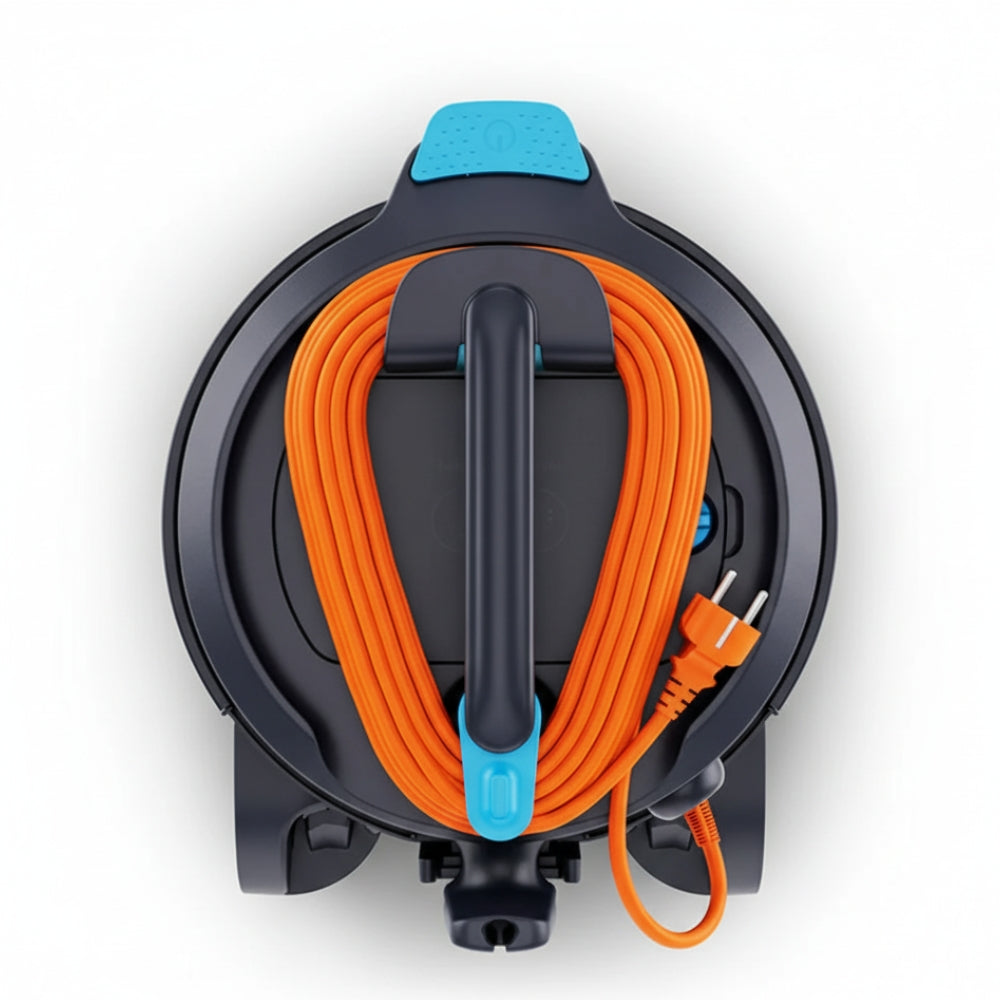
A backpack keeps the machine with the operator and removes the lead from the floor, which suits stairs, tight rooms and busy corridors, while a compact canister with good filtration and a long hose suits larger open areas where the machine can sit out of the way.
Backpack machines are usually the better fit for day cleaning in occupied buildings because they follow the operator and do not need to be repositioned around furniture. They also keep the hose out of walkways, which reduces trip hazards. The trade-off is weight on the operator and a smaller capacity, which means more emptying.
Canister machines suit open floors and longer hoses, and they are easier to park in a corner while the operator works. Where the route includes stairs, a backpack or a lightweight canister with a carry handle is more practical than a large machine.
Bags, Filters and Maintenance
Bags and filters decide both containment and noise over time. A bagged machine with a sealed bag contains dust better and is quicker to empty, which matters in an occupied building. A bagless machine keeps airflow steadier but requires more careful emptying and filter cleaning, which is a disruption in a quiet space.
Filters need to be checked and replaced on the manufacturer's interval, and the pre-filter may need cleaning more often. A loaded filter reduces airflow and increases noise as the machine works harder, so the maintenance interval is part of the noise specification.
Keep the correct bags and filters in stock, and record the changes against the machine. A substitute bag or filter changes both airflow and containment, and on a quiet machine it can also change the noise.
Route Design and Public Areas
Day cleaning is a route problem. The machine should move through the building in a sequence that avoids meetings, consultations and peak customer times, and the operator should know which areas can be cleaned while occupied and which have to wait.
Public areas add controls: signage, cordoning, hose management and the timing of the work. A vacuum used in a reception area during a busy period creates a trip hazard and a noise problem at the same time, and the answer is usually to schedule that area for a quieter window rather than to buy a quieter machine.
Where the building has lifts, the machine should be carried or wheeled in a way that does not block the doors or the lobby. A backpack is easier in a lift than a canister and hose, which is one more reason it suits occupied buildings.
Working Around Meetings and Consultations
Day cleaning in an occupied building is a sequence of short windows. A meeting room is free between bookings, a consulting room is empty between patients, a classroom is empty at lunch, and the operator has to be able to clean each space and leave it ready before the next use. The machine has to suit that rhythm, and the route has to follow it.
The practical method is a quick reset rather than a full clean: empty the bin, vacuum the visible area and the edges, check the floor and leave. The deep work happens out of hours. That reset needs a compact machine, a short hose and a tool that reaches under the table without moving the furniture.
The booking calendar is the most useful planning tool. Where the workplace or practice can share the room schedule, the operator can work to it rather than guessing, and the cleaning stops interrupting the people the building exists for.
When the Building Cannot Tolerate Day Cleaning
Some buildings cannot support day cleaning regardless of the machine. A recording studio, a surgical suite, a courtroom or a quiet consultation wing may need the work done outside occupancy, and the honest specification says so rather than buying a quieter machine and hoping.
In those buildings the answer is a split program: the quiet tasks - surfaces, bins, glass, touchpoints - during the day, and the machine tasks outside hours. That keeps the building presentable without asking a vacuum to be quieter than the building allows.
The decision should be made with the people who use the space. A short trial in the actual room, at the actual time, with the actual machine, is the evidence that settles it, and it prevents both a failed day-cleaning program and an unnecessary out-of-hours contract.
What the Operator Needs to Know
A quiet machine is only quiet in the hands of an operator who knows the building. The operator needs to know which rooms can be cleaned while occupied, which cannot, and what to do if a meeting runs over or a patient arrives early. That judgement is part of the method, not an exception to it.
The operator also needs to know the machine's limits. A backpack with a small bag has to be emptied before the bag is full, and a cordless machine has to be charged before the route rather than during it. Those details decide whether the day-cleaning schedule holds together on a busy day.
Finally, the operator needs a way to report a problem. A machine that is louder than usual, a filter that needs changing, or an area that was disturbed by the cleaning should be recorded and passed on. That feedback is what keeps the program adjusting to the building rather than repeating the same disruption.
What to Record in the Approved Method
- Noise: the machine used for each area, and the time window when it can be used.
- Filtration: the filter class, the bag system and the emptying point.
- Format: backpack or canister, hose length and tools for each surface.
- Route: the sequence around meetings, consultations and public areas.
- Maintenance: filter and bag intervals, and who checks them.
- Inspection: who confirms the area is clean and the machine has not disturbed occupants.
That record is what makes day cleaning auditable. It also gives the next contractor a method rather than a machine, which is the part that actually delivers a quiet clean.


Questions we get asked most
- How quiet should a vacuum be for office day cleaning?
- Quiet enough that normal conversation continues a few metres away. A decibel rating is a guide, but the practical test is to run the machine in the occupied space at the time it will be used and ask the people who work there.
- Do quiet vacuums clean as well as louder ones?
- They can, if the airflow at the tool is adequate and the operator uses the right technique. Quiet machines often move less air, so they may need more passes. Filtration and airflow have to be balanced against the noise limit, not sacrificed to it.
- Is a backpack or canister better for day cleaning?
- A backpack suits stairs, tight rooms and busy corridors because it follows the operator and keeps the hose out of walkways. A canister with a long hose suits larger open areas where the machine can sit out of the way.
- How often should vacuum filters be changed in a day-cleaning program?
- At the manufacturer's interval for the filter and the duty, and sooner where the machine is used heavily or the dust is fine. A loaded filter reduces airflow and can make the machine louder, so the interval is part of the noise specification.
Conclusion
Balance noise, filtration and reach rather than buying on a decibel figure. Trial the machine in the occupied space, check the airflow at the tool and choose the format that fits the route.
Then protect it with the right bags and filters, a route that avoids meetings and consultations, and a written method. That is what makes day cleaning possible in a building that is still working.
Manufacturer information: Pacvac and Nilfisk Australia. Work health and safety: Work Health and Safety Regulations 2011, SafeWork NSW and WorkSafe Victoria.
Compare quiet backpack and canister vacuums for day cleaning in the Freshway range.