Bagged versus bagless is usually presented as a convenience question, and convenience is the least important part of the answer. What changes is how the machine handles dust: how much airflow it keeps as it fills, how the dust is contained when it is emptied, what it costs per year in bags and filters, and whether the operator is exposed when the container is opened. A bagged vs bagless commercial vacuum decision should be made on those.
This guide is for cleaning supervisors, facility managers and contractors choosing vacuums for offices, hotels, healthcare, schools and light industrial sites. It compares dust handling, airflow, containment, cost and maintenance, and sets out how to trial both types on the same route.
Bagged vs Bagless Commercial Vacuums: Compare Dust Handling
A bagged machine collects dust in a disposable or reusable bag inside the container. The bag is the filter's first stage and the containment system: it holds the dust, it can be removed and closed, and it keeps the container cleaner. The trade-off is the cost of bags and the loss of airflow as the bag fills.
A bagless machine collects dust in a container that is emptied into a bin. There are no bags to buy, and airflow does not fall as a bag fills, but the container has to be emptied, cleaned and sometimes washed, and the emptying process is where dust is most likely to be released.
The commercial question is not which is more convenient. It is which handles the dust on that site safely and economically. On fine or hazardous dust, containment usually decides for a bagged or sealed system; on general office dust with a tight consumable budget, a bagless machine can be the practical choice.
Clarify the Required Result and the Trade-off
The required result is a floor that is clean and a dust stream that stays contained. That sets two trade-offs. A bagged machine gives better containment and a cleaner emptying process, at the cost of bags and a gradual loss of airflow. A bagless machine gives consistent airflow and no bag cost, at the cost of a messier emptying process and more cleaning of the machine.
The second trade-off is labour. A bagless container has to be emptied and cleaned regularly, and the cleaning is part of the operator's shift. A bagged machine takes seconds to empty and reseal, but the bags have to be stocked and the cost tracked.
Where the dust is hazardous, the trade-off is not a choice at all: the class and the containment system are set by the risk assessment, and a bagless domestic-style machine is not an option. The comparison only applies to general commercial dust.
Identify the Dust Before Choosing Either
General office dust, paper and textile fibres, food crumbs and light soil are forgiving, and either system can handle them. Fine mineral dust, timber dust, toner, flour and construction dust are less forgiving, and the way the machine is emptied matters as much as the way it filters.
Where the dust is hazardous, the machine class and the bag system are specified together. A bagged H-class machine with the correct bags is a system; the same machine with a generic bag is not. A bagless machine is generally not appropriate for hazardous dust because the emptying step releases what was collected.
Liquids change the answer again. A wet-and-dry machine is usually bagless for wet pick-up, and a bagged machine is used for dry dust. Where a site needs both, the practical answer is two machines or a convertible machine with the correct configuration for each.
Airflow, Suction and Bag Loading
Airflow is what captures dust at the tool, and it falls as a bag fills and a filter loads. A bagged machine therefore loses performance gradually, and the operator may not notice until the pick-up is poor. A bagless machine keeps airflow more consistent but loads its filter, so the filter becomes the limiting factor.
The practical difference is in the maintenance rhythm. A bagged machine needs the bag changed before it is full and the filter checked on schedule. A bagless machine needs the container emptied and the filter cleaned more often, and the filter cleaning is the step that keeps airflow steady.
Neither system removes the need to check airflow. A machine that only performs with a new bag or a freshly cleaned filter is being used beyond its duty, and the answer is a different machine or a different interval rather than more consumables.
Containment and Emptying
Containment is where the two systems differ most. A bag can be closed and removed with minimal dust release, particularly where the bag has a sealed collar. A container has to be tipped into a bin, and that is the moment dust becomes airborne again.
The emptying location matters. A bagless container emptied into an open bin in a corridor releases dust into the building, and a bagged machine emptied in a service area contains it. Where the site has a designated waste point, both systems are easier to manage.
For sites with sensitive occupants - healthcare, aged care, schools, allergy sufferers - the containment difference is a real quality issue. The machine that releases least dust when emptied is often the better choice even if the bags cost more.
Cost per Year, Not per Vacuum
A bagless machine looks cheaper because there are no bags. The honest comparison is the annual cost of ownership: bags, filters, the labour to empty and clean the container, the downtime, and the replacement interval.
Bags and filters are predictable costs. A bagged machine may use several bags a week, and the filter needs replacing on schedule. A bagless machine uses fewer consumables but more operator time, and its filter may need cleaning more often, which is labour even when it is not a purchase.
Build the comparison over a year on the real route. Include the cost of the bags, the filters, the labour minutes per week, and the expected life of the machine. On a site with high dust volumes, the bag cost can be significant; on a site with light dust and expensive labour, the emptying time can outweigh it.
Noise, Ergonomics and Route Design
Noise decides when the machine can be used, and the bag system has little effect on it compared with the motor and the housing. What does change is the emptying routine: a bagged machine can be emptied quickly at the end of a route, while a bagless container may need cleaning before the next area.
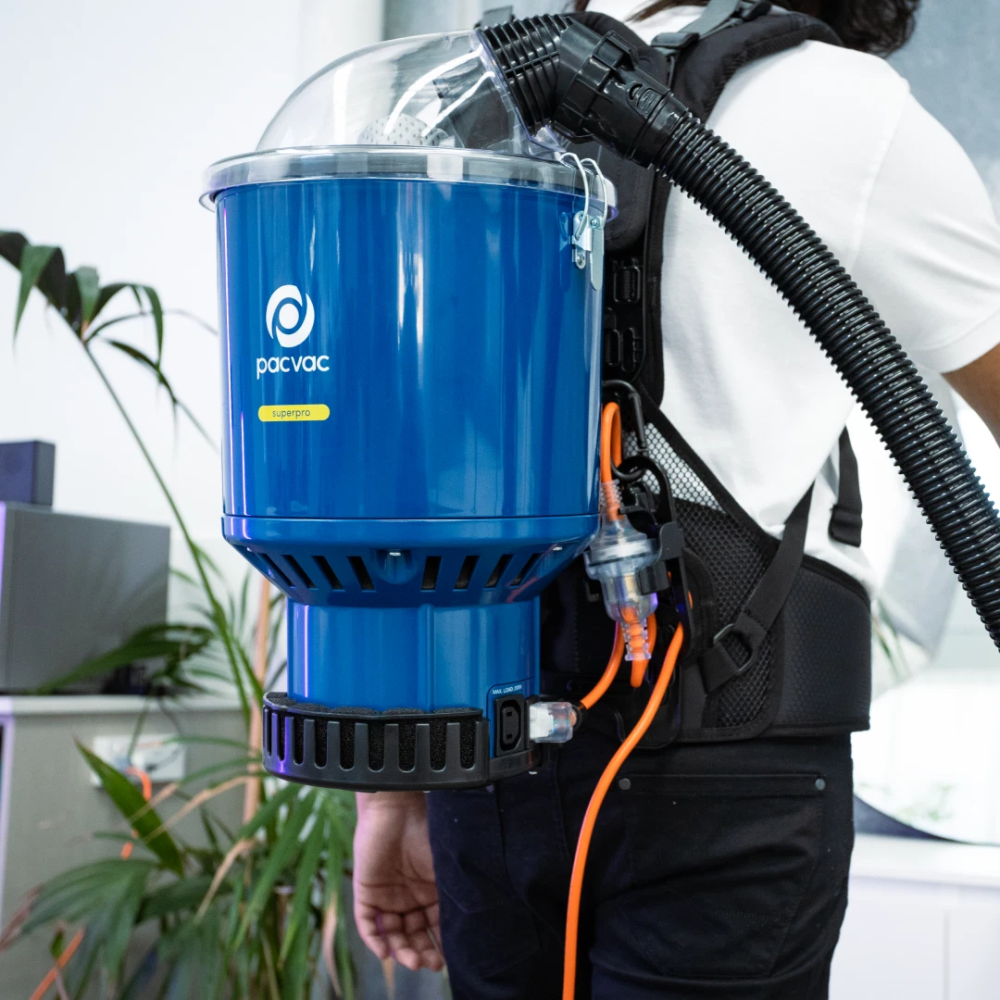
Ergonomics matter on both. A backpack machine suits stairs and tight routes; a canister suits larger open areas. The weight of a full bag or a full container changes as the shift goes on, and the operator feels it.
Route design should include the emptying point. A machine that has to be carried back across a building to be emptied is a machine that gets emptied less often than it should, and that affects both performance and hygiene.
When Should the Choice Be Reviewed?
Review the choice when the dust, the site or the labour model changes. A move into healthcare or aged care, a renovation that introduces fine dust, a change in the cleaning schedule or a new contractor can all make the current machine unsuitable.
The signals are specific: dust trails around the container, a smell from the machine, operators avoiding the emptying step, filter costs rising, or a floor that needs more passes. Each points to a containment or airflow problem rather than to the operator.
Review both types on the route before switching. A trial on the actual dust, with the actual emptying point, is the only reliable comparison. This guide to matching bags and filters to the machine covers the consumable side.


Questions we get asked most
- Are bagged or bagless vacuums better for commercial cleaning?
- Bagged machines contain dust better, especially when emptied, and suit fine dust and occupied buildings. Bagless machines keep airflow more consistent and avoid bag costs, but the emptying step releases more dust. The right choice depends on the dust, the occupants and the labour.
- Do bagless vacuums lose suction?
- They lose airflow as the filter loads rather than as a bag fills. Cleaning or replacing the filter on schedule keeps performance steady, but a bagless machine used beyond its duty will still lose suction and needs a different interval or machine.
- Can I use a bagless vacuum for hazardous dust?
- Generally no. Hazardous dust requires a class-rated machine with a sealed bag and disposal system, because emptying a container releases the dust that was collected. The class and the containment system are set by the risk assessment.
- Which is cheaper to run?
- Compare the annual cost: bags, filters, labour to empty and clean, downtime and replacement. Bagless machines avoid bag cost but use more operator time, while bagged machines cost more in consumables but are faster to empty.
Emptying and Waste Handling
The emptying step is where the bagged versus bagless decision is most visible, and where a good machine can be undermined by a poor routine. A bagged machine is emptied by removing the bag and closing it, ideally with a sealed collar, and placing it in a waste bag. A bagless machine is emptied by tipping the container, which releases the fine dust that has settled on the walls and the lid.
The location matters. A container emptied in a corridor, a lift lobby or a washroom releases dust into an occupied space, and the operator may not notice because the release is invisible. A designated waste point with a bin, a liner and some ventilation is the minimum, and a bagged machine can be emptied there more cleanly.
The frequency matters too. A bagless container that is emptied when it is full is already overdue, because the dust has been sitting in the airflow path. A bagged machine has the same issue with a full bag, but the bag can be removed without exposing the container. On a busy route, that difference is the difference between a clean machine and a dusty one.
Waste disposal should follow the site's arrangements. General dust goes in general waste; hazardous dust follows the class and the disposal procedure. The operator should know which bin is which, and the cleaning cupboard should not become the place where waste bags are left.
What to Record in the Approved Method
- Machine: type, model, bag system and filter class, recorded per machine.
- Dust: what the machine collects, whether it is hazardous, and the disposal route.
- Emptying: the location, the frequency and the method for the bag or container.
- Consumables: bag and filter part numbers, reorder points and change intervals.
- Cost: bag and filter cost per month, emptying time per route and downtime.
That record is what makes the comparison between bagged and bagless honest. It also gives the next supervisor the information needed to keep the machine performing, rather than discovering the bag and filter specification after a failure.
Trialling Both Types on the Route
A trial is the only way to settle the question for a specific building. Run both machines on the same route, with the same operator and the same dust, and measure the time, the emptying, the dust visible around the container and the operator's feedback.
Score four things on the same route. Time per area, including emptying and filter checks. Dust release at the emptying point, observed rather than assumed. Filter and bag consumption over the trial period. And the operator's willingness to use the machine, which predicts whether the routine will be followed.
Run the trial long enough to include a full bag or a full container, because that is when the difference appears. A trial that ends before the first emptying tells you how the machine cleans, not how it handles the dust when the container is opened.
Where the site has both bagged and bagless machines, the comparison can be made with the existing fleet before any purchase. That is cheaper than buying a machine to find out, and it gives the operator a chance to compare on their own route.
Conclusion
Compare bagged and bagless on dust handling, not convenience. Bagged machines contain dust better at emptying and suit fine dust and occupied buildings; bagless machines keep airflow steadier and avoid bag costs, at the price of a messier emptying step.
Then cost both over a year, trial them on the route and review the choice when the dust or the site changes. That is what makes the decision about the building, the dust and the people in it, rather than about the cupboard or the brochure.
Manufacturer information: Pacvac and Karcher Australia. Work health and safety: Work Health and Safety Regulations 2011, SafeWork NSW and WorkSafe Victoria.
Compare bagged and bagless commercial vacuums, bags and filters in the Freshway range.