
Flat Mop vs String Mop: Which Is Better for Commercial Cleaning?
A flat mop covers more floor per pass, and the pad does the scrubbing for you.
Shop now
A flat microfibre mop is usually the better everyday tool for smooth floors, controlled damp mopping and fast pad changes. A string or round mop remains useful when you need to collect more liquid, work over uneven surfaces or scrub around irregular edges. Many commercial sites need both, assigned to different tasks.
Choose a flat mop for routine damp cleaning on broad, smooth floors. Keep a string or round mop for larger spills, uneven surfaces and irregular edges. In controlled care environments, the facility procedure decides the system.
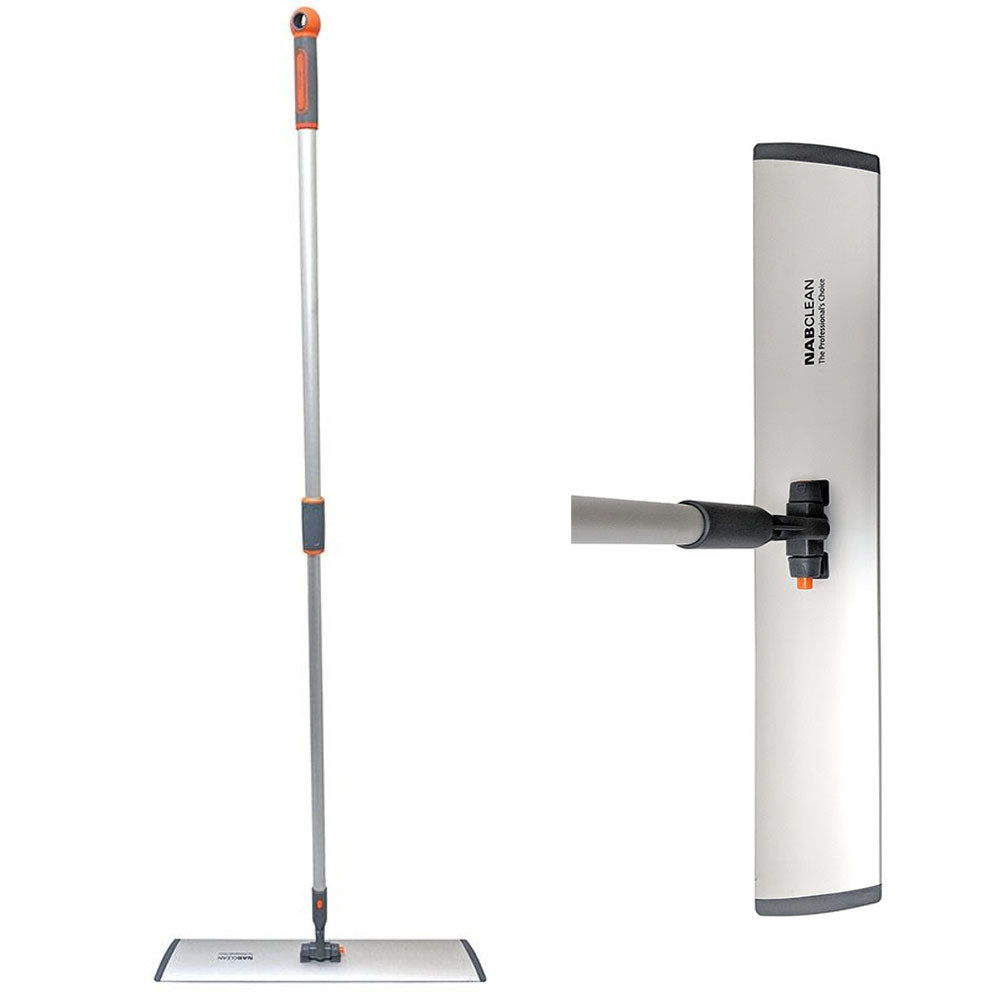
Choose by task, not by the shape of the mop
| Cleaning situation | Better starting point | Why |
|---|---|---|
| Routine damp cleaning on smooth vinyl, sealed timber or polished floors | Flat mop | Broad, even contact and controlled moisture |
| Fine dust and hair before wet cleaning | Dry microfibre flat mop | A wide pad can cover open areas efficiently |
| Large liquid spill | String or round mop | More yarn can take up and transfer liquid to a wringer |
| Uneven tiles, textured floors and edges around fixtures | String or round mop | Yarn conforms around surface variations |
| Room-by-room pad change or pre-prepared pad workflow | Flat mop | Pads can be changed without returning a used pad to the solution |
| Heavy local soil needing agitation | Depends on pad/yarn and floor | Material, pressure, chemical and technique matter more than shape alone |
When is a flat mop the better choice?
A flat frame keeps the pad in contact with a broad strip of floor. That makes it well suited to open corridors, retail areas, classrooms and offices with relatively smooth surfaces. A lightly dampened pad gives better moisture control than a saturated mop head, which is useful where excess water would increase slip risk or slow access to the area.
Flat systems also support a clean-pad workflow: prepare the required number of pads, use one for the defined area, remove it without touching the soiled face, and send it for laundering. The practical benefit depends on having enough pads, a clear change rule and a laundering process. The mop shape alone does not create infection control.
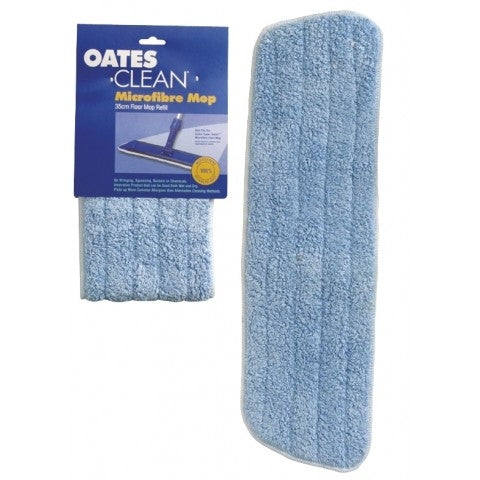
A 600 mm pad covers open floor quickly, but a narrower frame may be easier in furnished rooms and tight washroom layouts.
When does a string mop work better?
A round mop can spread into corners and across uneven or textured flooring. Its yarn makes it a practical liquid-recovery tool for spills and wet entries, especially when paired with a suitable commercial bucket and wringer. Looped-end heads resist the loose ends and tangling associated with basic cut-end designs, although the actual durability depends on construction and laundering.
The trade-off is control. A heavily loaded head becomes harder to move and wring, and it can leave more solution on the floor. If the cleaning solution becomes dirty and the mop repeatedly returns to the same bucket, soil can be redistributed. Define when to change the solution and mop head instead of relying on how clean the water looks.
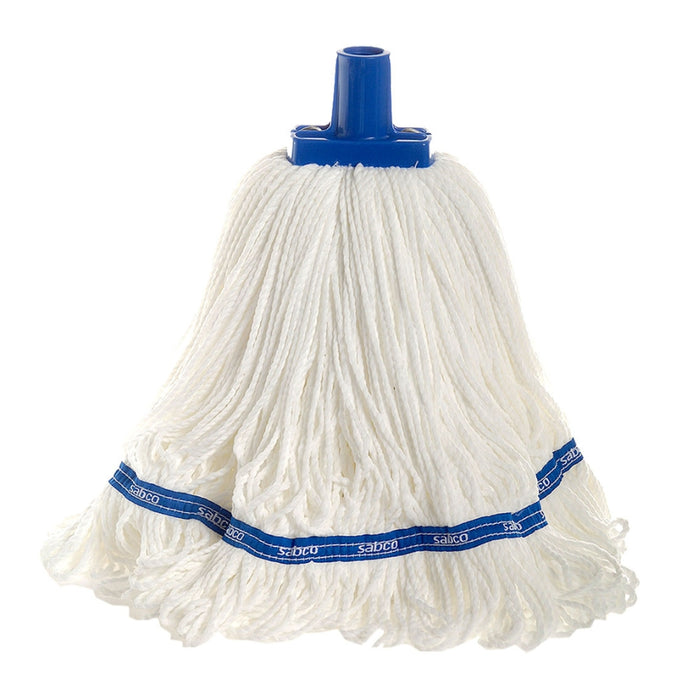
Looped yarn can conform around irregular surfaces and pick up spills, while the wringer and head weight affect the physical effort required.
Material changes the comparison
“Flat” does not always mean microfibre, and “string” does not always mean cotton. Compare the pad or yarn material as well as the frame. Microfibre can hold fine soil within its structure, but residues from fabric softener or an incompatible laundry process can reduce performance. Cotton is absorbent and familiar, yet it can hold more water and may leave lint depending on construction.
Always follow the product's care instructions. In healthcare and care settings, local procedures take precedence. The Victorian Department of Health's infection-control cleaning guidance says cleaning items should be washed, rinsed and stored dry between uses, and mop heads should be changed after use; specialised areas can require different controls.
Calculate the whole system
A useful comparison includes more than the head price:
- frame, handle, bucket and wringer compatibility;
- pads or heads required per shift;
- laundry capacity and drying time;
- chemical and water use under the site's actual procedure;
- time to change pads, refill solution and move furniture;
- storage that keeps clean and used items separate;
- the floor manufacturer's cleaning requirements.
Run a timed trial in a representative area. Record set-up, active cleaning, pad or water changes and the time until the floor can reopen. Inspect the dry floor under normal lighting. A lower-cost mop that creates repeat work or leaves the floor wet for longer can be the more expensive system.
A practical mixed-fleet approach
For a typical office or retail site, use flat microfibre pads for planned daily floor care and keep a clearly designated round mop for larger spills or rough back-of-house surfaces. In a hospitality venue, a round mop may handle wet kitchen incidents while flat pads maintain the smoother dining floor. In a healthcare setting, choose the system through the facility's infection-prevention procedure rather than a generic comparison.
Browse Freshway's commercial mop heads and handles, then verify frame, handle and wringer compatibility before combining parts from different systems.
Frequently asked questions
Does a flat mop need a bucket?
Not always. Some systems use pre-dampened pads or an onboard solution reservoir, while others use a compact bucket. The method must still keep clean supplies separate from used pads and follow the site's chemical and hygiene procedure.
Can a flat mop handle spills?
It can manage small spills when the pad has enough capacity, but a string mop or dedicated spill kit is usually more practical for a larger volume. In clinical or hazardous situations, use the site's spill procedure rather than an everyday floor-cleaning method.
How often should commercial mop heads be changed?
Change a head or pad when it is visibly soiled, after the area defined by the facility's procedure, and immediately when a contamination event requires it. Replace the item permanently when laundering no longer restores it or its fibres, backing or attachment are damaged.
References
- Victorian Department of Health — Cleaning and waste disposal procedures (accessed 7 September 2026).
This article is one section of the floor machine guide, which covers scrubbers, polishers, sweepers and mop systems.
Related articles
 Do Concentrated Cleaning Products Reduce Impact? Check Dose, Packaging an...
 How to Launder Microfibre Mops Without Ruining Their Cleaning Performance
 Urinal Cleaning and Odour Control: Treat Scale, Drainage and Daily Soil S...
 Commercial Toilet-Roll Dispensers: Prevent Run-Outs Without Creating Waste