Spot cleaning is where a carpet program is judged, because a spot is visible and the client sees it before and after. It is also where chemistry is chosen fastest and worst. Coffee, blood, ink, grease, wine and chewing gum need different products, and the wrong one can set the stain, bleach the fibre or leave a ring that outlasts the original mark. A commercial carpet spot cleaning guide has to start with identification.
This guide is for cleaning supervisors, facility managers and contractors handling spills in offices, hotels, aged care, retail and education. It covers stain families, chemistry, moisture control, test patches and the inspection that decides whether the spot is actually gone.
Commercial Carpet Spot Cleaning Guide: Identify the Stain First
The first question is what the substance is, not which bottle to use. A water-based stain, an oil-based stain, a protein stain, a dye or ink, and a sticky residue each need a different approach, and the treatment that works on one can set another. Where the substance is unknown, remove what can be removed, test a small area and work up from the mildest product.
The second question is how long it has been there. A fresh spill is easier than one that has dried and been walked over, and a stain already treated with the wrong product can be harder than the original. The record should include what was applied, because that changes the chemistry.
The third question is the fibre. Wool, nylon, polyester, polypropylene, viscose and blends respond differently to water, heat, pH and agitation. Where the fibre is unknown, a test patch is the only reliable way to proceed.
Identify the Failure Mode Before Comparing Products
Spot cleaning fails in four visible ways: the stain remains, the stain spreads, a ring appears around the treated area, or the fibre is damaged. Each points to a different cause.
A stain that remains may be the wrong chemistry or insufficient dwell. A stain that spreads may have been over-wetted or agitated too hard. A ring is usually wicking, where moisture from the backing carries soil to the edge, or residue from an overdosed product. Fibre damage is usually heat, high pH or aggressive agitation on a sensitive fibre.
Diagnosing first changes the purchase. A site with rings needs better moisture control and rinsing, not a stronger spotter. A site with recurring stains needs a different spotting kit or a different first response.
Match the Process to Fibre, Backing and Soil
The process follows the fibre and the backing. On solution-dyed synthetic loop, a range of spotters can be used with moderate agitation. On wool, the pH has to be controlled, heat avoided and agitation gentle. On viscose and some blends, water itself can cause distortion, so the method uses the minimum moisture and dries quickly.
The backing matters because that is where the moisture goes. A carpet with a waterproof backing keeps the spill near the surface; one glued to a slab or over a porous underlay can hold moisture and soil below the pile, which is where rings and odour begin. Where the spill has reached the backing, the method has to extract rather than wipe.
Soil type completes the picture. Water-based stains respond to dilution, a suitable detergent and extraction. Oil-based stains need a solvent or degreaser. Protein stains need cool water and a product that does not set them. Dyes and inks need a reducing or oxidising agent used with care.
Which Chemistry Suits Which Stain?
Match the product to the stain family, then to the fibre.
Water-based food and drink stains suit a neutral or mildly alkaline spotter with extraction, oil and grease suit a solvent or degreaser, protein stains suit a cool-water enzyme product, and ink or dye stains need a specialist spotter tested on an inconspicuous area first.
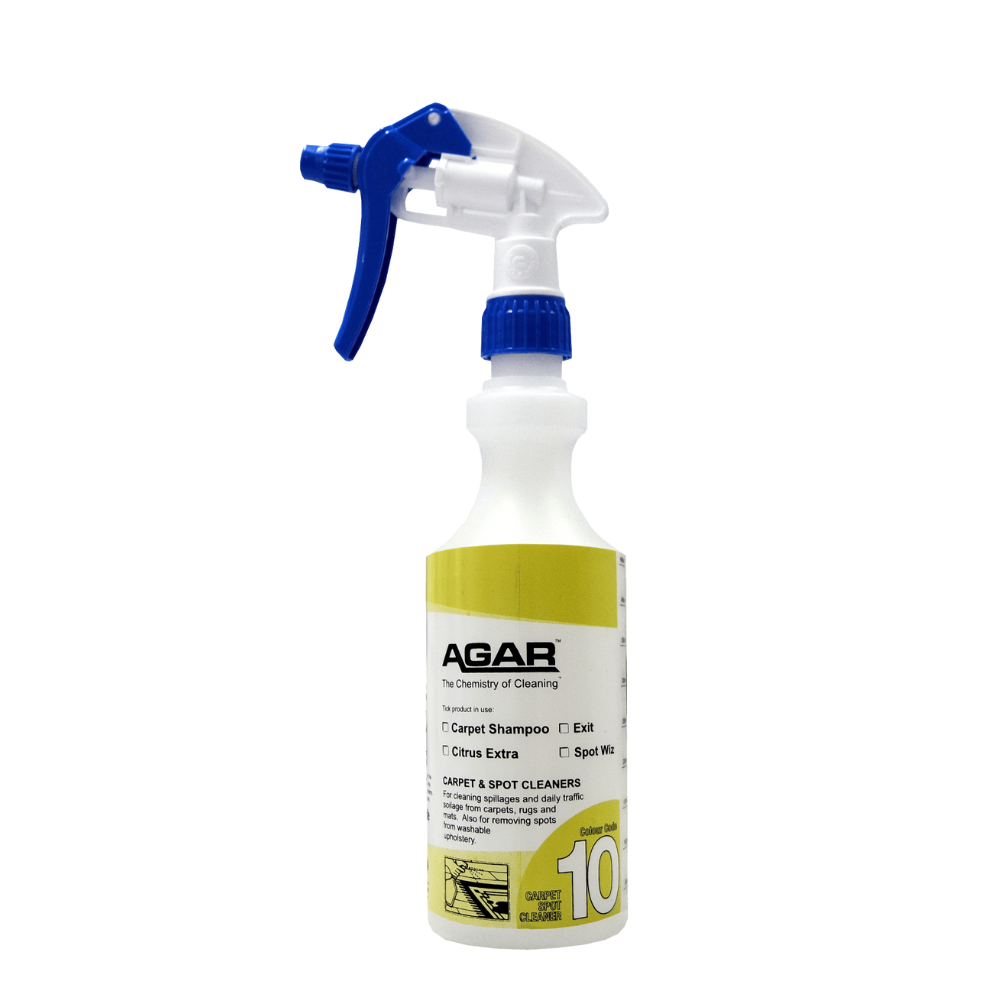
A commercial spotting kit has five or six products rather than twenty: a neutral spotter, an alkaline or grease spotter, a solvent, an acid rinse or rust remover, a reducing agent and a gum freeze or solvent. Each has a dilution, a dwell and a fibre it should not be used on.
The sequence matters as much as the product. Remove the excess, test, apply at the label dilution, allow the dwell, agitate gently, extract and rinse. Where the stain persists, repeat at the same dilution rather than escalating, because a stronger mix is more likely to damage the fibre than to remove the stain. Freshway Supplies stocks spotters and carpet chemistry, and this guide to removing coffee stains from carpet covers the most common commercial spill.

Control Moisture, Recovery and Drying Time
Most spot-cleaning complaints are moisture problems. Over-wetting drives soil into the backing, extends drying time and creates the conditions for wicking and odour. Use the minimum solution that lifts the stain, extract more than is applied, and dry the area with air movement rather than leaving it to evaporate.
Recovery depends on the tool and the operator. A small hand tool with strong vacuum recovery is better for a spot than a full-size wand, and dry passes after the wet pass remove the water the rinse added. On upholstery, the foam holds water the tool cannot reach, so less solution and more recovery are essential.
Drying is part of the method. Air movers across the area, a dehumidifier in a sealed room, and enough time before the area is released are what prevent the ring that appears the next day. Where the area cannot be left to dry, use a low-moisture method or defer the work.
Residue, Rinsing and Test Patches
Residue is the reason spots return. A spotter left in the pile attracts soil, and the area looks dirty again within days. Rinsing with clean water and extracting it removes the product as well as the stain, and it is the step most often skipped under time pressure.
Test patches are essential on unknown fibres and on any stain that needs a strong product. Apply to an inconspicuous area, allow the dwell, extract, and inspect after it dries. Colour movement, fibre distortion and ring marks often appear only after drying, so check the test the next day where possible.
Record the result of the test, the product and the dilution. On a site with repeated spills of the same kind, that record becomes the standard response and removes the guesswork from the next incident.
Measure the Result After the Carpet Dries
Inspect the spot after it dries, not while it is wet. Wet pile hides rings, wicking and colour change, and the client will see the area in daylight the next morning. Check for a ring at the edge, a change in texture, a colour difference and any remaining odour.
Where the spot returns, the cause is usually residue, wicking or incomplete removal. A second treatment at the same dilution, with better rinsing and drying, is more likely to succeed than a stronger product. Where a stain cannot be removed, report it rather than treating it until the fibre is damaged.
Record the outcome and the time taken. That record shows whether the spotting kit is adequate, whether the operators need training, and whether a spill type needs a specialist.
What to Record in the Approved Method
- Stain family and fibre: what the substance was, the carpet and the backing, and the product approved for it.
- Product and dilution: the spotter, the dose and the dwell used for each stain family.
- Moisture: the tool, the number of wet and dry passes, and the drying method.
- Test: the area tested, the result after drying and the date.
- Outcome: whether the spot was removed, reduced or reported, with the time taken.
That record turns spot cleaning into a method rather than a series of guesses, and it gives the next operator a starting point for the same spill.

Questions we get asked most
- What should I use to spot clean commercial carpet?
- Start with a neutral spotter and extraction for water-based stains, a solvent or degreaser for oil and grease, a cool-water enzyme product for protein, and a specialist product for ink or dye. The fibre decides which is safe, so test an inconspicuous area first.
- Why does a ring appear after spot cleaning?
- Usually wicking: moisture from the backing carries soil to the edge as it dries. Over-wetting and residue make it worse. Use less solution, extract more, rinse with clean water and dry with air movement.
- Can I use a steam cleaner on a carpet stain?
- Only where the fibre and the stain allow it. Heat can set protein stains and distort some fibres, and steam adds moisture that has to be recovered. For most spots, a spotter with controlled moisture and extraction is the safer first choice.
- What if the stain will not come out?
- Report it rather than escalating the chemistry. Some dyes, inks and substances permanently stain a fibre, and repeated treatment with stronger products damages the carpet. Record what was tried and recommend replacement or professional restoration.
Prevention: Reducing the Number of Spots
Spot cleaning is reactive, and the volume of reactive work depends on the site. Entrance matting, bin placement, a clear policy on food and drink in carpeted areas, and a quick response to spills all reduce the number of spots that reach the carpet.
The first response matters most. A spill blotted with an absorbent cloth and reported immediately is far easier to remove than one left until the end of the shift. Providing a small spill kit and a simple instruction to staff is cheaper than the spotting labour it prevents.
Where the same location produces repeated spills, the cause is usually the layout: a coffee point without a mat, a printer area without a bin, or a doorway without a walk-off zone. Fixing the cause is a facilities decision, and it belongs in the same conversation as the cleaning specification.
Conclusion
Identify the stain, the fibre and the age before choosing a product. Match the chemistry to the stain family, use the minimum moisture, extract more than you apply, rinse the residue and dry the area with air movement.
Then inspect after drying and record the result. That is what turns spot cleaning from a series of guesses into a method that protects the carpet and the client relationship.
Industry standards: IICRC S500 and Carpet and Rug Institute cleaning guidance. Slip and safety: WorkSafe Victoria, the Work Health and Safety Regulations 2011 and SafeWork NSW.
Compare spot cleaners, carpet chemistry and portable extractors in the Freshway carpet care range.