Vacuum Bags and Filters: How to Match Them to the Right Machine
Wrong filter, dead airflow. Match the bag and filter to the exact machine.
Shop now
Bags and filters are the most frequently reordered items in any commercial cleaning account and the ones most often ordered wrongly. The reason is that they are matched by model code rather than by brand.
Match by model, never by brand
Vacuum bags and filters are specific to a model or model series, not to a brand. A bag listed for one Karcher will not fit another, and the same applies across Nilfisk, Pacvac and the domestic brands. Read the model code before ordering, and check the compatibility list on the listing.
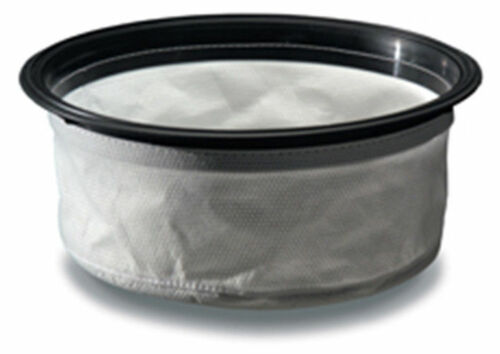
The practical consequence is that a site running three machine models needs three consumable lines, which is a reason to standardise a fleet on fewer models rather than a reason to buy a “universal” bag that fits nothing properly.
Prices are Freshway catalogue prices as at 16 September 2026 and are subject to change. Confirm the current price, and whether GST applies, before quoting.

Bags by machine family
| Product | Fits | Price |
|---|---|---|
Paper vacuum bags, 5 pack VP198 |
Electrolux, Karcher, Pullman, Volta and others | A$4.95 |
Kirby G3–G6 synthetic bags, 3 pack VP366S
|
Kirby G3 to G6 | A$5.80 |
Miele synthetic dust bags, 5 pack VP374S
|
Miele vacuum cleaners | A$5.85 |
Electrolux, Philips, Wertheim synthetic bags, 5 pack VP201S
|
Selected Electrolux, Philips and Wertheim models | A$6.00 |
Paper dust bags, 5 pack VP482
|
VAX, Kerrick, Piranha | A$6.00 |
Synthetic bags VP482S
|
VAX, Kerrick, Piranha | A$6.45 |
Ghibli T1 synthetic bags VP924S
|
Ghibli T1 backpack | A$23.95 |
| DeWalt 15 L wet and dry bags, 3 pack | DeWalt 15 L wet and dry vacuums | A$28.00 |
Note the price range. Generic-fit bags for domestic machines start under A$6 for a pack, while a commercial backpack bag is several times that. The difference is volume produced rather than quality, and it is worth knowing before assuming a commercial machine is expensive to run.
Paper, synthetic or cloth
| Paper | Synthetic | Cloth / SMS | |
|---|---|---|---|
| Filtration | Adequate for general dust | Better on fine dust | Reusable; filtration depends on weave |
| Wet use | No | No | Yes, with the correct configuration |
| Cost per use | Lowest | Low to moderate | Higher initially, lower over time if reused |
| Best for | General commercial cleaning | Fine dust and allergy-sensitive sites | High-volume commercial and wet pickup |
The honest guidance: paper for general commercial work, synthetic where fine dust or filtration matters, cloth or SMS where the machine is used heavily enough that reusable bags make sense. Reusable bags only save money where they are actually emptied and reused, which in practice they often are not.

Filters: pre-motor and post-motor
Every machine has two filtration stages and they perform different jobs. The pre-motor filter protects the motor and is usually washable; the post-motor filter governs what leaves the machine and is often HEPA. Replacing one does not restore the other, and the symptoms of each failing are different: a loaded pre-motor filter reduces suction, while a spent post-motor filter shows up as dust smell or visible emissions.
Cross-referencing an unknown bag
- Find the machine model code on the rating plate, not the serial number.
- Check the bag part number if the old bag has one printed on it.
- Measure the bag collar where no number is legible, and match it against the listing.
- Photograph the old bag next to a ruler if the identification is still uncertain.
Filtration classes and when they apply
Where a site specifies a dust class or a HEPA rating, the bag and filter have to match that class rather than merely fitting the machine. M-class and H-class machines use specific bags, and substituting a standard bag undermines the filtration specification the machine was bought to meet. Our filters and filter kits range covers both, and the hazardous dust vacuums range covers the classed machines.
Ordering and stockholding
Bags and filters are the highest-turnover consumables in most cleaning accounts, which makes them worth standardising rather than ordering reactively. Holding one spare pack per machine removes the downtime, and consolidating the number of machine models reduces the number of consumable lines a store has to carry.
Frequently asked questions
- How do I know which vacuum bag fits my machine?
- Match the machine model code against the compatibility list on the bag listing. Bag part numbers are printed on genuine bags, and where they are not legible the collar size is the next identifier to use.
- Are universal vacuum bags as good as model-specific ones?
- Generally no. A universal bag fits loosely, which allows dust to bypass the bag and load the filter. Model-specific bags seal properly, and the difference shows up in filter life and in how much dust escapes into the room.
- Do I need a bag at all in a commercial vacuum?
- For wet pickup, no — most machines use a different filter configuration and no bag. For dry pickup, bags are not strictly required on machines designed to run bagless, but running bagless on fine dust loads the cartridge filter faster.
- What is the difference between a pre-motor and a post-motor filter?
- The pre-motor filter protects the motor from dust and is usually washable. The post-motor filter governs what leaves the machine, and is often HEPA. Replacing one does not restore the other.
- How often should vacuum bags be changed?
- When they are noticeably full rather than to a fixed schedule, because loading depends on the material being collected. On fine dust, bags fill faster relative to their visual appearance, so they should be changed earlier than the fill line suggests.
References
Cannot identify a bag or filter?
Send us the machine model or a photo of the old bag next to a ruler, and we will identify it and confirm stock before you order. See dust bags or ask our team.
This article is one section of the commercial vacuum guide, which covers machine types, filtration, consumables and repair.