Polished Concrete and Epoxy: Scrubber Settings Soft Enough
Soft pads, neutral chemical and low pressure keep polished floors glossy.
Shop now
The polished concrete floors that dull fastest are often the ones cleaned the hardest. A new operator sees a grey film in a showroom aisle, fits the most aggressive pad on the shelf, winds the deck pressure up and adds a squirt of something "stronger". The next morning the film is gone, and so is part of the gloss.
Polished concrete and epoxy coatings reward a light touch. This guide is written from the operator's side of the handlebar: what actually harms these floors, which pads, brushes and chemicals stay on the safe side, how to set pressure and speed, and how to troubleshoot a floor that looks worse after scrubbing than before.
Floor scrubber polished concrete: the short answer
For polished concrete and epoxy, fit a white or similar low-abrasion pad, or soft brushes on textured epoxy. Use a pH-neutral, low-foam detergent at label dilution and the lowest deck pressure that still lifts the soil. Test a patch first. Damage usually comes from acid, abrasive pads or excess pressure, not the machine itself.
That is the whole method in two sentences. The rest of this guide covers why each part matters, and what to change when the result is streaky, dull or slippery.
Surface risks: what actually damages these floors
Polished concrete and epoxy fail in different ways, so it helps to know which one you are standing on.
- Grit. Sand and fine dust act like sandpaper underfoot and under a pad. Sydney polishing contractor Diagrind puts routine dry cleaning first for this reason, noting that daily sweeping or dust mopping removes grit before it abrades the surface, and that commercial buildings may need this several times a day.
- Acid. Acidic products can react with the calcium compounds in concrete. Diagrind calls this etching: a dull patch or loss of gloss that cannot simply be cleaned away and may need re-polishing.
- Abrasion from the wrong pad or brush. On epoxy, Sydney coating applicator TLC Epoxy Coatings advises against abrasive cleansers and suggests a soft bristle brush, because hard bristles act like sandpaper.
- Residue and slip. Overdosed detergent leaves a film that attracts dirt and can make a smooth floor slippery. SafeWork NSW's slips, trips and falls guidance lists slippery surfaces caused by cleaning products or methods as a hazard, and notes that sealed interior concrete can be more slippery.
Notice what is missing from that list: the scrubber itself. A machine with a sensible pad, neutral chemical and modest pressure is gentler and more consistent than a mop and bucket.
Pad and brush options that stay soft
Start with the pad, because it is the part touching the floor. The Mirafloor polished concrete maintenance guide from Arrunga Surface Solutions says that during normal cleaning only white pads with low abrasion should be used on the auto scrubber or buffer. It treats diamond-impregnated pads as a periodic maintenance option, to be discussed with Arrunga first.
Pad colour codes are not universal, so check the pad maker's chart rather than assuming every brand's white or red means the same thing. As a rule of thumb for daily work:
- Smooth polished concrete: white or equivalent low-abrasion pad on a disc deck.
- Smooth epoxy: low-abrasion pad, or soft brush if the coating supplier prefers it.
- Textured or anti-slip epoxy: soft poly brushes, which reach into texture that a flat pad tends to ride over. TLC specifies soft poly brushes with a pH-neutral cleaner for its periodic mechanical scrub.
- Periodic gloss restoration: diamond-impregnated pads, only when the installer recommends them.
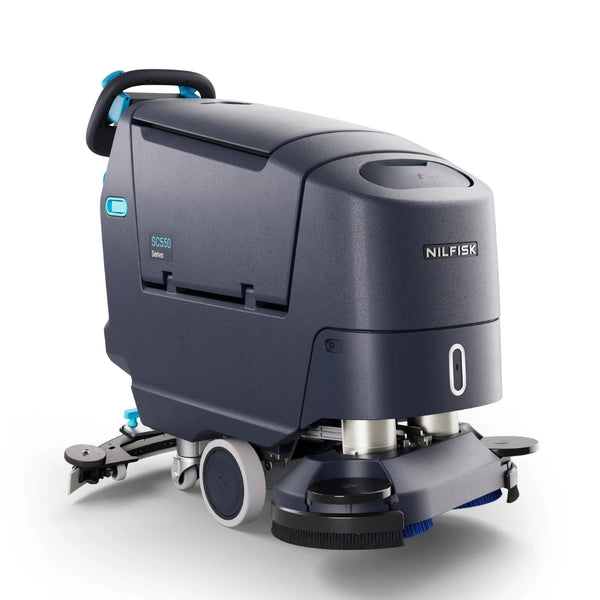
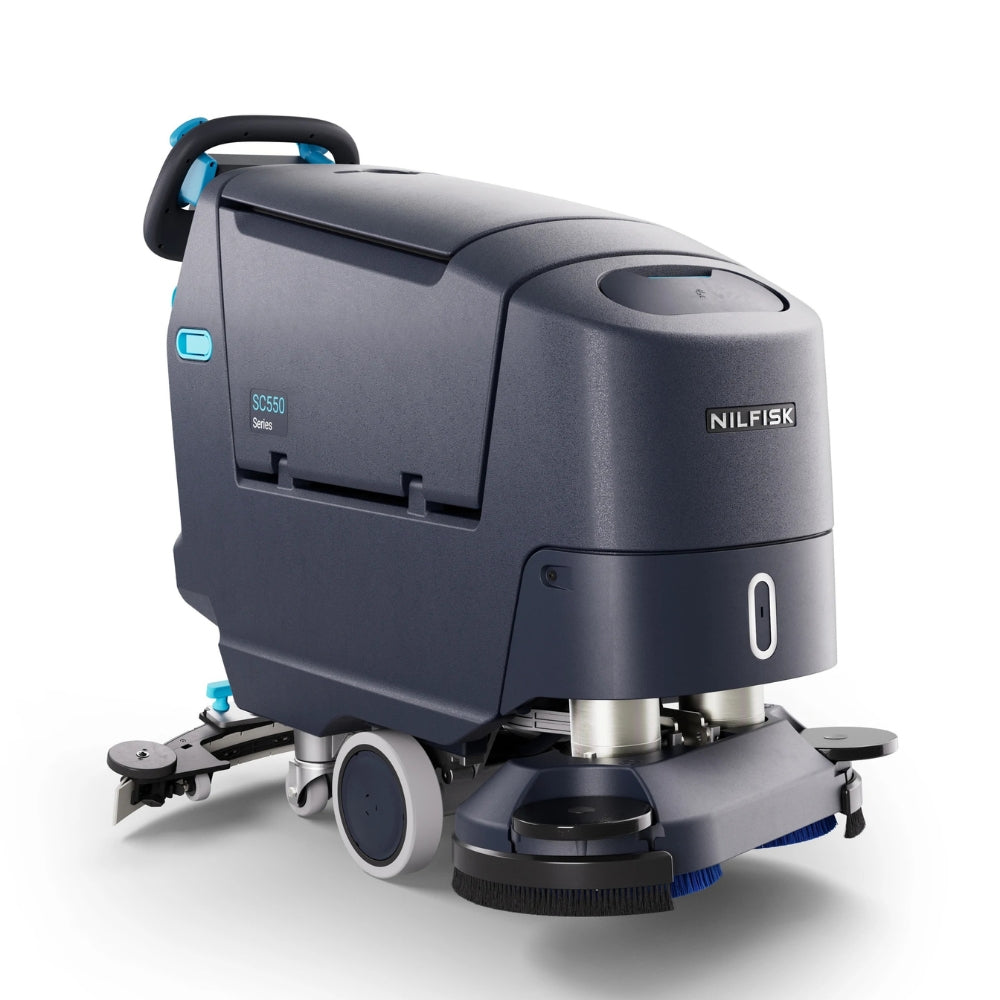
The deck type matters as well. Freshway's listing for the Nilfisk SC550 D 61 describes its twin 305 mm disc brushes at 120 RPM as optimised for smooth hard floors like polished concrete and vinyl, while the cylindrical SC550 CYL 51 at 600 RPM is aimed at textured floors, deep grout lines and safety flooring. Our guide to disc vs cylindrical scrub decks covers that choice in more depth.

Chemical pH: neutral first, everything else by exception
Every polished concrete and epoxy source we checked lands in the same place. Diagrind recommends only pH-neutral cleaning products and lists acidic cleaners, bleach, vinegar and ammonia among the things to avoid. Traralgon contractor LV Concrete Polishing goes further, warning that bleach or acidic cleaners will damage the sealer and etch your floor. TLC says not to use acid-based cleaners on epoxy, and to dilute strong alkali cleaners as the label directs rather than using them concentrated.
In practice, for an operator, that means:
- Use a pH-neutral, low-foam floor detergent as the default in the solution tank.
- Dose at label dilution. More chemical does not mean more clean; it means more residue.
- Keep degreasers for spot work in kitchens or loading docks, and only where the floor's installer or coating supplier has approved them.
- Never add descalers, acidic toilet cleaners or vinegar to a scrubber tank used on these floors.
The scrubber's own dosing can help. Several Freshway machines use speed-linked or adjustable dosing, and our guide to solution flow and chemical dosing explains how to set it so the floor gets enough liquid without flooding.
Pressure and speed: reading the listed figures
Many scrubber listings quote a maximum brush pressure in kilograms and a brush speed in RPM. On polished concrete and epoxy, treat the maximum as a ceiling you rarely need. The table below shows what Freshway's own listings state for some common machines.
| Model (Freshway listing) | Deck and width | Listed brush speed | Listed brush or contact pressure |
|---|---|---|---|
| Nilfisk SC550 D 61 | Twin 305 mm discs, 610 mm | 120 RPM | Not listed |
| Nilfisk SC550 CYL 51 | Cylindrical, 508 mm | 600 RPM | Not listed |
| Nilfisk SC500 | 510 mm scrub width | 180 RPM | Not listed |
| Nilfisk SC800 71 | Twin 355 mm discs, 710 mm | 270 RPM | Up to 77 kg |
| Nilfisk SC800 71C | Cylindrical, 710 mm | 840 RPM | Up to 43 kg |
| Karcher BR 40/10 C Anniversary Edition | Twin rollers, 400 mm | 1100 RPM | Adjustable, up to 30 kg |
Two practical points. First, the SC800 71's "up to 77 kg" is pitched at compacted grime on raw, sealed industrial concrete, which is a very different job from a maintenance pass on a polished showroom. Start at the lowest setting and only step up if soil is left behind. Second, figures from different brands are not always measured the same way, so compare within a brand where possible.

Test patches before the first full run
A test patch takes ten minutes and protects a floor that may have cost far more than the machine. Do one whenever the site, pad, brush or chemical changes.
- Pick a low-visibility area with the same finish as the main floor, such as behind a counter or inside a store room.
- Dry clean first. Sweep or dust mop so grit is not dragged under the pad.
- Run one pass at the lowest pressure with your chosen pad and pH-neutral detergent.
- Let it dry fully, then look at it low and at an angle against a light source. Check for haze, swirl marks or a duller patch.
- Step up pressure or pad aggressiveness one notch at a time only if soil remains.
New epoxy needs patience as well. TLC's guidance allows seven days after the finish is applied before any wet cleaning, and longer in cold conditions for full chemical loading. Ask the installer for the exact figure for that coating.
Spec-sheet fields to check on a floor scrubber
If you are choosing a machine for a site with polished concrete or epoxy, these are the fields worth reading on the product page:
- Deck type: disc for smooth finishes; cylindrical for textured or grouted floors.
- Brush pressure adjustment: a range you can turn down matters more than a high maximum.
- Brush speed: listed in RPM; compare like with like.
- Solution flow control: adjustable or speed-linked dosing reduces residue.
- Squeegee and recovery: clean pick-up is what keeps a smooth sealed floor from staying slippery.
- Pad driver availability: check that a pad driver suits the deck if you plan to run pads rather than brushes.
Troubleshooting common mistakes
When a polished or epoxy floor looks wrong after scrubbing, the symptom usually points to the cause.
| What you see | Likely cause | What to change |
|---|---|---|
| Dull patches or loss of gloss | Acidic chemical, or a pad that is too abrasive | Switch to pH-neutral detergent and a low-abrasion pad; ask the installer about restoring gloss |
| Fine swirl marks | Grit trapped under the pad, or pressure set too high | Dry clean first, rinse or flip the pad, drop pressure |
| Sticky film or streaks | Detergent overdosed or not recovered | Dose to label, reduce solution flow, check squeegee blades |
| Floor slippery after drying | Residue from wrong chemical or overdosing | Rinse pass with clean water, then correct the dilution |
| Soil left in texture of anti-slip epoxy | Pad skating over the surface | Change to soft poly brushes and allow dwell time |
One more habit to fix: tipping recovery water into the nearest outside drain. The NSW EPA states that cleaning and washing runoff, including from work floors, must not enter any stormwater drains. Empty the tank into the site's designated sewer point.
Checklist for operators and site supervisors
- Floor type confirmed: polished concrete, smooth epoxy or textured epoxy.
- Installer or coating supplier's cleaning advice on file.
- Dry clean completed before any wet pass.
- Low-abrasion pad or soft brush fitted, matched to the deck.
- pH-neutral, low-foam detergent dosed at label rate.
- Deck pressure at the lowest setting that removes the soil.
- Test patch checked after drying when anything changes.
- Wet-floor signs out until the floor is dry; recovery water emptied to sewer, not stormwater.
Myth-busting FAQ
Isn't a harder pad faster on polished concrete?
Not for routine cleaning. An abrasive pad can dull the gloss. Polished concrete installers recommend low-abrasion white pads for normal scrubbing.
Can I use a degreaser if the floor is really dirty?
Only where the installer approves it. Default to a pH-neutral detergent and use stronger products as spot treatments, never as the daily mix.
Does a scrubber damage epoxy floors?
Not when set up correctly. Soft brushes or low-abrasion pads, neutral chemical and modest pressure are gentler than scrubbing by hand.
Is maximum brush pressure the setting to use?
No. Listed figures are maximums. Start at the lowest pressure and step up only if soil is left behind after a test pass.
Next steps with Freshway
Compare disc and cylindrical machines, deck widths and listed brush pressures in our floor scrubbers collection, or widen the search in commercial cleaning machines. For pH-neutral, low-foam detergents, browse cleaning chemicals and check each product's label and safety data sheet. If a floor needs more than maintenance, our commercial floor stripping guide explains when a heavier process is appropriate. Freshway is based in Arncliffe, Sydney, with Australia-wide delivery; check each product page for current pricing and full specifications.