Solution Flow and Chemical Dosing on Commercial Scrubbers
If the floor feels tacky the next morning, check the dose before the dirt.
Shop now
Six o'clock on a Tuesday, and the night crew's work looks perfect from the doorway. Then the first delivery driver walks across the vinyl and his boots make a faint tacky sound. By mid-morning the main aisle has dull grey footprints, and the day cleaner is back out with a mop, trying to rinse off what the scrubber put down eight hours earlier.
Nothing was wrong with the machine. The problem was the solution: too much detergent, delivered at a flow rate nobody had checked. This guide works backwards from the symptoms operators actually see to the controls on the machine that cause them, and finishes with a checklist a site supervisor can sign off.
Floor scrubber chemical dosing: the short answer
Floor scrubber chemical dosing works when the machine, not the operator, controls how much solution reaches the floor. Use the lowest flow that keeps the brush wet, mix to the label, and match flow to travel speed. Speed-linked or on-board dosing systems help. A tacky, streaky or slippery floor usually means overdosing, not dirt.
Dilution ratios on the drum are only half the story. If you need the mixing side, Freshway's commercial chemical dilution guide covers it. This article is about what happens after the solution goes into the tank.
Why overdosing happens on scrubbers
Most overdosing is not careless. It comes from three habits that feel sensible on the night.
- "A bit extra for the dirty bits." An operator adds a splash more concentrate to the tank, so every square metre gets the heavy-traffic mix.
- Flow set for the worst spot. The flow dial is turned up for one greasy corner and never turned back down.
- Slow passes at full flow. On a machine where flow does not follow speed, every slow turn, stop and edge pass lays down more solution per square metre than the straight runs.
The table below links what you see on the floor to the most likely cause and the first thing to check.
| Symptom | Likely cause | First check |
|---|---|---|
| Floor feels tacky once dry | Too much concentrate in the tank | Mixing method and measuring jug at the fill point |
| Streaks or a dull film on vinyl | Detergent residue left behind | Flow setting and squeegee pick-up |
| Puddles at turns and stops | Flow not reduced when the machine slows | Whether the machine links flow to speed |
| Foam in the recovery tank | Overdosing, or a high-foaming product | Product label and dose rate |
| Solution runs out well before the battery | Flow set higher than the soil needs | Flow dial position against the site method |
Flow controls: gravity, pump and speed-linked dosing
How a machine meters solution decides how much the operator can get wrong. Freshway's listings show three broad approaches.
Gravity feed. The Hako Wizzard W34N is listed as a basic no-pump model that relies on gravity feed from a 1.7-litre tank. Simple and low-maintenance, but flow depends on the valve setting, so the operator's habits matter.
Pumped delivery. The Hako Wizzard W44P is listed with an active water pump that delivers solution from a 4-litre tank, which Freshway describes as giving more consistent delivery than gravity-fed models.
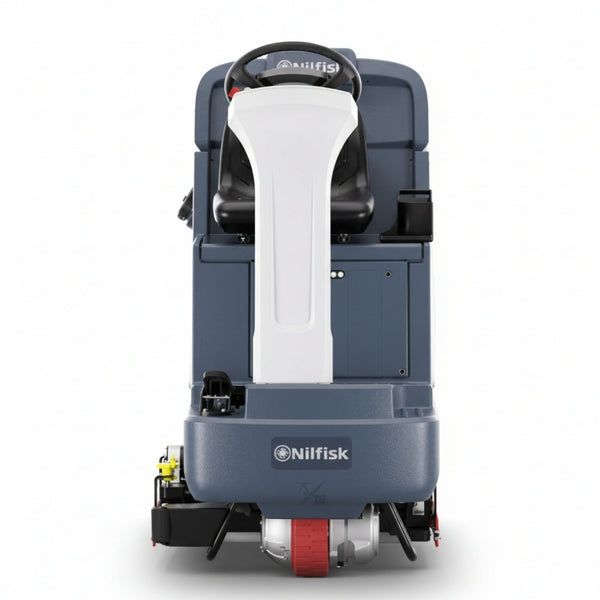
Speed-linked flow. The Nilfisk SC500 is listed with SmartFlow, which links water and detergent flow to walking speed. The Nilfisk SC6000 910C listing describes the same idea from the other side: flow drops when the operator slows for a turn, which prevents puddles. That is exactly the puddles-at-turns symptom in the table above.

On-board dosing: when the chemical never goes in the tank
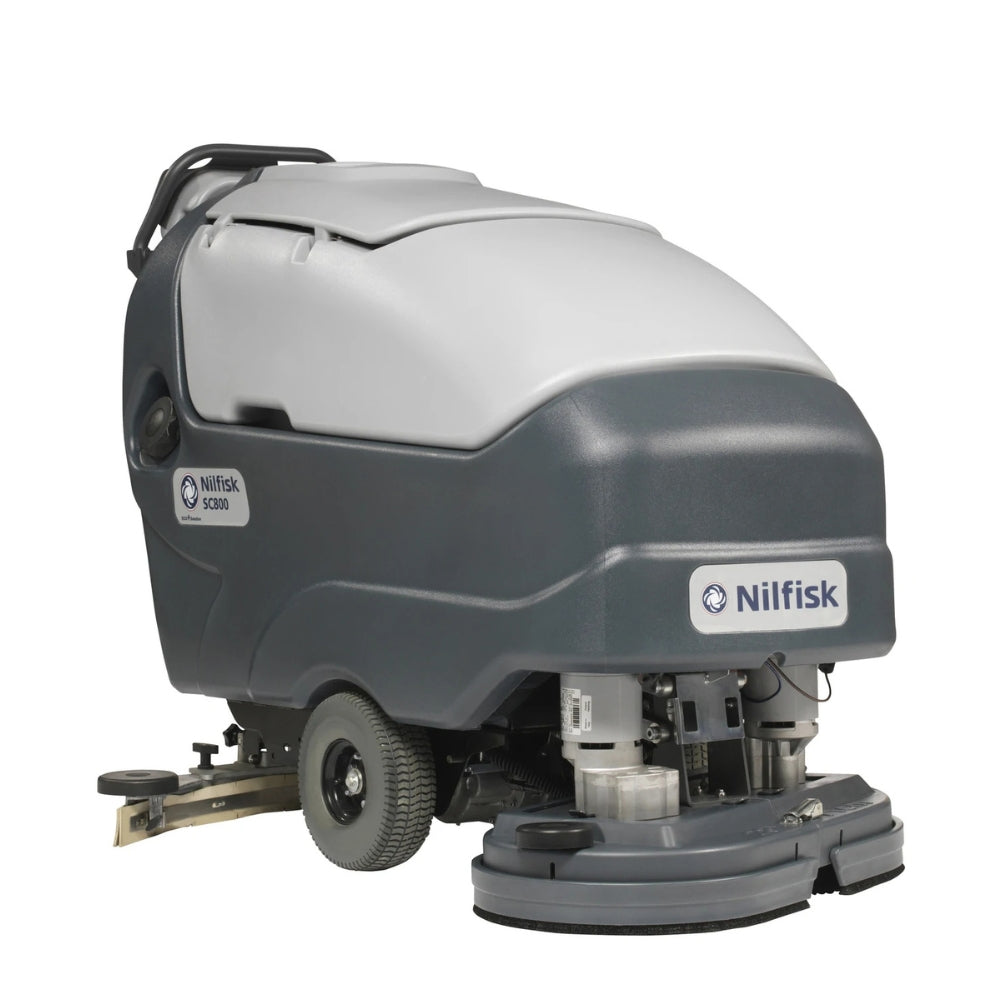
The next step up keeps concentrate out of the solution tank altogether. The Nilfisk SC800 is listed with the Ecoflex detergent system, which Freshway describes as mixing the chemical at the brush head and letting the operator switch between plain water and detergent at the push of a button, with a boost for isolated heavy spills.
For a supervisor, that changes the problem. The tank holds water only, so nobody can "add a bit extra". Light soil can be scrubbed with water alone, and the heavy dose goes only where the operator presses the button. The SC800 pairs this with 95-litre solution and recovery tanks and a traction drive listed up to 5.8 km/h, so it suits long runs in retail centres and warehouses.

Chemical types and what the machine can take
A scrubber is not a mop bucket. Whatever goes in the solution tank also ends up in the recovery tank, through the vacuum system and down the drain, so the product has to suit the machine as well as the floor.
- Check the machine's manual first. Many scrubber manuals call for low-foam products, because foam in the recovery tank can be drawn towards the vacuum motor.
- Read the label and safety data sheet. SafeWork NSW lists cleaners alongside paints and fuels among the hazardous chemicals used in workplaces, and describes the GHS labelling and safety data system. Freshway's guide on how to read a safety data sheet walks through the sections operators need.
- Choose the milder option where it works. WorkSafe Victoria's cleaning injury hotspots page advises using a less harmful product or process where a substance cannot be eliminated.
Freshway's cleaning chemicals range lists floor and general-purpose products with their own label directions. Match each one to the scrubber's manual before it goes near the tank.
Residues and slip: what a sticky floor is telling you
Overdosing is a safety issue, not just a finish issue. SafeWork NSW's slips, trips and falls guidance lists slippery floor surfaces resulting from cleaning products or methods as a hazard, and its housekeeping checklist asks directly whether there is an excessive residue of detergent and whether employees have to walk on floors wet from washing.
The same page notes that vinyl is slippery when wet, particularly if polished, and terrazzo can be slippery when excess polish is used. Those are the floors where a residue film shows first. WorkSafe Victoria's slips, trips and falls hub names wet and slippery floors among the most common causes of slips across workplaces.
If a floor feels sticky the morning after, run a test strip: scrub one lane with water only and compare it with the next lane after it dries. If the water-only lane looks and feels better, the dose is the problem.
Cost impact: where the extra detergent goes
Every millilitre of surplus concentrate is paid for three times: once in the drum, once in the extra rinse passes needed to remove it, and once in the recovery water that leaves the site.
Freshway's listings put numbers on the savings controlled flow can make. The SC500 page states SmartFlow saves up to 50% on water and chemicals. The Nilfisk SC550 page states its Ecoflex and SmartFlow systems reduce water use by up to 40% and detergent use by 60% compared with traditional models. Treat these as upper-end brand claims and test them against your own refill log.
Recovery water also has to go somewhere. Sydney Water's commercial trade wastewater page says businesses must meet certain requirements before discharging wastewater into its system. The NSW EPA's "the drain is just for rain" guidance says washing runoff, including from work floors, must not enter stormwater drains. Less chemical in means less to manage on the way out.
Spec features to check before you buy
When comparing machines in Freshway's floor scrubbers collection, look for these dosing-related details on each listing:
- Feed type: gravity, pump or speed-linked flow.
- Detergent system: chemical mixed in the tank, or dosed on board like Ecoflex.
- Water-only mode: a quick switch for light soil.
- Setting locks: the Nilfisk SC2000 53B listing describes a supervisor key that locks water flow settings, and the SC550 lists personalised PIN access and smart presets.
- Solution tank size: a bigger tank changes refill frequency, not dose rate.
Training and sign-off
A machine with locked presets still needs an operator who knows why the settings are there. Keep training short and practical:
- Show the fill point, the measuring jug and the label dose for the site's product.
- Set the flow for the site's normal soil, then lock it if the machine allows.
- Demonstrate the test strip: water-only lane against dosed lane.
- Show the emptying point for recovery water, which must be to sewer.
- Have the operator run one full tank under supervision and sign the method sheet.
Checklist for site supervisors
- One product per floor type, with the label and safety data sheet at the fill point.
- Measuring jug or dispenser at the tap. No free pouring.
- Flow setting written on the method sheet, and locked where possible.
- Monthly water-only test strip on each main floor type.
- Recovery tank checked for foam at the end of each shift.
- Refill log kept, so a jump in chemical use shows up quickly.
- Wet-floor signs out until the floor is dry.
Frequently asked questions
Does more detergent clean better?
No. Past the label dose, extra detergent tends to stay on the floor as a tacky or slippery film.
Can I scrub with water only?
Often, for light soil. Machines with a water-only mode, such as the Nilfisk SC800 with Ecoflex, make this a one-button choice.
Why does my floor puddle at the turns?
Flow stays the same while the machine slows down. Speed-linked flow, such as Nilfisk SmartFlow, reduces flow as the machine slows.
Can I use any floor cleaner in a scrubber?
Check the scrubber's manual first. Many manuals call for low-foam products, and the label and safety data sheet still apply.
Next steps with Freshway
Start with the symptom table on your own floors, then compare dosing systems across the floor scrubbers range and the wider commercial cleaning machines collection. Check each product page for current pricing and full specifications.