Makita Cordless Pruning Shears: Is the DUP362Z Right for Your Pruning Kit?
The DUP362Z skin is 0.8 kg in the hand, but you still need two 18V LXT batteries.
Shop now
Last updated: 21 November 2026
The handheld DUP362Z shear is listed at 0.8 kg. That number is not the weight of a complete working kit. On the Freshway product page fetched on 21 November 2026, Makita cordless pruning shears in this skin still need two 18V LXT batteries in a backpack harness, plus a charger, before they will cut.
Which Makita cordless pruning shears suit your work and battery system?
Makita cordless pruning shears in the DUP362Z listing are a 36 V (18 V x 2 LXT) skin, not a ready-to-cut kit. The Freshway page on 21 November 2026 names SKU DUP362Z and a 0.8 kg shear, with two batteries in a backpack harness. Whether that format fits depends on the wood you cut and the batteries you hold.
The same listing describes the tool for viticulture, orchard work and large-scale landscaping, and states a maximum cutting capacity of 33 mm on living, green branches, with 250 N of cutting torque and a 54 mm maximum blade opening. Those figures belong to this SKU because they appear on the product page fetched that day; they should not be mixed with 12 V or single-18 V pruning shears, or with generic “fits Makita 18 V battery” tools that appear in search results.
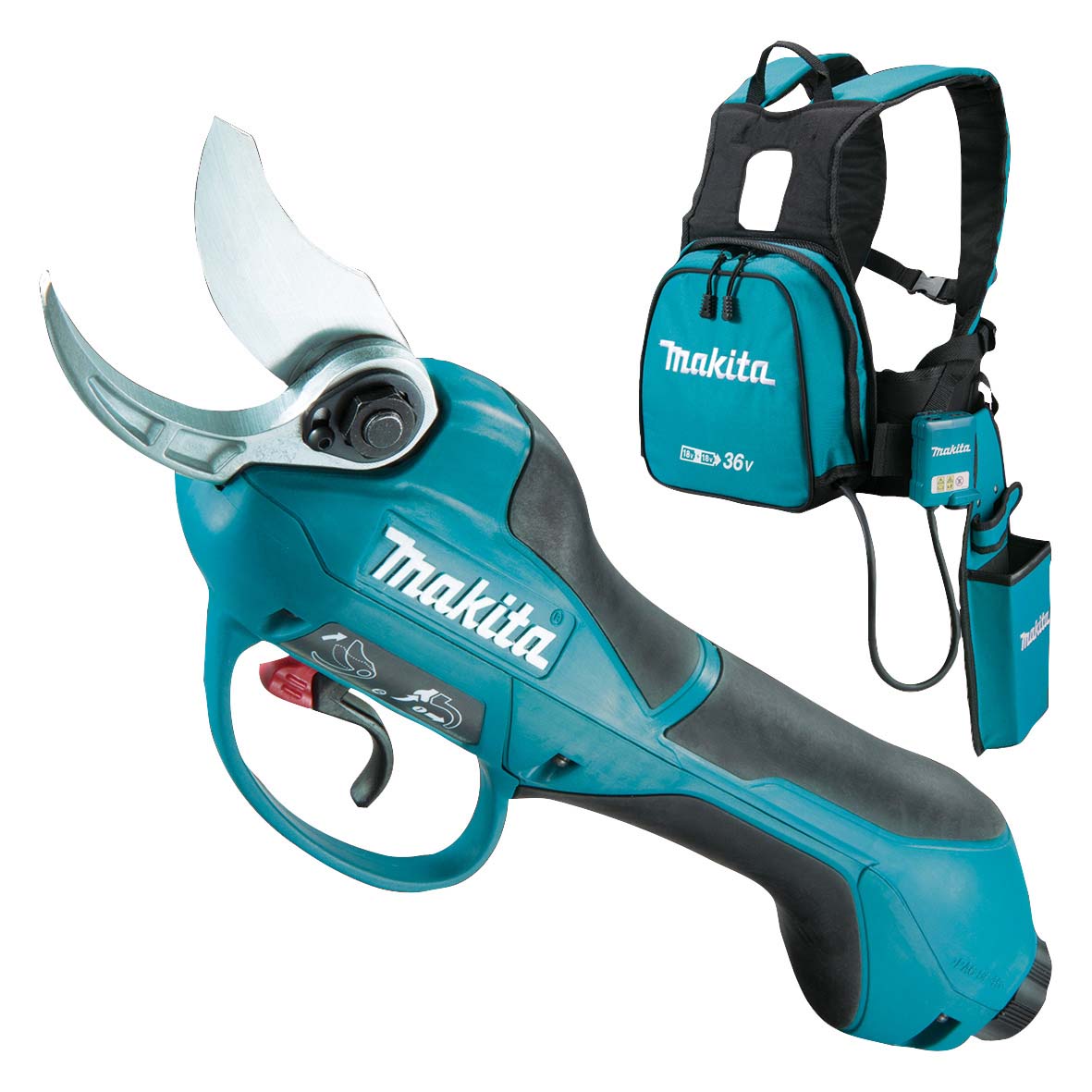
If your crew already standardises on the 18 V LXT platform for cleaning or outdoor tools, start with the site guide to Makita cleaning and outdoor equipment on one battery platform, then come back to this skin and check whether two spare 18 V packs and a charger are actually in the van.
What does “skin only” include, and what must you add?
Skin only is the first buying trap on this listing.
The product page states that the package includes the pruning shears, the battery backpack harness and connection cables, and that it does not include the two 18 V batteries or the charger. Those have to be bought separately. The page also says the DUP362Z requires exactly two Makita 18 V LXT batteries, housed in the backpack to provide a combined 36 V. A single pack will not meet that requirement.
| Item | In the DUP362Z skin? | What the product page says |
|---|---|---|
| Pruning shears (SKU DUP362Z) | Yes | Handheld shear listed at 0.8 kg, 54 mm maximum blade opening. |
| Battery backpack harness and connection cables | Yes | The kit includes the cable that connects the shears to the harness. |
| Two Makita 18 V LXT batteries | No | Required; not in the skin. The runtime example on the page uses two fully charged 5.0 Ah packs. |
| Charger | No | Must be purchased separately. |
Current dealer pricing for the skin, and for batteries, should be taken from the live product pages on the day you order, not from this article.
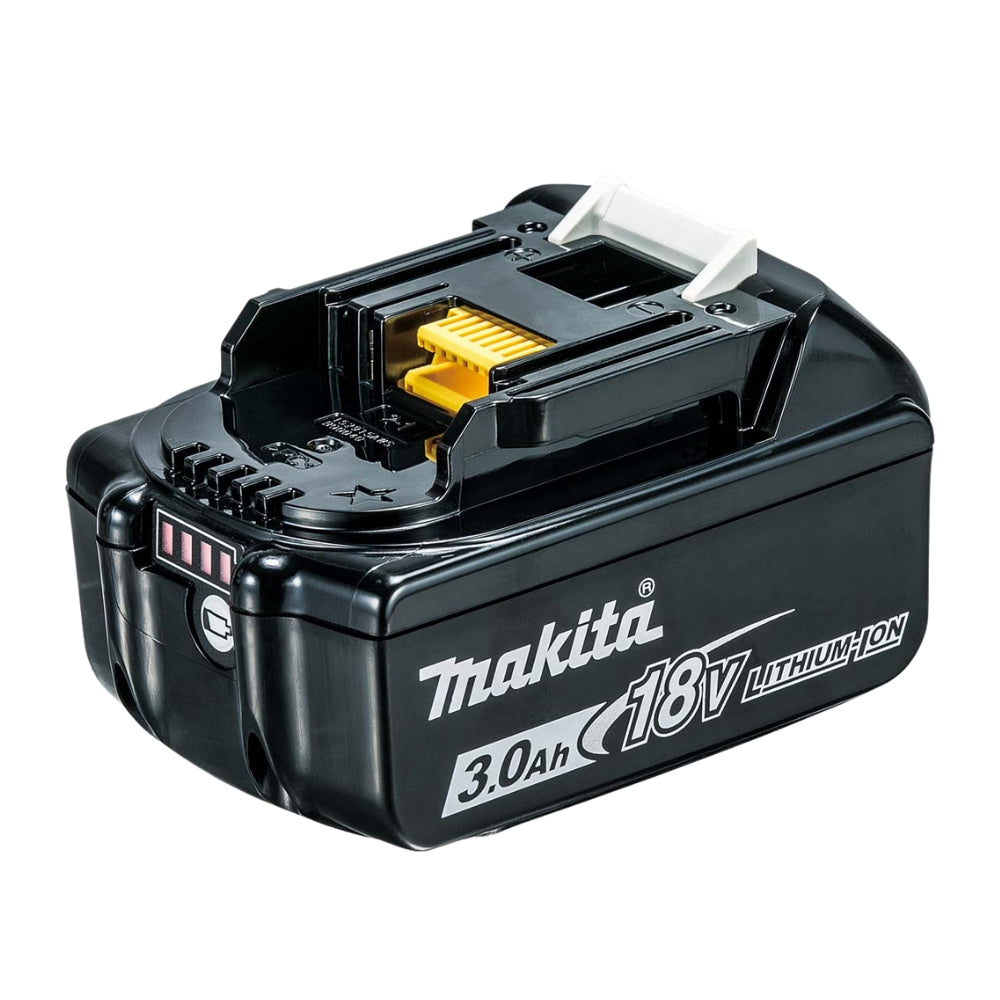
The store also lists Makita 18 V LXT batteries; the linked listing is titled as covering 3.0 Ah to 6.0 Ah options. Confirm the exact capacity and quantity (two packs) on the quote. This article does not treat any one amp-hour rating as the only correct match.
Which pruning tasks suit these powered shears?
The listing points the DUP362Z at grapevines, fruit trees, thick woody shrubs and repetitive commercial pruning.
It also states that the shears are primarily engineered to cut living, green wood, and that cutting thick, rock-hard dead wood places excessive strain on the motor and blades. That is a limit to plan around, not a marketing extra. If a block of the day’s work is dry, dead timber, this skin is the wrong planning assumption unless you have another method for that wood. For vineyard or orchard days that stay on green wood within 33 mm, the listed format — light shear in the hand, batteries on the back — is the one the page is written for.
How should branch size be checked against the 33 mm capacity?
Measure the wood, do not guess from the blade opening.
The official-to-this-listing maximum cutting capacity is 33 mm, and the maximum blade opening is 54 mm. Opening width is not the same as cutting capacity. The page describes a two-stage electronic blade-opening adjustment so that, on smaller vines or twigs, a narrower opening shortens blade travel and increases cutting speed. Use that adjustment for small wood; do not treat the 54 mm opening as permission to push past 33 mm, or to switch from green wood to hard dead wood.
Walk a typical row or bed and measure the branches you actually cut at the point the blades would close. If a regular share of cuts sits on or over 33 mm, or on dry timber, record that on the quote and ask whether this SKU is still the tool being supplied.
How do the two 18 V batteries and charger affect the purchase?
The skin does not run until two 18 V LXT packs and a charger are on hand.
If the crew already uses 18 V LXT batteries on other tools, count whether two packs can be spared for the harness for a full shift, or whether more packs are needed. The product page’s runtime claim is that, with two fully charged 5.0 Ah 18 V Makita batteries, the unit can perform tens of thousands of cuts on standard-sized branches and last a full working day for most operators. That wording is the listing’s claim, fetched on 21 November 2026, not a field test in this article. Actual runtime will move with amp-hour rating, wood hardness, cut diameter and how often the blades are opened fully.
How does the backpack harness change the weight you hold?
The 0.8 kg figure is the shear, not the kit on your shoulders.
The product page lists the shear weight as 0.8 kg and the total kit weight with batteries as approximately 3.3 kg. The difference is the backpack and packs. The listing says the harness houses the two 18 V batteries on the user’s back so the hand tool stays light and reduces wrist fatigue, and that the heavy-duty cable from shears to harness is included. Before you buy, try the harness fit, cable length and how you move between trees or vines. A harness that does not fit the operator is still part of the kit you are paying to use.
What blade care and replacement parts should you budget for?
The blades are consumable.
The Freshway page states that the forged steel blades can be sharpened or entirely replaced when they become dull from heavy commercial use. Budget for that as a running cost, and ask the seller for the official blade part number that matches DUP362Z, not a generic 18 V shear blade. The same page describes progressive trigger control, where the blade follows the trigger for work in tight spaces. That feature does not remove the need for sharp blades or for staying on green wood within the 33 mm figure.
If the crew already sends hedge cutters and outdoor tools out for workshop checks, the site’s note on what is included in a hedger service is a useful reminder to book assessment against a named model, not a lookalike.
What should you check before a pruning shift?
Check the batteries, the cable and the wood, then the operator’s fit.
Confirm two charged Makita 18 V LXT packs are seated in the harness, the connection cable is undamaged, the blade opening is set for the wood in front of you, and the first cuts are on living, green branches inside 33 mm. WorkSafe Victoria’s horticulture guidance lists pruning among manual-handling tasks and says mechanical aids and equipment should be used and maintained in accordance with manufacturer specifications, with work at a comfortable, sustainable pace. WorkSafe Victoria’s horticulture page also covers induction and other farm hazards; apply the rules that apply on your site and in your state or territory. WorkSafe Queensland’s hazardous manual tasks guidance and WorkSafe WA’s manual tasks page discuss the same class of sprain and strain risk. This article is not a risk assessment.
How should you read a quote for a complete crew kit?
Ask the quote to list the skin and the missing pieces separately.
The written quote should state the model as DUP362Z, that it is a skin only, that the backpack harness and cables are included, and that two Makita 18 V LXT batteries and a charger are either already owned or added as line items. Do not paste a complete-kit price together from memory. Take current prices from the product pages on the day of the quote. If a seller offers a 12 V pruning shear or a generic “for Makita 18 V” tool in place of DUP362Z, treat that as a different machine and do not approve the substitution without a written change of model.
Questions about Makita cordless pruning shears and the DUP362Z
- What does “skin only” mean on the Makita DUP362Z?
- On the Freshway product page fetched on 21 November 2026, skin only means the package includes the pruning shears, the battery backpack harness and connection cables, but does not include the two 18 V batteries or the charger. Source: Freshway DUP362Z product page, 21 November 2026.
- How many batteries does the DUP362Z need?
- The same page states that the DUP362Z requires exactly two Makita 18 V LXT batteries, housed in the backpack to provide a combined 36 V. Source: Freshway DUP362Z product page, 21 November 2026.
- What is the maximum branch thickness the DUP362Z can cut?
- The product page lists a maximum cutting capacity of 33 mm and says the shears are designed to cut living, green branches up to that diameter. The maximum blade opening is listed separately as 54 mm. Source: Freshway DUP362Z product page, 21 November 2026.
- Can the DUP362Z cut dead, dry wood?
- The product page says cordless pruning shears are primarily engineered to cut living, green wood, and that cutting thick, rock-hard dead wood places excessive strain on the motor and blades. Source: Freshway DUP362Z product page, 21 November 2026.