Microfibre and Chemistry Pairing for Commercial Cleaning Results
Match cloth colour, labelled chemistry and laundry so pairing does the work.
Shop now
A supervisor in a Sydney office tower watched a red cloth come back from the laundry smelling of fabric softener and leaving streaks on glass. The cleaner had used the same bottle on every surface. The failure was pairing, not effort: the cloth, the chemistry and the laundry cycle were working against each other.
Why cloth choice changes chemical performance
Microfibre cloth chemical pairing commercial work succeeds when the cloth, the labelled chemistry and the laundry cycle match the surface. Use a colour-coded cloth with the cleaner or disinfectant for that zone, skip fabric softener, and keep labelled contact times. Mixing every bottle onto one cloth wastes the dose.
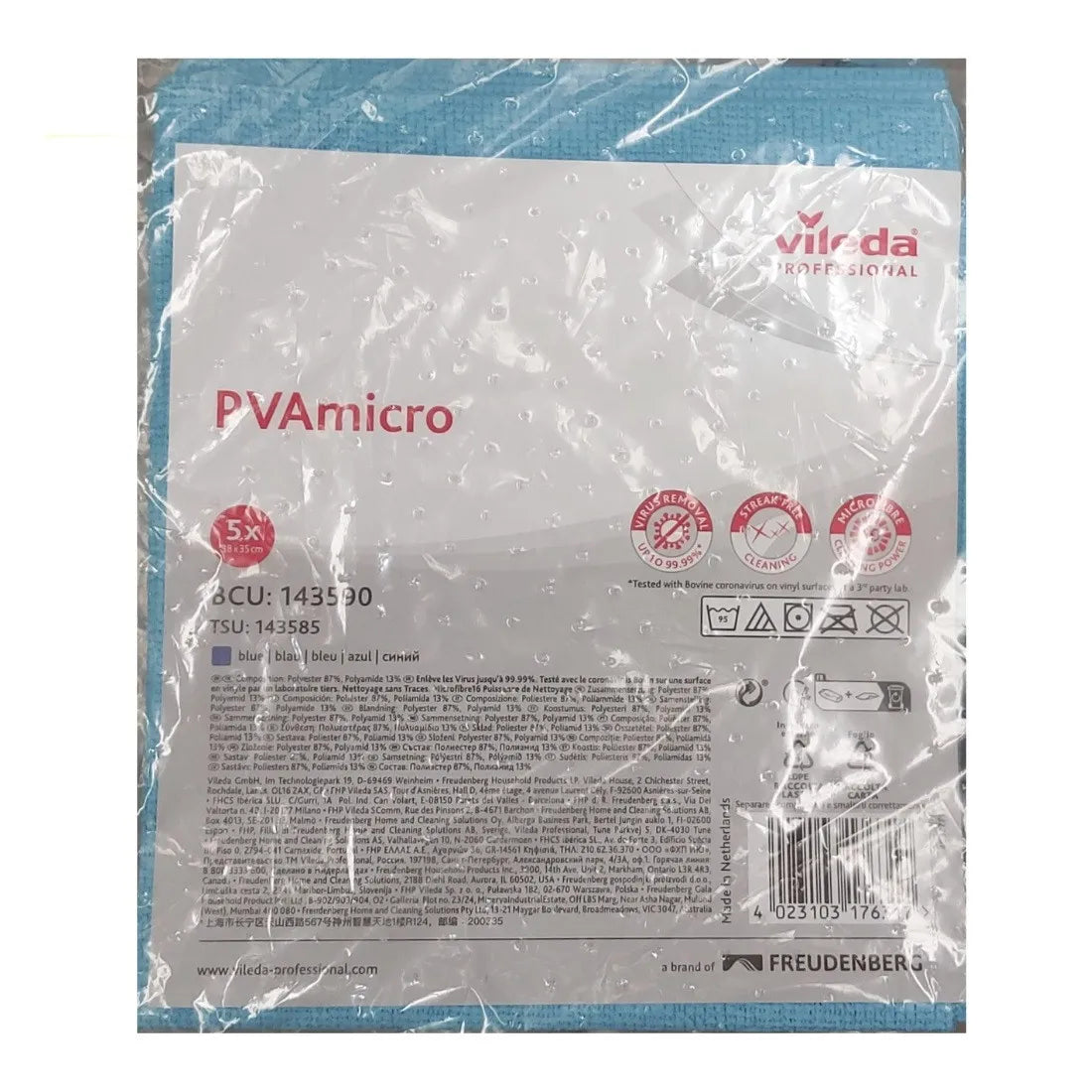
Cloth construction decides how much soil a wipe can hold before it smears. Freshway lists the Oates Vileda PVAmicro cloth (blue, 5 pack) at 38 cm x 35 cm (380 mm x 350 mm), made from 70% polyester and 30% polyamide, PVA-impregnated, colour coded and HACCP approved. The product page describes a chemical-free cleaning option and says the blue cloth suits general cleaning, common areas, mirrors and glass. That is a pairing decision: a high-absorbency, streak-free cloth can often clean glass and painted surfaces with water or a mild detergent, so you do not automatically reach for a degreaser.

For weave, weight and when microfibre is the wrong tool, use the existing commercial microfibre cloth guide. This article stays on pairing: which chemistry belongs on which cloth, and which laundry habits destroy that pairing.
Pairing cleaners vs disinfectants
A detergent lifts soil. A disinfectant needs a cleaned surface, the labelled dilution and a full contact time. Wiping a disinfectant on with a dirty cloth, then immediately drying it off, is not disinfection. Read the label before the cloth hits the bench; the chemical dilution guide covers how to mix concentrates without guesswork.
Freshway lists Agar Wipe Away as a 5-litre spray-and-wipe detergent for kitchens, hospitality and offices, with the 5-litre drum listed as producing up to 200 standard spray bottles when diluted as directed. That is a cleaner pairing: use it on a cloth assigned to general hard surfaces, not as a substitute for a hospital-grade disinfectant.

Agar Spruce is listed as a 5-litre all-purpose cleaner with a neutral pH of 7.0, intended for daily soil on washable surfaces including alkali-sensitive floors. Pair it with a general-area cloth when you need cleaning without a high-alkaline attack. Agar Tango is listed as a hospital-grade disinfectant with ARTG listing AUST L 104423. Pair Tango only with the cloth colour your site assigns to that disinfectant task, and keep the labelled contact time. Do not "finish" a Tango wipe with a softener-clogged cloth that leaves residue.
SafeWork NSW chemicals guidance, WorkSafe Victoria hazardous substances pages and WorkSafe Queensland hazardous chemicals advice all apply to how those bottles are stored, decanted and used. NSW Health's infectious disease control guidelines are the infection-control backdrop for sites that specify hospital-grade products.
Colour coding systems
Colour coding only works when the cloth colour and the bottle colour mean the same zone. Freshway also lists PVAmicro packs in red, green and yellow, each described as colour coded and HACCP approved. The blue pack's own page assigns blue to general cleaning, common areas, mirrors and glass. Keep site cards equally specific for the other colours rather than leaving staff to guess.
Store clean cloths dry, in colour-separated tubs, on the trolley. A mixed bag in the sink turns colour coding into theatre. Browse Agar multipurpose cleaners and Agar floor and surface disinfectants when you print the pairing chart so the bottle names match what the store actually stocks.
Laundering microfibre correctly
Laundry chemistry can ruin a good pairing. Fabric softener coats fibres and cuts both water pick-up and disinfectant contact. Wash microfibre separately from cotton mops, skip softener, and dry according to the cloth instructions. Freshway lists Freshway Laundry Liquid Classic 155 as a commercial laundry detergent for hospitality and healthcare linen; use it as a laundry product for cloths only if your written method says so, and never add a separate softening rinse to microfibre loads.
The Freshway laundry and fabric care collection is the place to review laundry options; the pairing rule stays the same: wash to restore the fibre, not to perfume it. SafeWork NSW hazardous manual tasks and WorkSafe Queensland hazardous manual tasks guidance still apply when crews haul wet laundry bags.
When disposable wipes win
Reusable microfibre is the default for daily desks, glass and most hard surfaces. Disposable wipes win when the soil is heavily soiled with unknown fluids, when laundry turnaround cannot keep colours separate, or when a site's infection-control procedure specifies single-use. Do not stretch a disposable wipe across two rooms "to save stock"; that re-creates the dirty-cloth problem.
Spec cloth grades
| Cloth | Listed detail | Pairing note |
|---|---|---|
| PVAmicro blue 5-pack | 38 cm x 35 cm; 70% polyester / 30% polyamide; HACCP colour coded | General areas, mirrors and glass; often water or a mild detergent |
| PVAmicro other colours | Same construction family, sold in red, green and yellow packs | Assign one colour per zone and print it on the chart |
| Oates MicroEzy blue 50-pack | Knitted microfibre in a pop-up dispenser box | High-volume trolley stock where cloths turn over quickly |
Freshway lists the Oates MicroEzy 50-pack (blue) as 100% knitted microfibre supplied in a pop-up dispenser box for carts and housekeeping trolleys. Use that format when the pairing problem is availability: staff reuse a filthy cloth because the next clean one is downstairs.
Common pairing mistakes
- One cloth, every bottle, every room.
- Disinfectant wiped on and immediately dried off.
- Fabric softener in the microfibre wash.
- A high-alkaline degreaser on a surface that only needed a neutral cleaner such as Spruce.
- Colour-coded cloths stored wet in one shared bucket.
Unused chemical that is poured away still has to be handled as waste; EPA NSW waste guidance applies to leftover concentrates and contaminated rinses.
Training cards
A pairing card should fit on the trolley: zone, cloth colour, product name, dilution or ready-to-use status, contact time if it is a disinfectant, and the laundry rule (no softener). Walk new starters through one floor with the card in hand. If the chart names products you do not stock, rewrite the chart before the next shift, using names from the cleaning chemicals collection.
Frequently asked questions
Can I use the same microfibre cloth with a detergent and a disinfectant?
Not on the same shift if your colour-coding system separates those tasks. Use the cloth assigned to that chemistry, and start disinfectant work with a clean cloth.
Why does fabric softener matter for microfibre?
Softener coats the fibres so the cloth holds less water and leaves residue. That residue interferes with both streak-free wiping and disinfectant contact.
Is a hospital-grade disinfectant always the right pair for microfibre?
Only when the site and the label require it. Daily desks and glass often need a cleaner such as Wipe Away or Spruce, not a hospital-grade product.
How should we wash commercial microfibre cloths?
Wash them separately from cotton, skip fabric softener, and follow the cloth instructions so the fibre can pick up soil again on the next shift.
Next steps with Freshway
Build the pairing chart from the cloth colours you actually issue and the bottles on the Agar multipurpose cleaners and disinfectant shelves. Review laundry options in laundry and fabric care, then check each product page for current pack sizes before you reprint the trolley card.