Microfibre cloths are the most-used item on a cleaning trolley and the least specified. Most sites buy them by colour, use them until they look tired, wash them with whatever is in the machine, and then wonder why surfaces streak and why the same cloth seems to stop working after a month. A commercial microfibre cloth guide has to cover three things together: the weave, the colour system and the laundering method.
This guide is for cleaning supervisors, facility managers and contractors specifying cloths for offices, healthcare, aged care, education, hospitality and general commercial cleaning. It covers what the weave actually does, how colour coding and laundry interact, and how to measure whether a cloth is still doing its job.
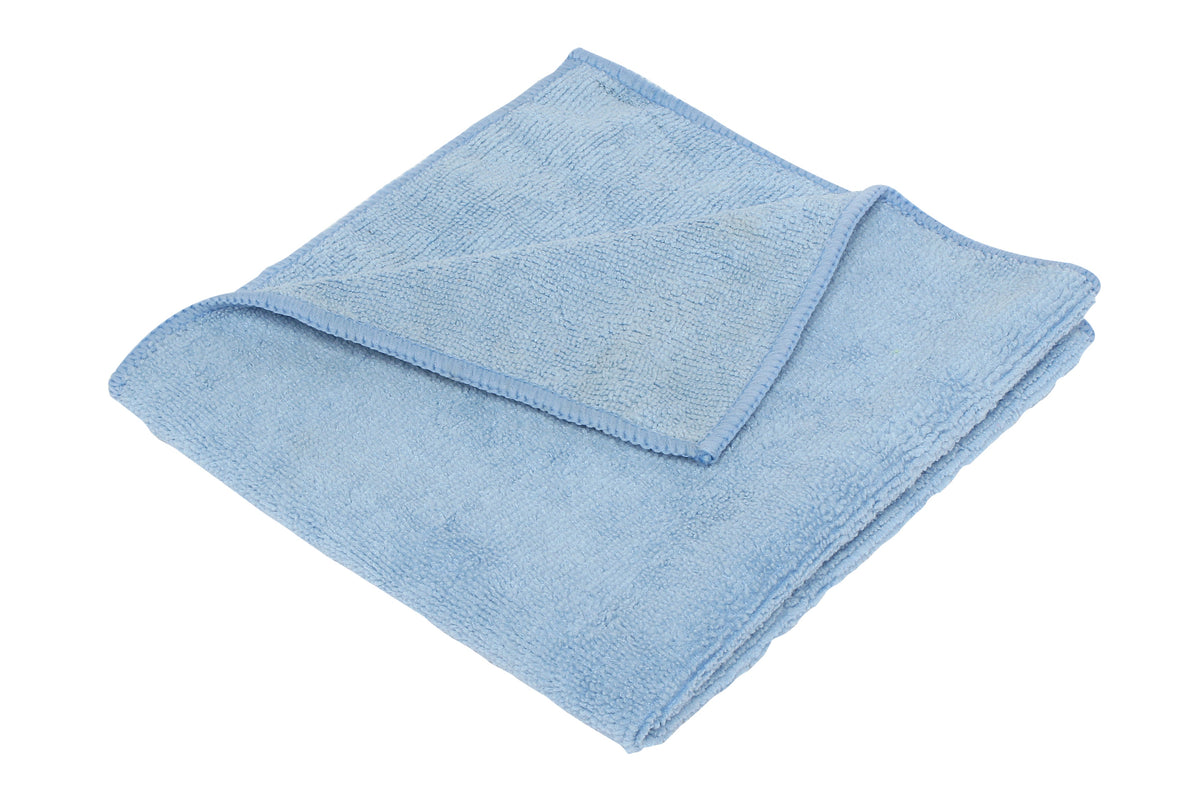
Commercial Microfibre Cloth Guide: Start With the Failure Mode
Identify what is failing before comparing cloths. The common complaints are streaking on glass and stainless steel, lint left on dark surfaces, cloths that smear instead of lifting soil, cloths that smell after a shift, and a colour system that collapses because every cloth ends up in the same wash.
Each complaint points to a different cause. Streaking is usually too much liquid, a saturated cloth or a cloth that has lost its split fibres. Lint comes from a low-quality or worn cloth, or from washing with lint-producing textiles. Smearing usually means the cloth is overloaded with soil or detergent. Smell means the cloth was stored damp, which is a laundry and storage problem rather than a cloth problem.
Diagnosing first stops the purchase being decided by GSM alone. Weight matters, but a heavy cloth with a poor weave and a bad laundry routine performs worse than a lighter cloth that is washed and stored correctly.
Choose Weave, Weight and Edge for the Task
Microfibre works because the fibres are split to a few microns and trap soil and liquid rather than pushing them around. The weave determines how that happens in practice. A terry or looped weave has more surface texture and lifts dust and soil from uneven surfaces; a flat or suede weave is smoother and finishes glass, stainless steel and screens without lint; a waffle weave holds more water and suits spill pick-up and wet wiping.
Weight is expressed in grams per square metre. Lighter cloths around 200 to 250 GSM suit light dusting and glass finishing. Mid-weight cloths around 300 GSM are the general-purpose choice for surfaces, and heavier cloths above 350 GSM hold more liquid and last longer under commercial laundering. The trade-off is drying time and cost, not just performance.
Edge construction matters more than most buyers expect. Overlocked edges can scratch polished surfaces and shed thread; ultrasonic-cut or flat-hemmed edges are the safer choice for glass, screens and stainless steel. Where a site uses colour-coded cloths, the colour should be in the fabric rather than printed on a label, because printed labels fade and peel in commercial laundering.
| Cloth type | Typical weight | Best for | Watch out for |
|---|---|---|---|
| Looped / terry | 300-350 GSM | General surfaces, dust lifting, fittings | Can leave lint on glass and screens |
| Flat / suede | 200-300 GSM | Glass, mirrors, stainless steel, screens | Holds less liquid; needs a second cloth for heavy soil |
| Waffle | 300-400 GSM | Spill pick-up, wet wiping, washrooms | Slower to dry; must not be stored damp |
| Heavy commercial | 350+ GSM | High-use routes, laundering cycles | Longer drying time and higher unit cost |
Which Cloth Suits Which Surface?
Match the weave to the surface and the soil, then the colour to the zone.
Looped or terry cloths suit general surfaces and dust lifting, flat or suede cloths suit glass and polished finishes, and waffle cloths suit wet pick-up, with the colour assigned to the zone rather than to the surface alone.
In practice a commercial site needs three or four types rather than one. A general-purpose mid-weight cloth for desks, rails and fittings. A flat glass cloth for windows, mirrors and screens. A heavier cloth or waffle weave for spill pick-up and washroom work. And a colour-coded set for each zone, kept separate through storage and laundering.
Two surfaces deserve specific attention. Stainless steel and glass show every streak and every lint fibre, so they need a clean flat cloth and a light touch with liquid. Screens and electronic equipment need a dry or barely damp cloth and no aggressive chemistry, because the risk is liquid ingress rather than soil. Where a site cleans both, separate cloths are cheaper than replacing a monitor.

Colour Coding, Storage and Replenishment
Colour coding only works if the cloths are stored and laundered by colour. Assign each zone a colour, store the cloths in that colour group on the trolley and in the store, and launder them separately so a washroom cloth does not share a cycle with a cloth used on desks.
Storage is where the system usually breaks. Damp cloths left in a bucket or a trolley bag grow odour within a shift, and a cloth that smells is a cloth that spreads odour to the next surface. The practical routine is to bag used cloths separately, keep clean cloths dry, and never return a used cloth to the clean stock.
Replenishment should be per colour rather than on total volume. Where one colour runs out, the operator substitutes another and the system collapses quietly. Setting reorder points per colour, and checking the store weekly, keeps the system working without supervision. The broader trolley setup is covered in this guide to commercial cleaning trolley setup.
Where Microfibre Stops Being the Right Tool
Microfibre is not a universal replacement for every cloth and mop. It excels at fine soil, films and finishing, and it struggles where the soil is heavy, greasy or wet. A cloth loaded with grease stops absorbing and starts spreading, and a cloth used to pick up a spill is better replaced by an absorbent material and then a clean cloth for the residue.
Heavy grease in kitchens, thick spill pick-up, and construction dust in volume are all cases where a different product does the first pass. Microfibre is also a poor choice for aggressive solvents and strong acids unless the fibre and dye are specified for them, because repeated exposure degrades the cloth and can release dye onto the surface.
The practical rule is that microfibre finishes the surface rather than doing the heavy lifting. Use it for the soil that remains after the bulk has been removed, and the cloth will last longer, perform better and produce a cleaner finish than one expected to do both jobs.
Laundering: What Keeps Microfibre Working
Microfibre fails in the wash more often than on the surface. Fabric softener coats the fibres and destroys their ability to trap soil, so it must never be used. Bleach and high-alkaline detergents degrade the fibres over time, and over-drying at high heat can fuse the split fibres and leave the cloth flat and ineffective.
The wash that works is simple: a detergent without softener, a moderate temperature, a thorough rinse, and drying that removes moisture without scorching the fibre. Where cloths are washed with other textiles, lint-producing items should be excluded. Where a site uses a commercial laundry, the contract should specify no softener, no chlorine bleach, and separate handling by colour.
Water quality matters too. Hard water leaves mineral residue in the fibre, which shows as streaking on glass, so a site with hard water may need a water conditioner in the wash or a rinse aid appropriate to the process. Freshway Supplies stocks cloths and cleaning chemistry alongside each other, and the guide to choosing and diluting cleaning chemicals covers the chemistry side of the same method.
How Long Does a Microfibre Cloth Last?
Until it stops lifting soil, which is a performance question rather than a calendar one.
A commercial cloth typically survives a few hundred wash cycles if it is laundered correctly, but visible wear, a flattened pile, frayed edges or a cloth that smears clean water are all signs it has stopped doing the job, and the colour fading is a separate reason to retire it.
The practical test is a water break test on a clean surface: dampen the cloth and wipe a small area of glass or stainless steel. If the water sheets evenly and dries clear, the cloth is still working. If it leaves streaks or droplets, the fibre has lost its split structure or is contaminated with softener or mineral residue. That test takes seconds and settles the question better than the cloth's age.
Retire cloths for three reasons: performance, hygiene and colour. Performance is the water break test, hygiene is odour or contamination that survives laundering, and colour is fading that makes the zone ambiguous. Retiring a cloth early is cheap compared with a callback, and keeping a faded cloth in a colour-coded system undermines the system for everyone.

Measure Cost per Clean, Not per Cloth
Cloth cost is trivial next to the labour it supports, so the useful comparison is cost per clean surface or per shift rather than price per pack. A cheaper cloth that needs two passes, sheds lint or has to be replaced every month costs more than a better cloth used correctly.
Build the comparison around four inputs: the number of cloths a shift consumes, the number of washes before retirement, the laundering cost per wash, and the labour time saved by a cloth that lifts soil in one pass. On most sites the laundering and labour inputs dominate, which is why a cloth that survives more cycles and performs better wins even at a higher unit price.
Laundering is part of the same calculation. A cloth that survives 300 washes at a low cost per wash is cheaper than one that survives 100, even at twice the purchase price, and a cloth that needs a second pass adds labour on every surface it touches. That is why the comparison should be made per shift or per area rather than per pack, and why the laundry contract or the on-site wash process belongs in the specification. Consumption is also a diagnostic. A site that uses far more cloths than the method requires is usually using them for spill pick-up or as disposable wipes, which is a different product. A site that uses far fewer is usually reusing soiled cloths, which is a hygiene problem. Auditing usage per area against the method shows both.
What to Record in the Approved Method
Write the cloth system down so it survives staff changes and suppliers.
- Types: weave and weight for each task, with the surface each one is approved for.
- Colours: the zone mapping, consistent with the site's wider colour coding.
- Laundry: detergent type, temperature, prohibition on softener and bleach, and colour separation.
- Drying and storage: how cloths are dried, where clean stock is kept, and how used cloths are bagged.
- Retirement: the performance test and the colour-fade rule for removing a cloth from service.
- Replenishment: reorder points per colour, and who checks them.
That record is also the purchasing specification. When a supplier changes the cloth or the wash process, the method is what shows whether the change is acceptable rather than leaving it to be discovered as a streak on a client's glass.
Conclusion
Choose the weave for the surface, the weight for the workload, and the colour for the zone, then protect all three with laundering and storage that keep the fibre working. A cloth that is washed with softener and stored damp will fail regardless of what it cost.
Test performance with water rather than judging by appearance, retire cloths on performance, hygiene and colour, and write the method down. That is what turns a consumable into a system that produces the same finish on every shift.
Questions we get asked most
- What GSM is best for commercial microfibre cloths?
- Around 300 GSM suits general surface work, lighter cloths of 200 to 250 GSM suit glass and light dusting, and heavier cloths above 350 GSM hold more liquid and last longer under commercial laundering. Weight is only one input: weave and edge construction decide how the cloth performs on a specific surface.
- Why do my microfibre cloths leave streaks?
- Usually because of residue: too much liquid, a cloth saturated with soil or detergent, fabric softener in the wash, or hard water minerals left in the fibre. A water break test on glass shows whether the cloth is still working, and a rinse with clean water usually confirms whether the problem is the cloth or the method.
- Can microfibre cloths be washed with other laundry?
- They can, but lint-producing items should be excluded and colour-coded cloths should be washed separately by zone. Fabric softener must never be used, chlorine bleach and high-alkaline detergents degrade the fibre, and high heat drying can flatten the split fibres that do the cleaning.
- How often should commercial microfibre cloths be replaced?
- When they stop performing, not on a fixed calendar. Retire a cloth when it smears clean water, sheds lint, has frayed edges or a flattened pile, when odour survives laundering, or when the colour has faded enough to make its zone ambiguous. A cloth should typically survive several hundred correct wash cycles.
Manufacturer information: Agar cleaning chemicals. Chemical and laundry safety guidance: WorkSafe Victoria, the Work Health and Safety Regulations 2011, SafeWork NSW and NSW Health environmental health.
Compare microfibre cloths by weave, weight and colour in the Freshway janitorial range.