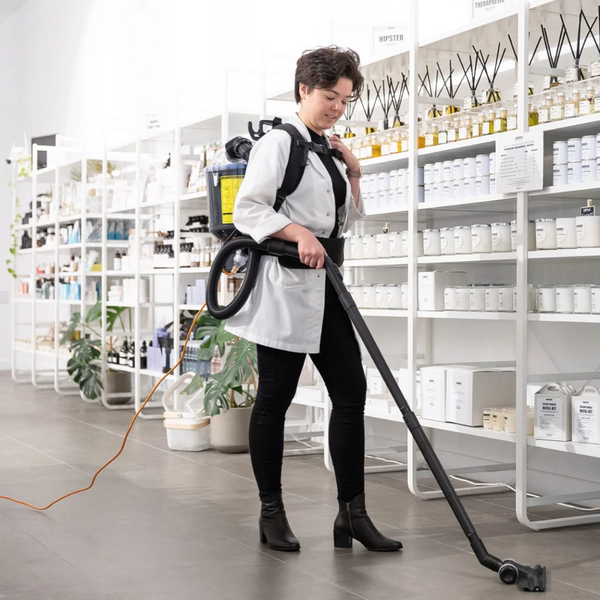
Gyms are cleaned by two different processes that are often bought as one. Members wipe down equipment between sets with whatever is at hand, and the cleaning team runs a scheduled program across floors, change rooms, studios and reception. Gym cleaning supplies that do not separate those two processes produce a floor that looks wiped but is not cleaned, and a change room that is cleaned but not maintained through the day.
This guide is for gym owners, facility managers and cleaning contractors specifying supplies for gyms, fitness studios, aquatic centres and allied health spaces in Australia. It covers the two-process split, the zones and surfaces, the chemistry that suits rubber flooring and equipment, and the checks that keep a gym presentable at peak hours.
Gym Cleaning Supplies Checklist: Separate Wipe-Down From Scheduled Cleaning
Member wipe-down is a hygiene habit, not a cleaning program. It uses a ready-to-use product and a paper towel or cloth at the point of use, and its purpose is to remove sweat and body oils from a bench or handle between users. It is applied by people who are not cleaners, often in a hurry, and it has to be safe for rubber, vinyl, leather, painted metal and electronic screens.
Scheduled cleaning is the program: floors, change rooms, showers, toilets, mirrors, lockers, studios, reception and high-touch points, cleaned to a frequency that reflects traffic. It uses concentrates, colour-coded equipment and equipment that can handle the floor area, and it is performed by staff who are trained and supervised.
The purchase decision follows from that split. Wipe-down stations need a product that is safe for equipment and skin, in a dispenser that cannot be over-used, with a waste bin beside it. Scheduled cleaning needs the chemistry, mops, machines and colour coding of a commercial program. Buying one product for both usually means the station is too strong for the equipment or the program is too weak for the soil.
Map Products to Zones and Risk Levels
Gyms divide into training floors, studios, change rooms and showers, toilets, reception and circulation. Training floors carry sweat, rubber crumb, chalk, dust and equipment oil. Change rooms and showers carry the highest risk of fungal and bacterial contamination, and toilets carry the usual washroom risks. Studios may carry mats and mirrors that need specific products.
Each zone gets its own set. Training floors need a neutral or mildly alkaline floor cleaner, a scrubber or mop system, and a vacuum or sweeper for rubber crumb and dust. Change rooms and showers need a washroom cleaner, a descaler for scale, a disinfectant where the procedure requires one, and colour-coded cloths and mops. Studios need a product that suits mats without leaving residue, and glass or mirror cleaner for the walls.
Risk mapping also sets the frequency. Showers and change rooms usually need attention several times a day in a busy gym, training floors need daily cleaning with spot attention, and studios need cleaning between classes. A single daily clean for the whole facility rarely matches the traffic.
High-Touch Surfaces and Cleaning Frequency
Gym high-touch surfaces are unusually numerous: handles and grips on every machine, dumbbells, mats, benches, lockers, shower taps, hair dryers, door handles, lift buttons and reception counters. They are also touched by people who are hot, sweaty and breathing hard, which makes the hygiene case stronger than in an office.
The wipe-down station covers the equipment between users, and the scheduled program covers everything the station does not reach: the frames, the cables, the floors under the machines, the lockers and the change rooms. The schedule should distinguish between a wipe-down, a clean and a disinfecting step, because the products and contact times differ.
Frequency should follow peak hours. A gym with a morning and evening peak needs change room attention around those peaks rather than only at closing. Where the facility runs classes, the studio needs a clean between sessions, which is a staffing and supply decision rather than a chemical one.
Surface Compatibility and Contact Time
Gym surfaces are a compatibility test: rubber flooring, vinyl upholstery, leather, chrome, painted steel, mirrors, mats, screens and grip surfaces. Strong solvents can soften rubber and vinyl, high alkalinity can dull chrome and painted metal, and aggressive abrasives scratch screens and grips. The product has to be chosen for the surface, not just the soil.
Contact time matters where a disinfecting step is claimed. A product sprayed on a bench and wiped immediately has cleaned the bench, not disinfected it. The method should state the product, dilution and dwell for the surfaces where a claim is made, and the class schedule should allow the dwell to happen before the equipment is used again.
Rubber flooring deserves specific attention. It holds dust and crumb in its texture, and it reacts to some solvents and to heat from scrubbing. A neutral cleaner with a soft pad and good recovery usually outperforms a strong product, and a vacuum or sweeper before wet cleaning prevents the crumb from being pushed into the surface.
| Zone | Task | Frequency |
|---|---|---|
| Training floor | Sweep or vacuum, spot clean, periodic scrub | Daily plus between peaks |
| Change rooms and showers | Clean, descale, disinfect | Several times a day |
| Studios | Floor clean, mirror clean, mat check | Between classes |
| Reception and circulation | Glass, counters, high-touch points | Daily plus peak checks |
Floor Care Between Peak Periods
Training floors in a gym are cleaned at the edges of the day, but they are used all day. Between peaks, the practical work is spot cleaning, crumb and dust removal and attention to the areas that show traffic first: the free-weight zone, the treadmill line and the entrance matting. Those tasks need a compact machine or a manual kit that can be used while members are training.
Rubber flooring needs a different rhythm from carpet. Dust and crumb sit on the surface and in the texture, so a vacuum or sweeper before any wet work is the step that protects the finish. Where a scrubber is used, a soft pad and good recovery keep the surface dry enough to use quickly, which matters in a gym where a wet floor closes an area.
Between-peak cleaning also protects the scheduled clean. A floor that is spot-cleaned during the day needs less work at night, and a machine that is used gently during the day lasts longer than one pushed through a full clean at closing time every day.
Change Rooms, Showers and Wet Areas
Change rooms and showers are the hardest part of a gym to keep right, because they combine high traffic, warm humid air, water on the floor and a constant risk of fungal growth. They also generate the complaints that members voice most readily: odour, hair, scale on screens and water on the floor.
The daily method needs a washroom cleaner for the surfaces, a descaler on a schedule for the screens and taps, and a disinfectant where the procedure requires one, applied at the label dilution for the label contact time. Floors need a mop or scrubber that removes water rather than spreading it, and the drains need attention because odour usually starts there rather than on the tiles.
Ventilation is part of the cleaning method. A change room with poor extraction stays damp, and damp surfaces grow biofilm between cleans no matter how often they are washed. Where the extraction is inadequate, the fix is a maintenance job rather than more chemical, and it should be reported rather than cleaned around.
Peak-hour checks make the difference between a change room that is cleaned at closing and one that is presentable all day. A short check that removes hair, empties bins and dries the floor around the showers is cheaper than a deep clean and prevents most of the complaints.
Storage, Colour Coding and Cross-Contamination
Colour coding matters more in a gym than in many other buildings because the same cloth could move from a shower to a bench. Assign colours for change rooms and showers, toilets, equipment and mirrors, store them separately and launder them separately. The wipe-down station should use disposable towels rather than shared cloths, because the station is used by members rather than staff.
Storage should keep chemicals out of member access. Cleaning products belong in a locked cupboard or a plant room, with the station product in a dispenser that members can use safely. Decanting into unlabelled bottles is a particular risk in a gym, where a bottle left on the floor can be picked up by anyone.
Cross-contamination also comes from equipment storage: a mop used in the showers and then on the studio floor, a bucket that is not emptied between zones, or cloths left damp in a locker room. The store and the trolley layout should make the right choice obvious.
Training and Documented Procedures
Two audiences need instruction. Members need a simple, visible instruction at the wipe-down station: use the product, wipe the equipment, dispose of the towel. Staff need the full method: which product for which zone, the dilution, the contact time, the colour coding and the reporting of damage or odour.
The documents worth keeping are a zone map with frequencies, a wipe-down station standard, a chemical list with dilutions, and the safety data sheets. Where the gym has a pool or a sauna, the procedures and products for those areas should be separate and referenced rather than assumed.
Training also covers what not to do: not mixing products, not using the shower cleaner on upholstery, not leaving a wet mop in a change room. In a gym those mistakes are visible to members, which makes them a reputation issue as well as a cleaning one.

Supplier Continuity and Approved Substitutions
Gyms run on consumables: station product, towels, bin liners, hand soap, toilet paper, cloths and floor pads. A shortage of any of those is visible to members within hours, so the supply list should set reorder points per item and keep a buffer for peak periods.
Substitution is risky where members interact with the product. A different station product with a strong smell, a different towel that disintegrates, or a different hand soap in the change rooms all generate complaints. The gym manager should approve any change to a member-facing consumable, and the cleaning supervisor should approve changes to the scheduled chemistry.
Equipment continuity matters too. Scrubber pads, squeegees, vacuum bags and filters should be stocked for the actual usage, because a machine out of service during peak hours leaves the floor with a visible gap. Freshway Supplies stocks cleaning chemicals and janitorial equipment, and this guide to gym cleaning supplies and schedules covers the wider program.

A Site-Trial Scorecard for the Shortlist
Trial the station and the scheduled program separately, because they fail in different ways.
- Member use: whether the station product is pleasant, quick and safe on the equipment members actually touch.
- Equipment condition: any softening, discolouration or residue on rubber, vinyl and chrome after a week of use.
- Floor result: whether rubber flooring is left clean and dry without crumb being pushed into the texture.
- Change room result: scale, odour and surface condition after a peak period.
- Labour: minutes per zone compared with the current method, including refills and restocking.
- Consumables: usage per week, and whether the reorder points kept up.
Score both processes on the same zones with the same staff. The differences appear within a week, and they are usually about whether the product suits the surface rather than about how strong it is.
Conclusion
Separate member wipe-down from scheduled cleaning. The station needs a safe, ready-to-use product and a simple instruction; the program needs the chemistry, colour coding and equipment that match each zone, from rubber floors to shower screens.
Then set frequencies around peak hours, keep the products compatible with the surfaces, and stock the consumables that members notice. A gym that gets those three right looks maintained all day, not just after the cleaning shift.
Questions we get asked most
- What should be at a gym wipe-down station?
- A ready-to-use product that is safe for rubber, vinyl, leather, painted metal and screens, paper towels or disposable cloths, a bin, and a simple instruction. The station is for sweat and body oils between users; it does not replace the scheduled cleaning program.
- How often should a gym be cleaned?
- Training floors and equipment daily at minimum, change rooms and showers several times a day in a busy facility, and studios between classes. The schedule should reflect peak hours rather than only opening and closing, and it should distinguish wipe-down, cleaning and disinfecting tasks.
- What is safe to use on rubber gym flooring?
- A neutral or mildly alkaline floor cleaner with a soft pad and good recovery, after removing dust and rubber crumb with a vacuum or sweeper. Strong solvents and high heat can damage rubber, and scrubbing without removing the crumb first pushes it into the surface.
- Can gyms use one product for equipment and change rooms?
- Usually not. Change rooms and showers need washroom chemistry and periodic descaling, while equipment and rubber floors need products that do not soften upholstery or leave residue. Separate products with separate colour-coded equipment are the more reliable arrangement.
Public health and cleaning guidance: NSW Health environmental health and Agar cleaning chemicals. Work health and safety: Work Health and Safety Regulations 2011, SafeWork NSW and WorkSafe Victoria.
Compare disinfectants, floor cleaners, colour-coded cloths and gym cleaning equipment in the Freshway range.