Office cleaning has moved from the night shift to the working day on a lot of sites, and the equipment did not always move with it. A machine chosen for an empty building at midnight is often too loud, too large or too slow for a floor with people at desks, meetings running and phones ringing. An office cleaning equipment checklist for day cleaning has to start with noise, access and congested floor space, not with the floor area.
This guide is for facility managers, workplace teams and cleaning contractors specifying equipment for Australian offices, co-working spaces and professional suites. It covers day cleaning, machine noise, shared desks, storage and the documentation that keeps a program consistent.
Office Cleaning Equipment Checklist: Plan for Day Cleaning
Day cleaning changes the equipment brief. The work happens around people, so noise becomes a constraint, the route has to avoid meetings and calls, and the machine has to be quiet enough that a conversation can continue a few metres away. It also has to be compact enough to move between desks, pods and meeting rooms without clearing a path.
The alternative is a split program: quiet manual cleaning during the day and machine work outside hours. That is often the most practical arrangement, but it has to be specified rather than left to the cleaner's judgement, because the machine that is acceptable at 7 pm is not necessarily acceptable at 10 am.
The checklist should therefore state, for each task, whether it happens in hours or out of hours, which machine or tool is used, and what the noise limit is. Without that, a site buys a quiet vacuum and then runs a loud scrubber through reception at lunchtime.
Noise, Access and Congested Floor Space
Noise is measured in decibels, but the practical test is whether a normal conversation can continue. Vacuum cleaners, scrubbers and blowers vary widely, and the same machine can sound acceptable in an empty corridor and intrusive in an open-plan office with hard surfaces. Where a site has meeting rooms or phone booths near the route, the machine and the timing both matter.
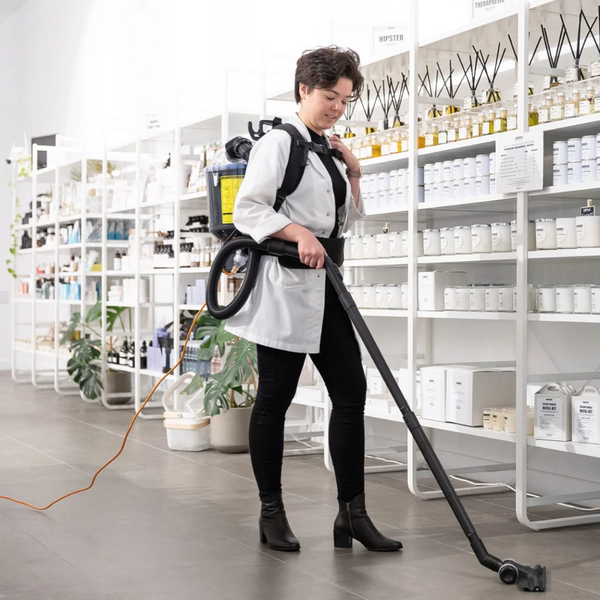
Access decides the machine size. Office floors have desks, pods, cables, chair legs, meeting room tables, reception furniture and lifts, and a machine that cannot pass or turn is a machine that gets left in the store. Compact scrubbers and backpack vacuums suit congested space; ride-on machines and wide sweepers do not.
Floor space is usually described as open plan, but the usable area is much smaller than the plan suggests. Measure the route the machine will actually take, subtract the desk clusters and the meeting rooms, and add the time lost at doorways and lifts. That gives a realistic productivity figure for the machine.
Which Machines Suit Day Cleaning?
Quiet machines and manual tools, sized to the route.
Day cleaning suits battery scrubbers with low noise, backpack or canister vacuums with good filtration, and manual tools for desks, glass and detail work, with the machine route planned around meetings and calls rather than through them.
In practice the office kit is small. A quiet backpack vacuum for carpets, edges and upholstery. A compact battery scrubber for hard floors in circulation areas, or a flat mop system where the area is small or the noise limit is strict. A glass and surface kit with colour-coded cloths. Waste handling that can be done without a trolley blocking a corridor. And a spot kit for the marks that appear between scheduled cleans.
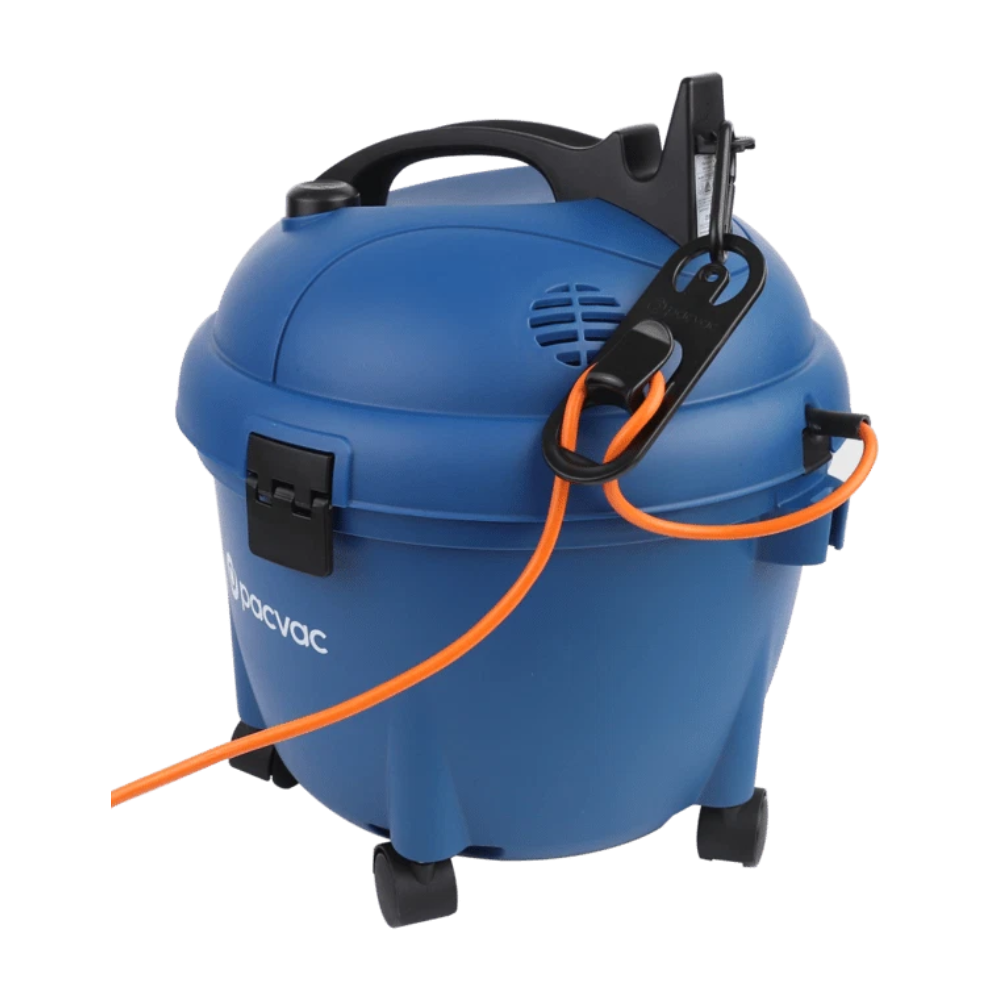
Corded machines still have a place for out-of-hours work, where noise and leads are less of an issue. The specification should say which tasks are corded and which are battery, because a corded machine used during the day creates a lead across a walkway and a trip hazard in a busy office.


Surface Compatibility and Contact Time
Offices mix carpet, vinyl, laminate, polished concrete, glass, screens and upholstery, often within a few metres. The chemistry has to suit the surface, and the method has to keep liquids away from electronics and paper. A neutral cleaner for hard surfaces, a carpet product for spots, and a screen-safe method for monitors are the basics.
Contact time matters where a site's procedure includes a disinfecting step on shared desks or meeting tables. A product sprayed and immediately wiped has cleaned the surface, not disinfected it, and the schedule has to allow the dwell before the desk is used again. In a hot-desk office that is a real scheduling constraint, not a technicality.
Furniture and finishes limit the chemistry further. Some laminates and veneers are sensitive to solvents, some upholstery is sensitive to water, and some monitor coatings are damaged by ammonia. Where the surface is unknown, a neutral product and a test patch are the safe default.
Meeting Rooms, Phone Booths and Shared Desks
Meeting rooms and phone booths are the spaces where day cleaning is most visible and most intrusive. A cleaner entering a room during a call is a disruption, and a room that is not cleaned between meetings is a surface that several people have touched without a reset. The answer is a short, quiet reset between bookings rather than a full clean during one.
The reset is quick: clear cups and rubbish, wipe the table and the shared controls, check the glass and the whiteboard, and reset the chairs. It needs a caddy rather than a trolley, and a cloth system that keeps the table cloth separate from the floor or washroom cloths. Where the room has a screen or a video unit, the screen-safe method applies.
Hot-desking adds a personal-hygiene dimension. Shared desks, keyboards, mice and headsets are touched by different people every day, and the cleaning schedule should name them rather than treating the desk as a single surface. Where the office has a clean-desk policy, the cleaning team and the occupants need to agree what is cleared and when, or the desk cannot be cleaned properly.
Booking data is the practical planning tool. Where the workplace team can share the meeting room calendar, cleaning can be scheduled into the gaps rather than sent into occupied rooms, which reduces both disruption and repeat work.
Storage, Colour Coding and Cross-Contamination
Office storage is usually a cleaner's cupboard on each floor, and it has to hold the chemistry safely, keep the colour coding intact and allow the trolley or caddy to be loaded for the route. Products belong in labelled containers, separated by family, with the safety data sheets accessible.
Colour coding should separate washrooms, kitchens and general office surfaces, and it should be consistent across floors. Where the office has a kitchen or a wellness room, those areas need their own cloths and their own chemistry, because a cloth used on a desk should not then be used on a food surface.
Cross-contamination also comes from the trolley and the vacuum. A vacuum used in washrooms and then in offices carries soil and odour, and a mop used in a kitchen and then in a corridor spreads grease. The equipment should be assigned by zone in the same way the cloths are.
Training and Documented Procedures
Day cleaning depends on judgement as much as method: which areas to clean while a meeting is running, how to work around a desk without disturbing the occupant, and when to defer a machine task. That judgement is easier when the procedure states the priorities and the acceptable timing.
The documents worth keeping are a floor plan with zones and machine routes, a task list with in-hours and out-of-hours frequencies, a chemical list with dilutions, and the data sheets. A one-page route map is more useful than a long manual, because the cleaner can see where the machine goes and when.
Training should also cover the noise rule and the escalation path. Where a machine task cannot be done without disturbing a meeting, the cleaner needs to know whether to defer it, move to another floor, or ask the workplace team.
Waste, Recycling and Desk Bins
Waste is the task that most often pulls a day cleaner away from the plan. Desk bins, kitchen bins, recycling and confidential waste all have different handling, and a cleaner who has to leave the floor to empty a trolley loses time and disrupts the route.
The waste specification should state the bin types, the liner sizes, the recycling rules and the collection points. Where the building separates recycling and general waste, the liners and the bins should be visually distinct so the separation survives a busy shift. Confidential waste needs its own locked bin and its own collection arrangement, and it should never be consolidated with general waste.
Desk bins are a design decision as much as a cleaning one. Where every desk has its own bin, the cleaner visits every desk; where the office uses central bins, the route is shorter and the bins are larger. Either way, the schedule and the trolley have to match the choice.
Waste also affects the smell and the pest risk in a kitchen or a wellness room. A bin that is emptied on a schedule and lined correctly is cheaper than pest control, and it is one of the few cleaning tasks that occupants notice immediately when it fails.
Supplier Continuity and Approved Substitutions
Offices consume steadily: cloths, bin liners, hand soap, paper, vacuum bags and floor pads. Reorder points per item and per floor prevent the mid-week shortage that turns into a skipped task, and a buffer of the high-use items is cheaper than an emergency order.
Substitution is most visible in consumables and most consequential in chemistry. A different hand soap in the washroom, a different bin liner that tears, or a different floor cleaner that leaves a film will all be noticed. Approved substitutes should be named in the specification, with the product, dilution and any change to the method recorded.
Equipment continuity matters where a machine serves several floors. Pads, squeegees, filters and batteries should be stocked, and the service arrangement should be local enough that a machine out of service does not leave a floor unfinished. Freshway Supplies stocks janitorial supplies and machines, and this guide to office and strata cleaning supplies covers what buildings reorder most often.
What to Record in the Approved Method
Write the day cleaning method down so it survives a change of cleaner, supervisor or contractor.
- Tasks and timing: what is cleaned in hours and out of hours, and the noise limit that applies.
- Route: the machine route per floor, including lifts, doorways and areas to avoid.
- Equipment: machine, tool and attachment per task, with corded and battery tasks stated.
- Chemistry: product, dilution and contact time per surface, with the screen-safe method noted.
- Colour coding: zone colours and storage positions per floor.
- Records: the task sheet, fault reporting and the reorder points per floor.
That record is also the tender document. Where a contractor is asked to deliver day cleaning, the method shows what equipment and staffing the price depends on, and it prevents the quiet substitution of a night-shift machine into a daytime building.
Conclusion
Office cleaning equipment for day cleaning is chosen by noise, access and the real route rather than by floor area. Quiet machines, compact tools and a planned sequence around meetings will do more for the workplace than a larger machine that cannot be used while people are working.
Then protect the method with a route map, a clear in-hours and out-of-hours split, colour-coded equipment and named substitutes. That is what keeps an office clean during the day without making the cleaning the loudest thing in the building.
Questions we get asked most
- What equipment is needed for office day cleaning?
- A quiet backpack or canister vacuum, a compact battery scrubber or flat mop system for hard floors, colour-coded cloths for surfaces, glass and washrooms, waste handling and a spot kit. The exact list depends on the floor types, the noise limit and the route the machine can actually take.
- How quiet should a vacuum be for daytime office cleaning?
- Quiet enough that a normal conversation can continue a few metres away. Decibel ratings help, but the practical test is whether the machine disturbs meetings and calls on the route, so trial it during working hours rather than in an empty building.
- Can I use a corded scrubber during office hours?
- Usually not in busy areas, because the lead becomes a trip hazard and the machine is often louder than a battery equivalent. Corded machines are better reserved for out-of-hours work, with battery or manual methods covering the daytime tasks.
- How often should shared desks be cleaned?
- At least daily in most hot-desk offices, with high-touch points such as keyboards, mice and desk edges included. Where the procedure includes a disinfecting step, the product needs its labelled contact time before the desk is used again, which has to be built into the schedule.
Manufacturer information: Nilfisk Australia and Agar cleaning chemicals. Work health and safety: Work Health and Safety Regulations 2011, SafeWork NSW and WorkSafe Victoria.
Compare quiet vacuums, compact scrubbers and janitorial supplies for offices in the Freshway range.