How to Choose Between a Commercial Backpack and Barrel Vacuum
Profile the job first, then let stairs, debris and roster pick the vacuum.
Shop now
Week one of a new hotel contract. The night crew has barrel vacuums, and by the third floor they are carrying them up the fire stairs because the service lift is booked for linen. By Thursday two cleaners have sore backs and the corridors are still unfinished at breakfast.
Nothing was wrong with the vacuums. The format was chosen from a catalogue rather than from the job. This guide works from the job outwards, then uses a few numbers to confirm the choice.
Choose backpack or barrel vacuum: the short answer
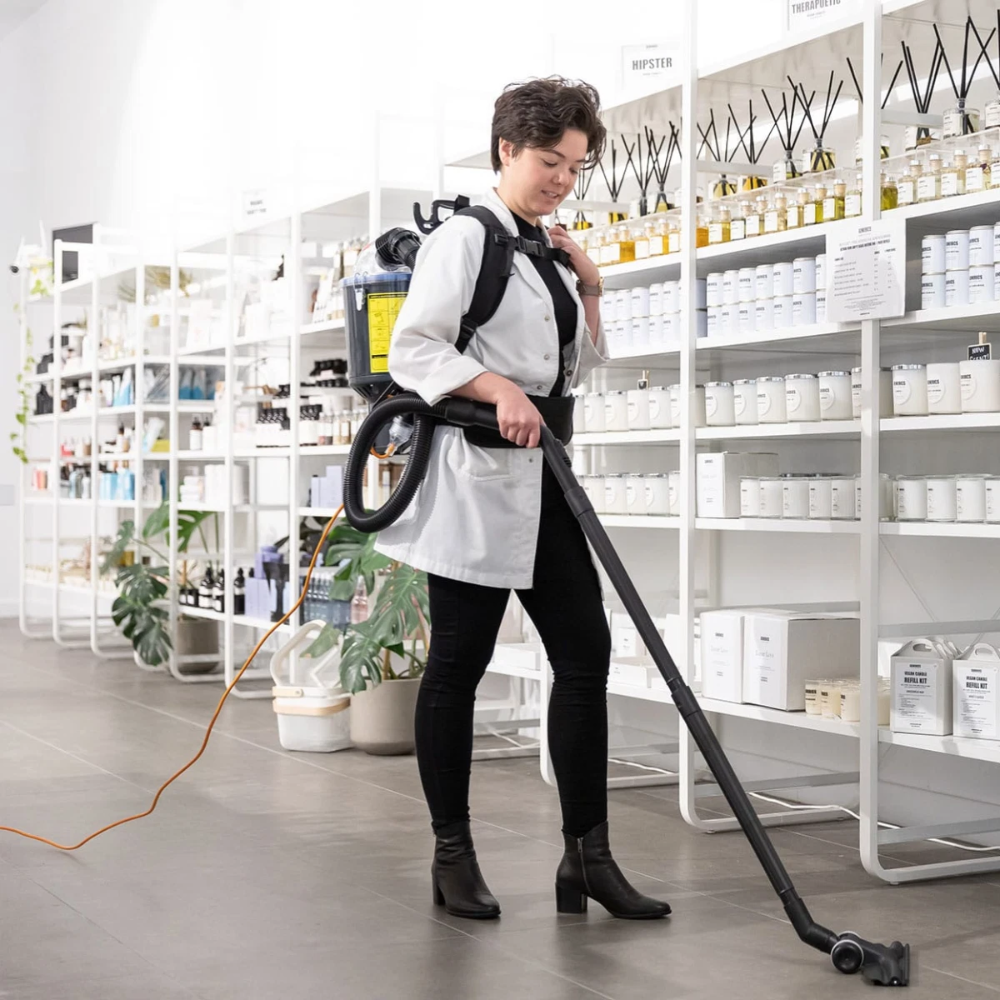
Choose a backpack when the work is stairs, tight rooms and quick moves between areas by one operator. Choose a barrel when floors are open and on one level, debris volume is high or liquids turn up. Profile the job first, then confirm the choice with capacity, cord reach, weight and battery maths.
Most contracts run both, so the real question is which format leads at each site. If you already know you want a backpack, Freshway's commercial backpack vacuum buyer's guide covers the buying process for that format. This article is about choosing between the two.
Job profile checklist
Before opening a product page, write one line for each item below.
- Levels and stairs: how many floors, and can the crew actually use a lift during the shift?
- Furniture density: open floor, rows of desks, or beds and tight rooms?
- Debris: fine dust, grit and sand, paper and litter, or liquid?
- Area per operator per shift, in square metres.
- Hours: night, early morning, or daytime around occupants.
- Power: where the power points are, and whether a cord can safely cross a walkway.
- People: who runs the machine and how often staff change.
Stairs, beds and desks push towards a backpack. Volume, liquid and single-level floors push towards a barrel.
Area size and furniture density
Tennant Australia's vacuum selection guide describes backpacks as the machine for cubicles, stairways, under furniture and other tight quarters, and canister vacuums as wheeled machines pulled from one area to the next across a variety of surfaces.
Hotels show furniture density at work. A guest room is small and crowded, so a machine that moves with the operator saves steering a barrel around the bed and desk. Back-of-house areas such as loading docks are open and on one level, which suits a barrel.
Area also sets how often the bag comes out. The Pacvac Thrift 650 backpack lists a 5 L capacity and the Pacvac Glide 300 barrel lists 15 L, so at the same debris load the barrel holds three times as much (15 ÷ 5) before it needs emptying. The Kärcher NT 27/1 wet and dry barrel lists 27 L, which is 5.4 times the backpack (27 ÷ 5).
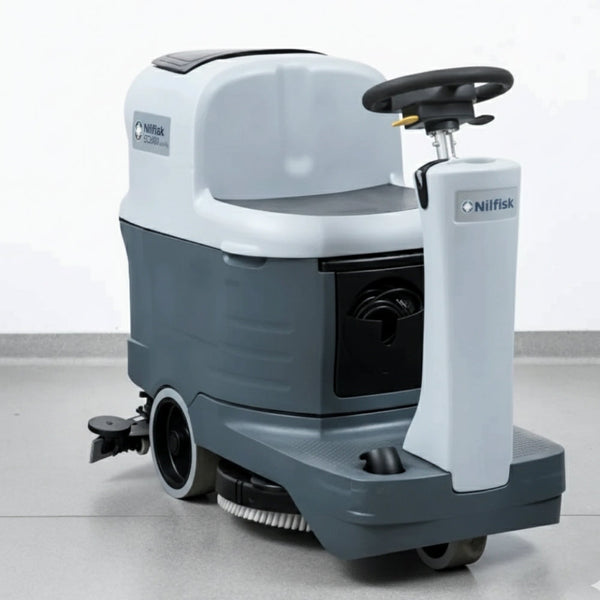
Warehouses sit at the other end. Long aisles, concrete floors and high debris volume favour a barrel, often a wet and dry one. Both formats are in Freshway's backpack vacuums and canister and barrel vacuums ranges.

Debris type: wet vs dry
Liquid settles the question quickly. None of the backpacks in this guide lists a wet capacity, so spills and slurry are a barrel job. Tennant Australia says moisture and soiled areas are most effectively cleaned with a wet-dry vacuum, which also helps speed up floor stripping and refinishing.
Dust needs a second look, because the class of the machine matters more than the filter name. WorkSafe Queensland's guide to industrial vacuum cleaners and hazardous dust puts general dust and dirt in the L class, wood dusts such as MDF in M, and silica, lead and asbestos in H. It also notes that HEPA does not mean H-class.
A warehouse with general dust and a fit-out site with MDF or stone dust are different purchases, even if both pick a barrel. Check the class marking before format comes into it.
Staff skill and roster
A barrel on stairs turns into lifting. If a crew carries the NT 27/1 (7.1 kg listed without accessories) up and down four flights, that is eight lifts and about 57 kg lifted per round (7.1 × 8 = 56.8), before the hose and tools. A backpack replaces those lifts with a sustained load on the hips and shoulders; the Thrift 650 lists 4.8 kg, machine only. SafeWork NSW counts sustained force, repetitive movement and awkward posture among the risk factors for hazardous manual tasks, and says "how to lift" training is not an effective way to protect workers.
Rosters matter too. A backpack harness must be adjusted for each wearer, so a crew that rotates casual staff spends more time on fitting. A barrel hands over more easily, but someone still manages the cord.
Storage and charging
Corded machines need a power plan. At 240 V, amps are watts divided by volts: the Thrift 650's 1,300 W is about 5.4 A, the NT 27/1's maximum 1,380 W is about 5.8 A, and a Numatic Henry HVR200 at 620 W is about 2.6 A. A standard 10 A outlet supplies up to 2,400 W. Run the Thrift and the NT 27/1 from one outlet through an adaptor and the pair asks for 2,680 W (about 11.2 A), more than it can supply.
Cord reach differs as well. The Thrift 650 and Glide 300 list 18 m cords, while the NT 27/1 lists a 7.5 m cable, which reaches less than half as far from each outlet (7.5 ÷ 18 is about 0.42). Leads dragged across thresholds every night need checking too: SafeWork NSW says electrical equipment must be regularly inspected and tested by a competent person, with AS/NZS 3760 setting out the methods, tagging and frequency.
Battery backpacks swap the cord for a charging schedule. Freshway lists the Kärcher BVL 5/1 Bp kit with a 36 V battery and fast charger, and up to 64 minutes of runtime in eco!efficiency mode. Kärcher Australia's product page gives the other half: up to 30 minutes in power mode with the 7.5 Ah battery, and about 200 m² per charge. An operator who vacuums for 150 minutes a shift needs 3 charges in eco mode (150 ÷ 64 = 2.3, rounded up) but 5 in power mode (150 ÷ 30). By area, a 1,000 m² round needs about 5 (1,000 ÷ 200). If a battery takes longer to charge than it runs, one spare will not keep up.
Plan where batteries live. SafeWork NSW's lithium-ion battery guidance says to store them in a cool, dry place away from sunlight, heat and flammable materials, use chargers designed for the battery type and voltage, and not leave them charging unattended or for long periods.
Spec-sheet fields to check on a vacuum
Once the profile points to a format, confirm it on the spec sheet. Check each product page for current pricing.
| Field | What to check | Example from a Freshway listing |
|---|---|---|
| Capacity | Dry and wet capacity listed separately | NT 27/1: 27 L container |
| Weight and its basis | Machine only, with battery, or without accessories | Thrift 650: 4.8 kg machine only; Nilfisk GD5 Battery: listed including the battery |
| Cord length | Reach from each power point | Thrift 650 and Glide 300: 18 m; NT 27/1: 7.5 m |
| Power and current | Watts, then amps at 240 V | Thrift 650: 1,300 W, about 5.4 A; Henry HVR200: 620 W, about 2.6 A |
| Runtime | Which mode and battery the figure applies to | BVL 5/1 Bp: up to 64 min in eco!efficiency mode |
| Dust class | L, M or H marking, not the word HEPA | Check the machine's class marking |
| Noise | dB(A) and where it was measured | Compare figures measured the same way |
A caution from checking these listings against brand sites: weight, airflow and noise are not always quoted on the same basis. Where figures disagree, ask for the data plate rather than picking the more flattering number.

Sample decision tree
Run each site through these questions in order. The first "yes" decides the lead machine for that task.
- Is there liquid or slurry on the floor regularly? If yes, a wet and dry barrel takes that task. If no, go to 2.
- Is the dust hazardous, such as silica, lead, MDF or asbestos? If yes, start from a class-marked M or H machine, not a format. If no, go to 3.
- Does the operator spend more time on stairs or between beds, desks or seats than on open floor? If yes, a backpack leads. If no, go to 4.
- Is the area large, on one level, and within cord reach of the power points? If yes, a barrel leads. If no, go to 5.
- Is the work done around occupants, or would a cord cross a walkway? If yes, a battery backpack sized with the charge maths above. If no, a corded backpack.
For the hotel above, guest floors answer "yes" at question 3 and get backpacks; the loading dock answers "yes" at question 1 and gets one wet and dry barrel. For daytime work, Tennant notes that cordless vacuums remove the cord as a trip hazard around tenants, patients and guests.
Budget bands without hard prices
Price the job in bands, and check each product page for current pricing. The first band is a corded backpack or barrel; Freshway's page positions the Thrift 650 below the Pacvac Superpro 700 series on price. The second band is anything battery powered, where batteries and a charger are extra line items and are sometimes sold separately; the Numatic NBV190NX Henry cordless, for example, is listed as skin only. The third band is wet and dry barrels and class-marked machines, where the specification drives the cost.
Then add bags and filters, which a 5 L backpack uses more often than a 15 L barrel, spare batteries and repairs. Freshway's service and repairs team covers vacuum cleaners, backpack vacuums and commercial wet and dry vacuums across Sydney, with a quote before work begins.
Frequently asked questions
Is a backpack or barrel vacuum the right choice for hotels?
Usually both. Guest floors with beds and furniture suit a backpack that moves with the operator. Open, single-level back-of-house areas such as loading docks suit a barrel, and a wet and dry barrel covers spills.
What kind of vacuum suits a warehouse?
A barrel, often a wet and dry model, because aisles are long, floors are on one level and debris volume is high. A 27 L container holds 5.4 times as much as a 5 L backpack. Check the dust class for silica or MDF.
How many batteries does a cordless backpack need per shift?
Divide the vacuuming minutes by the runtime for the mode you will use. With 150 minutes of vacuuming, a 64 minute eco runtime needs 3 charges and a 30 minute power-mode runtime needs 5. Then check whether the charge time keeps up.
Can I run a backpack and a wet and dry barrel from one outlet?
Not always. A standard 10 A outlet supplies up to 2,400 W at 240 V. A 1,300 W backpack and a 1,380 W barrel together need 2,680 W, about 11.2 A, so run them from separate outlets and check each data plate.
Next steps with Freshway
Fill in the job profile for each site, run the decision tree, and send the shortlist and site notes to Freshway for a second look before you order. Businesses that buy regularly can also ask about a trade account on the B2B dealer page.