Floor Scrubber vs Mopping: When Machines Pay Off
Time your mop round first, then let the maths decide if a machine pays.
Shop now
Picture two medical centres on the same Sydney street, each with about 400 m² of vinyl in the waiting room, corridors and treatment rooms. At the first, a cleaner mops every night: fill the bucket, mop, wring, change the water halfway, then wait for the floor to dry before locking up. At the second, the cleaner walks a small battery scrubber over the same floor once, empties the recovery tank into the cleaner's sink and leaves a dry floor behind.
Neither site is wrong. The question for an owner or facility manager is when the second approach starts paying for itself. This guide gives you a checklist and the maths to answer that for your own floors, using figures from Freshway's product pages and your own timings, not industry averages.
Floor scrubber vs mopping: the short answer
A floor scrubber beats mopping when the same hard floor is cleaned often, the area is large enough that time per clean adds up, and the floor needs to be dry quickly. Mopping still wins on small, cluttered or rarely cleaned rooms. Time your current mop round, then compare it with the machine's listed rate.
The rest of this article turns that into a checklist you can work through with a stopwatch and a floor plan.
Labour maths: start with your own stopwatch
There is no reliable published mop rate that fits every site, so do not borrow one. Time your current round from bucket fill to bucket empty, including the wait for the floor to dry if staff cannot leave until it does.
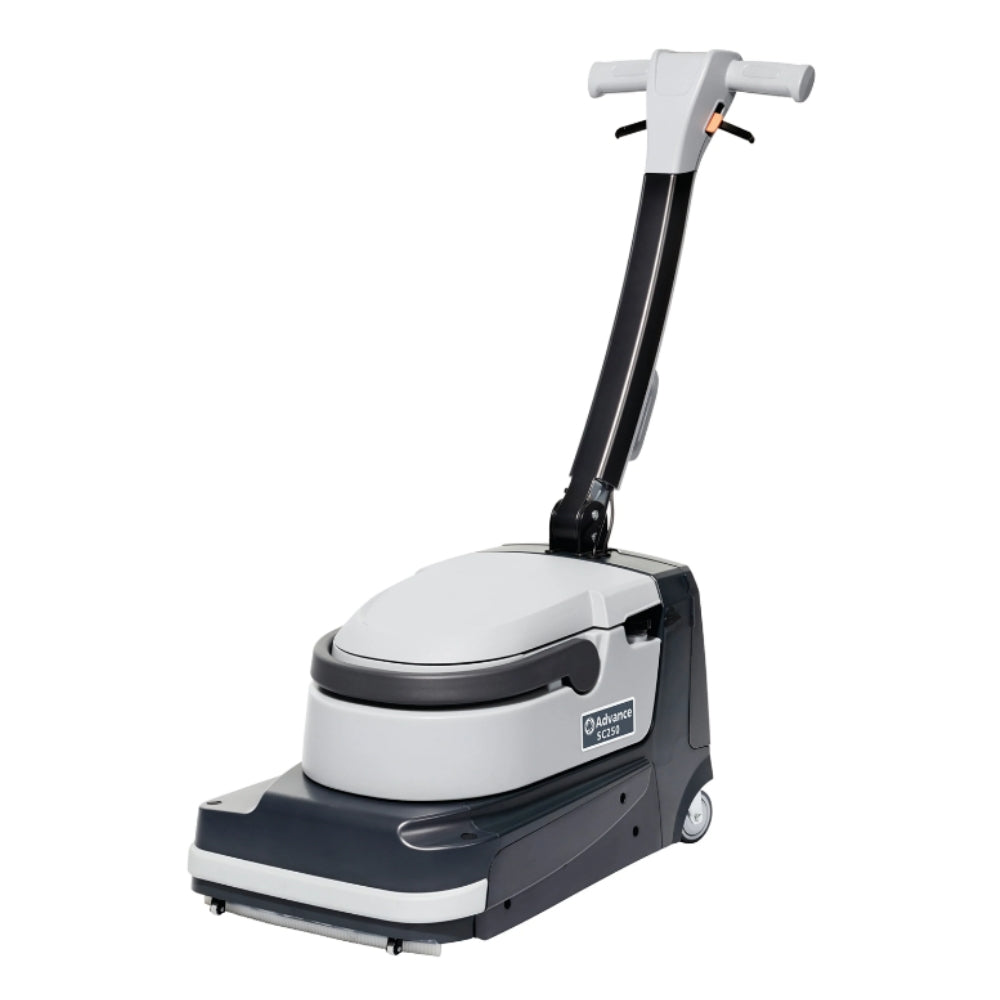
For the machine, use the product page. The Nilfisk SC250 is listed with a 34 cm cleaning path and productivity of up to 1,438 m²/hour. Listed rates are theoretical, so this guide applies a planning assumption of 60% of the listed rate for turns, furniture and edges. That 60% is an assumption, not a Freshway figure; adjust it once you have timed a trial.
- Practical rate: 1,438 m²/h × 0.60 = 862.8 m²/h.
- Scrubbing time for 400 m²: 400 ÷ 862.8 = 0.464 hours, or about 28 minutes.
- Add set-up, emptying and clean-down. Assume 15 minutes, then check it on site.
- Machine round: about 28 + 15 = 43 minutes.
So the break-even question for a 400 m² floor is simple: does your timed mop round take longer than about 43 minutes? If it does, the machine is already saving time on every clean.

What the time saving adds up to
Small savings per clean become real hours over a year. The table shows the maths for every 10 minutes your timed mop round runs over the machine round, at common cleaning frequencies. Annual figures use 52 weeks.
| Minutes saved per clean | Cleans per week | Minutes saved per week | Hours saved per year |
|---|---|---|---|
| 10 | 5 | 50 | about 43 |
| 10 | 7 | 70 | about 61 |
| 20 | 5 | 100 | about 87 |
| 20 | 7 | 140 | about 121 |
| 30 | 5 | 150 | 130 |
| 30 | 7 | 210 | 182 |
Example: 20 minutes saved × 7 cleans = 140 minutes a week. 140 × 52 = 7,280 minutes, and 7,280 ÷ 60 = about 121 hours a year.
Soil levels: what the mop leaves behind
Time is only half the comparison. A mop and bucket uses the same water for a run of the floor, and the water gets dirtier as it goes. A scrubber dryer keeps clean solution and recovered dirty water in separate tanks. The SC250 lists 6 litres of each, and the Nilfisk SC100 lists a 3-litre solution tank and a 4-litre recovery tank.
That matters most on heavy-soil floors: food courts, canteen servery lines, workshop entries and toilet blocks. On a lightly used meeting room, a clean flat mop does a fine job. Freshway's flat mop vs string mop guide covers how to get the most out of manual methods where they still fit.
Hygiene and safety outcomes
Wet floors are the bigger risk. SafeWork NSW's slips, trips and falls guidance asks whether employees have to walk on floors wet from washing, and notes that vinyl is slippery when wet, particularly if polished. WorkSafe Victoria's slips, trips and falls page names wet and slippery floors among the most common causes of slips.
A scrubber dryer picks up the solution in the same pass, so the drying wait mostly disappears. There is also the cleaner's body to think about. SafeWork NSW lists repetitive movement and sustained or awkward posture among the risk factors for hazardous manual tasks, and WorkSafe Victoria's cleaning injury hotspots page lists scrubbing machines among the mechanical aids for repetitive work and awkward postures.
Hybrid SOPs: machine for the floor, mop for the edges
Very few sites go 100% machine. A practical standard operating procedure splits the work:
- Dry-sweep or vacuum loose debris first.
- Scrub open floor and corridors with the machine.
- Flat mop the edges, behind doors and small rooms the machine cannot reach.
- Spot mop spills during trading hours.
- Empty the recovery tank to sewer, never to stormwater, in line with the NSW EPA's "the drain is just for rain" guidance.
Keep mops, flat mop frames and buckets on hand from the janitorial supplies range. The machine replaces the bulk of the mopping, not all of it.
Capex mindset: payback in hours, not hopes
A scrubber is a purchase that is paid back in labour hours. Work out your own payback rather than trusting a sales claim:
- Hours saved per year from the table above, using your own timings.
- Your full hourly labour cost. business.gov.au's pricing strategy guide says an hourly rate should include wages, superannuation, leave entitlements and taxes.
- Payback in years = machine price ÷ (hours saved per year × full hourly labour cost).
- Running costs such as pads, brushes, squeegee blades and battery care, taken off the saving.
Check the product page for current pricing. If the payback is longer than the machine's likely working life on your site, keep mopping.
Spec starter: what to look for in a mop replacement
- Cleaning path that fits the doors and aisles. Wider covers more floor per pass, but the SC250 at 34 cm and the SC100 at 31 cm suit tight rooms.
- Listed productivity. SC250 up to 1,438 m²/hour; SC100 up to 620 m²/hour. At the same 60% assumption, 400 m² takes about 28 minutes on the SC250 and about 65 minutes on the SC100 (400 ÷ 372).
- Battery or cord. The SC250 is lithium-ion battery powered. The SC100 runs on 230V mains and comes with a carpet kit.
- Noise for daytime use. Listed at 66 dB(A) for the SC250 and 72 dB(A) for the SC100.
- Weight for carrying between floors. 25 kg including battery for the SC250; 12 kg empty for the SC100.

Common mistakes to avoid
- Comparing the machine's theoretical rate with a guessed mop rate. Time both on your floor.
- Forgetting set-up, emptying and clean-down time for the machine.
- Buying a machine too wide for the doorways and aisles it has to pass.
- Dropping mops altogether, then having nothing for edges and spills.
- Skipping operator training, so the machine sits in the cupboard.
Worked scenarios
Scenario 1: 400 m² clinic, cleaned 5 nights a week. Machine round about 43 minutes, as calculated above. If the timed mop round, including the drying wait, is 63 minutes, the saving is 20 minutes per clean, or about 87 hours a year.
Scenario 2: 1,500 m² office floor, cleaned 7 nights a week. SC250 at the 60% assumption: 1,500 ÷ 862.8 = 1.739 hours, or about 104 minutes. Add 15 minutes for set-up and clean-down: about 119 minutes. Every 10 minutes your timed mop round runs over that is worth about 61 hours a year at 7 cleans a week.
Scenario 3: 60 m² staff kitchen, cleaned twice a week. The machine round is mostly set-up time. Keep the flat mop.
The timed mop figures above are example inputs, not benchmarks. Replace them with your own.
Frequently asked questions
Is a floor scrubber faster than mopping?
On large, open hard floors cleaned often, usually yes. Time your own mop round and compare it with the machine's listed rate, adjusted for turns and set-up.
What size floor justifies a scrubber?
There is no fixed cut-off. Work out the machine round for your area and frequency, and compare it with your timed mop round.
Does a scrubber replace mops completely?
Rarely. Most sites keep flat mops for edges, small rooms and daytime spills.
Do scrubbers leave the floor dry?
Scrubber dryers pick up the solution in the same pass, which shortens the wet-floor period compared with mopping.
Next steps with Freshway
Time one mop round this week, then shortlist machines from Freshway's floor scrubbers collection that fit your doors and floor area, or step up to larger units in the wider commercial cleaning machines range. Pair the machine with suitable products from the cleaning chemicals range, and check each product page for current pricing.