Diesel Pressure Washers: Parameters for Heavy Commercial Sites
Compare diesel machines on flow and heat first, then plan the fuel, noise and exhaust.
Shop now
Twenty-one litres. That is the engine fuel tank Freshway lists for the Kärcher HDS 1000 DE, a diesel hot water machine, and on a remote site that number can matter as much as the pressure figure on the frame. The pump engine and the water heater both burn diesel, so one fuel goes to site in one container, and the day's cleaning ends when that fuel runs out.
This guide is for the person comparing diesel units for plant yards, farms, civil jobs and council work. It sets the listed parameters of three Freshway diesel machines side by side, works through the maths, and shows where diesel earns its place against petrol and electric.
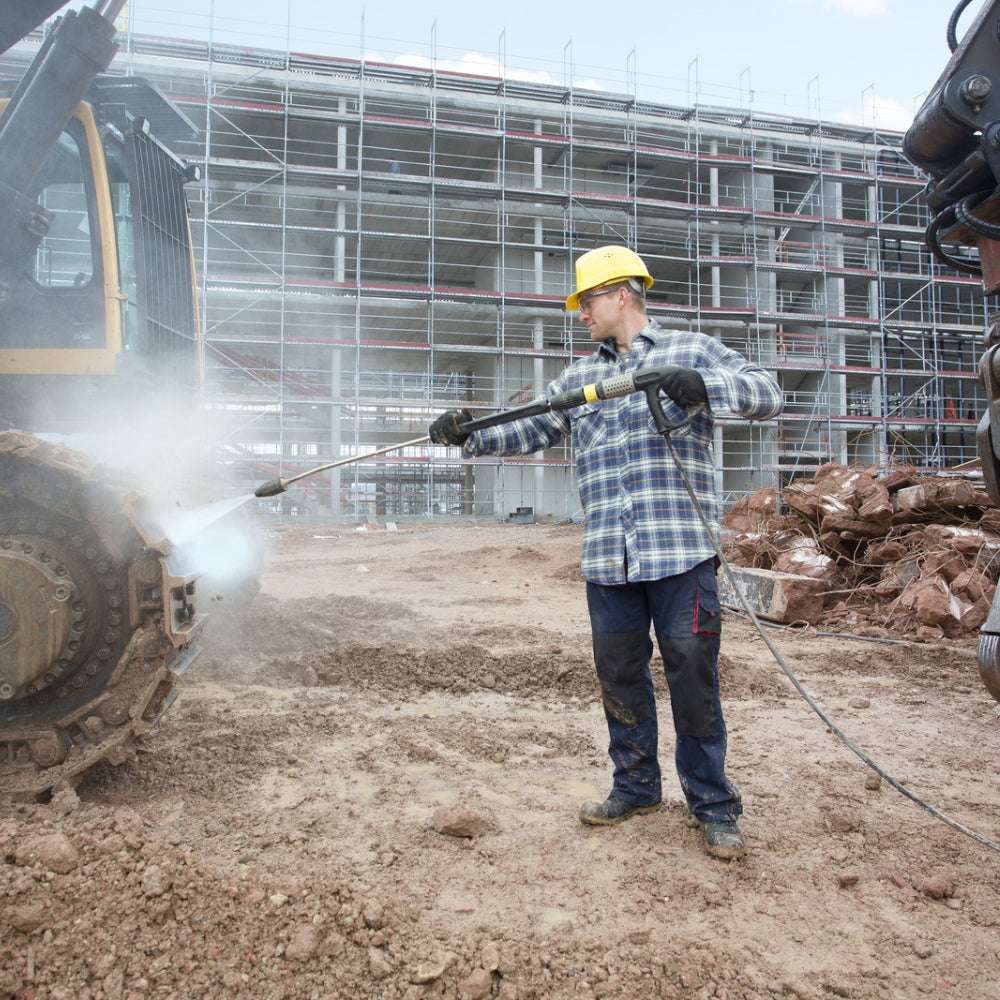
Diesel pressure washer commercial: the short answer
Choose a commercial diesel pressure washer when the site has no reliable mains power and the work needs long runs, hot water or both. Compare flow in L/min first, then heat, then pressure. Check the bar × L/min figure for the operator class, plan fuel storage, and keep the machine in open air.
The rest of this article puts numbers to each of those steps, using figures shown on Freshway's own product pages.
Why diesel exists on a commercial site
Most pressure washer decisions start with the power supply. An electric unit needs the right outlet within reach of the job. A petrol unit frees you from the outlet but adds a second fuel to the ute when everything else on site runs on diesel. A diesel unit closes that gap: the excavator, the generator and the washer can all be refuelled from the same tank.
Heat is the second reason. On Freshway's listings for the Kärcher HDS 1000 DE and the HDS 13/20 De Tr1, a Yanmar diesel engine drives the pump and a diesel burner heats the water. Hot water does part of the work that chemicals and extra pressure would otherwise do on hydraulic oil, grease and diesel soot. A cold water diesel, such as the B.A.R Kohler-powered unit, suits mud and clay where heat adds little.
The trade-off is weight, noise and exhaust. Freshway lists the HDS 1000 DE at 165 kg, and the HDS 13/20 De Tr1 comes on a road-ready trailer chassis rather than a trolley. These are machines you move to the work, not machines you carry.
Parameter ranges on Freshway's diesel listings
The table below uses the figures each Freshway product page lists. Where a page gives flow in litres per hour, it has been divided by 60. Where it gives pressure in PSI only, it has been converted at 14.5 PSI per bar and rounded.
| Freshway listing | Water | Listed pressure | Listed flow | Flow in L/min | bar × L/min (upper figure) | Other listed details |
|---|---|---|---|---|---|---|
| Kärcher HDS 1000 DE | Hot, 80 to 98°C | 230 bar | 450 to 900 L/h | 7.5 to 15 | 3,450 | Yanmar L 100 V engine, 21 L engine fuel tank, 165 kg, pneumatic wheels |
| Kärcher HDS 13/20 De Tr1 | Hot | 2,900 PSI (about 200 bar) | Up to 1,300 L/h | Up to 21.7 | about 4,330 | 19 kW Yanmar engine, trailer chassis, 30 m hose on an integrated reel |
| B.A.R Kohler-powered diesel | Cold | 3,500 PSI (about 241 bar) | 15 L/min | 15 | about 3,620 | Kohler KD15-440 10 HP with electric start, Comet plunger pump, 15 m hose, four-wheel frame |
The spread is wider than the pressure column suggests. The HDS 13/20 De Tr1 lists the lowest pressure of the three and the highest flow, by a margin of almost 7 L/min over the other two.

Reading the numbers: flow, heat and operator class
Start with flow, because it sets how fast soil leaves the surface. At 15 L/min, 10 minutes of trigger time puts 150 litres through the gun. At the Tr1's upper figure of 21.7 L/min, the same 10 minutes is about 217 litres. On a muddy excavator, that extra volume is usually the difference you notice first.
Water supply follows from the same sum. A machine drawing 21.7 L/min for an hour of trigger time needs about 1,300 litres, which is the listed hourly flow. If the site water comes from a tank on a trailer, size the tank to the hours of washing you plan between refills, and check the inlet requirements in the machine's manual.
Then check the operator class. WorkSafe Victoria's high-pressure water jetting alert summarises AS 4233.1: Class A covers 800 to 5,600 bar litres per minute, and Class B is anything above 5,600, with operators trained and assessed through a Registered Training Organisation. All three machines in the table sit in Class A on their highest listed figures. The same alert says training should be given by a competent person and refreshed at least every two years.
Heat is the last field. The HDS 1000 DE lists 80 to 98°C. The Tr1 listing describes a diesel burner but does not state a temperature range, so ask for it before you compare the two on degreasing.
Fuel logistics: one fuel, two jobs
A diesel hot water unit uses fuel twice: once in the engine and once in the burner. Freshway's listings for both Kärcher units say the pump engine and burner run on diesel, so only one fuel type needs to travel to site. That simplifies the ute, but it does not remove the storage question.
SafeWork NSW classes diesel as a Category 4 flammable liquid, equivalent to a C1 combustible liquid, and sets placard rules for tanks and packages above certain quantities. Its flammable substances guidance lists diesel among flammable liquids and says they must be kept in the lowest practical quantity at the workplace.
In practice that means three habits. Carry the fuel you need for the shift, not for the month. Refuel with the engine and burner off and cool. Keep a spill kit with the machine, because a diesel spill on a wash pad ends up in the wash water.
Shutdown is part of fuel planning too. Jetblaster's guide to self-contained hot water contractor setups notes that its own diesel-heated manual tells operators to switch off the burner and run cold water until the system has cooled before shutting down. It also points out that self-contained still means arranging water and diesel. Follow the sequence in the manual for your model.
Noise, exhaust and people nearby
A diesel engine running all shift is a noise source. The SafeWork NSW code of practice on managing noise sets the exposure standard at LAeq,8h of 85 dB(A) or a peak of 140 dB(C). None of the three Freshway listings in the table quotes a sound level, so ask for the figure before the machine goes near a school, aged care site or occupied office.
Exhaust is the other neighbour issue. SafeWork NSW's carbon monoxide guidance lists diesel engine operators among exposed workers and says enclosed or restricted spaces carry a higher risk because the gas accumulates. A diesel unit belongs outdoors or in a well ventilated bay, with the exhaust pointed away from the operator, doorways and air intakes.

Spec-sheet fields to check on a diesel pressure washer
- Flow in L/min. Convert L/h by dividing by 60, then compare machines on flow before pressure.
- Bar × L/min. Multiply the upper pressure in bar by the upper flow. Above 5,600 means Class B and RTO training.
- Hot or cold, and the temperature range. If a listing does not state it, ask.
- Engine and start type. The Kohler-powered unit lists electric start. The Kärcher units list Yanmar engines.
- Fuel tank size and burner fuel. The HDS 1000 DE lists a 21 L engine tank. Ask about burner fuel capacity where it is not shown.
- Hose length and reel. The Tr1 lists a 30 m hose on an integrated reel, and the Kohler unit a 15 m hose.
- Weight and transport. Trolley, four-wheel frame or trailer, and who will load it.
- Sound level. Not listed on these pages, so request it in writing.
Diesel vs petrol vs electric: the trade-offs
Diesel is not automatically the heavy-duty answer. If the job is a fixed wash bay with three phase power, an electric hot water unit from the hot water pressure washers range removes fuel handling and exhaust from the bay altogether. If the job is a mobile cold water round for driveways and shopfronts, a cold water unit from the petrol pressure washers collection avoids carrying a burner and boiler you will not use.
Diesel earns its place where three things overlap: no reliable power, long running hours, and heavy soil such as grease, clay or soot on plant. For a deeper comparison of the two engine types, read diesel vs petrol pressure washers for commercial work.
Common mistakes to avoid
- Buying on the PSI headline. The table shows the lowest listed pressure paired with the highest flow.
- Running a diesel hot water unit in a closed shed because it does not need mains power.
- Letting wash water reach the stormwater grate. NSW EPA's stormwater guidance says runoff from washing equipment must not enter stormwater drains and should be confined to a designated wash bay.
- Stockpiling fuel on site instead of carrying what the shift needs.
- Skipping the cool-down sequence after hot water work.
- Pairing hoses or accessories rated below the machine's maximum pressure.
Frequently asked questions
Does a diesel pressure washer need mains power?
Not for the units covered here. Freshway's listings for the Kärcher HDS 1000 DE and HDS 13/20 De Tr1 describe a diesel engine driving the pump and a diesel burner heating the water. You still need a suitable water supply and diesel fuel on site.
Can I run a diesel pressure washer inside a workshop?
Only with careful ventilation, and usually it is better not to. SafeWork NSW says carbon monoxide risk is higher in enclosed spaces because the gas accumulates. Keep diesel units outdoors or in a well ventilated bay, and choose electric for indoor wash areas.
How much flow does a diesel machine need for plant wash-down?
For mud and clay on earthmoving plant, flow matters more than pressure. The three Freshway diesel listings covered here range from 7.5 to 21.7 L/min. Match the flow to the size of the equipment and the water you can supply on site.
Do operators need special training for a diesel pressure washer?
Training depends on the class, not the fuel. WorkSafe Victoria says Class B systems, above 5,600 bar litres per minute, need RTO training. The three machines covered here are Class A, but operators should still be trained by a competent person.
Next steps with Freshway
Write down the site's power, water source, soil type and weekly washing hours, then compare machines in the diesel pressure washers collection on flow, heat and class. If the site does have reliable outlets, check the electric pressure washers range as well before deciding. Check each product page for current pricing and availability, and talk to the Arncliffe team through service and repairs about pump and burner servicing before the machine heads out to site.