Avoiding Over-Spec: Why More Bar Is Not Always Better
Size the machine to the softest surface you clean each week, then add flow, not bar.
Shop now
The job was a set of old sandstone entry steps at a Sydney strata block. The operator had the biggest machine in the van, clipped on the narrowest nozzle and started close to get through the black staining quickly. Twenty minutes later the steps looked clean, but the surface felt rough, the mortar lines were deeper than before, and the runoff at the bottom was gritty with sand.
That kind of damage comes from a decision made at purchase, not on the day. This guide answers the questions operators and buyers ask about pressure washer over-spec, in the order they usually come up, and uses Freshway listings to show where a smaller bar figure is the better tool.
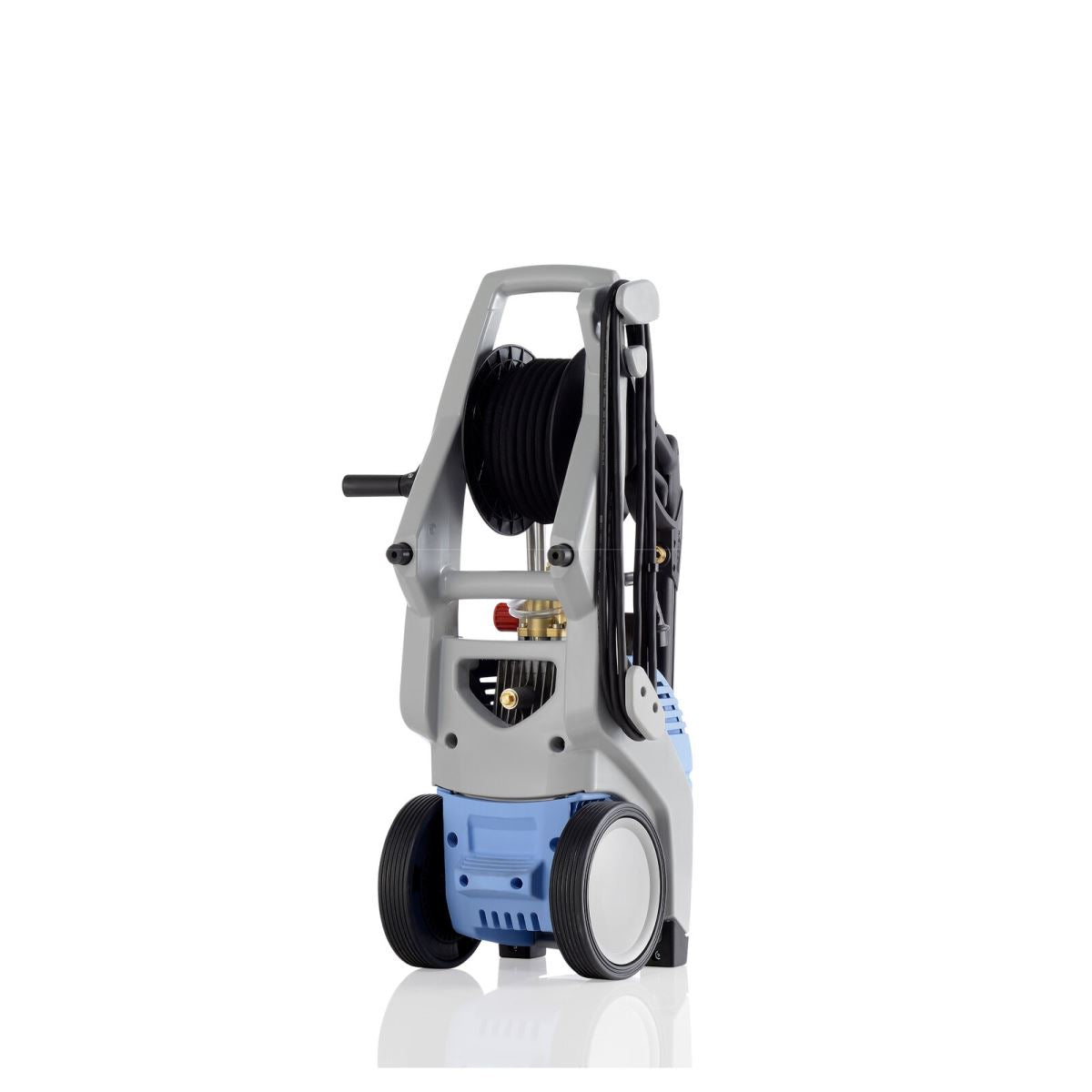
Pressure washer too much pressure: the short answer
Too much pressure can damage soft surfaces and raises injury risk without making most jobs faster. Rinse speed comes from flow, not bar. Size the machine to the softest surface you clean regularly, choose flow in L/min for rinse speed, and use nozzles, heat or detergent before adding pressure.
The answers below explain each part of that, then finish with worked examples you can copy for your own jobs.
What actually goes wrong when the pressure is too high?
The step scene above is a composite, but each part of it shows up on real jobs. Pressure that is too high, or a narrow jet held too close, removes the surface along with the dirt. On masonry that means etched stone and washed-out joints. On painted or coated surfaces it means lifted coatings. On timber it means raised, furry grain.
Heritage bodies set the clearest limits. Place Management NSW's standard exemptions say cleaning of significant fabric with water must only use low-pressure water, not exceeding 500 kPa (72 psi) unless a qualified heritage professional advises otherwise in writing. Queensland's heritage technical note on inspection and cleaning says not to use cleaning devices that use a high-pressure spray, and warns that over cleaning can accelerate deterioration of older building fabric.
Over-spec has a quieter cost too. A bigger machine is heavier to move, takes more training, and spends most days turned down to protect the surface it is cleaning.
Is more pressure a safety issue as well?
Yes. WorkSafe Victoria's high-pressure water jetting alert lists the main risks as the water jet piercing the skin, contaminated material being injected into the body, flying debris and a flailing hose or nozzle. It sets Class A at 800 to 5,600 bar litres per minute and Class B above that, with Class B operators trained through a Registered Training Organisation.
The same alert says refresher or extra training should be given when operators move to new or more powerful equipment. A bigger machine is not just a bigger purchase. It is a training and supervision commitment.
Why do buyers over-spec in the first place?
Mostly it is insurance thinking. A buyer pictures the worst job of the year, such as oil-stained concrete or dried render, and buys for that day. The other 300 days are spent turning the machine down, swapping to a wider nozzle or standing further back, which is the long way of owning a smaller machine.
The PSI headline makes it worse. It is the largest number on most boxes, so it becomes the comparison. Flow is printed smaller, sometimes in litres per hour, and gets skipped. Jetblaster's guidance on pressure cleaners losing pressure adds a related warning: do not increase pressure or alter internal controls to compensate for weak performance, because the cause may be something else entirely.
How do I right-size a machine for my jobs?
- List the surfaces you clean every week, not the worst one each year.
- Mark the softest one. Sandstone, older brick, timber, painted render and signage set the ceiling.
- Pick flow for the area. Larger areas need more L/min to rinse in a reasonable time.
- Check the power you will have. A 10 A outlet, 15 A outlet, three phase or no power at all.
- Add tools before bar. A rotary nozzle, surface cleaner, detergent or hot water usually solves the hard job.
- Check the class. Multiply upper bar by upper L/min and stay in Class A unless you can train for Class B.
If not more bar, then what?
Flow. The table lists four Freshway machines from small to large. Flow given in litres per hour has been divided by 60, and PSI-only figures converted at 14.5 PSI per bar.
| Freshway listing | Listed pressure | Flow in L/min | bar × L/min (upper figure) | Listed power |
|---|---|---|---|---|
| Kränzle K1050P | Adjustable up to 130 bar | 7.5 | 975 | 240 V, 10 A plug |
| Kränzle K1152TST | Adjustable up to 120 bar | 10 | 1,200 | 240 V, 10 A plug |
| Kärcher HD 5/12 C Plus | 175 bar maximum | 8.3 to 10 (500 to 600 L/h) | 1,750 | 240 V single phase |
| PowerShot PS4200HD | 4,200 PSI (about 290 bar) | 16 | about 4,630 | Honda GX390 13 HP petrol |
Look at the first two rows. The K1152TST lists less pressure than the K1050P but a third more water, 10 L/min against 7.5. For rinsing a footpath or a loading dock, the lower-bar machine finishes first.

Which spec-sheet fields should I check?
- Adjustable pressure. The K1152TST and K1050P listings both say pressure is adjustable, which lets one machine cover soft and hard surfaces.
- Flow in L/min. Convert L/h to L/min before comparing.
- Nozzles supplied. The K1152TST lists a Dirtkiller nozzle and a Vario-Jet nozzle, each on a 500 mm lance, with a D12 quick release.
- Stop and protection systems. The K1152TST lists Total-Stop switch-off and a dry-run safety system. The HD 5/12 C Plus lists automatic pressure relief.
- Plug and supply. A 10 A plug suits a standard outlet. SafeWork NSW's RCD guidance covers plug-in equipment used where it is exposed to moisture.
- Weight. 19 kg for the K1050P, 25.2 kg for the HD 5/12 C Plus and 32 kg for the K1152TST, against 55 kg for the PS4200HD.
What mistakes do operators make on site?
- Using the zero-degree or rotary nozzle on everything because it looks fastest.
- Closing the distance instead of letting detergent dwell.
- Turning the unloader up when cleaning slows. An Aussie Pumps product catalogue hosted by Alpha PMS says worn nozzles cause loss of pressure, so replace the nozzle first.
- Skipping a test patch on old masonry, timber or coated surfaces.
- Moving to a more powerful machine without refresher training.

Worked examples: matching three jobs to a machine
Strata footpaths and entries. Ten minutes of trigger time on the K1152TST moves 100 litres of water. The K1050P moves 75 litres in the same time at a higher listed pressure. For loose dirt, leaf stain and general rinsing, the 10 L/min machine is the faster choice, on a standard 10 A outlet.
Heritage sandstone steps. Place Management NSW's limit of 500 kPa is 5 bar. The K1152TST at full setting is 120 bar, or 12,000 kPa, which is 24 times that limit. Every machine in the table is far above it, so this job needs written heritage advice and a low-pressure method, not a pressure washer at full output.
Large car park. Here more output is justified, but by area, not by stain. The PS4200HD lists 16 L/min, and at about 4,630 bar litres per minute it stays in Class A. Pair it with a surface cleaner rated for its pressure, and the extra capacity goes into coverage rather than into the concrete. For concrete pressure ranges, see how much pressure you need to clean concrete safely.
Frequently asked questions
Do I need 3,000 PSI in Australia?
Usually not for general commercial washing. 3,000 PSI is about 207 bar. The electric machines in the table list 120 to 175 bar and suit general rinsing work. Buy more only for heavy soil over large areas.
Can too much pressure damage concrete?
Yes. A narrow jet held close can etch the surface and open joints. Use a wider nozzle or a surface cleaner and test a small area first.
Is flow more important than pressure?
For rinsing, yes. Flow in L/min carries soil away. Pressure only needs to loosen it.
Should I turn the pressure up when cleaning slows?
No. Check the nozzle first, because worn nozzles lose pressure. If that does not fix it, have the machine checked rather than adjusting internal controls.
Next steps with Freshway
Start with the softest surface on your regular jobs and work up. Compare adjustable, flow-focused machines in the Kränzle pressure washers range and the wider commercial pressure washers collection, then add nozzles and surface cleaners from the pressure washer accessories range. The full pressure washers collection covers petrol and hot water options for larger sites. Check each product page for current pricing, and see the B2B page if you are buying for a fleet.