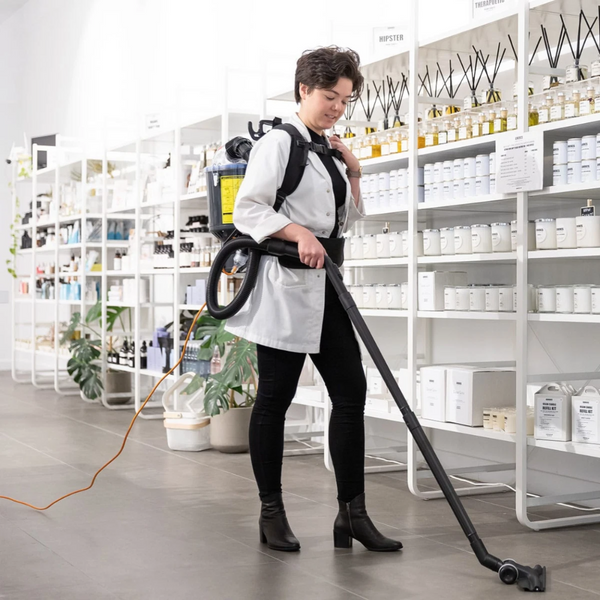
The barrel or canister format remains the most common commercial vacuum shape, and the reason is stability rather than suction. A canister sits on the floor and follows the operator, which suits long cleaning runs.
Why canisters persist alongside backpacks
Canister vacuums suit large open floors where the machine can be towed behind, and they carry larger capacity and more filtration than a stick. Backpacks suit stairs and multi-floor work. Where a site has both, most teams run one of each rather than trying to cover everything with one format.
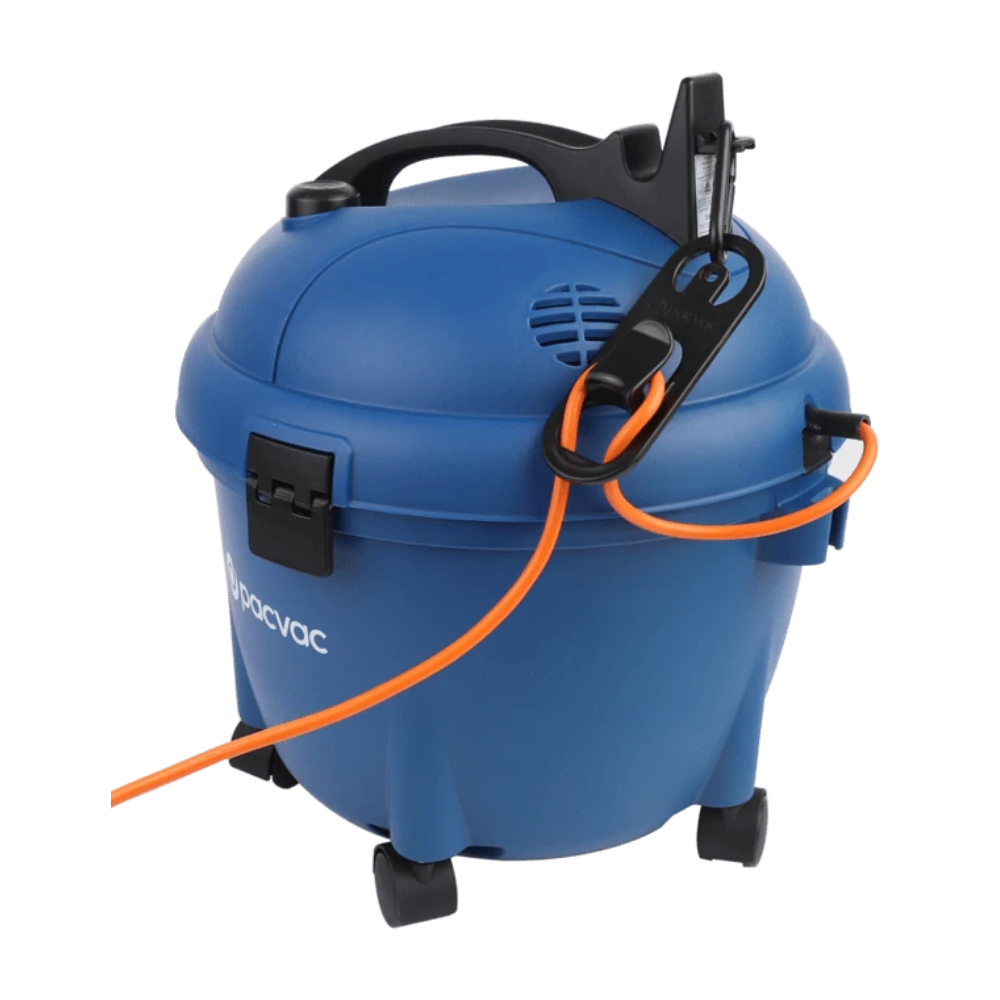
Prices are Freshway catalogue prices as at 16 September 2026 and are subject to change. Confirm the current price, and whether GST applies, before quoting.

Machines we stock
| Model | Brand | Price |
|---|---|---|
| Glide 300 canister vacuum | Pacvac | A$299.00 |
| Hush canister vacuum | Pacvac | A$429.00 |
| James JVP180 canister vacuum | Numatic | A$499.00 |
| Henry HVR200 canister vacuum | Numatic | A$599.00 |
| PV25 hospital canister floor polisher | Polivac | A$3,350.00 |
Filtration and where it matters
Canister machines generally accept larger filters than stick or backpack formats, which is why they appear in filtration-specified sites. Where a class or HEPA rating is required, the canister format is often the only one that can carry the filter the specification demands.

Capacity and weight trade-off
Canisters hold more than backpacks, but a full canister has to be moved, and on multi-storey sites that becomes the constraint. The practical split: canisters on single-level open floors, backpacks where stairs and multiple levels are involved.
Bags, filters and consumables
Consumables are model-specific, and holding a spare set per machine removes the downtime. Our dust bags and filters ranges cover the common canister families.
Noise and daytime cleaning
Noise determines when a machine can be used in occupied buildings, and canister models vary considerably. Where cleaning happens during business hours, the noise rating is worth checking before the suction figure.
Maintenance
- Empty and check the bag weekly.
- Inspect filters monthly.
- Check the hose and cuffs for leaks.
- Store with a dry filter.
Noise and handling on site
Two requirements decide whether a canister works in a particular building. The first is noise, because canister vacuums run for long periods in occupied space and the noise at work rules apply to the operator regardless of who else is in the room. The second is handling: full canisters and long hose runs are lifted and dragged all day, which is the kind of repetitive task SafeWork NSW covers under hazardous manual tasks.
Frequently asked questions
- What is a barrel vacuum?
- A barrel vacuum, also called a canister vacuum, has the motor and dust container in a body that sits on the floor and follows the operator, with the cleaning head on the end of a hose. That arrangement suits hard floors, mixed surfaces and long runs of cleaning.
- Are barrel vacuums better than stick vacuums?
- For long sessions on hard floors and mixed surfaces, yes: the body is carried by the floor rather than the operator’s wrist, capacity is larger, and filtration is easier to specify. Stick vacuums win on speed for small carpeted rooms and spot pickup, which is why most sites keep both.
- Which is the best canister vacuum?
- The one that matches the site’s floor types, capacity requirement and filtration class. For general commercial work, canisters in the A$300–600 range cover most requirements; where a dust class is specified, that requirement decides the model rather than the capacity.
- Canister or backpack vacuum for commercial cleaning?
- Canister for large open floors where the machine can be towed, backpack for stairs and multi-level buildings. Most commercial teams run one of each rather than a single format.
- Do canister vacuums have HEPA filtration?
- Many do, and the larger body makes HEPA filtration more practical than in stick formats. Where a site specifies filtration, confirm the specific model rather than assuming across a range.
Choosing a vacuum format?
Tell us the floor types and number of levels, and we will recommend a format and filtration level. See canister vacuums or ask our team.