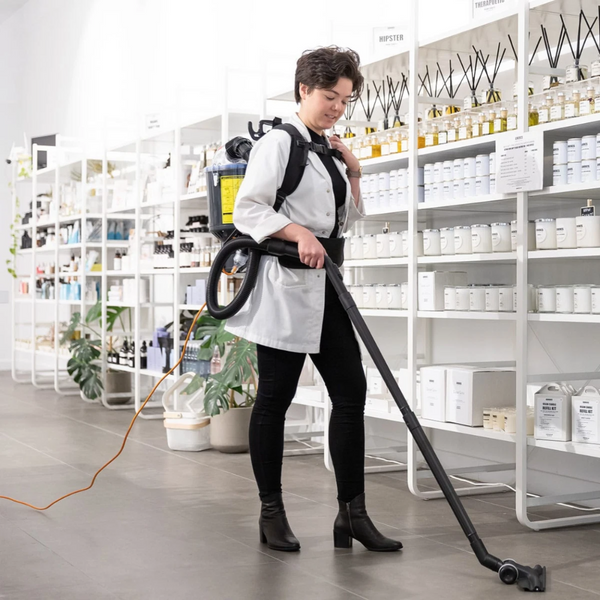
A sweeper is the cheapest way to cover a large hard floor, and the category splits sharply by how the machine is moved. The choice is decided by floor area and aisle width rather than by cleaning performance.
Match the format to the aisle, then the area
Push sweepers suit areas up to a few hundred square metres and narrow aisles. Walk-behind battery sweepers suit mid-size floors where labour hours matter. Ride-on sweepers only pay off on very large areas with wide aisles. Track width and turning circle decide whether a machine can actually work the space before capacity does.
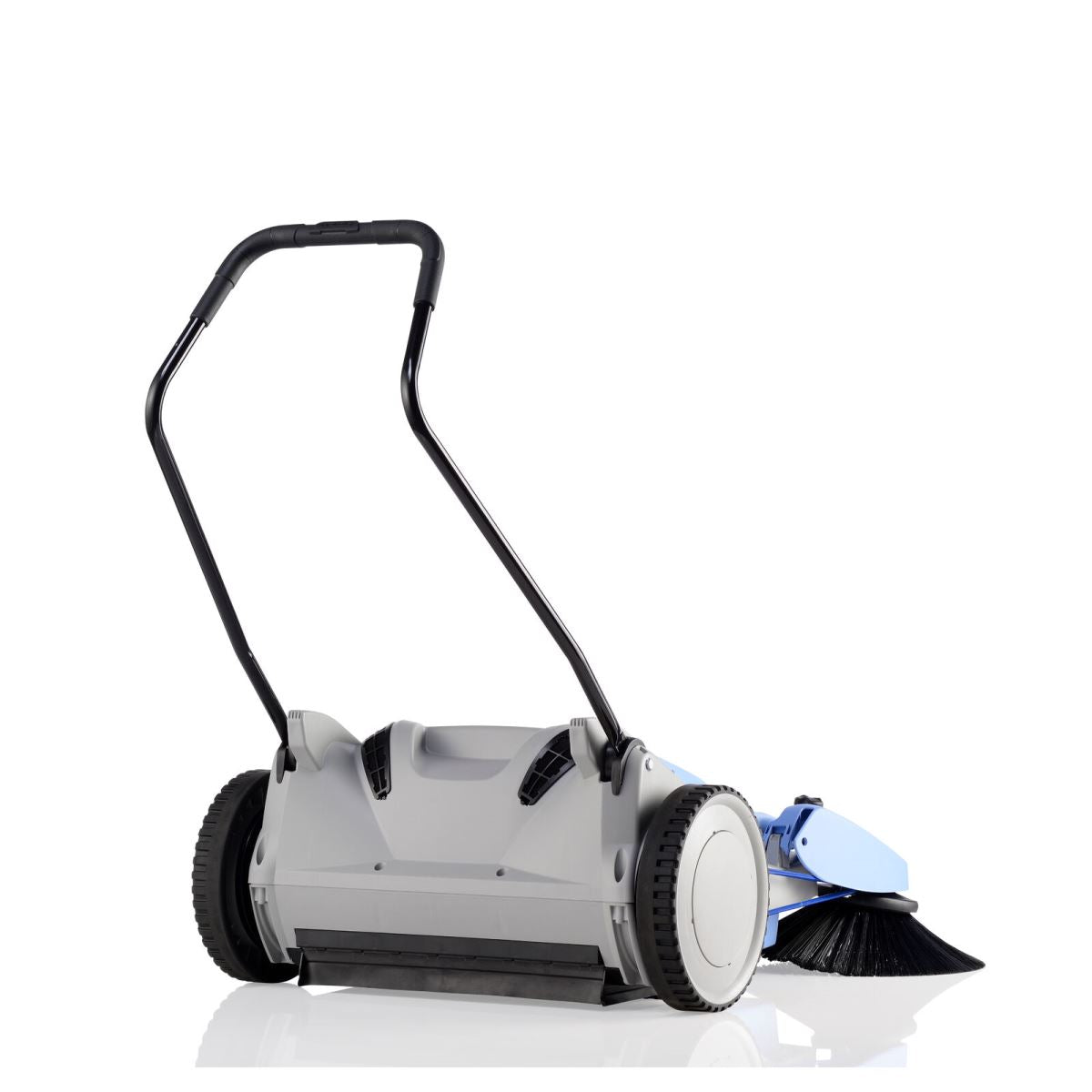
That ordering matters because a ride-on machine in a cluttered warehouse can be slower than a push sweeper, and the purchase price difference is substantial.
Prices are Freshway catalogue prices as at 16 September 2026 and are subject to change. Confirm the current price, and whether GST applies, before quoting.

Sweepers we stock
| Model | Format | Price |
|---|---|---|
| Karcher S4 Twin push sweeper, 20 L | Mechanical push, outdoor | A$456.85 |
| HAKO Manual Flipper+ push sweeper | Mechanical push | A$999.00 |
| Cleanstar ACTIV8 battery vacuum head and cordless sweeper | Battery | A$1,099.00 |
| Nilfisk SW250 manual push floor sweeper | Mechanical push | A$1,112.27 |
| Kranzle Colly 800 manual push sweeper | Mechanical push | A$1,315.00 |
| Haaga 477 dual brush industrial sweeper, 50 L | Mechanical push, industrial | A$1,399.00 |
| Haaga 697 industrial sweeper | Mechanical push, industrial | A$1,627.15 |
| Haaga 677 battery indoor and outdoor sweeper | Battery | A$2,295.00 |
| HAKO Sweepmaster B500 battery walk-behind | Battery walk-behind | A$4,900.00 |
Note the gap between mechanical push sweepers at A$456–1,627 and battery machines at A$1,099–4,900. A mechanical push sweeper has no battery to replace, no motor to service and no downtime — which is why it remains the specification on many sites where a powered machine would be bought on appearance.
What actually decides the format
- Aisle width and turning space — a wide machine that cannot turn is useless.
- Floor area per shift — push sweepers cover roughly 1,000–2,000 m² per hour, battery walk-behinds considerably more.
- Debris type — coarse debris and dust need different brush and filtration configurations.
- Indoor or outdoor — outdoor sweepers handle rougher surfaces and larger debris; indoor machines prioritise dust containment.

Sweeping versus scrubbing
The two tasks are different and neither replaces the other. Sweeping removes dry debris before it becomes mud; scrubbing removes the film that sweeping leaves behind. On a warehouse floor, sweeping daily and scrubbing periodically is the standard pattern, and buying a scrubber to do both jobs leads to a machine that does neither well.
Brushes and consumables
Side brooms and main brooms are the consumables, and they are model-specific. Our Nilfisk sweepers range covers replacement brushes, and holding a spare set prevents a machine sitting idle over a wear item.
Sizing by productivity
Manufacturers publish coverage rates per hour. Halve the claim for a cluttered floor, then divide the site area by that figure. If the result is more than a shift, either the machine is too small or the frequency is unrealistic — and the honest answer is often to sweep a smaller area more often rather than buy a larger machine.
When a sweeper is the wrong purchase
Sweepers are the wrong answer where the floor is wet, where fine dust requires vacuum filtration rather than sweeping, or where the area is small enough that a broom and dustpan is faster. On sites with a dust class requirement, a classed vacuum is required and a sweeper does not satisfy it.
Maintenance
- Empty the hopper after each use rather than at the end of the week.
- Check brush contact — brooms that no longer touch the floor are the most common reason a sweeper appears to be failing.
- Clean filters on machines with dust filtration, at the manual’s interval.
- Charge batteries after use on powered machines, and store at partial charge if idle for long periods.
Moving plant, noise and site rules
A ride-on or walk-behind sweeper is mobile plant, and on a worksite that brings duties that a broom does not: pedestrian segregation, safe operating procedures, and in some buildings a speed and access restriction. SafeWork NSW sets out the underlying requirements in its machinery and equipment guidance, and where sweepers run in occupied buildings the noise at work obligations apply as well.
Frequently asked questions
- Do floor sweepers work?
- Yes, on the right debris. A sweeper with rotating brushes lifts dry dirt, packaging and grit into a hopper faster than a broom because it covers a wider path and does not rely on the operator’s wrists. It will not pick up liquids, fine dust without filtration, or debris too large to pass under the brush housing.
- What is the best floor sweeper?
- There is no single best machine, because the format is decided by the building. Push sweepers suit small areas and tight aisles, walk-behind powered sweepers suit warehouses, and ride-on machines only earn their cost where aisles are wide and the area is large enough to keep the machine moving.
- What is the difference between a sweeper and a scrubber?
- A sweeper removes dry debris with rotating brushes. A scrubber applies solution, agitates and recovers it, cleaning the floor surface. Sweeping and scrubbing are typically both required, at different frequencies.
- Do I need a ride-on sweeper?
- Only where the area is very large and aisles are wide enough to use the machine efficiently. In a cluttered warehouse a walk-behind or push sweeper is often faster, because the constraint is manoeuvrability rather than coverage.
- Why is my sweeper not picking up?
- Usually brush contact rather than a mechanical fault. Check that the brooms still touch the floor, that the hopper is not full, and that the brush height adjustment has not moved. On a battery machine, check the battery and charge state before assuming a mechanical failure.
Choosing a sweeper?
Tell us the floor area, aisle widths and debris type, and we will recommend the format rather than the biggest machine. See sweepers or ask our team.