Wet and Dry: When a Barrel Vacuum Beats a Backpack
Keep backpacks on dry routes and send every spill to a barrel.
Shop now
Ten minutes before the lunch bell, a drink fountain in a school corridor starts leaking across the vinyl. The cleaner on the afternoon route has a backpack vacuum on, and the obvious move is to run it over the puddle. That is how backpack motors end up at the repair bench. Down the corridor, the caretaker's cupboard holds a wet-and-dry barrel that would have cleared the floor in a few minutes.
This guide is for facility teams and buyers deciding which machine handles liquid on their sites. It compares the two formats on wet work only, sets out a spill routine, and lists the specification fields that matter when you shortlist a barrel.
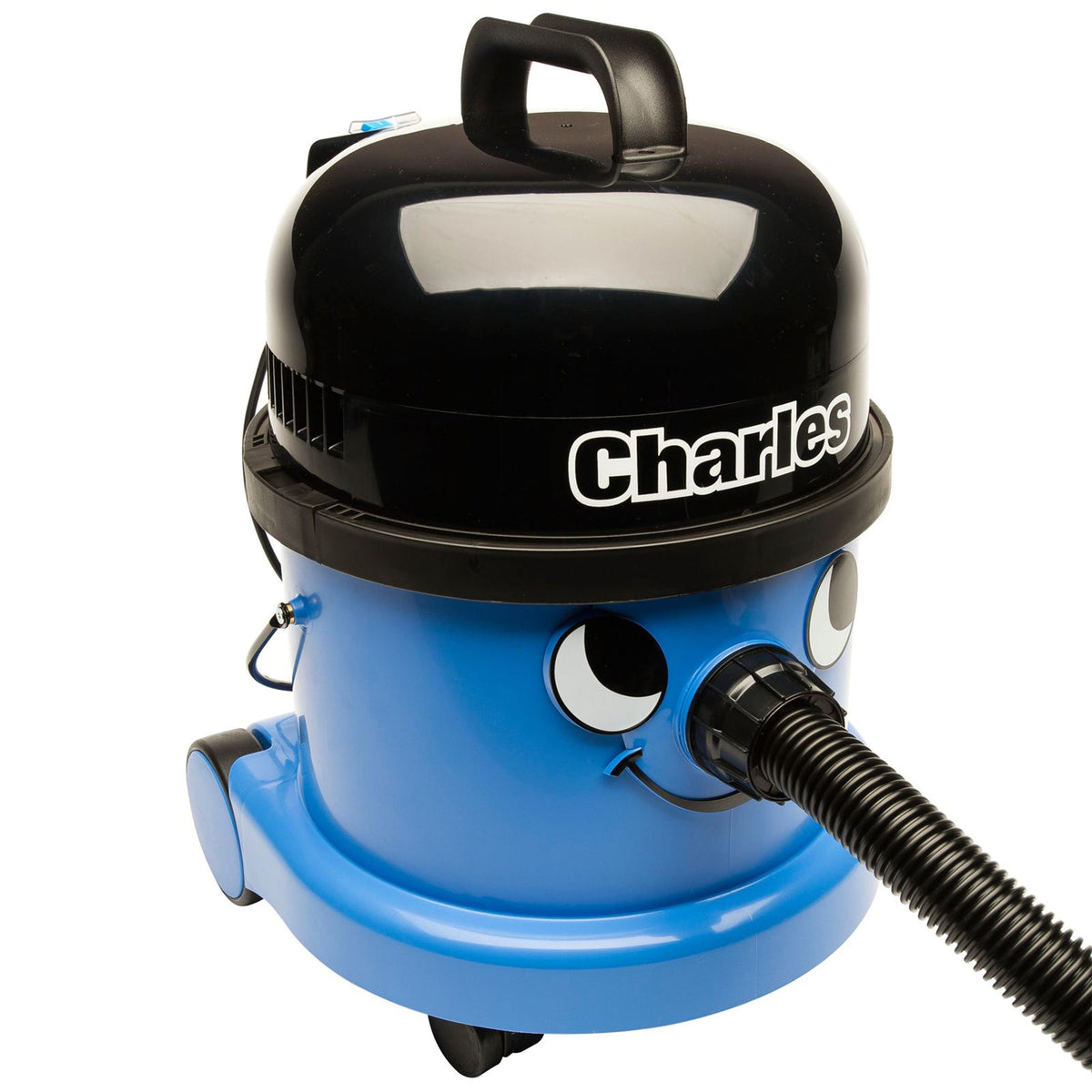
Wet dry barrel vs backpack: the short answer
A wet-and-dry barrel beats a backpack whenever liquid is part of the job: spills, leaks, flooded floors or scrubber support. Backpacks on Freshway's range are dry machines, and even a bypass-motor backpack is only protected against accidental liquid. Keep backpacks on dry routes and send liquid to a barrel with a float shut-off.
The rest of the decision is about which barrel, where it lives on site, and how it is emptied and dried afterwards.
Wet pickup reality check
Wet pickup is a different job from dry vacuuming. Water is heavy, it fills a tank quickly, and it has to go somewhere afterwards. Three figures from Freshway's listings put that in perspective:
- The Numatic Charles CVC370 holds 15 litres dry but 9 litres wet.
- The Numatic WVD570 holds 23 litres dry and 15 litres wet.
- The cordless Makita VC003GL holds 15 litres dry and 12 litres wet.
Wet capacity is always the smaller number, and it is the one to plan around. A litre of water weighs about a kilogram, so a full 9-litre load in a Charles adds roughly 9 kg to a machine listed at 7.1 kg. That is about 16 kg to move to a drain point. A full WVD570 comes to about 31 kg (15.8 kg plus 15 litres).
Spill response SOPs
A written spill routine makes the barrel worth its cupboard space. A simple version for most commercial sites:
- Isolate the area. Put out wet floor signs and, where foot traffic is heavy, a physical barrier or an alternative route.
- Identify the liquid. Water, drinks and mop water are routine. Chemicals, oils or anything unknown need the product's SDS checked first.
- Set the machine up for wet use. Freshway's Charles listing describes swapping the dry HepaFlo bag and Microtex filter for the wet float valve. Follow the conversion steps for your own model.
- Use the wet tool. A squeegee floor tool, pulled towards the operator, recovers more water than a dry floor brush.
- Watch for shut-off. A sudden drop in suction usually means the float has closed. Stop and empty.
- Dispose of it properly. Empty into the site's designated sink or waste point, never a stormwater grate.
- Dry and reopen. Keep people off until the floor is dry, then rinse and air-dry the tank and tools.
The disposal step is a legal one, not a courtesy. The NSW EPA's guidance, the drain is just for rain, tells businesses not to let anything other than clean rainwater enter the stormwater drain on or near their premises.
Barrel strengths
A barrel earns its place on wet work through four features a backpack doesn't have:
- Motor isolation. Freshway describes the Charles as using a TwinFlo bypass motor that keeps the electrical components separate from the wet airflow.
- Overflow protection. The same listing describes a float that blocks the suction hole once the 9-litre wet tank is full, so the machine stops rather than overflowing.
- Emptying aids on larger machines. The 56-litre Ghibli AS12P-CBN has a tilting container. The 70-litre Nilfisk ATTIX 751-61 is a pump-out design listed at about 200 L/min intake and 300 L/min discharge, so it doesn't need lifting to empty.
- Wet tools in the box. The Charles, Ghibli AS9P and Karcher NT 27/1 all list a wet or squeegee floor tool among their inclusions.

Backpack dry-only limits
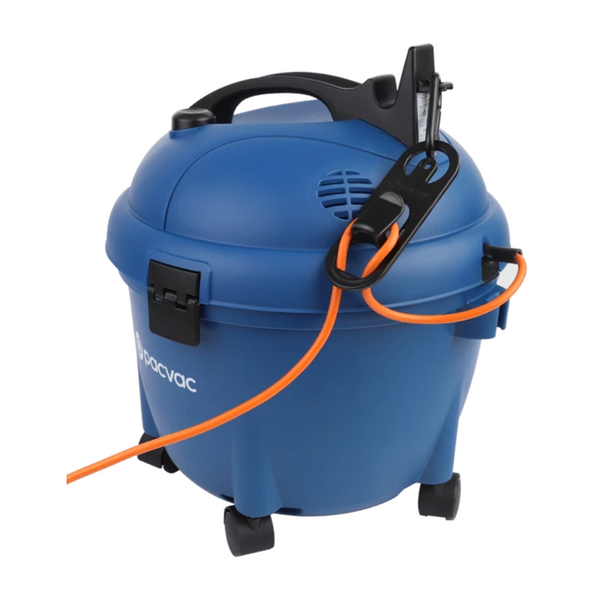
Every backpack in Freshway's Pacvac backpack range is sold as a dry machine. The Superpro Duo is the closest any of them comes to wet tolerance. Its two-stage bypass motor is described as protecting the electrics if a small amount of liquid is picked up by accident. The same listing says plainly that it is fundamentally a dry vacuum and is not designed for wet extraction or flood restoration.
The Duo listing contrasts this with standard machines, where ingested liquid can destroy the motor. The standard Superpro 700, for comparison, is listed with a single-stage flow-through motor. On a pub floor or in a school canteen, where damp debris is common, the Duo is the safer backpack. It is still not a spill machine.
Capacity and load are the other limits. A 5-litre backpack container is sized for dry soil, not water, and any liquid that did get in would be carried on the operator's back.

Combo fleets
Most sites need both formats, each on its own job. Backpacks run the dry routes, and one barrel per building or floor cluster covers liquid. Where there's no power point near the spill, such as car park lift lobbies, loading docks or outdoor dining areas, a cordless wet-and-dry unit from the Makita vacuum range fills the gap. The VC003GL is listed with up to 28 minutes on maximum suction, so treat it as a spill responder, not a flood machine.
For how many of each format to hold across several sites, see Building a Mixed Vacuum Fleet.
Filter care after wet use
Filter setup is where wet-and-dry machines differ most, so check your model's listing before the first wet job:
- Swap systems. The Charles removes its dry bag and filter and runs on the float valve for wet work.
- Washable cartridges. The Karcher NT 27/1 lists a washable PES cartridge filter. The Nilfisk VL500 lists a washable PET filter for use on wet and dry pickup.
- Cloth filters. The Ghibli AS9P and AS12P-CBN list a cloth filter bag or cloth filter among their inclusions.
Whatever the system, the routine after wet use is the same. Empty the tank, rinse it, and let the tank, float and filter dry fully before the machine goes back to dry work or into a closed cupboard. A damp filter put back for dry dust pickup clogs quickly. A tank stored wet starts to smell.
Safety and WHS notes for Australian sites
Slips. SafeWork NSW's guidance on slips, trips and falls on the same level names spills of liquids, water, grease and oil among the floor contaminants to control. Its checklist asks whether wet floor signs are available and used correctly. WorkSafe Victoria's slips, trips and falls page is shorter: clean up spills immediately and fix the causes of spills.
Lifting. WorkSafe Victoria's hazardous manual handling guidance includes reducing the size and weight of objects to be lifted. On wet work, that means emptying before the tank is full, or choosing a tilting or pump-out machine for big volumes.
Electrical. SafeWork NSW's electrical risks fact sheet gives commercial cleaning equipment as an example for more frequent testing under AS/NZS 3760, for example at least once every six months. It also calls for testing after a repair or service that could affect electrical safety. Keep plugs and lead joins out of the water being recovered.
Buying fields
When you shortlist barrels from Freshway's wet and dry vacuums collection, compare these fields:
| Field | Why it matters for wet work | Example from Freshway listings |
|---|---|---|
| Wet capacity | Sets how often you empty | Charles: 9 L wet, 15 L dry |
| Motor type | Bypass keeps electrics out of the wet airflow | Charles: TwinFlo bypass |
| Overflow cut-off | Stops suction before the tank overfills | Charles: float valve |
| Emptying method | Reduces lifting on large volumes | AS12P-CBN: tilting container; ATTIX 751-61: pump-out |
| Filter for wet use | Decides the drying and swap routine | NT 27/1: washable PES cartridge |
| Power source | Corded reach or cordless access | VL500: 10 m cord; VC003GL: battery |
| Weight empty | Add 1 kg per litre of water when full | Charles: 7.1 kg; VL500: 11.5 kg |
For a wider buying checklist on tank handling and dust classes, Freshway's wet and dry vacuum buying guide covers the rest of the range.
Frequently asked questions
Can a backpack vacuum pick up water?
Not as a job. Backpacks on Freshway's range are dry machines. The Pacvac Superpro Duo's bypass motor only protects against small accidental liquid pickup.
What size wet-and-dry barrel suits a school?
Plan around the wet capacity, not the dry figure. A machine with about 9 litres wet, such as the Numatic Charles, suits corridor and canteen spills.
Where should recovered water go?
Into the site's designated sink or waste point. The NSW EPA says only clean rainwater should enter stormwater drains.
Do I need to change the filter for wet pickup?
It depends on the model. The Charles swaps its dry bag and filter for a float valve, while machines like the Karcher NT 27/1 use a washable cartridge.
Is a cordless wet-and-dry vacuum enough for floods?
No. Cordless units suit spills away from power. For large volumes, use a big tank with a tilting container or a pump-out machine.
Next steps with Freshway
Map where liquid actually happens on each site, place one barrel within reach of those spots, and keep backpacks on the dry routes. Check each product page for current pricing, inclusions and availability. If a backpack has already picked up liquid and is running rough, Freshway's Service & Repairs team in Sydney handles backpack and wet-and-dry vacuum repairs and quotes before starting work.