Traction Drive vs Push Scrubbers: Operator Fatigue and Speed
Let weight, distance and ramps decide whether the machine or the operator does the pushing.
Shop now
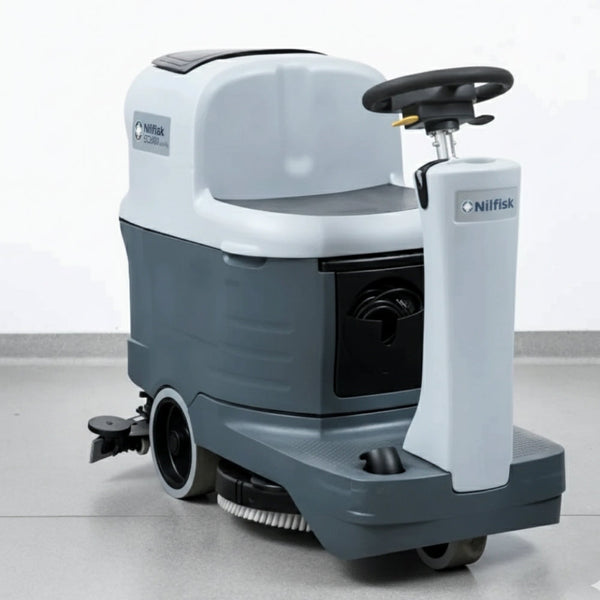
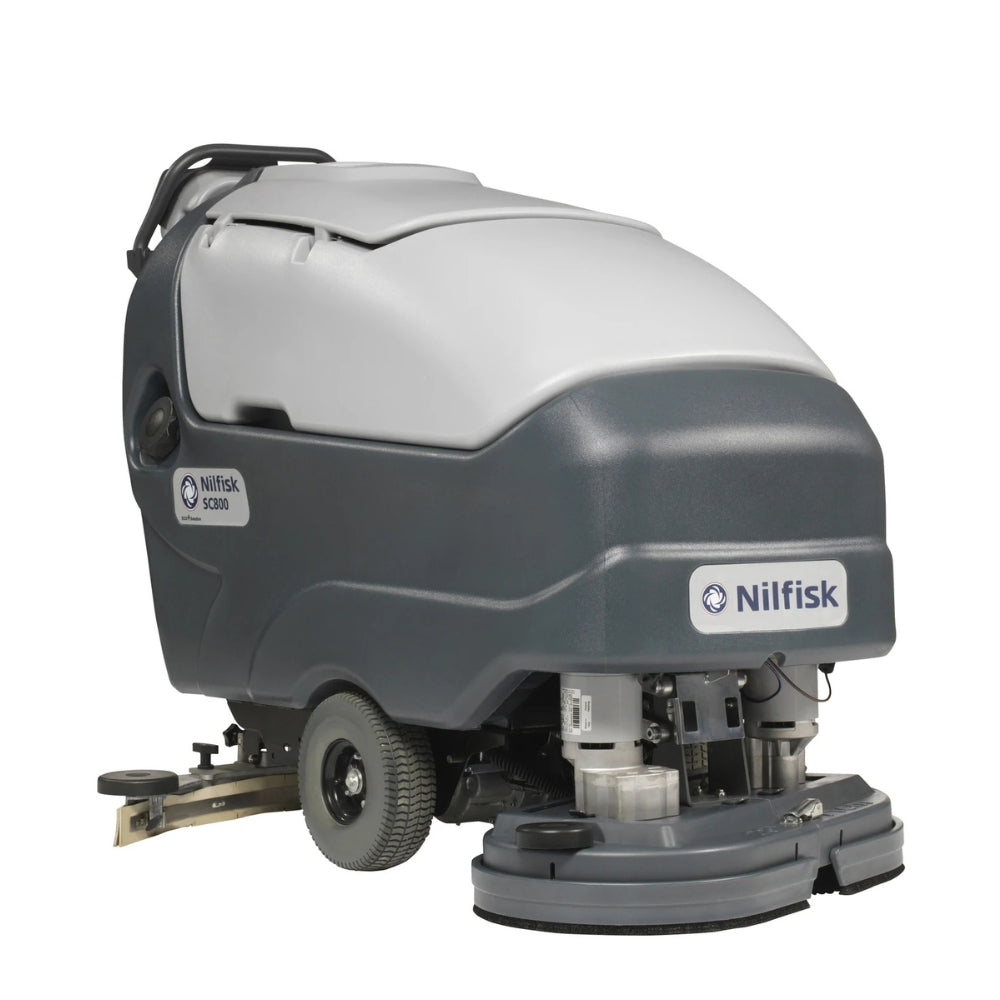
The 487 kg machine can be the easier one to walk behind. That is the operating weight Freshway lists for the Nilfisk SC800, and the same listing says an electric traction motor drives the wheels while the operator simply guides the handle. A much lighter scrubber with no drive has to be moved by the operator's arms, shoulders and legs on every metre of every shift.
So the question is not how heavy the machine is, but who supplies the push. This guide takes an engineer's view of traction drive versus push scrubbers: where operator effort really comes from, what drive does to speed and finish, and how to roll a machine out on site.
Traction drive floor scrubber: the short answer
Choose a traction drive floor scrubber when the machine is heavy, the route is long, or the site has ramps, and one operator runs it for most of a shift. A push scrubber is fine for small, light machines on short, flat routes. Decide by weight, distance, slope and shift length, not scrub width.
Each of those four factors has its own section below, followed by a step-by-step plan for trial, training and sign-off.
Fatigue and repetitive strain: where the effort comes from
An operator puts force into a scrubber in three places: getting it moving, keeping it moving, and stopping or turning it. SafeWork NSW's hazardous manual tasks guidance lists repetitive or sustained force, high or sudden force, repetitive movement and sustained or awkward posture as the risk factors. A push scrubber on a long route can tick all four.
The NSW Hazardous Manual Tasks Code of Practice gives pushing a trolley around hospital wards as an example of sustained force, and pushing an object that is hard to move or stop as an example of high force. Its controls include motorised push and pull equipment, and motorised hand trucks and trolleys that are easy to operate. A traction drive applies the same idea to a scrubber.
WorkSafe Victoria's cleaning injury hotspots page points the same way. For repetitive work and awkward postures, it lists mechanical aids including scrubbing machines and ride-on equipment, and it asks employers to limit the need to push, pull or carry equipment.

Speed consistency and what it does to the finish
A traction machine holds the pace the operator sets. A push machine moves at whatever pace the operator can keep up, and that pace usually falls late in a shift. The difference shows up in two places.
The first is productivity. Freshway lists the SC800 at a 710 mm scrub width, a top speed of 5.8 km/h and a theoretical rate of 4,120 m²/h. The maths checks out: 0.71 m × 5,800 m/h = 4,118 m²/h. A push machine has no fixed top speed to put in that sum. For example, if an operator slows from 4 km/h to 3 km/h, a 400 mm path drops from 1,600 to 1,200 m²/h, a quarter less floor per hour.
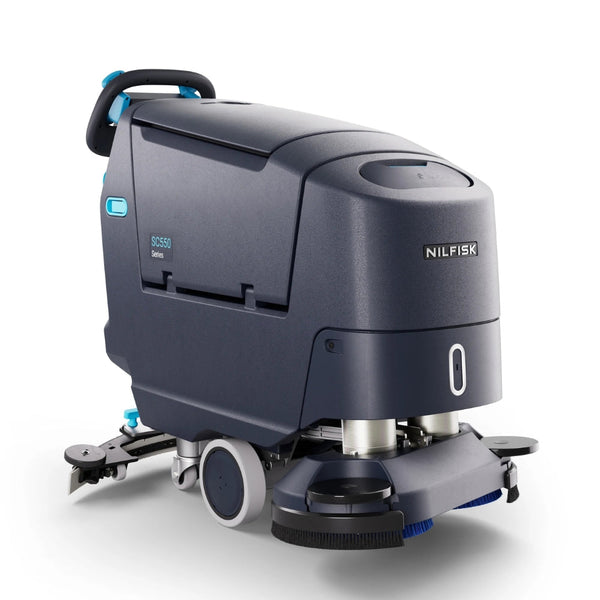
The second is the finish. Solution flow, brush dwell and squeegee pick-up are all tuned around a steady pace. Some machines link flow to speed. Freshway's Nilfisk SC500 listing says SmartFlow ties water and detergent flow to the machine's actual walking speed, which helps when pace varies. On machines without that feature, a slow, uneven push can leave too much solution on the floor.
Ramps, slopes and stopping
Ramps are where the drive question becomes a safety question. Going up, a push machine needs extra force. Coming down, the operator has to hold back the machine's full weight, which is the "hard to stop" case the Code of Practice describes. Its controls include brakes and speed limiters so speed can be controlled.
Wet floors add to the risk. SafeWork NSW's slips, trips and falls page lists sloping surfaces, slippery floors caused by cleaning products or methods, and fatigue among the sources of risk. An operator braced against a heavy machine on a wet ramp has all three.
Before you buy for a site with ramps, ask for the machine's rated gradeability and braking method in writing. Freshway's SC800 listing does not give a gradeability figure, so this is a question for the sales team, not an assumption.
Cost drivers
Prices change, so check each product page. What you can compare is where the money goes.
- Drive hardware. A traction motor, controller and wheels are extra parts to buy and service.
- Battery demand. The drive uses battery capacity as well as the brush and vacuum, so check stated runtime. Freshway lists the SC800 at up to 3.5 hours, battery dependent.
- Labour. Steadier speed means more floor per paid hour, as the sum above shows.
- Injury risk. Less sustained pushing means lower manual-handling exposure, which is hard to price but easy to see in rosters and claims.
When a push scrubber is fine
Small, light machines on short routes do not need traction. Freshway lists the Kärcher BR 40/10 C at 35.5 kg without accessories, with a 400 mm path, 10-litre tanks and a collapsible push handle. It cleans in both directions and runs on 220 to 240 V mains. On a café floor, a washroom block or a small retail unit, the operator is moving a light machine over a short distance.
A corded machine brings its own check. SafeWork NSW says plug-in equipment used where it is exposed to moisture or similar conditions must be regularly inspected and tested by a competent person, so keep the lead on the test and tag schedule.

Spec-sheet fields to check on a floor scrubber
- Drive type in plain words. The Kärcher BR 75/75 W Classic Bp listing states "Traction Motor (Self-propelled)". The SC500 listing describes an "Ergonomic Drive System" with a control paddle but does not say traction, so ask.
- Weight basis. Operating weight and net weight are different. Freshway lists the SC800 at 487 kg operating weight and the SC500 at 75 kg net weight.
- Speed. Top working speed, and whether it can be limited.
- Reverse behaviour. The SC800 listing says the squeegee lifts automatically when the machine reverses.
- Ramp rating and brakes. Ask if they are not on the page.
- Runtime with drive in use. Compare it with your route length.
Traction vs push at a glance
| Site factor | Push is usually fine | Traction is worth it |
|---|---|---|
| Machine weight | Light compact units, such as the 35.5 kg BR 40/10 C | Large walk-behinds, such as the 487 kg SC800 |
| Route length | Short rooms and corridors | Long aisles and concourses |
| Slopes | Flat floors only | Ramps, car park links, loading areas |
| Shift pattern | Short runs, operator changes task | One operator for most of the shift |
| Finish | Small areas where pace matters less | Large areas that need steady flow and pick-up |
Implementation path: trial, training and sign-off
- Map the route. Measure the main runs, mark ramps and tight turns, and note where the machine is filled, emptied and charged.
- Shortlist by weight and drive. Use the table above, then confirm drive type and gradeability in writing.
- Trial on the worst section. Run the machine on the longest run and steepest ramp, wet, with the operators who will use it.
- Train the operators. Cover speed control, braking, reversing, ramps and emptying. Keep a record of who was trained.
- Sign off. A supervisor watches each operator complete the route before they work alone.
- Review after a month. Ask operators about effort and check the finish at the end of shifts.
Checklist for site supervisors
- Wet floor signs stay out until the floor is dry. WorkSafe Victoria names wet and slippery floor conditions among the most common causes of slips, trips and falls.
- Speed is set for the area, slower near people and on ramps.
- Chemical is low-foaming and dosed to suit the machine.
- Batteries are charged to the routine in the machine's manual.
- Operators report any change in effort, steering or braking straight away.
Frequently asked questions
Isn't a traction drive scrubber just a luxury for big sites?
No. It is a manual-handling control. On heavy machines, long routes or ramps, the drive takes over sustained pushing and holding back the machine, which WHS guidance lists as hazardous manual task risk factors.
Doesn't a heavier machine mean more operator fatigue?
Not if the machine drives itself. Freshway's SC800 listing says the traction motor propels the 487 kg machine while the operator guides the handle. A lighter push machine can be harder work over a long route.
Can't we just train operators to push properly instead?
Training helps, but WHS codes favour controls that reduce force at the source, such as motorised equipment, before relying on technique. Train every operator either way, especially for ramps and stopping.
Is a push scrubber ever the better choice?
Yes. On small, flat areas with short runs, a light compact machine such as the Kärcher BR 40/10 C is easier to store, move between floors and use in tight spaces than a heavy traction unit.
Next steps with Freshway
Map your longest route and your steepest ramp, then compare walk-behind machines in the floor scrubbers collection. If the route is long enough that walking itself becomes the problem, read Freshway's guide to ride-on vs walk-behind floor scrubbers. Brushes, pads and squeegees sit in the wider commercial cleaning machines range, and low-foaming products are in cleaning chemicals. Check each product page for current pricing, and ask the Arncliffe team to confirm drive type and ramp rating before you order.