Water-Saving and Eco Modes on Commercial Floor Scrubbers
Measure litres per 100 square metres before you decide an eco mode is not working.
Shop now
A walk-behind scrubber with a 114-litre solution tank can waste more water in one warehouse aisle than a 10-litre compact machine uses in a whole café. Eco modes exist to cut that waste, not to decorate a touch screen. The useful question is what the mode actually reduces, and when you should turn it back up for heavy soil.
What eco modes actually change
Floor scrubber water saving eco mode settings usually reduce solution flow, and sometimes detergent, while brushes and vacuum still run. Use the lower flow on daily soil, measure litres against square metres cleaned, and raise flow only when tyre marks or grease remain after a pass. An unused eco button does not save water.
This is not another guide to dosing pumps or warehouse productivity. Those topics already live in Freshway's articles on solution flow and chemical dosing and warehouse scrubber productivity. The unique issue here is water-saving behaviour: eco or flow-reduction modes, litres per 100 square metres, and the overrides that undo them.
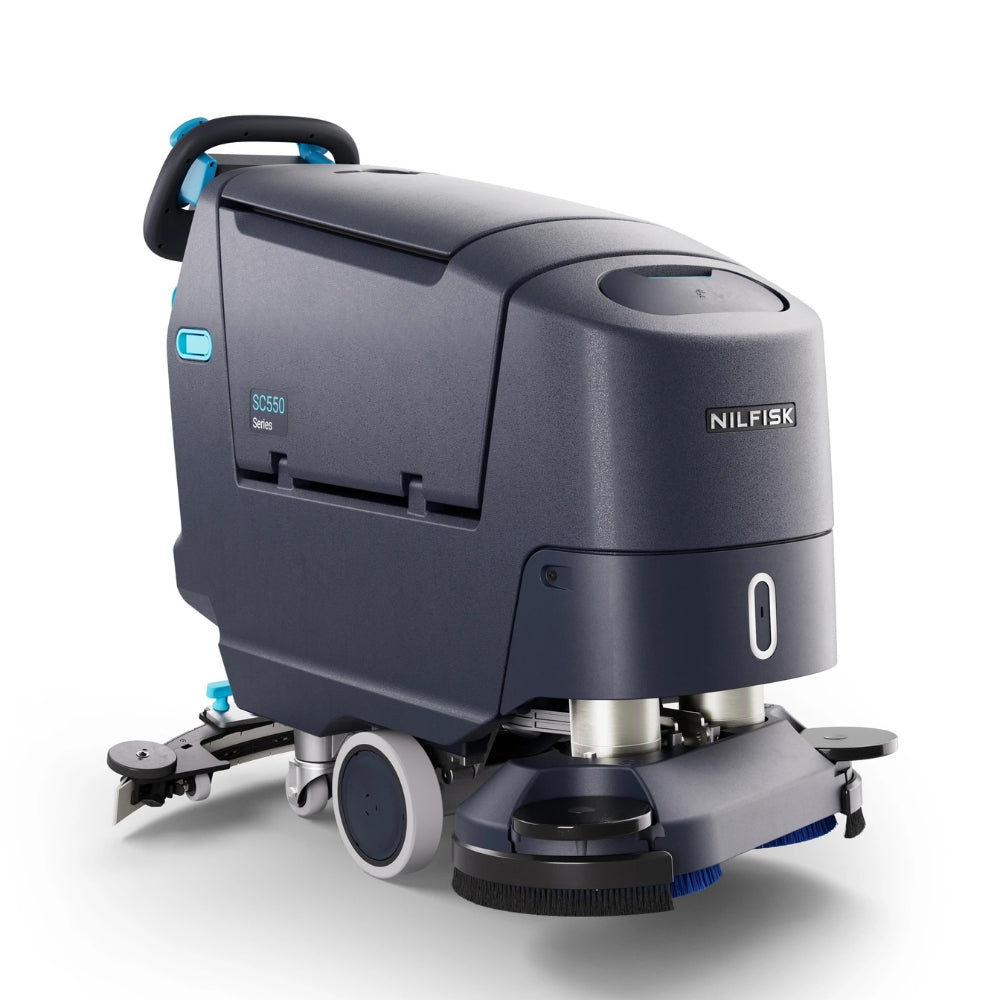
Freshway lists the Nilfisk SC550 with Ecoflex and SmartFlow systems that reduce water usage by up to 40% and detergent usage by 60% compared with traditional models, plus lithium-ion batteries and a 7-inch touch screen. The listing includes the SC550 CYL 51 cylindrical deck with dual 508 mm brushes at 600 RPM and the SC550 D 61 disc deck. Those percentage figures are the comparison stated on the Freshway product page; your site still needs its own litre count to prove the saving.

Solution flow vs soil load
Low flow works on dust and light foot soil. It fails on oily tyre marks, spilled drink syrup and kitchen grout that needed more dwell. Freshway lists the Nilfisk SC500 as automatically adjusting water and detergent flow according to machine speed. That speed-linked idea matters: operators who sprint and starve the floor, or crawl and flood it, produce different litre counts even without touching an eco button.
Water Corporation's Waterwise advice is written around using only the water the job needs. The same mindset applies inside a commercial building, whether or not a formal restriction is in force. Recovered slurry is still wastewater; keep it out of stormwater and handle it under EPA NSW water and waste expectations.
Metering chemical with less water
When you cut water, chemical concentration in the remaining film can rise if the dosing system does not reduce detergent in step. Ecoflex on the SC550 is listed as cutting both water and detergent. If your machine only has a manual tap, reduce the chemical as well or you will leave a sticky film that looks like "the floor needs more water" on the next pass.
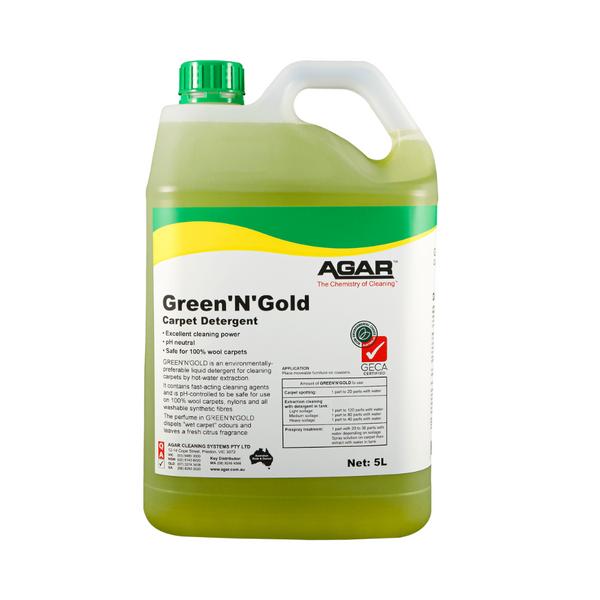
Freshway lists Agar Novadet as a 5-litre low-alkaline (pH 9) detergent concentrate for daily floors, and Agar pH-7 as a neutral pH 7 detergent for sensitive hard floors. Pair low-water runs with a labelled daily detergent rather than a heavy stripper chemistry. SafeWork NSW chemicals and WorkSafe Queensland hazardous chemicals guidance still apply to mixing and storage when you change the dose.
When eco mode fails on heavy soil
If a single eco pass leaves visible soil, do not keep driving the same setting around the building. Increase flow for that zone, or pre-treat the mark, then return to eco for the rest of the floor. A second flooded pass "to be sure" can use more water than starting on the richer setting for ten metres of tyre lane.
Compact machines already live on small tanks, so there is less room for waste. Freshway lists the Karcher BR 40/10 C with a 400 mm working width and dual 10-litre solution and recovery tanks, plus dual rollers at 1100 RPM and adjustable contact pressure up to 30 kg. Ten litres is easy to measure: if that tank covers 200 square metres, you used 5 litres per 100 square metres (10 L ÷ 200 m² × 100).

Measuring litres per 100 sqm
Pick a marked area, fill the solution tank to a known litre mark, scrub only that area, then read what remains. Litres used ÷ square metres × 100 gives litres per 100 square metres. Example: 15 litres used on 250 square metres is 6 litres per 100 square metres (15 ÷ 250 × 100 = 6). Repeat once in eco mode and once in the standard flow so the saving is a site number, not a brochure claim.
Large tanks hide waste unless you measure. Freshway lists the Nilfisk Advance SC901 with an 860 mm cleaning width, dual 560 W brush motors at 250 RPM, a 114-litre solution tank and a 121-litre recovery tank. A 114-litre fill that is dumped half-used at the end of a shift is not "capacity"; it is water you pumped, treated and discarded. Compare that habit with the SC550's listed Ecoflex saving and you can see why a mode only pays off if someone reads the tank.
Pad choice that supports low water
A glazed or overloaded pad needs more water to look effective because it is no longer cutting soil. Change pads on the written interval and match pad type to the floor, using the scrubbing pads range as the consumable side of a low-water program. More water will not rescue a polished-smooth pad.
Staff overrides that waste water
The usual overrides are: eco switched off at the start of every shift "because it does not clean", solution left on while the operator talks, and extra passes after the floor is already wet. Put the default mode in the start-up checklist and ask for a photo of the control setting during audits. WorkSafe Victoria slips, trips and falls guidance is the reason you should not flood a foyer to compensate for a poor pad or the wrong detergent.
Spec questions for buyers
| Question | Why it matters | Listed example |
|---|---|---|
| Does the machine reduce water and chemical together? | Water-only cuts can leave a richer chemical film | SC550 Ecoflex / SmartFlow listed at up to 40% water and 60% detergent reduction |
| Does flow follow speed? | Fast walking can starve the floor; slow walking can flood it | SC500 listed as adjusting flow with machine speed |
| Can you measure tank litres easily? | You cannot manage what you cannot read | BR 40/10 C dual 10 L tanks; SC901 114 L solution / 121 L recovery |
| What default do new staff see? | A hidden eco button will not be used | SC550 7-inch touch screen with PIN access on the listing |
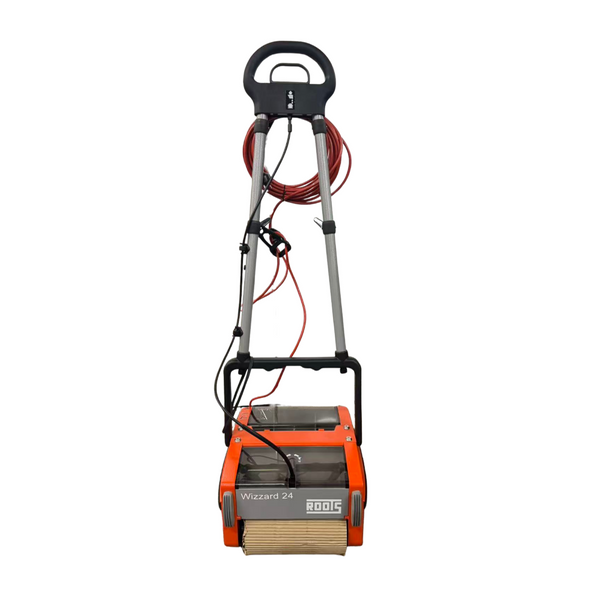
Browse floor scrubbers, Agar floor cleaners and Wizzard floor scrubbers when you compare how different platforms expose flow controls. Check current tank volumes on each product page rather than copying an old quote.
Frequently asked questions
Does eco mode always use less detergent as well as less water?
Only if the machine is designed that way. The SC550 listing states Ecoflex and SmartFlow reduce water by up to 40% and detergent by 60% compared with traditional models.
How do I calculate litres per 100 square metres?
Divide litres used by square metres cleaned, then multiply by 100. Fifteen litres on 250 square metres is 6 litres per 100 square metres.
When should we turn eco mode off?
When a single low-flow pass leaves visible soil. Raise flow for that zone, then return to the water-saving setting for the rest of the floor.
Can a large 114-litre tank still support water saving?
Yes, if operators measure what they actually use. A large tank only wastes water when it is treated as a tank that should be emptied every shift.
Next steps with Freshway
Pick one floor, measure litres per 100 square metres in the current setting, then compare an eco or reduced-flow run on the same area. Review machines in floor scrubbers and daily detergents in Agar floor cleaners, and confirm listed tank volumes on each product page before you change the default mode.