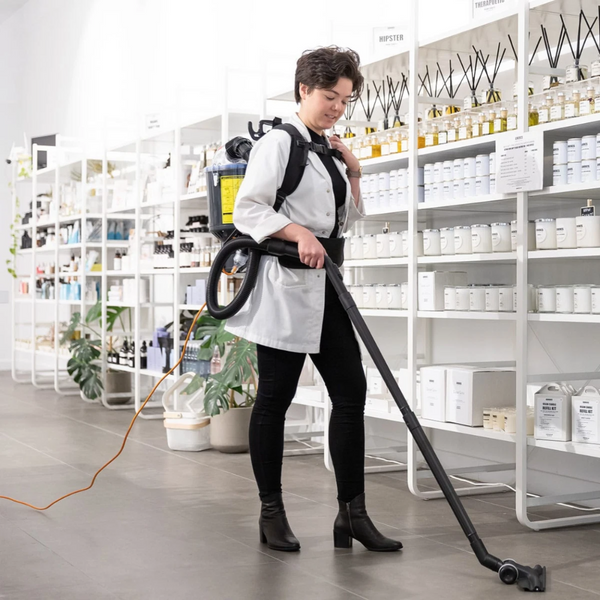
Upholstery Cleaning Equipment for Commercial Work
Upholstery work lives or dies on the wand. Four jets means faster, drier passes.
Shop now
Upholstery is where carpet cleaning equipment stops being sufficient. The fibre, the backing and the frame all impose limits that a floor machine cannot respect, and the tools that make upholstery work possible are almost always bought separately.
Hand tools, not floor machines
Upholstery cleaning needs a hand tool matched to the extraction machine, a low-moisture method, and chemistry appropriate to the fibre. Floor tools cannot reach the shapes involved, and over-wetting is the failure mode that damages fabric and frames rather than merely disappointing a customer.
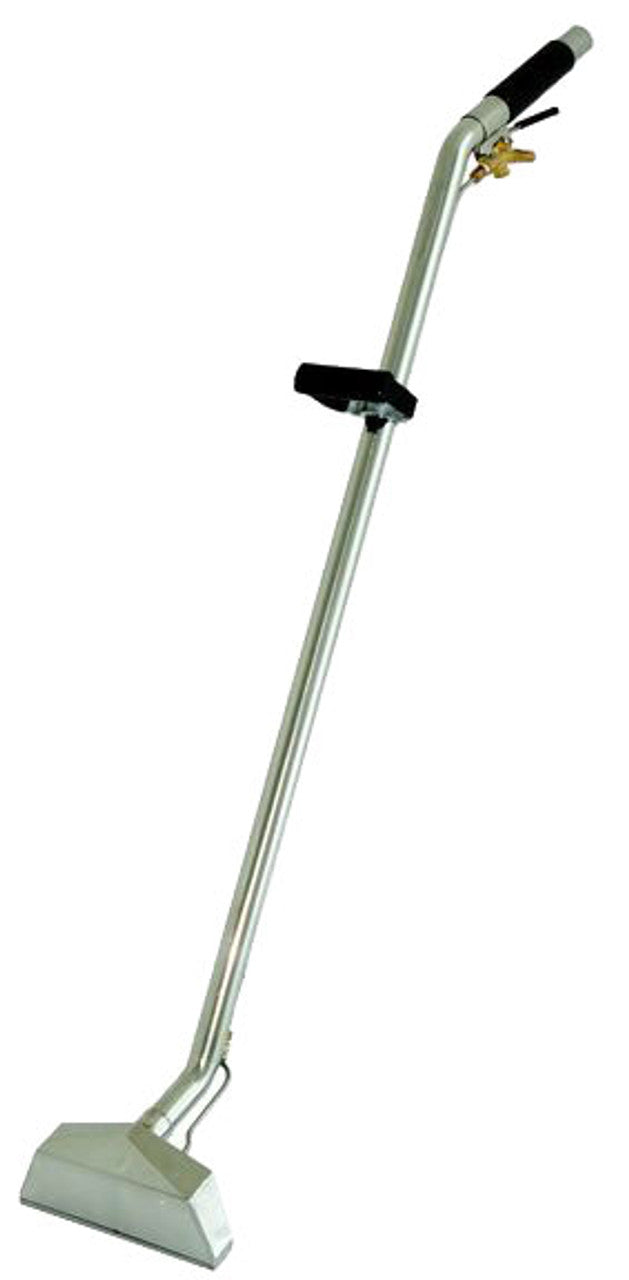
That is why the commercial upholstery specification is dominated by hand tools and by drying, not by the size of the machine behind them.
Prices are Freshway catalogue prices as at 16 September 2026 and are subject to change. Confirm the current price, and whether GST applies, before quoting.

The hand tools that matter
| Tool | Use | Price |
|---|---|---|
| Karcher Puzzi fishtail cover, upper part | Replacement cover for the fishtail tool | A$17.55 |
| Upholstery brush with pickers, 36 mm | Agitation on fabric before extraction | A$17.95 |
| Karcher upholstery brush DN 35 | Vacuum agitation on furniture | A$29.90 |
Fishtail cover replacement 5.130-223.0
|
Extraction on flat and shaped panels | A$32.38 |
Karcher upholstery nozzle 2.885-018.0
|
General furniture extraction | A$69.00 |
| Compact upholstery nozzle, 110 mm | Controlled moisture on narrower surfaces | A$79.00 |
| Numatic fishtail extraction nozzle, 275 mm | George and similar machines | A$153.41 |
| Kerrick upholstery hand tool, complete | Complete hand tool assembly | A$191.47 |
Note that most of these are model-specific. A hand tool that does not match your machine’s hose diameter and connector will not work, which is why the connector specification matters as much as the tool head.
Fibre and the moisture limit
| Fibre group | Typical fibres | Approach |
|---|---|---|
| Synthetic | Polyester, polypropylene, nylon | Most tolerant; normal low-moisture extraction |
| Cellulosic | Cotton, viscose, rayon | Colourfastness test required; reduce moisture |
| Protein | Wool, silk | pH-controlled chemistry; minimal moisture; no strong alkali |
| Blends and unknown | Mixed or unlabelled | Test in an inconspicuous area first, always |
Where the fibre is unknown, the correct process is a colourfastness and shrinkage test on a hidden area before any cleaning. That test is not a formality: it is the control that prevents a cleaning job becoming an insurance claim.

Method for furniture
- Vacuum first, including under cushions and into seams.
- Test for colourfastness and shrinkage in a hidden area.
- Pre-treat spots and heavy soiling with a chemistry matched to the fibre.
- Extract with low moisture and multiple dry passes.
- Dry with airflow; block furniture up where it sits on a wet floor.
Drying and the risk of over-wetting
Furniture holds moisture differently from carpet because the filling absorbs it and the frame can be timber. Over-wetting produces three outcomes: prolonged drying, wicking and browning on cellulosic fibres, and in the worst case frame damage or mould inside the filling.
The controls are a narrow tool, low flow, multiple dry passes and directed airflow. Where a large quantity of furniture is cleaned in one visit, air movers are not optional.
Chemistry for fabric
Upholstery chemistry is chosen for the fibre rather than the soil. Protein fibres such as wool and silk need pH-controlled products and should never see strong alkali; synthetics tolerate a wider range; cellulosics sit in between and need the colourfastness test before anything is applied.
Equipment sizing for furniture work
The machine behind the hand tool sets the pace. A small portable suits single rooms and spot work; a larger unit with a heated option suits contract furniture cleaning where multiple suites are cleaned in sequence. Where a site has both carpet and furniture to clean, one extraction machine with the appropriate hand tools covers both.
Frequently asked questions
- What equipment do I need to clean upholstery commercially?
- A hand tool matched to your extraction machine, a soft agitation brush, a low-moisture method and chemistry matched to the fibre. The hand tool is the essential item — floor tools cannot reach the shapes involved.
- Can I clean a sofa with a carpet cleaning machine?
- Yes, with the correct hand tool fitted, and with lower moisture than carpet work. The machine is the same; the tool and the method are what change.
- How do I know if a fabric will shrink or bleed?
- Test in an inconspicuous area first. A colourfastness and shrinkage test on a hidden section is standard practice before cleaning unknown or untested fabric, and it is the control that prevents damage claims.
- How long should furniture take to dry?
- Four to six hours with airflow under normal conditions, longer where the filling is thick or humidity is high. Multiple dry passes and directed air movers are the practical controls.
- Do I need different chemicals for wool and synthetic upholstery?
- Yes. Wool and silk are protein fibres and need pH-controlled, non-alkaline chemistry; synthetics tolerate a wider range. Using a strong alkaline product on wool causes fibre damage that cannot be reversed.
Kitting out for furniture cleaning?
Tell us your extraction machine and what you clean, and we will match the hand tools and chemistry to the fibre types you encounter. See upholstery cleaners or ask our team.
Filed under the carpet and upholstery guide, alongside the carpet cleaning method comparisons.