Filters Bags and Motors: Maintenance Differences Backpack vs Canister
Same brand, different wear: plan checks and stock for each vacuum format.
Shop now
Picture two cleaners on the same office contract, both using Pacvac machines. One wears a Superpro 700 backpack, the other pulls a Glide 300 canister. By Friday the backpack has been through two or three bags, its harness straps have been readjusted twice, and its cord has taken a week of being stepped on. The canister is still on its first bag, but its hose has been dragged round every desk leg on the floor. Same brand, same building, different wear.
This guide compares how maintenance differs between the two formats. It is for supervisors and buyers who need to plan consumables, checks and repairs for a mixed fleet, and it uses Freshway's listings for the Superpro 700 and Glide 300 as a paired example throughout.
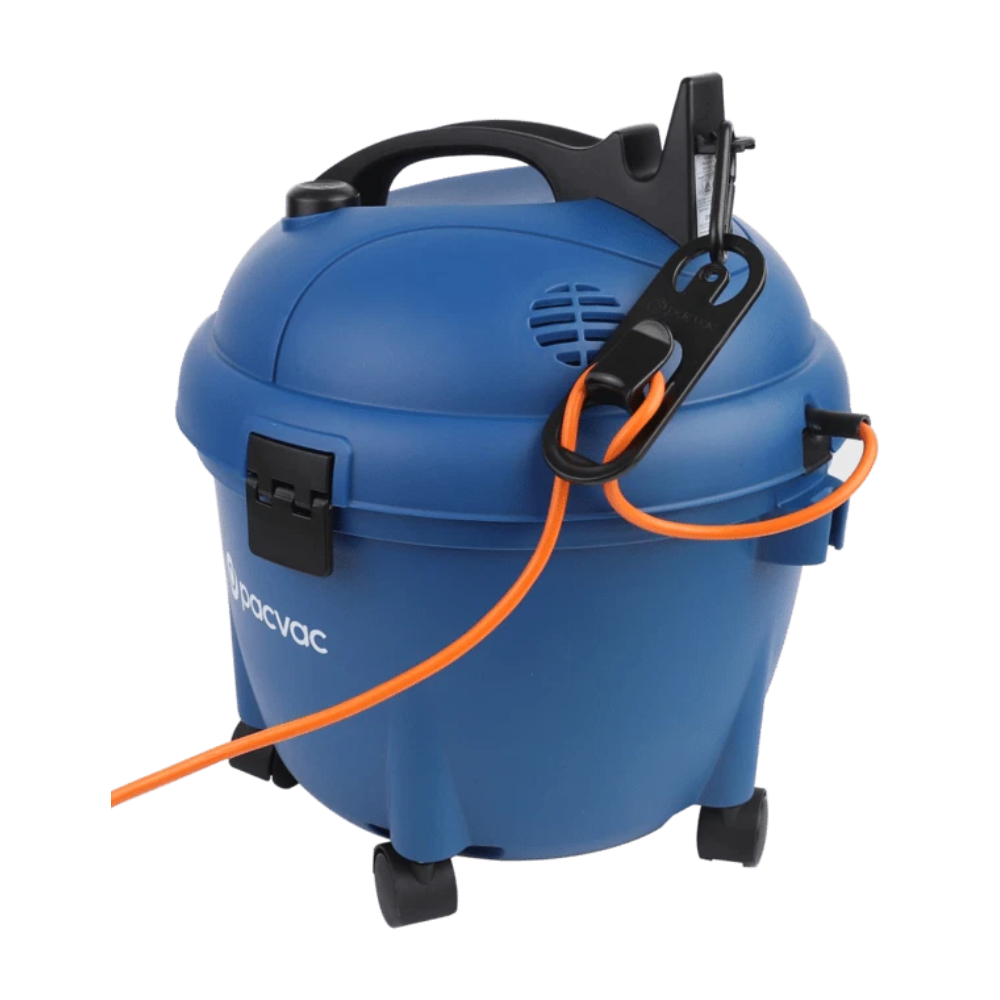
Commercial vacuum maintenance backpack canister: the short answer
Backpacks need more frequent bag changes, harness checks and cord care because they hold less and travel with the operator. Canisters need fewer bag changes but closer attention to hoses, wheels and pre-motor filters. Both need dry filters, clean exhaust paths and regular electrical testing. Plan stock and checks by format, not by brand.
The paired table below shows where the routines diverge on two machines from the same Pacvac family.
| Maintenance item | Backpack: Pacvac Superpro 700 | Canister: Pacvac Glide 300 |
|---|---|---|
| Container | 5 litres | 15 litres |
| Disposable bags | DUB019 5 L paper, fitted inside the reusable cloth bag | DUB031 15 L sealed paper |
| Pre-motor filter | FIL001 cone filter, twist-lock | FIL005 33 mm cartridge, twist-to-lock |
| Other filter parts | FIL004 washable exhaust foam, held by the CAG001 cage | FIL008 synthetic filter cover, supplied in the SEK002 kit |
| Motor protection | Single-stage flow-through motor; clear lid shows bag fill | Flow-through motor with a pressure relief valve |
| Hose | HOA014 1.2 m | HOA013 2 m |
| Power | 18 m cord; SHL001 420 mm short lead | 18 m cord |
| Wear points | Harness, straps, lid seal | Wheels, hose cuff, cord hooks |
Daily operator tasks
Daily checks take a couple of minutes and catch most early failures. The split by format:
Backpack. Look through the clear lid before starting. Freshway's Superpro 700 listing describes it as a way to see the bag's fill level and avoid overfilling. Check the hose screw fitting is tight, and the short lead and main cord are both seated. Adjust the harness to the person wearing it, not the person who wore it last.
Canister. Check the bag level before starting a large area, make sure the hose has no splits at the cuff, and check the wheels turn freely. Wind the cord back onto its hooks at the end of the shift rather than leaving it coiled in the cupboard.
Both. Look along the cord and plug for cuts, crushed sections or exposed wire before plugging in. A damaged lead goes out of service straight away.

Weekly supervisor checks
Once a week, a supervisor should look at what operators don't. For backpacks: harness buckles, strap wear and the plastic cage that holds the exhaust filter. Freshway's listing for the Pacvac CAG001 cage notes that bumps and drops can crack it or break its clips, letting the exhaust filter fall out. For canisters: wheel wear, the hose connection at the machine, and whether the pre-motor cartridge is seated and locked.
For both, run a quick suction check with a clean bag. If pickup is still weak, the problem is further along the air path: filter, hose or motor.
Bags vs filters
Bags and filters do different jobs, and the formats load them differently. The bag is the first stage and fills with every pass. Going by container size alone, a 5-litre backpack fills about three times as often as a 15-litre canister doing the same floor. The pre-motor filter catches what gets past the bag, so it loads more slowly but suffers most when bags are overfilled or torn.
Two habits apply to both formats. Use the disposable bag the listing names: DUB019 for the Superpro 700, Superpro Go and Superpro Duo, and DUB031 for the Glide 300, Glide Wispa 300 and Hush. Then clean or replace the pre-motor filter on a schedule rather than waiting for suction to drop. Pacvac's FIL001 listing notes the cone filter can be cleaned regularly, but recommends timely replacement. For diagnosing a filter that keeps clogging, Freshway's filter maintenance guide covers the full air path.
Motor protection
Both machines are listed with flow-through motors, so the air the motor moves passes through it. A full bag, a choked filter or a blocked hose reduces that airflow and makes the motor work harder. The formats handle that risk differently:
- The Glide 300 listing describes a pressure relief valve that opens if the hose is completely blocked and lets cool air into the motor.
- The Superpro 700 relies on the operator watching the bag through the clear lid. Its exhaust foam filter must stay clean, and its cage must hold that filter in place.
On either format, a burning smell, a rising motor note or a machine that cuts out mid-shift means stop and check the air path before restarting.
Cord and battery care
Corded backpacks wear their leads faster because the cord moves with the operator's body. Superpro and Thrift machines with Pacvac's short-lead system use a "pigtail" lead. Freshway's SHL001 listing describes a 420 mm lead from the machine to a C13 socket that the main cord plugs into, so a damaged main cord can be replaced without rewiring the vacuum. The SEK009 kit pairs that short lead with a 20 m, 10 A lead and a cord restraint. Canister cords wear mostly where they are wound and where wheels run over them.
All corded machines need regular electrical testing. SafeWork NSW's electrical risks fact sheet refers to AS/NZS 3760. It gives commercial cleaning equipment as an example that needs testing more often, for example at least once every six months, and calls for testing after a repair that could affect electrical safety.
Battery backpacks swap cord wear for battery care. Pacvac's 18 V, 108 Wh battery listing advises not leaving it on the charger indefinitely once full and not regularly draining it to zero. Energy Safe Victoria's lithium-ion battery safety page adds three more rules: let the battery cool after use before recharging, charge on a non-flammable surface, and use chargers supplied or recommended for the product. Fire Rescue Victoria's battery safety advice also warns that chargers with the wrong voltage or current can damage the battery or overheat it.
When to book repair
Book a repair when a clean bag, a clean filter and a clear hose don't bring suction back. Do the same for any electrical fault, a motor that overheats or trips power, or a cracked housing. Freshway's Service & Repairs page lists suction, motor, cord and switch faults for backpack vacuums, and motor, seal, hose and airflow checks for commercial vacuums. It quotes before any work starts. After the machine comes back, test and tag it before it returns to service if the repair could have affected electrical safety.
Consumables stocking
Stock by format, because the formats use consumables at different rates:
- Backpacks. More disposable bags per machine, spare pre-motor and exhaust filters, a spare short lead, and harness parts for high-use units.
- Canisters. Fewer bags, but keep a service kit per machine. Pacvac's SEK002 for the Glide and Hush bundles five DUB031 bags, a FIL008 filter cover and a FIL005 cartridge. Add a spare hose for sites with heavy furniture.
- Battery models. A spare battery for crews whose shift is longer than one charge, plus a charging area set up as above.
The bags, filters, leads, hoses and batteries named here are listed in Freshway's vacuum parts and accessories collection. Search by part code to avoid near-misses between similar models.
Log templates
A one-line entry per machine per week is enough. Use the same columns for both formats so supervisors can compare them:
| Week | Machine ID and format | Bags used | Filters cleaned or replaced | Cord, lead or battery | Harness or wheels | Fault and action |
|---|---|---|---|---|---|---|
| Example | BP-03, backpack | 3 | Pre-motor cleaned | Short lead OK; tag due | Waist strap frayed | Strap ordered |
| Example | CN-01, canister | 1 | Cartridge replaced | Cord OK | Rear wheel stiff | Cleaned, monitor |
Freshway's commercial vacuum maintenance checklist explains how to turn these records into replacement decisions.
Common failures
- Backpack: overfilled bags, a lost exhaust filter after the cage cracks, crushed cords at the plug, and harness straps worn through on one side.
- Canister: split hoses at the cuff, stiff wheels, cords run over by the machine, and pre-motor cartridges left unlocked after a change.
- Both: the wrong bag fitted, filters refitted damp, and machines returned to work after repair without a test tag.
Weight is part of the picture too. SafeWork NSW lists sustained or awkward posture among hazardous manual task risk factors, so a backpack harness that no longer adjusts properly is a maintenance item, not a comfort issue. For canisters carried up stairs, WorkSafe Victoria's hazardous manual handling guidance suggests reducing the size and weight of objects to be lifted. Emptying the bag before a stair run helps.

Frequently asked questions
How often should a backpack vacuum bag be changed compared with a canister bag?
More often. Going by container size, a 5-litre backpack such as the Superpro 700 fills about three times as often as a 15-litre canister like the Glide 300 on the same floor. Change bags by fill level, not by day of the week.
Can I wash the pre-motor filter?
Check the listing for your model. Pacvac's FIL001 cone filter listing says it can be cleaned regularly but should be replaced in good time. Let any washed filter dry fully before refitting.
What does the Glide 300 motor protection valve do?
Freshway's listing describes a pressure relief valve that opens if the hose is completely blocked, letting cool air into the motor so it doesn't overheat.
Do battery backpacks need test and tag?
The vacuum has no mains lead, but its charger is plug-in equipment. Include chargers in your electrical testing schedule and check them for damage before each use.
Next steps with Freshway
List your machines by format, set a daily and weekly check for each, and stock consumables by format using the part codes above. Freshway's backpack vacuums and canister and barrel vacuums collections link to each machine's own listing, where the bag and filter details are given. Check each product page for current pricing and availability.