Shopping Centre Food-Court Scrubbing Between Meal Peaks
Degrease first, scrub in coned sections and leave a dry route between meal peaks.
Shop now
At 2.40 pm the lunch crowd has thinned, and the contract cleaner starts the scrubber at the edge of the food court seating. Four tables in, the brush is gliding over a film of fry oil that nobody pre-treated, the squeegee is smearing it into a shiny arc, and a shopper carrying a tray steps onto the wet edge. The machine is fine. The method is wrong for a food court.
Food court floor scrubbing between meal peaks
A food court floor scrubber in a shopping centre works well between meal peaks with a compact battery machine, pre-applied degreaser on the grease zones, and seating cleared in sections. Keep the machine small enough to pass between table legs, leave the floor dry behind it, and save heavy restorative scrubbing for after trading.
The Freshway guide to retail and shopping centre scrubbers covers concourses, public-hours safety and noise across a whole centre. This article stays inside the food court: grease, seating density, short windows between lunch and dinner, and the consumables that cope with oil.
Meal-peak soil patterns
Food courts soil in a predictable pattern. Oil, sauce and drink spills concentrate in front of tenancies, at tray-return points and under the busiest tables. Grit and dry litter arrive from the concourse. After a peak, the floor carries a thin grease film that a neutral detergent will spread rather than lift. That film is also a slip hazard: SafeWork NSW lists contaminants and spills such as grease, oil and water among the main internal sources of slip risk in its guidance on slips, trips and falls.
Map the court into zones: tenancy fronts and tray returns (heavy grease), main seating (moderate), and walkways (grit). Each zone gets a different treatment in the same window.
Compact vs mid scrubbers in seating
Seating decides the machine more than floor area does. Chairs, table bases and planters leave narrow lanes, and a wide deck spends most of its time reversing.

| Freshway listing | Path | Tanks (solution / recovery) | Listed productivity | Food court role |
|---|---|---|---|---|
| Karcher BR 30/4 C | 300 mm | 4 L / 4 L | Not listed | Spot work around tenancies and tight table clusters; mains with 12 m cable |
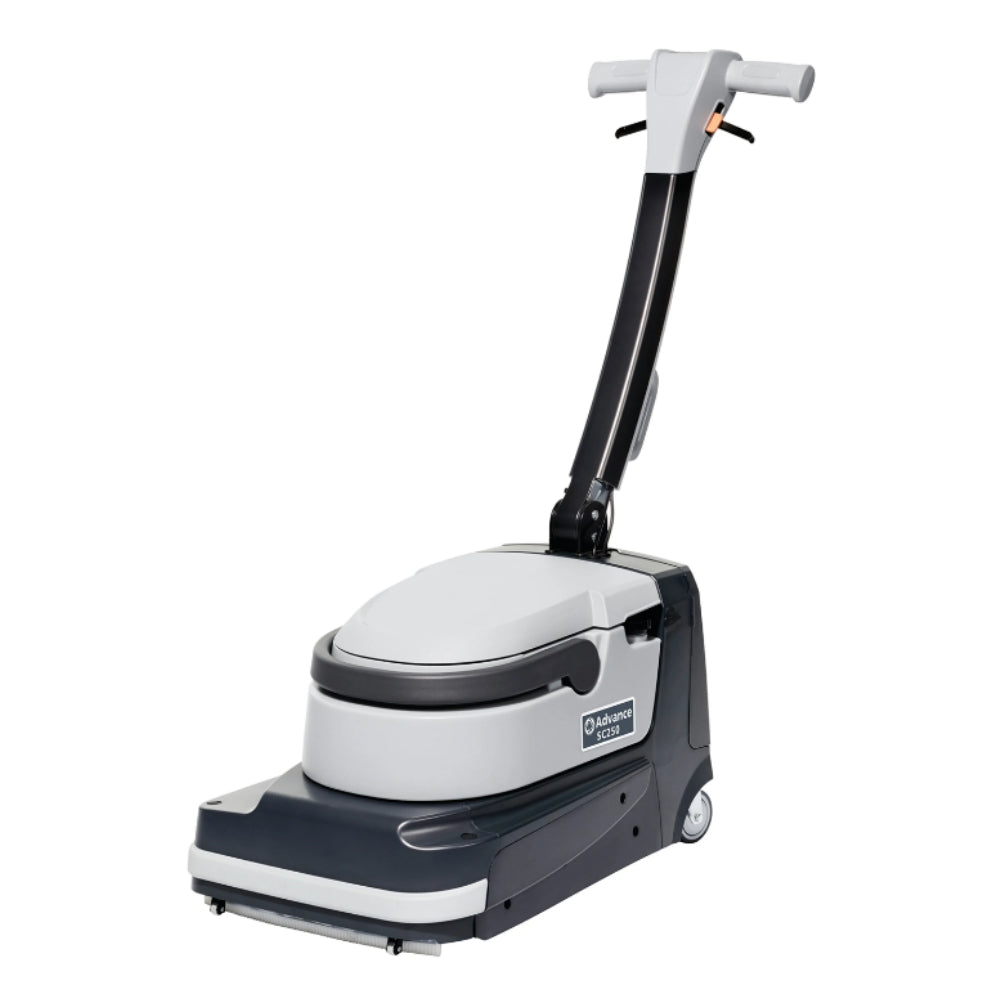
| Nilfisk SC250 | 34 cm | 6 L / 6 L | Up to 1,438 m²/h | Between-peak seating sections on battery |
| Nilfisk SC401 | 43 cm | 30 L / 30 L | Up to 2,330 m²/h (theoretical) | Open walkways and after-hours passes |
Run the numbers before trusting them. For a 600 m² seating zone, the SC250's listed rate gives 600 ÷ 1,438 × 60 ≈ 25 minutes, and the SC401's gives 600 ÷ 2,330 × 60 ≈ 15.5 minutes. Those are open-floor figures. In dense seating, turns, chair moves and spot treatment can easily double real time, so time a trial on your own layout. Tank size matters too: a 6-litre recovery tank on a greasy floor fills faster than its solution tank empties, so plan emptying points near the court.
Degreaser dwell before scrubbing
Grease needs chemistry and time before it needs a brush. Pre-spray tenancy fronts and tray returns with a diluted degreaser, let it dwell for the label time, then scrub and recover in one pass. Freshway lists Agar Dirt-Off as a high-alkaline heavy-duty degreaser with a controlled-foaming profile that suits auto-scrubbers, with vinyl, porcelain and concrete among its listed safe surfaces. Check the floor type before use; polished stone and some sealed finishes need a neutral product instead. Keep the current SDS with the concentrate, as WorkSafe Victoria's safety data sheets page explains. More degreaser options sit in the Agar degreasers collection.
Pedestrian management
A food court never fully empties during trading. Work in sections of four to six tables, coned off with wet-floor signs, and keep a dry route between tenancies and seating at all times. WorkSafe Victoria's slips, trips and falls guidance recommends cleaning up spills immediately and fixing their causes, which in a food court means spot-cleaning spills during the peak and leaving the full scrub for the gap. Battery machines also remove the trailing cord, one less trip hazard among diners.

Noise near retailers
Tenants and diners both notice machine noise. The SC250 is listed at 66 dB(A) and the SC401 at 65 dB(A), which is why battery walk-behinds are common in daytime courts. Keep vacuum-motor-heavy work, such as wet vacuuming of large spills, for quieter windows, and agree start times with centre management so cleaning does not compete with tenant deliveries or events.
Overnight deep scrub vs daytime maintenance
Split the work by window. Daytime passes between peaks are maintenance: degrease the hot zones, scrub the seating in sections, and leave the floor dry. Overnight, with chairs stacked, a larger machine can run the full court, edges can be detailed, and grout lines can get the dwell time they need. If the overnight scrub is done well, daytime passes stay short.
Consumables for grease
Brush or pad choice changes results on oily floors. Brushes reach into textured tile and grout; pads suit smooth vinyl and sealed floors. The Freshway guide to floor scrubber brushes versus pads covers the choice. In a food court, rinse squeegee blades and pads after each window, because grease builds up and causes streaks. Dispose of recovered water at a sewer point such as a cleaner's sink; the NSW EPA notes that the drain is just for rain, so stormwater grates in service yards are off limits.
Spec for abuse and spills
Food court machines take knocks from chairs and trolleys and run on greasy water. When comparing options in the floor scrubber range, look for a path that fits between table legs, a recovery tank you can empty quickly, tool-free squeegee access, battery power for daytime work, and listed noise figures. Battery machines bring a charging task too. SafeWork NSW's lithium-ion batteries page warns that these batteries can catch fire if handled, stored or charged incorrectly, so agree a charging spot with centre management.
Frequently asked questions
Can we scrub the food court during the lunch peak?
Spot-clean spills during the peak, but leave full scrubbing for the gap between meals. Working in small coned sections keeps a dry route open for diners.
Why does the floor look streaky after scrubbing?
Usually grease that was not pre-treated, or a squeegee blade coated in oil. Apply degreaser with dwell time first and rinse blades after each window.
Is a bigger scrubber faster in a food court?
Not in dense seating. Narrow lanes and frequent turns slow wide machines, so a compact unit often finishes sooner between tables.
Can the same chemical be used in the day and overnight?
Often yes, at different dilutions. Follow the label for each soil level and confirm it suits your floor finish.
Next steps with Freshway
Time one between-peak window on your own seating layout, note where grease concentrates, and choose the machine and degreaser for that pattern. Confirm paths, tanks and noise on each product page, and contact Freshway for help matching a scrubber to your centre's food court.