Removing Concrete Curing Compounds with Pressure and Chemistry
Test the membrane, read the data sheet, then decide between wash and grind.
Shop now
Two figures decide most curing compound jobs before anyone starts the pressure washer. Wattyl's concrete preparation sheet says new concrete should cure for a minimum of 28 days before coating, and that the slab should be dry, below 4% moisture content, before a coating goes on after release agents are washed off. A crew that blasts a three-week-old slab and recoats the next morning has missed both numbers.
Can a pressure washer remove concrete curing compound?
Sometimes, but not on every slab. Pressure and detergent can lift many sprayed curing membranes and release agents, but some coatings, adhesives and flooring systems need the membrane removed mechanically. Read the curing compound's data sheet and the next trade's preparation requirement first, then trial a test patch before quoting a wash.
Wattyl's concrete surface preparation sheet says release agents can be removed with high-pressure water cleaning and detergent, with hard nylon brushes for heavy contamination and a thorough fresh-water flush afterwards. Dunlop's substrate preparation bulletin takes a harder line for its levellers and adhesives: curing compounds, including dissipating types, must be completely removed, and the bulletin specifies mechanical methods. Both can be true on the same site. The wash is often a step, not the whole preparation.
What the membrane is doing on the slab
A sprayed curing compound slows moisture loss while the concrete gains strength. The film that keeps water in is also what stops the next product from bonding. Dunlop describes many curing compounds as bond breakers that inhibit levellers, adhesives and membranes, and Resene's concrete surface data sheet notes that new precast and tilt slab concrete typically carries form oils or curing compounds that need removal before a clear coat. Some compounds are made to break down or to suit later finishes, so the product name on the builder's pour record matters more than how the slab looks.
Why bar alone often fails
More pressure is the usual reaction when water still beads on the slab, and it is usually the wrong one. A narrow jet held close enough to cut a resin film can also open the surface paste, leave wand marks and drive water into joints. Wattyl gives a simple field check: release agents are indicated where water forms droplets instead of an even film. If the slab still beads after a wash with detergent and agitation, the membrane is still there, and turning up the pressure rarely fixes it evenly. For bar settings on different slabs, the Freshway guide on pressure washing concrete without etching covers nozzle and distance choices.
Chemical assist windows
Chemistry does the work when it has time to soften the film. A practical sequence for a test patch:
- Identify the curing compound from the pour record or the builder, and read its data sheet for the recommended remover.
- Pre-wet the patch so the chemical does not flash-dry on warm concrete.
- Apply the remover at the label dilution and keep it wet for the label dwell time.
- Agitate with a stiff nylon brush or a deck scrub.
- Rinse with the surface cleaner, then flush with clean water.
- When dry, repeat the water-bead check across the patch.
If the data sheet is silent, an alkaline, low-foam degreaser made for pressure-washer use is a reasonable trial product. Agar HF Detergent is listed on Freshway as a low-foaming alkaline degreaser suitable for high-pressure washers, and the Agar degreaser range sits alongside it. Keep acid residue removers for cement splashes and efflorescence; Freshway lists Actichem Crete Clean for dried concrete, mortar and grout residue, not for stripping membranes.
Hot vs cold water
Heat helps with waxy and oily films and does little for a membrane the remover has not softened. A hot-water machine also brings a burner, fuel, more weight and burn risk to a new-build site. Run the test patch cold first. If the chemical softens the film but rinsing leaves a smear, repeat it hot and compare. The hot water pressure washer collection lists burner temperatures and power supply on each product page.

Spec starting parameters: a worked check
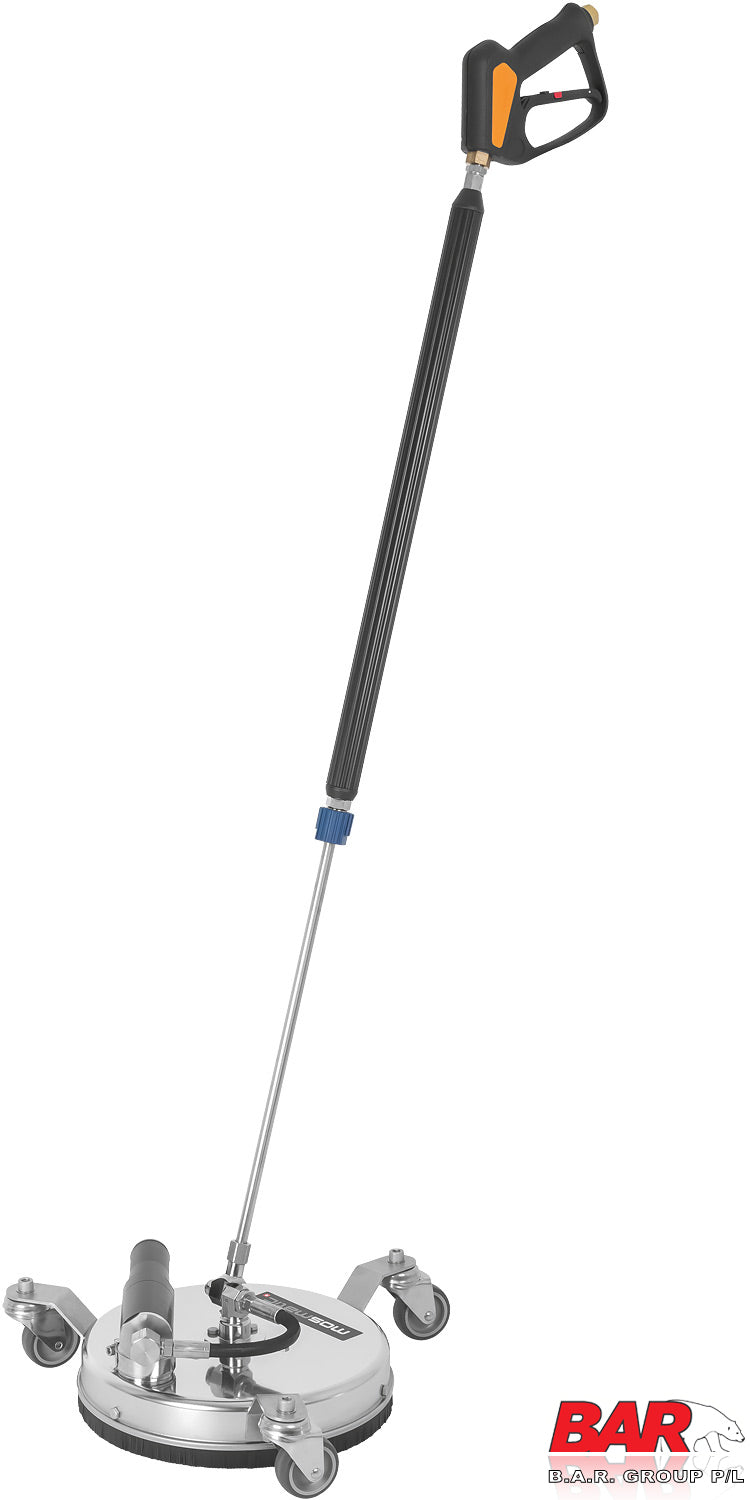
The recovery surface cleaner and the machine have to match, or the wash water stays on the slab. Freshway's listing for the Mosmatic AQUA 12-inch surface cleaner recommends at least 15 L/min at 3000 PSI for its Venturi suction to work properly.
| Listed figure on Freshway | Value | Check against the AQUA recommendation |
|---|---|---|
| Mosmatic AQUA 12-inch recommended supply | 15 L/min at 3000 PSI | The target |
| Kranzle CA11-130 | 11 L/min, 1885 PSI (130 bar) | 11 ÷ 15 = 73% of the flow; pressure also below target |
| Kranzle Therm-RP1200 | 20 L/min, 2755 PSI | Flow above target; 2755 ÷ 3000 = 92% of the pressure |
| Mosmatic AQUA maximum water temperature | 120 °C | Keep a steam-capable burner below this figure |
Neither listed machine meets both recommended figures, so check suction on a trial pass before relying on it. The Therm-RP1200 also runs on 415 V at 20 A, which many new-build sites cannot supply at the slab. Where the machine cannot drive integrated recovery, Freshway also lists the Mosmatic FL-AER 300, which connects to a separate wet vacuum.
Protecting adjacent finishes
New-build floors rarely sit alone. Mask or protect fresh render, aluminium frames, stainless fittings, timber thresholds and any installed services before chemistry goes down. Work away from finished areas so overspray and slurry move towards the capture point, not across it. Keep acid products off metal and away from alkaline strippers, and rinse splashes immediately.
Waste capture
Slurry from curing compound removal carries cement fines, membrane residue and chemical. The NSW EPA's drain is just for rain guidance says nothing other than clean rainwater should enter stormwater. Block nearby pits, recover the water as you go, and agree disposal with the builder. Discharging to sewer is a separate question: Sydney Water says businesses discharging industrial trade wastewater need written approval.

When to call specialists
Hand the job to a grinding or shot-blasting contractor when the next trade's data sheet requires mechanical preparation, when the test patch still beads after two chemistry rounds, or when the slab is going under resilient flooring or a high-build coating. Grinding brings its own hazard: SafeWork NSW's crystalline silica fact sheet explains that cutting, sanding and similar processes on concrete create respirable dust. The wash crew's role then becomes pre-clean and final rinse, which is still worth quoting. On the pressure side, WorkSafe Victoria's high-pressure water jetting alert lists jet injection, flying debris and flailing hoses as the main risks to control on any wash.
Frequently asked questions
How do I know the curing compound is gone?
Wet the dry slab and watch the water. Beading indicates a release agent or film is still present; an even, darkening film suggests it has been removed. Check several spots, not just the test patch.
Can I use an acid wash to remove curing compound?
Acid residue removers are sold for cement splashes, mortar and efflorescence. They are not a membrane remover, so use the remover named on the curing compound data sheet or move to mechanical preparation.
How long after washing can the slab be coated?
Wattyl says the slab should dry below 4% moisture content before coating. Follow the coating supplier's moisture test and limit rather than a fixed number of hours.
Do I need hot water for curing compound removal?
Not always. Trial cold water with the right chemistry first. Heat can help with waxy films, but it adds burn risk and setup work on a new-build site.
Next steps with Freshway
Start with the pour record, the next trade's preparation rules and a measured test patch. Then match the surface cleaner, machine and chemistry on paper before the crew arrives. Compare surface cleaners in the pressure washer accessories range and cleaning chemistry in specialty and industrial chemicals, and contact Freshway if you need help pairing a recovery cleaner with an existing machine.