Seasonal and Event Cleaning: Temporary Vacuum Capacity Planning
Size event vacuum fleets for peak m², reset windows and spares.
Shop now
Compare two Sydney weeks. In a quiet mid-winter office contract, two backpack vacuums and one canister cover the night run with bags to spare. In the week of a harbour-side exhibition, the same crew inherits an extra hall, late crowd litter and a same-night reset — and those three machines are empty before the last aisle is done. Capacity planning for events is about that gap, not about buying a different brand for the poster.
This guide is written for supervisors and cleaners who staff festivals, exhibition halls, graduation days and seasonal peaks. It covers demand patterns, format choice, spares, storage, return-to-base cleaning and worked scenarios you can adapt to your roster.
Event cleaning vacuum capacity: the short answer
Plan event cleaning vacuum capacity from peak square metres and turnaround time, not from quiet-week numbers. Use backpacks for dense seating, canisters for open runs and bulk litter, hold spares and bags for a full shift, and stage machines where they stay secured between sessions.
The rest of this article puts numbers and formats on that plan so a temporary spike does not become a pile of half-done halls at midnight.
Peak demand patterns through the year
Australian event calendars are lumpy. Destination NSW promotes a year-round pipeline of major events and business events across the state; cleaners feel that as sudden jumps in foot traffic, food packaging and late finishes. Summer heat adds another layer: the Bureau of Meteorology's Australian climate overview is a reminder that outdoor and pavilion work in peak summer needs hydration and sensible shift lengths, not just more motors.
For capacity maths, split demand into three layers:
- Base contract load — the nightly work that never goes away.
- Event add-on — extra halls, marquees, concourses opened for a defined date range.
- Spike buffer — the unpredictable litter after a sell-out session, usually cleared in a short window before the next public entry.
If you only size to base load, the spike buffer is what fails first. Bags fill, batteries die, and the canister is stuck at the far end of the hall while the entrance mats are buried.
Format choices for crowded venues
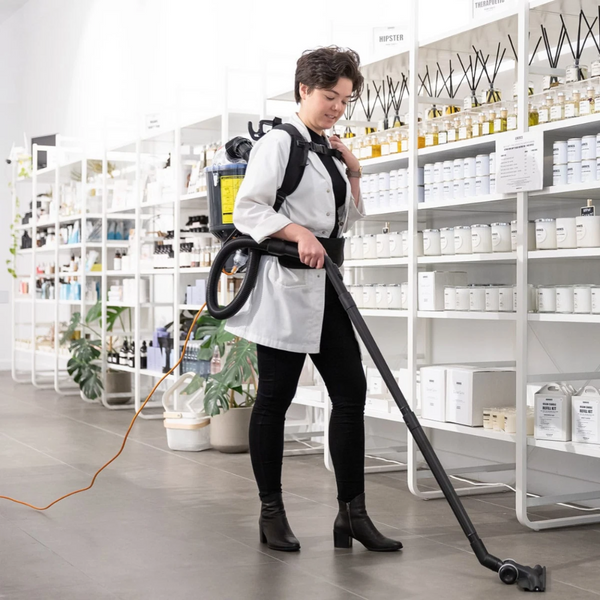
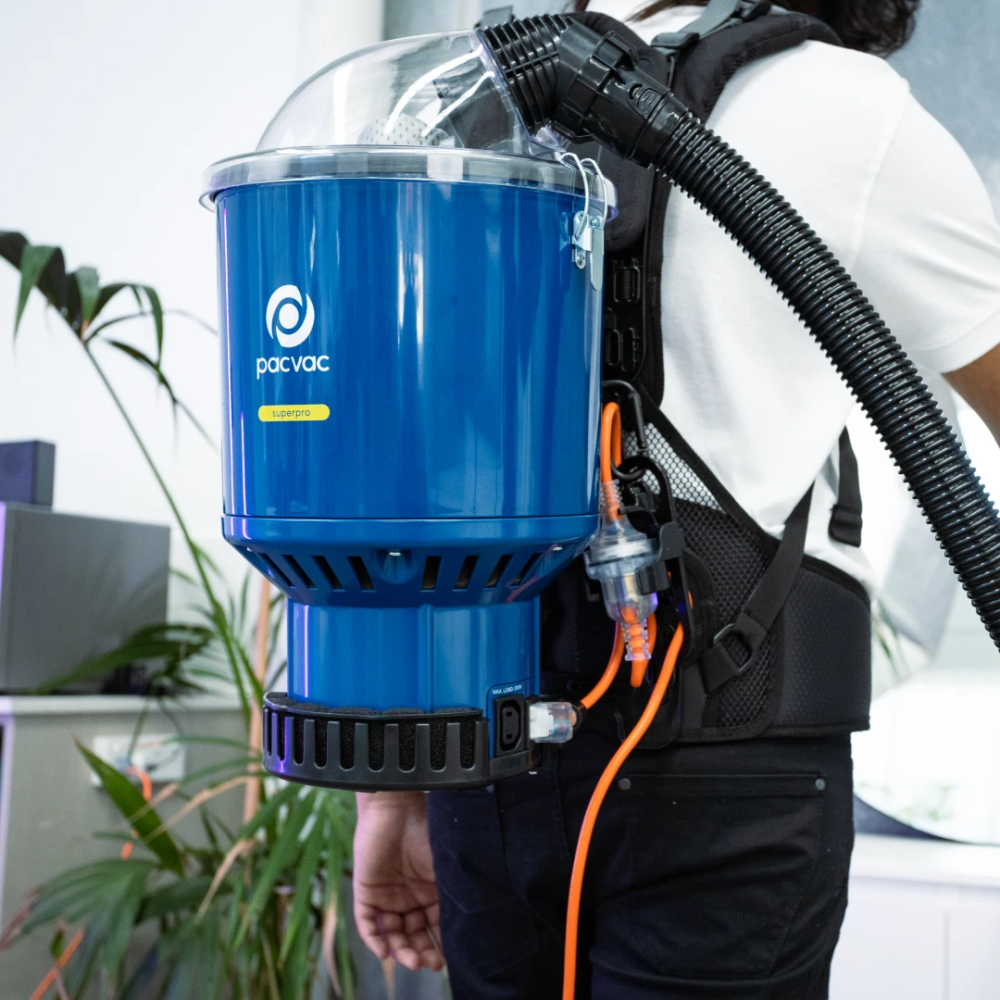
Backpacks win where chairs, stalls and cable trays kill a pull-along path. Freshway lists the Pacvac Superpro 700 with a 1000 W motor, 38 L/s airflow, 5 L dust capacity, 66 dBA and 5.4 kg excluding cord and hose. That combination suits dense seating banks and rapid aisle work when the public has just left.
Canisters win where the floor is open and the litter is bulky. Freshway lists the Pacvac Glide 300 with a 1300 W motor, 38 L/s airflow, 15 L dust capacity, 64 dBA, an 18 m cord and 5.8 kg unit weight. The larger bag means fewer mid-hall changeouts when cups and programmes are coming up by the handful.
| Freshway listing | Format | Motor / airflow | Dust capacity | Noise | Cord / weight | Event role |
|---|---|---|---|---|---|---|
| Pacvac Superpro 700 | Backpack | 1000 W; 38 L/s | 5 L | 66 dBA | 5.4 kg excl. cord/hose | Dense seating, stairs, rapid aisle resets |
| Pacvac Glide 300 | Canister | 1300 W; 38 L/s | 15 L | 64 dBA | 18 m cord; 5.8 kg | Open halls, bulk litter, long cord runs |

Browse both formats in Freshway's backpack vacuums and canister and barrel vacuums collections when you build a temporary kit list. A mixed pair usually beats a single format for exhibition work.

Spares and buffer planning
Worked example for a single exhibition hall of about 2,000 m² with a 90-minute reset between sessions. Two backpack operators covering dense seating at a cautious 400 m²/h each need about 2.5 hours of backpack time in total (2,000 ÷ 400 = 5 operator-hours ÷ 2 operators ≈ 2.5 hours on the clock if they work the same window — too slow). Raising to three backpacks brings the same 5 operator-hours inside roughly 1.7 hours, which fits a 90-minute reset with a thin margin. Add one canister on the open concourse so backpacks are not emptying cups into 5 L bags all night.
Buffer rules of thumb that survive contact with real events:
- Bags: at least one full shift of disposables per machine on the trolley, plus a sealed spare sleeve in the van.
- Machines: one spare vacuum per five in service on multi-day events, charged and bagged.
- Cords and wands: one spare wand set and one spare cord where detachable — SafeWork NSW's electrical inspection and testing expectations still apply to temporary event kits.
- People: plan a bag-change runner on large floors so operators do not walk 80 metres every time a bag fills.
Manual handling rises when bags are overfilled. SafeWork NSW's hazardous manual tasks guidance lists lifting and carrying as risk factors; change bags early on food-heavy events rather than waiting for the motor note to change.
Storage and security on temporary sites
Event cleaners lose more time to missing kits than to weak suction. Stage machines in a locked cleaners' bay or a supervised compound between sessions. Label every backpack with site and shift, and keep the canister cabled or tagged so it does not migrate to another contractor's pile.
Power planning matters as much as floor planning. Map 240 V outlets before doors open; daisy-chaining through audience areas creates trip hazards that WorkSafe Victoria groups with other slips, trips and falls risks. Prefer wall outlets on the perimeter and backpacks that can finish an aisle without dragging a cord across a still-open crosswalk.
Return-to-base cleaning after the event
Temporary capacity fails quietly if dirty machines go straight back onto the next contract. Build a return-to-base checklist into the event quote:
- Empty and dispose of bags in the site’s approved waste stream; NSW EPA's waste guidance is the frame for not improvising with stormwater or public bins.
- Wipe motors and harnesses; food sugar left on a harness becomes a hygiene complaint on the next school contract.
- Check cords and plugs; tag out anything damaged before it returns to the general fleet.
- Restock bags and filters at the Arncliffe or depot shelf the same day, not "sometime next week".
- Log hours and faults while memory is fresh.
Checklist for site supervisors
- Peak m² and reset window written on the job sheet.
- Backpack and canister counts agreed, with one spare machine rule applied.
- Bag and filter quantities picked against the shift plan.
- Lockable staging point confirmed with the venue.
- Outlet map and cord routes agreed before public entry.
- Return-to-base clean and restock booked on the roster, not left to goodwill.
Worked scenarios
Graduation foyer, 800 m², 45-minute reset. Two Superpro-class backpacks cover seating and edges; one Glide-class canister sits on the carpet expanse. Pre-stage both backpacks at opposite doors so operators walk toward the centre.
Outdoor festival cool-room and VIP tent, mixed litter. Backpacks for tent interiors; canister at the tent mouth for cups. Hold a third backpack charged in the van as the spare. Heat planning matters — shorter rotations, water available, as BoM summer conditions require.
Three-day trade show. Night crew runs the mixed fleet; day crew keeps one backpack on call for spill response only. Overnight return-to-base wipe-down happens at the depot so day response gear stays presentable.
Common mistakes to avoid
- Sizing to quiet week numbers. Events fail on the spike buffer.
- Backpacks only, no large bag. Food litter overwhelms 5 L capacities.
- No spare bags on the trolley. Operators stop while someone walks to the van.
- Unsecured staging. Kits walk overnight.
- Skipping return-to-base clean. The next school contract inherits festival dust.
- Ignoring cord routes. Trip hazards in still-open concourses.
Frequently asked questions
Do I need to hire vacuums for a one-off event?
Not if your buffer fleet and bag stock already cover the peak m² and reset window. Hire or buy extras only when the spike exceeds what your spare machines can absorb.
Backpack or canister for exhibition halls?
Both. Backpacks for seating and tight aisles; canisters for open floor and bulk litter. A mixed pair usually clears a hall faster than either format alone.
How many spare bags should we stage?
At least one full shift per machine on the trolley, plus a sealed spare sleeve in the van for food-heavy events.
Is event vacuum work harder on operators?
It can be, because bag changes and long resets stack manual tasks. Change bags early and rotate operators rather than waiting for overfilled bags.
Next steps with Freshway
Build a temporary kit from the vacuum cleaners, backpack and canister collections, then confirm account terms via the B2B dealer and trade account pages. More method pieces sit on the Knowledge blog. Check product pages for current pricing and stock before peak season.