Compact Scrubbers and MotorScrubber-Style Tools for Tight Areas
Fit compact scrubbers to amenity gaps, then extract so floors reopen dry.
Shop now
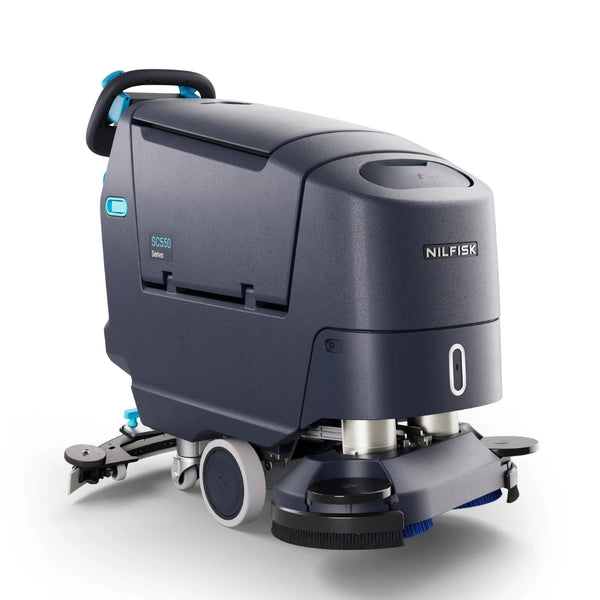
The walk-behind scrubber sits in the corridor. The amenity block is three metres deep, the toilet pedestals leave a 300 mm gap, and the only tool that reaches the grout is a hand brush and a mop bucket. By the end of the shift the corridor looks fine and the amenities still smell of damp detergent. That mismatch is where compact scrubbers earn their keep.
This guide is an implementation path for engineers and supervisors who need a scrubber that fits amenities, food-prep corners and other tight zones without pretending a full-size machine will somehow squeeze through. It covers categories, workflow, chemistry, limits and the spec fields worth checking before you order.
Compact floor scrubber amenities: the short answer
Use a compact floor scrubber for amenities when the scrub head is narrower than the tightest gap you clean daily. Pair a handheld MotorScrubber-style head for pedestals with a mini walk-behind for open amenity floors, keep solution volumes small, and extract slurry so the room can reopen quickly.
Everything below turns that choice into a workable site method: where full scrubbers fail, which compact formats exist on Freshway, how the amenities pass runs, and which numbers on the spec sheet matter.
Where full scrubbers fail in amenities
Full-size walk-behinds are built for open floors. Once the deck is wider than the gap between a toilet pedestal and the wall, the operator either leaves a strip of soil or reverts to a mop. RapidClean's guidance on preparing floors for scrubbing still applies in amenities — loose paper and grit should be cleared first — but prep alone cannot shrink a 50 cm deck into a 30 cm aisle.
Wet mopping then creates its own problem. SafeWork NSW lists slippery floors from cleaning products or methods among the causes of slips, trips and falls on the same level. An amenity left wet while the next visitor walks in is not a finished job. Extraction, or at least a controlled rinse-and-dry, is part of the machine choice, not an optional extra.
There is also a manual-handling cost. SafeWork NSW's hazardous manual tasks guidance treats repetitive bending, reaching and forceful scrubbing as risk factors. Hand-brushing every pedestal every night is exactly that kind of task. A compact powered head exists to cut that load, not to decorate the cleaners' cupboard.
Compact categories that actually fit
On Freshway, compact amenity work usually splits into two formats: a handheld cordless scrub head that reaches behind fixtures, and a mini walk-behind scrubber dryer that cleans the open floor of the same room.
| Freshway listing | Format | Scrub path / head | Solution | Brush speed | Listed coverage or runtime | Weight / noise |
|---|---|---|---|---|---|---|
| MotorScrubber JET3 | Cordless handheld scrub head with backpack tank | 18 cm head | 1 L backpack; spray at 7.9 bar (116 PSI), 5 L/min | 360 RPM | 3.5 h runtime; 144 m²/h linear performance | Head listed waterproof; backpack-mounted solution |
| Hako Wizzard W24N | Mini walk-behind scrubber dryer | 215 mm cleaning width (24 cm class) | 1.2 L gravity feed | 650 RPM cylindrical | 250 m²/h theoretical | 20 kg; 68 dBA |
| Hako Wizzard W34N | Compact walk-behind scrubber dryer | 315 mm cleaning width (34 cm class) | 1.7 L gravity feed | 650 RPM cylindrical | 350 m²/h theoretical | 23.5 kg; 69 dBA |
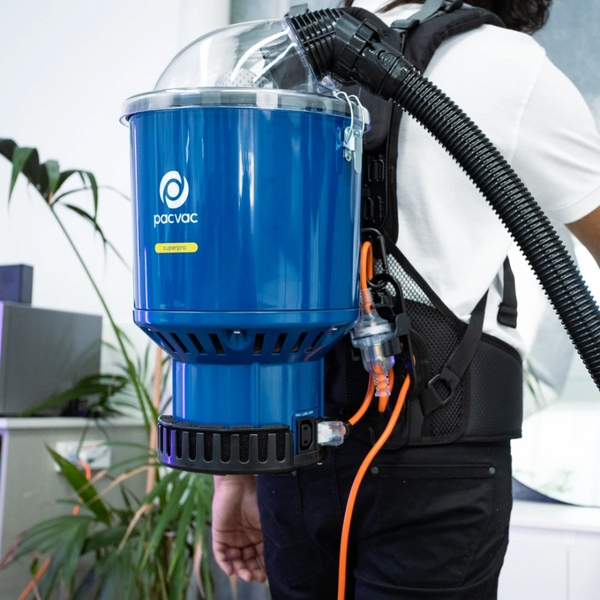
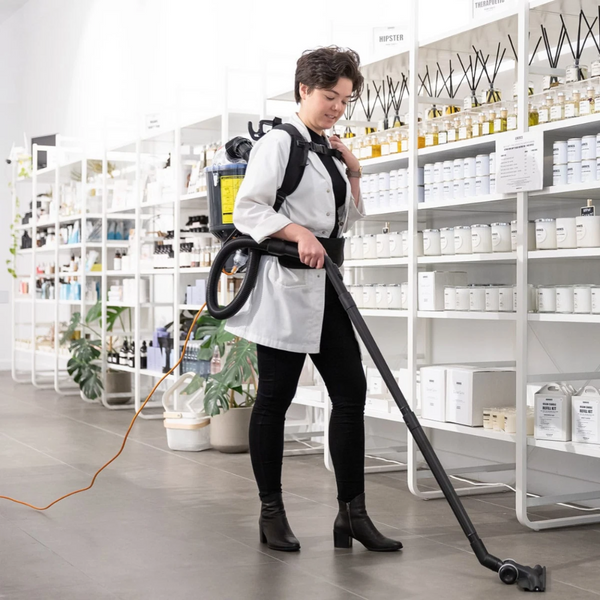
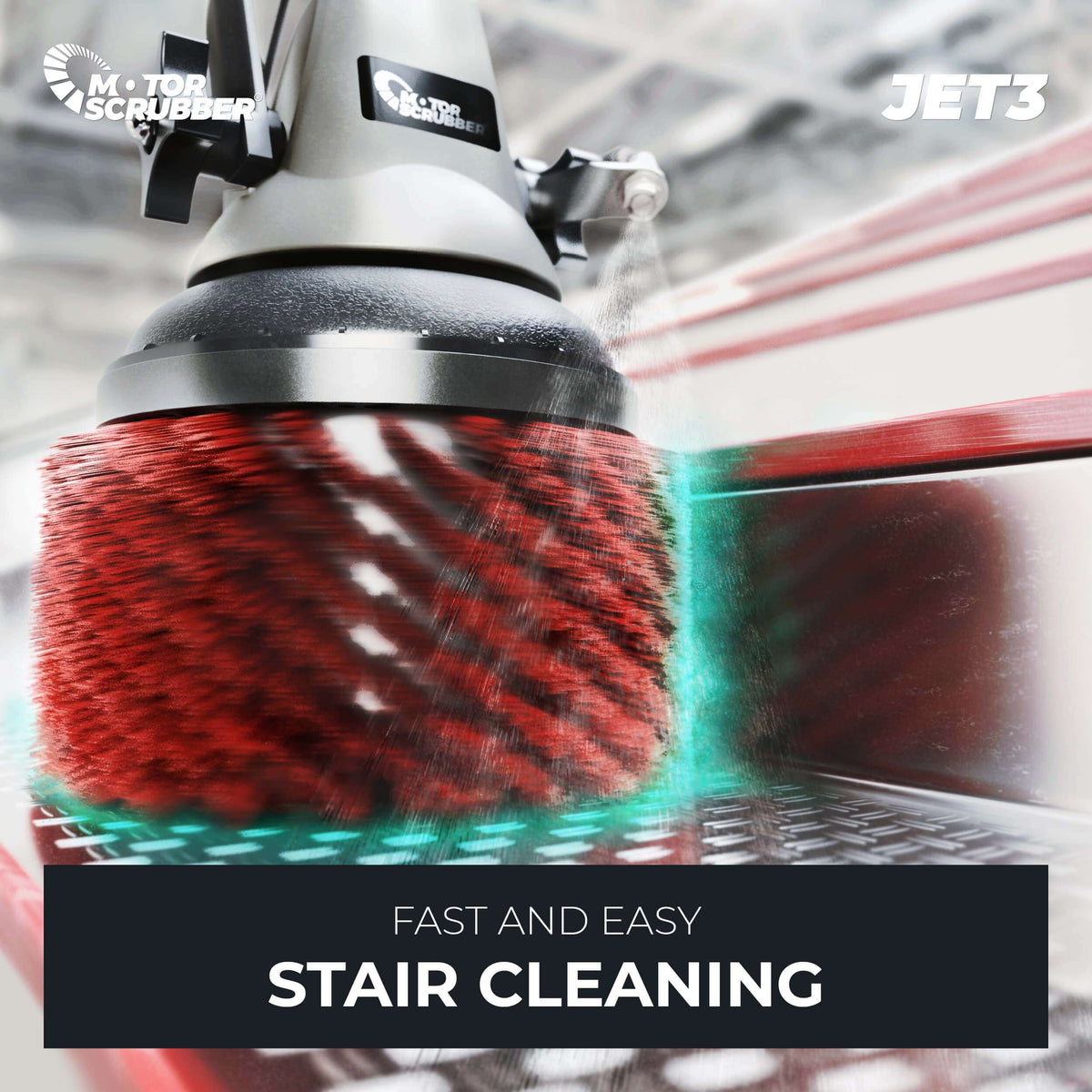
The JET3 listing describes an 18 cm scrub head driven at 360 RPM with a backpack-mounted 1 litre tank and a spray pump rated at 7.9 bar (116 PSI) and 5 L/min, with a stated 3.5-hour cordless runtime and 144 m² per hour linear performance. That is the tool for pedestals, wall junctions and under benches where no walk-behind will go.

The W24N listing describes a 215 mm cleaning width, 1.2 litre tank, 650 RPM cylindrical brush, 250 m²/h theoretical coverage, 20 kg weight and 68 dBA. Freshway groups these machines in the Wizzard floor scrubbers and MotorScrubber collections so you can compare path width against the amenity layout before you buy.

Amenities workflow that keeps floors dry
Treat the amenity block as a short, repeatable loop rather than a mopping afterthought.
- Close and sign. Wet-floor signs at both doors before water goes down. SafeWork NSW's slips guidance expects controls when floors will be wet from cleaning.
- Dry pick first. Paper, soap wrappers and grit leave with a dustpan or vacuum. Scrubbing slurry mixed with paper is a blocked recovery hose waiting to happen — Capital Equipment lists debris in the recovery system among common floor scrubber quick fixes.
- Corners and pedestals with the handheld head. Work the JET3-style head around bases, wall junctions and under vanity lips while the open floor is still dry enough to stand on.
- Open floor with the mini walk-behind. One overlapping pass with the W24N or W34N class machine, extracting as you go so the room can reopen sooner.
- Empty to sewer, not stormwater. The NSW EPA's "the drain is just for rain" guidance says washing runoff must not enter stormwater drains. Amenity slurry goes to a sewer-connected cleaner's sink.
Chemical choice and dosing
Small tanks punish guesswork. A 1.0 to 1.7 litre solution tank means overdosing fills the room with foam and underdosing leaves soil on the grout. Dose from the chemical label into a measured jug, then pour into the machine tank — do not free-pour "until it looks right".
SafeWork NSW's chemicals guidance expects you to manage health risks from the products you use, which in practice means keeping SDS sheets available, using the dilution the label states, and keeping incompatible products apart in the cleaners' cupboard. Low-foam floor cleaners suit cylindrical scrubbers; heavy foam blinds the squeegee and leaves a slippery film.
For amenities that also need wall and fixture work, keep floor chemistry separate from toilet-bowl descalers. Cross-contamination into a scrubber tank is a common way to void a tidy process and leave residue on vinyl or tile.
Limits and trade-offs
Compact machines trade tank size and path width for access. The W24N's 1.2 litre tank will not scrub a supermarket aisle; it is sized for amenity floors and similar small rooms. The JET3's 1 litre backpack and 18 cm head will not replace a walk-behind on open concourses. Plan them as a pair with your larger scrubbers, not as a one-machine fleet.
Theoretical coverage figures assume a straight run. A toilet block is all turns and obstacles, so use the listed m²/h as a planning ceiling and time a real amenity once to set your own standard minutes per block.
Power and charging matter too. A cordless head needs a charged battery at the start of the amenity run; a corded mini walk-behind needs a safe lead path that does not cross the wet floor the machine just cleaned. Freshway's service and repairs page is the place to ask about maintenance when a compact unit is in daily use across many sites.
Spec-sheet fields to check
- Cleaning width or head diameter against the narrowest pedestal-to-wall gap on the site drawings or a tape measure on site.
- Solution litres and feed type (gravity versus pump) against how many amenity blocks you clean before returning to fill.
- Brush speed and brush type (cylindrical versus disc) for tile and grout versus smooth vinyl.
- Noise (dBA) if amenities are cleaned while the building is occupied.
- Weight and transport if the machine must go up stairs or into a van every shift.
- Runtime or cord length for cordless heads and corded walk-behinds respectively.
Common mistakes to avoid
- Buying path width from a brochure photo. Measure the gap; order the machine that fits.
- Using the compact scrubber as a mop bucket on wheels. If you are not extracting, you still have a wet slip risk.
- Overdosing small tanks. Foam hides soil and leaves residue.
- Emptying slurry to a stormwater gully. NSW EPA guidance is clear: washing runoff is not rain.
- Leaving hand-brushing as the only plan for pedestals. That is the hazardous manual task you were trying to remove.
- Skipping dry pick-up. Paper in the recovery path is downtime.
Checklist for site supervisors
- Amenity floor plan marked with pedestal gaps and machine path widths that fit.
- Handheld scrub head and mini walk-behind both on the asset list, charged or tested.
- Chemical dilution chart taped inside the cleaners' cupboard for the tank sizes you run.
- Wet-floor signs and a reopen time written into the amenity SOP.
- Recovery disposal point confirmed as sewer-connected.
- Spare brush or pad for each compact deck size held at the store or hub.
Frequently asked questions
What size scrubber do I need for commercial toilets?
Match the scrub head or deck to the tightest pedestal-to-wall gap. An 18 cm handheld head covers fixtures; a 215–315 mm mini walk-behind covers the open amenity floor.
Can a MotorScrubber replace a walk-behind scrubber?
No. Use it for edges, pedestals and under benches. Keep a mini walk-behind for the open floor of the same amenity block.
How do I stop amenity floors staying wet after cleaning?
Use a scrubber dryer that extracts slurry, put wet-floor signs out until the floor is dry, and avoid leaving detergent film from overdosing.
Where should amenity scrubber wastewater go?
To a sewer-connected cleaner's sink. NSW EPA guidance says washing runoff must not enter stormwater drains.
Next steps with Freshway
Measure the tightest amenity gaps on your sites, then shortlist machines in the MotorScrubber and Wizzard floor scrubbers collections. For sector-specific layouts, use Freshway's shop-by-industry page, and ask the Arncliffe team via service and repairs if you need help matching deck width to a floor plan. Check each product page for current pricing and full specifications.