Seasonal Soil Loads: Adjusting Scrubber Programs in AU Weather
Change frequency, chemistry and pads when soil type changes, not after complaints.
Shop now
35 mm of rain overnight, then a dry northerly that lifts grit through every automatic door. Those are the two soil stories Australian floor programs keep meeting, often in the same fortnight. A scrubber program written for mild spring weather will either under-clean after a wet week or over-chem a dusty stretch and leave residue.
This guide helps ops teams adjust seasonal floor scrubber programs for Australian weather: soil types by season, frequency, chemistry, pads, fleet strain, a supervisor checklist and worked scenarios.
Seasonal floor scrubber program Australia: the short answer
Seasonal floor scrubber program Australia means changing frequency, chemistry and pad or brush choice when soil type changes, not waiting for complaints. Wet weeks need more recovery attention and slip controls; dusty weeks need better dry prep and often a milder daily pad. Write those triggers into the SOP so night crews are not guessing.
The sections below map AU seasonal soils to concrete program changes and close with scenarios and a checklist.
AU seasonal soils you will actually see
Australia does not have one cleaning calendar. Coastal NSW and southern QLD summer storms drag mud and leaf litter through entries. Inland dry spells and spring winds move fine grit across polished concrete. Southern winters leave long damp mornings on shaded walkways. The Bureau of Meteorology's climate maps and current climate summaries are useful context when you brief regional managers, but the soil on your mats is the local signal.
Typical loads:
- Wet season / storm weeks: mud films, leaf tannins, sandy slurry at doors, longer wet-floor time after scrubbing.
- Dust and wind weeks: fine abrasive grit, outdoor dust on hard floors, clogged pads that glaze early.
- Pollen and spring: light organic film that smears if you flood with too much detergent.
- Event or fit-out spikes: plaster dust and offcuts that belong in a sweeper first, not a scrubber.
SafeWork NSW lists water, dust and other contaminants among common causes of slips, trips and falls on the same level. Seasonal soil is a WHS issue as much as an appearance issue.
Frequency changes that match the weather
Raise frequency where soil arrives faster than the last pad pass can remove it. A retail entry that is dry-dusted daily in winter may need wet scrubbing every night after a week of storms, plus a midday damp mop at the door. Warehouse aisles that look fine on a calm week can need an extra scrub after northerlies deposit grit that will scratch under forklift traffic.
Drop frequency only when you have measured it: if a weekly deep scrub still leaves the floor clean mid-week with only dust mopping between, keep the weekly machine pass and spend labour on entries instead. WorkSafe Victoria's slips, trips and falls guidance supports cleaning methods that leave floors dry and free of contaminants, which argues against flooding a quiet floor "just in case".
Chemical tweaks without guessing labels
Match chemistry to soil, then to the floor finish on the product label. Muddy weeks often need a neutral daily cleaner at the dilution the label allows for heavy soil, with a separate degreaser only where oil is proven. Dusty weeks often need less detergent and more mechanical action, because surplus surfactant leaves a film that attracts the next dust load.
Rinse recovery water to a sewer-connected cleaner's sink. The NSW EPA's "the drain is just for rain" guidance is clear that runoff from washing must not enter stormwater. Keep outdoor wash-down out of gutters and stormwater pits. Browse Freshway's cleaning chemicals range and read each label before you change a program.
Pad and brush changes by soil
Pads and brushes are the seasonal gear change most fleets under-use. Soft daily pads glaze when grit is high; a slightly more aggressive pad for a short restoration pass, then back to daily, often beats drowning the floor in chemistry. Textured safety flooring and grout favour cylindrical decks that can hold a light debris load; smooth polished concrete often prefers disc pads.
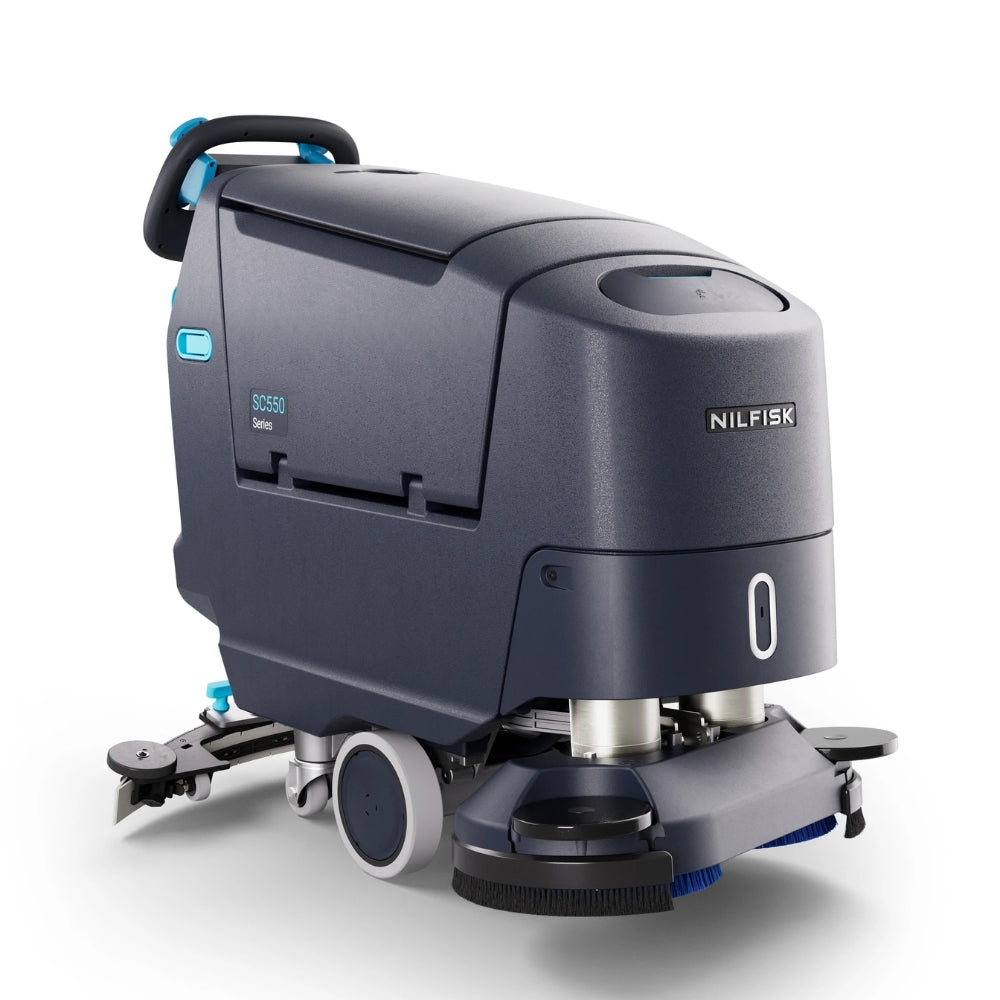
Freshway lists two useful reference points. The Nilfisk SC550 is offered as a CYL 51 cylindrical deck (508 mm working width, up to 2,550 m²/h listed) or a D 61 disc deck (610 mm, up to 3,050 m²/h listed), both with 50 L solution and 50 L recovery tanks. The Nilfisk SC250 lists a 34 cm path, 6 L / 6 L tanks and a cylindrical brush that can pick up light loose debris while scrubbing. Use those specs to plan which machine takes the muddy entry versus the open mall concourse. Freshway's brush vs pad guide covers the tooling choice in more detail.

Fleet strain in wet and dusty weeks
Seasonal soil shows up as maintenance tickets before it shows up on social media photos. Mud packs squeegee blades and recovery hoses; grit wears blade edges and scratches finishes. Capital Equipment's floor scrubber quick fixes list debris in the recovery path as a common suction fault. RapidClean's notes on preparing floors for scrubbing warn that scrubbing solution can turn loose dirt into mud that needs a second pass.
Plan for:
- Extra blade and hose checks after storm weeks.
- More frequent recovery-tank rinses when mud load is high.
- Pre-sweep or vacuum on dusty weeks so the scrubber is not acting as a grit mill.
- Battery charging capacity if you add a midday pass on battery machines such as the SC250 or SC351.
SafeWork NSW's hazardous manual tasks guidance still applies when operators lift full recovery tanks more often in wet weather; stage emptying points so people are not carrying 50 L loads further than needed.
Checklist for site supervisors
- Season trigger written in the SOP (for example: after ≥10 mm rain in 24 hours, or visible grit on mats).
- Entry mats vacuumed or beaten before the scrubber starts.
- Pad or brush choice for the current soil logged on the machine card.
- Detergent dilution confirmed against the label for heavy versus light soil.
- Wet-floor signs staged until the floor is dry enough for traffic.
- Recovery water emptied only to sewer-connected sinks.
- Blade, hose and filter check added after high-mud nights.
- Spare pads and a scraper on the trolley for sticky leaf films.
Worked scenarios
| Scenario | Soil signal | Program change | Machine notes from Freshway listings |
|---|---|---|---|
| Coastal shopping centre after summer storms | Muddy entries, wet mats | Nightly scrub at doors; midday damp clean; check blades daily | SC550 50 L tanks suit longer runs; keep wet-floor controls up |
| Inland warehouse in windy spring | Fine grit on concrete | Pre-sweep aisles; reduce detergent; inspect pad glaze mid-week | SC250 cylindrical brush can take light debris on compact zones |
| School after oval wet weather | Sand and grass at corridors | Increase vacuum/sweep before scrub; short restoration pad pass weekly | Compact units such as the Hako Scrubmaster B12 (38 cm, 16 L / 22 L tanks) suit corridor widths |

Common mistakes to avoid
- Leaving the same pad and dilution all year because "it worked in March".
- Scrubbing grit without a dry prep pass, then blaming the squeegee for streaks.
- Pouring recovery water into outdoor drains after washing entries.
- Adding chemistry when the real need is a pad change or an extra entry clean.
- Skipping wet-floor signs on humid days when dry time stretches.
Loose dirt left for the scrubber can clog blades and recovery systems, which is why dry prep belongs in the seasonal SOP beside the chemical change.
Frequently asked questions
Do I scrub more often in the wet season?
Usually at entries and tracked zones, yes. Raise frequency where mud arrives daily, and keep wet-floor controls up until floors are dry.
What changes in dusty weeks?
Pre-sweep or vacuum first, watch pad glaze, and often use less detergent so residue does not hold the next dust load.
Can I tip scrubber water outside after rain?
No. Send recovery water to a sewer-connected cleaner's sink. Stormwater drains are for rain, not wash water.
Should I change pads every season?
Change when soil type changes or the pad is glazed or loaded. Keep a restoration pad for short recovery passes, then return to the daily pad.
Which scrubber suits mixed seasonal sites?
Sites that swing between mud and dust often need both a compact unit for entries and a larger tank machine for open floors; match path width and tank size to the zone.
Next steps with Freshway
Write seasonal triggers into the scrubber SOP, then shortlist machines from Freshway's floor scrubbers and commercial cleaning machines ranges. Check each product page for current pricing and stock, and align chemicals from the cleaning chemicals range with the floor finish on site.