Spill Kit Chemistry for Facilities: Matching Absorbents to Soil Types
Match the absorbent to the liquid, then put the kit where spills start.
Shop now
Friday, 6.40 pm, a loading dock in western Sydney. A 20-litre drum of alkaline degreaser splits on a pallet jack and the liquid heads for the grated pit by the roller door. The site's spill kit is on the wall, sealed and full. Inside are body-fluid granules, a scraper and a biohazard bag. Nothing in it was chosen for a pool of degreaser moving towards stormwater.
Which absorbents belong in a facility spill kit?
Facility spill kits should hold absorbents matched to the liquids actually stored on site: general absorbent pads or vermiculite for water-based chemicals, oil-selective material for fuels and oils, neutralisers where acids or alkalis are kept, and body-fluid granules for washrooms. Add drain covers, compatible waste bags and PPE for every class.
EPA Victoria's liquid storage and handling guidelines list spill kits with absorbent material appropriate to the substance used on site, neutralisers for acids and bases, equipment to block stormwater inlets and compatible recovery containers. This checklist is written for facility managers and buyers who need to turn that list into kits that match each building. It sits alongside the Freshway cleaning spill kit checklist, which covers sizing kits to chemical volumes.
Spill types in facilities
Most commercial buildings produce four kinds of spill, and each behaves differently on the floor:
- Water-based cleaning chemicals. Detergents, degreasers and sanitisers from the cleaner's store, trolleys and dosing points.
- Oils and fuels. Plant rooms, car parks, loading docks, kitchen exhaust grease and maintenance workshops.
- Acids and alkalis. Descalers, toilet acids, drain products and concentrated alkaline strippers, including products from the specialty industrial chemicals range.
- Body fluids. Vomit, blood and urine in washrooms, foyers, transport hubs and aged care.
Walk the site with the chemical register and the SDS for each product. The Freshway guide to building a cleaning chemical SDS register explains how to keep that list current.
Absorbent classes matched to soil type
The University of Melbourne's managing spills guidance gives a useful breakdown of common spill-kit materials. Its notes are summarised below.
| Soil type | Absorbent or material | Watch-outs from the guidance |
|---|---|---|
| Water-based liquids | Vermiculite or absorbent pads; booms to contain | Vermiculite absorbs up to ten times its weight in water, but it is light and blows away outdoors and does not take up oil easily |
| Oils and fuels | Attapulgite or absorbent pads | Attapulgite is inert and suited to oil-based spills and outdoor use, though less absorbent than vermiculite |
| Acids and alkalis | Neutralising material, then absorbent | Choose the neutraliser from the SDS; do not improvise with another cleaning chemical |
| Body fluids | Solidifying granules plus disinfectant | Treat as a biohazard and follow the site's infection-control procedure |
PPE and bunding
Every kit needs PPE that suits its worst likely spill, not just gloves. For chemical kits that usually means chemical-resistant gloves, eye protection and a disposable coverall. Freshway lists Bastion Type 5/6 SMS coveralls, which are rated against hazardous particulates and limited liquid chemical sprays; compare gloves and eyewear in the gloves and PPE collection. Bunding reduces how often the kit is needed at all. The NSW EPA's drain is just for rain guidance says liquids should be stored in closed, labelled containers in a designated area away from stormwater drains, preferably covered, sealed and bunded.

Kit placement
Place kits where spills start, not where storage is convenient. Good locations are the chemical store door, the loading dock, the plant room, each floor's cleaner's room and the main washroom block. Each kit should be reachable within the time it takes a spill to reach the nearest drain. Mark the kit's class on the outside, such as "chemical", "oil" or "body fluid", so a casual staff member grabs the right one.
Restock discipline
A kit used once and not refilled is a wall ornament. EPA Victoria asks sites to regularly inspect spill kits to ensure they are available and well stocked, and to keep records of inspections and training. A simple routine works:
- Seal each kit with a numbered tag after it is checked.
- Check tags weekly on the cleaning round; a broken tag means the kit was opened.
- Restock any opened kit within one shift and log what was used.
- Check expiry dates on disinfectants and granules every quarter.
- Review the contents when a new chemical joins the register.
Spec kit contents
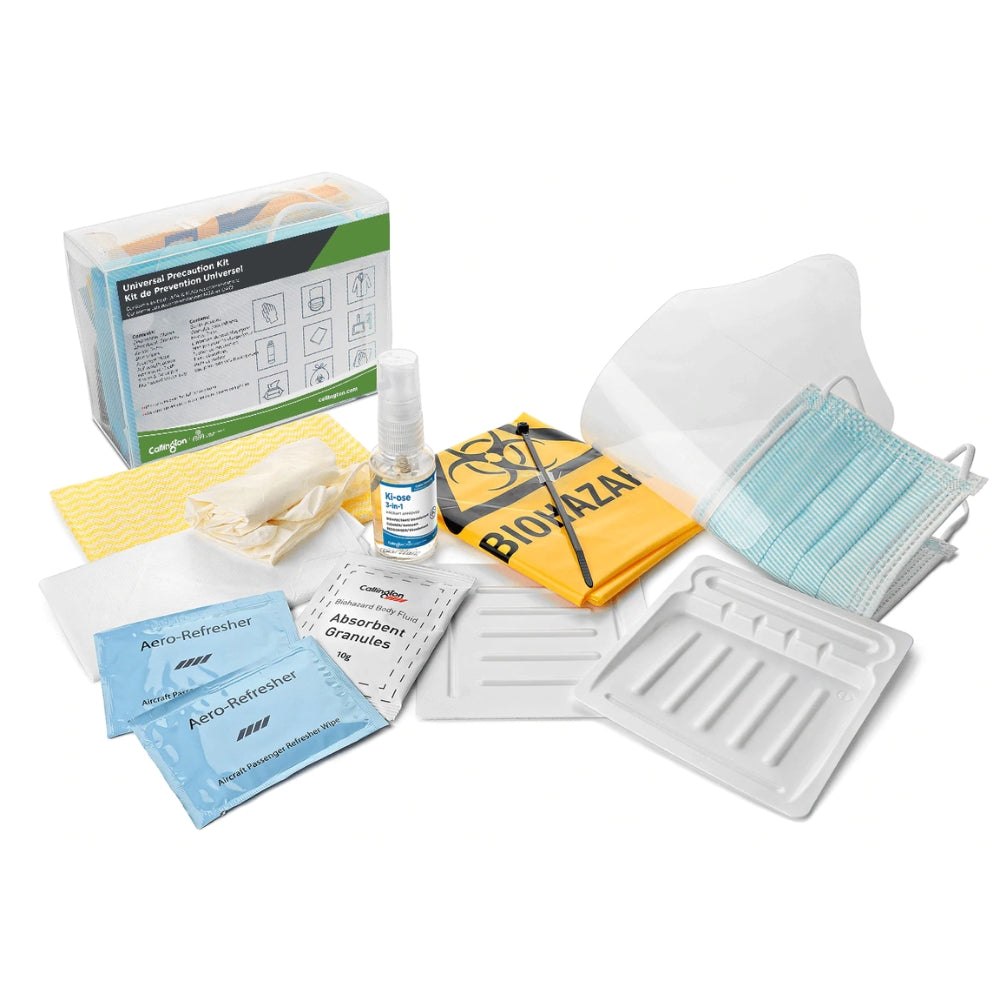
For each kit class, write the contents list before buying. A body-fluid kit is the simplest to source as a pack. Freshway lists the Callington Versatile Spill Cleaning Kit with absorbent granules, an apron, a combined face and eye mask, nitrile gloves, a 30 ml Ki-ose disinfectant spray, a scoop and scraper and a biohazard bag. Chemical and oil kits are usually built to a spec: absorbent pads or loose absorbent sized to the largest container on site, drain covers or booms, labelled heavy-duty waste bags, a dustpan and broom set used only for spill clean-up, PPE and a laminated response card.

Training drills
Run a short drill each quarter with water standing in for chemical. Time it from the call to the drain being covered. A useful sequence:
- Stop the source and warn people nearby.
- Identify the product from its label and open the SDS.
- Put on the PPE the SDS specifies.
- Protect drains first, then contain the edge of the spill.
- Apply the correct absorbent or neutraliser and collect it into a labelled bag.
- Clean the area and restock the kit.
WorkSafe Victoria's safety data sheet guidance says employers must obtain an up-to-date SDS for each product and make it accessible to employees, contractors and emergency services.
After-spill reporting
Record the product, volume, location, who responded, what was used and whether anything reached a drain. Victoria's Department of Health says in its infection control cleaning procedures that cleaning items should be changed immediately after cleaning blood or body fluid spills, so log replacement cloths and mop heads too. Review each report at the next site meeting and fix the cause, whether that is a damaged drum, a missing bund or a kit in the wrong place.
Frequently asked questions
Is one universal spill kit enough for a commercial building?
Rarely. Oil, chemical and body-fluid spills need different materials and PPE. Most buildings need at least one chemical kit near storage and body-fluid kits near washrooms.
How big should a facility spill kit be?
Size it to the largest container that could leak in that area, such as a 20-litre drum, and keep drain protection in the same kit.
Can a body-fluid kit be used on a chemical spill?
No. Body-fluid kits are built for biological waste. Use the absorbent and PPE the chemical's SDS specifies.
How often should spill kits be checked?
Check seals weekly, restock any opened kit within a shift, and review expiry dates and contents at least quarterly or when a new chemical arrives.
Next steps with Freshway
List the liquids on each site, match a kit class to each storage point and write the contents before ordering. Freshway's cleaning chemicals range and PPE collections carry the products and SDS details your register needs; contact the team if you want help building kit lists across several sites.