Maintenance Schedule Tied to Parameters and Duty Hours
Count running hours, not calendar months, before the pump tells you it is due.
Shop now
The pump did not fail early. It failed on time, and nobody was counting. Picture a wash bay that runs a machine for most of two shifts a day. The oil was changed "every few months", the inlet filter "when someone remembered". Then the pump starts knocking, pressure falls away, and the fleet queues while the machine goes to the workshop.
Calendar schedules hide the real variable, which is running time. A contractor's machine and a wash-bay machine can share a model number and still wear at very different rates. This guide builds a schedule from duty hours and from the parameters on the spec sheet, the way a service technician would set it up.
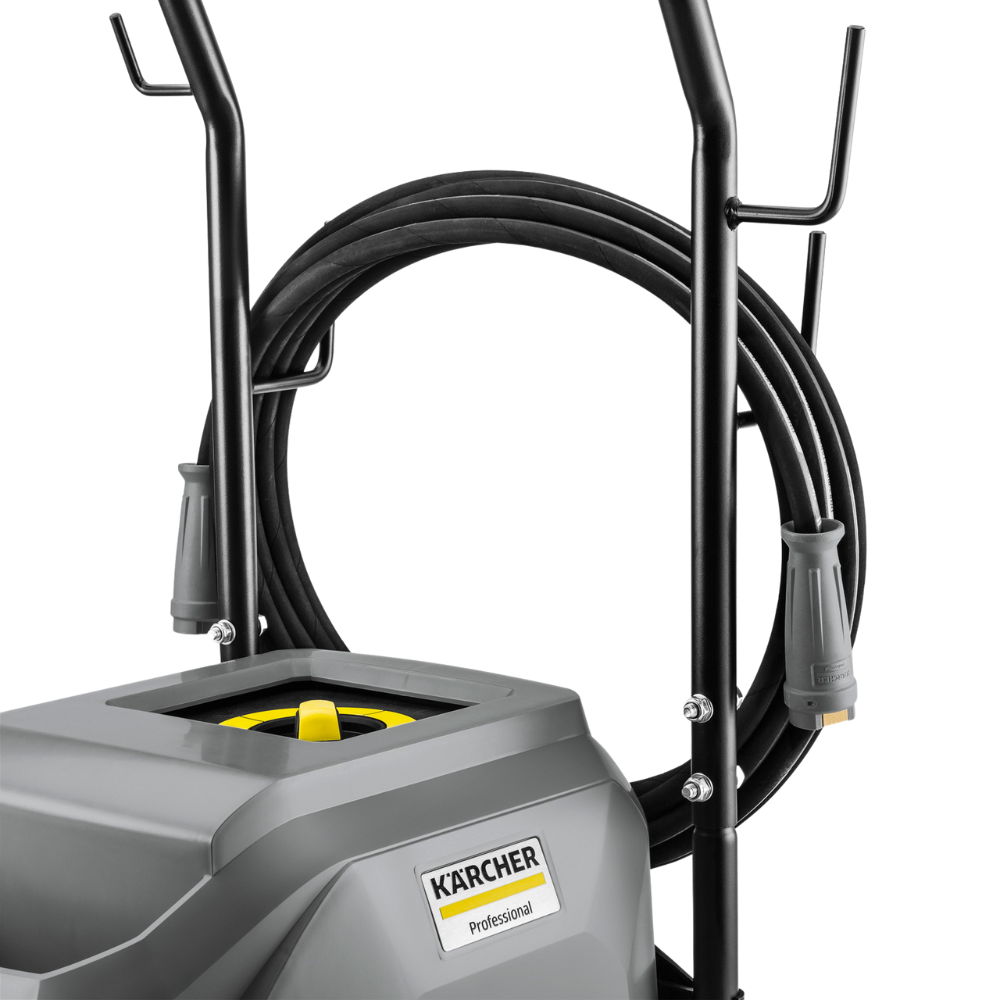
Pressure washer maintenance duty hours: the short answer
Pressure washer maintenance by duty hours means servicing at counted running hours, not calendar dates. Log motor-on time, including bypass. Pumps Australia's reference schedule changes pump oil after the first 50 hours, then every 750, with seals and valves at 2,500 hours. Your model manual sets the final intervals.
The rest of this guide turns those reference hours into weeks for your site, then adjusts them for pump type, bypass protection, water and storage. If you want the calendar version, Freshway's pressure washer maintenance schedule is built around failure modes and daily, weekly and monthly checks.
Build an hours-based plan from your parameters
Start with the reference. The Pumps Australia High Pressure Water Cleaner Guidance Manual gives replacement times based on a hot water machine working 750 hours a year in normal conditions, with medium hard water and the water cooled before switching off. It also says servicing times change when those conditions change.
Next, estimate your hours. Two common Australian duty patterns show how far apart they sit:
- Contractor's ute machine. 4 hours a day × 5 days × 46 weeks = 920 hours a year, or about 20 hours a week.
- Fleet wash bay. 8 hours a day × 6 days × 50 weeks = 2,400 hours a year, or 48 hours a week.
- Convert each interval into weeks. Divide the reference hours by your weekly hours, then put the dates in the diary.
| Item (Pumps Australia reference) | Hours | Contractor at 20 h/week | Wash bay at 48 h/week |
|---|---|---|---|
| First pump oil change | 50 | about 2.5 weeks | about 1 week |
| Clean inlet water filter | 250 | about 12.5 weeks | about 5 weeks |
| Replace quick couplings or O-rings | 500 | 25 weeks | about 10 weeks |
| Pump oil, HP nozzle, inlet filter replacement | 750 | about 37.5 weeks | about 15.6 weeks |
| Spray gun | 1,500 | 75 weeks | about 31 weeks |
| Water seal packing, valves, oil seals (or when pressure drops) | 2,500 | about 2.7 years | about 1 year |
The wash bay reaches its first seal service in roughly a year, the contractor in nearly three. Same reference figures, very different diaries.
Then adjust for the machine itself. These are the spec-sheet parameters that move the schedule:
- Pump drive. Freshway lists the Kärcher HD 6/15-4 Classic with a ceramic-piston crankshaft pump. Where a pump has its own oil, it gets its own hours-based oil change.
- Motor speed. Kärcher Australia says the reduced speed of the HD 6/15-4 M Classic's 4-pole motor means less wear on the pump. Freshway lists the Kränzle KHD7/122TS at 1400 RPM and the KHD10/122TS at 2800 RPM, so two machines from one brand can wear differently.
- Bypass protection. The KHD7/122TS listing describes Total Stop, which switches the motor off when the trigger is released. The Kärcher HD 4/10 X Plus Classic listing describes automatic pressure relief in bypass. Without either, idle time counts as hard pump time.
- Burner. Hot water machines add a second clock. The same manual lists in-line fuel filter and fuel pump filter replacement after 500 hours, and burner electrodes and the fuel nozzle after 1,000 hours.
- Class. Multiply working pressure in bar by flow in L/min. WorkSafe Victoria gives Class A as 800 to 5,600 bar litres per minute and Class B as above 5,600, says Class B operators must be trained through a registered training organisation, and says refresher training must be done and recorded at least every two years. Put that date in the same diary.
Daily and weekly checks, counted in hours
The short checks do not need an hours count, because they happen every time. The Pumps Australia manual sets out a daily inspection that takes a few minutes, starting on the inlet side:
- Water supply. Look for leaks, clean the filter and confirm there is enough flow. The manual asks for twice the pump's stated flow at the supply, so 20 L/min for a 10 L/min machine.
- Pump. Check for water leaks, the oil level, and that there is no water in the oil.
- Drive. Belt tension and condition on belt-driven machines; mounting bolts and gearbox oil on gearbox machines.
- Hose, gun, lance and nozzle. Fittings tight, no leaks, the right nozzle size in place.
- Test under pressure. Watch for leaks and vibration, and listen to the pump.
Weekly, the supervisor reads the hours log, cleans or inspects the inlet screen, checks coupling O-rings and confirms the test-and-tag date. SafeWork NSW says plug-in equipment exposed to moisture must be regularly inspected and tested by a competent person, with AS/NZS 3760 setting out methods and frequency. An electric pressure washer fits that description.
Pump care: oil, seals and time in bypass
Oil is the clearest hours item. The Pumps Australia manual says to change oil at the first service at 50 hours and every 750 hours after that, or at any time the oil turns from honey to grey in the pump, gearbox or engine. Pump and engine oils are separate items on petrol machines, with separate intervals, and the engine follows its own service manual.
Seals respond to how the machine is run. The manual says a pressure cleaner should not run for more than 2 to 3 minutes without the trigger being pulled, to avoid overheating the pump head and damaging seals. Pumps Australia explains why: in bypass, water heats very quickly and can destroy seals and valves, which is what a thermal valve is there to prevent.
Knocking is a stop signal. The manual's troubleshooting table links a loud knock to cavitation or sucking air, and its first fix is checking the water supply. For the step-by-step pump routine, use Freshway's pressure washer pump maintenance checklist.

Nozzles and hoses: wear you can measure
A worn nozzle is a quiet fault. The Pumps Australia troubleshooting table lists a worn nozzle as the first cause of low pressure, and its schedule replaces the HP nozzle after 750 hours. On a wash bay at 48 hours a week, that is roughly every four months. Swapping nozzles on hours rather than on complaints keeps the spray pattern, and your cleaning times, consistent.
Hoses need matching as much as replacing. Pumps Australia says high pressure hoses carry a pressure rating with a burst pressure of 2.4 times the working pressure, and that 2-wire hoses suit higher pressures than 1-wire. WorkSafe Victoria's summary of AS 4233.1 adds that parts, fittings and hoses should be the right size, compatible and rated at or above the equipment's maximum operating pressure.

Storage in Australian conditions
Humidity is the Australian storage problem most schedules forget. The Pumps Australia troubleshooting table lists water in the crankcase from humid air condensing inside it, and its remedy is to change the oil intervals. If machines live in a humid wash bay or in a coastal depot, shorten the oil interval and check for milky oil at every daily inspection.
Three other storage habits protect the hours you are counting:
- Run clean water through after detergent use, following the machine's flushing steps, so chemical does not sit in the pump.
- Drain and protect machines kept where frosts occur, such as inland and alpine sites, exactly as the manual describes.
- Keep wash water out of the stormwater system. NSW EPA says washing runoff must not enter stormwater drains, and that equipment washing should be confined to a wash bay draining to sewer under a council trade waste agreement, or treated and recycled.
A simple hours log to keep
One sheet per machine is enough. Fill it in at the end of each shift:
- Date, operator and site.
- Motor-on hours for the shift, including time in bypass.
- Running total since the last oil change, filter clean and nozzle change.
- Water source: mains, tank or bore.
- Anything odd: pressure drop, pulsing, knocking, leaks or grey oil.
- Next test-and-tag date and the next operator refresher training date.
If the machine has no hour meter, record start and finish times. A rough count kept every day beats an exact guess made once a year.
Common mistakes to avoid
- Servicing two machines on the same date when one runs twice the hours of the other.
- Counting spray time only. The motor and pump are working in bypass too.
- Using the calendar to change oil in a humid bay where condensation is getting into the crankcase.
- Ignoring the burner's own hours on hot water machines.
- Fitting a replacement hose or nozzle by appearance instead of rated pressure and size.
- Opening the pump yourself. WorkSafe Victoria's summary of AS 4233.1 says only the maker, its agent or competent persons should repair or maintain high-pressure water jetting equipment.
Parts and consumables to stock
An hours schedule only works if the part is on the shelf when the hours come round. Keep these for each machine model:
- Inlet filters and screens. Freshway's listing for the Kränzle 133003 water inlet filter describes a clear bowl for visual checks and separate replacement bowl, O-ring and sieve parts.
- Nozzles in the orifice size your machine needs, plus a spare of the one your crew uses most.
- Quick couplings and O-rings, which sit on the 500-hour line in the reference schedule.
- Pump oil of the grade in your machine's manual, enough for two changes.
- A rated spare hose that matches the machine's pressure and fittings.
Freshway's pressure washer accessories range covers hoses, nozzles, guns, lances and fittings. Check each product page for current pricing and fitting sizes before ordering.
Frequently asked questions
How many hours between pressure washer pump oil changes?
Pumps Australia's reference schedule changes pump oil after the first 50 hours, then every 750 hours, or sooner if the oil turns from honey to grey. Your model manual sets the final interval.
How do I count duty hours without an hour meter?
Record start and finish times for every shift and add them up weekly. Count motor-on time, including time in bypass, not just time spent spraying.
When should pressure washer seals be replaced?
Pumps Australia's reference schedule replaces water seal packing, valves and oil seals after 2,500 hours, or earlier when pressure drops.
Who should service a commercial pressure washer?
WorkSafe Victoria, summarising AS 4233.1, says only the maker, its agent or competent persons should repair or maintain high-pressure water jetting equipment.
Next steps with Freshway
Write down each machine's weekly hours, then convert the reference intervals into dates using the table above. When a pump service, seal kit or pressure fault comes due, Freshway's service and repairs workshop in Sydney handles pressure washers, including pump testing and pressure diagnostics, and provides a quote before work begins. If a machine is due for replacement rather than repair, compare duty-rated options in the commercial pressure washers collection.