Pressure washers rarely fail at a convenient moment. They fail when the machine has been working hard for an hour, when the crew is already behind schedule, and when nobody has looked at the inlet filter for a month. A pressure washer maintenance schedule exists to move those failures into a planned slot: filters changed before they starve the pump, nozzles cleared before they distort the spray pattern, seals replaced before they leak, and hoses retired before they burst.
The schedule that works is not the longest one. It is the one built around the failure modes that actually occur on commercial sites, written into the daily routine so it survives a busy week, and supported by the spares that make each check actionable.
Pressure Washer Maintenance Schedule: Build It Around Failure Modes
Start by listing how the machines on site actually fail, rather than by copying a generic checklist. On most commercial pressure washing programs the recurring failures are blockage or wear in the nozzle, a clogged or missing inlet filter, water starvation and cavitation, worn seals, leaking couplings, damaged hoses, and machines stored or run in conditions they were not designed for. Each of those has an owner and an interval, and each has a tell-tale sign that shows up before failure.
The signs are what make a schedule practical. A drop in pressure, a spray pattern that has gone fat or uneven, a machine that pulses, a pump that runs hotter or louder than usual, or a coupling that weeps are all early warnings rather than symptoms to work around. Training the crew to report those signs is worth more than any inspection sheet, because the operator is the only person who sees the machine while it is working.
Then set the intervals. Daily checks belong to the operator and take minutes. Weekly and monthly checks belong to the supervisor or the maintenance routine and cover things a busy operator will skip, such as filters, oil levels where applicable, couplings and storage. Annual or service-interval work belongs to a technician, and on commercial sites it should be scheduled around demand, not scheduled when the machine stops.
Start With the Failure Mode You Are Trying to Prevent
Different sites fail differently, and the schedule should reflect that. A machine used daily on construction sites with recycled or tank water will suffer filtration and pump problems long before a machine used once a week on a sealed hardstand with mains water. The first schedule decision is therefore about water quality and duty cycle, because those two variables drive most of the wear.
Duty cycle matters as much as water. A machine run at or near its limit for long shifts wears seals, valves and pumps faster than the same machine used in short bursts, and the maintenance interval should be shortened accordingly rather than assumed from the calendar. Where a site runs several machines, keeping a simple log per machine - hours used, water source, jobs completed - turns guesswork into a schedule that matches reality.
The third input is the environment. Machines stored in unheated or dusty areas, left in utes exposed to weather, or kept where they are exposed to salt air deteriorate differently from machines stored in a dry store. Storage conditions rarely appear on maintenance checklists and are one of the most common reasons a machine that is serviced on time still fails early.
Daily Checks Before the Machine Leaves the Store
The daily routine is short, and it should take less time than refuelling. Check water and, where applicable, fuel or oil levels. Inspect the inlet filter and strainer and clear anything visible, because a restricted inlet starves the pump and is the single most destructive condition a pressure washer can run in. Check that the nozzle is the correct one for the planned job and that the spray pattern is even. Look at the hose for kinks, abrasion or a coupling that does not seat properly.
Check the machine itself for leaks, unusual noise and loose fittings, and confirm that the trigger, safety catch and any guards work as intended. Then confirm that the site has what the machine needs: a supply that can deliver the flow the machine requires, a safe power or fuel arrangement, and an exclusion zone that protects people from rebound and mist.
At the end of the job, the shutdown routine matters as much as the start-up. Flush the system briefly with clean water if detergent was used, release pressure from the hose before disconnecting, drain and coil the hose without tight bends, clean the nozzle, and store the machine dry. A machine put away pressurised, wet and dirty will need more maintenance next week than one put away correctly today. For a step-by-step guide to the checks that matter most on the pump itself, see this pressure washer pump maintenance checklist.

Weekly and Monthly Checks That Catch Wear Early
Weekly checks cover what daily use cannot see. Inspect the full length of the hose for blisters, abrasion, soft spots or damaged crimps, and check both couplings for corrosion or worn seals. Look at the spray pattern under load rather than at idle, because a partly blocked nozzle often shows only when the machine is working. Check the water inlet filter element properly, not just visually, and confirm the machine's fasteners, wheels and frame are sound.
Monthly or service-interval work depends on the machine, so the correct reference is the manufacturer's manual rather than a generic list. Typically it covers oil levels and condition where the machine has an oil-filled pump or engine, valve and seal condition on machines that see heavy duty, battery and electrical connections on the cordless or battery-powered models, and a review of the maintenance log to see whether check intervals need shortening. Where a site runs the machine hard, shortening the interval is usually cheaper than replacing a pump.
What Water Quality Does to Pumps, Filters and Nozzles
Water quality is the variable most often left out of a maintenance plan and the one that determines how much maintenance the machine needs. Grit, sediment and organic matter in the supply wear seals and nozzles and clog filters; hard water deposits scale inside pumps, valves and heating elements; and recycled water can carry particles that pass a coarse filter and reach the pump. Low supply pressure or restricted flow from a marginal tap is worse again, because a starved pump cavitates and damages itself in minutes.
The responses are practical. Filter the inlet and clean the filter element on schedule rather than when it blocks. Where the supply is marginal or shared, use a buffer tank so the machine draws from a stable reserve instead of competing for flow. Where water is hard, follow the manufacturer's guidance on descaling and on the water quality the machine accepts. Where recycled water is used, confirm that the filtration matches the particle size the machine tolerates.
Checking the tank, its outlet and its filter belongs in the monthly list, not in the annual service, since it is usually the first thing to degrade and the easiest to overlook. Manufacturer documentation for the machine, such as Nilfisk's Australian product information or Karcher Australia's pressure cleaner range, states the water quality the machine is designed for.
Operator Controls and the Shutdown Routine
High-pressure water jetting is plant and equipment risk, and Australian duties require it to be managed through the equipment, the procedure and the competence of the operator. Maintenance and shutdown habits sit inside those controls: a machine that is stored pressurised with a kinked hose is a hazard as well as a maintenance problem, and a nozzle that is worn or mismatched can create rebound and mist that puts the operator at risk.
The practical controls are familiar. Never run the machine without water reaching it. Release pressure before disconnecting anything. Inspect hoses and couplings before each use and take damaged items out of service rather than taping them. Keep leads, hoses and connections out of standing water and away from traffic. Never kink a hose to stop flow. Never leave a pressurised machine unattended, and never work directly at another person.
Regulator guidance supports the site procedure: SafeWork NSW publishes plant and equipment material, WorkSafe Victoria's plant guidance covers the same duty, and the framework sits in the Work Health and Safety Regulations 2011. Standards Australia lists the high pressure water jetting series as AS/NZS 4233.1, which is the reference industry procedures are built on.
Hoses, Pumps and Service Access
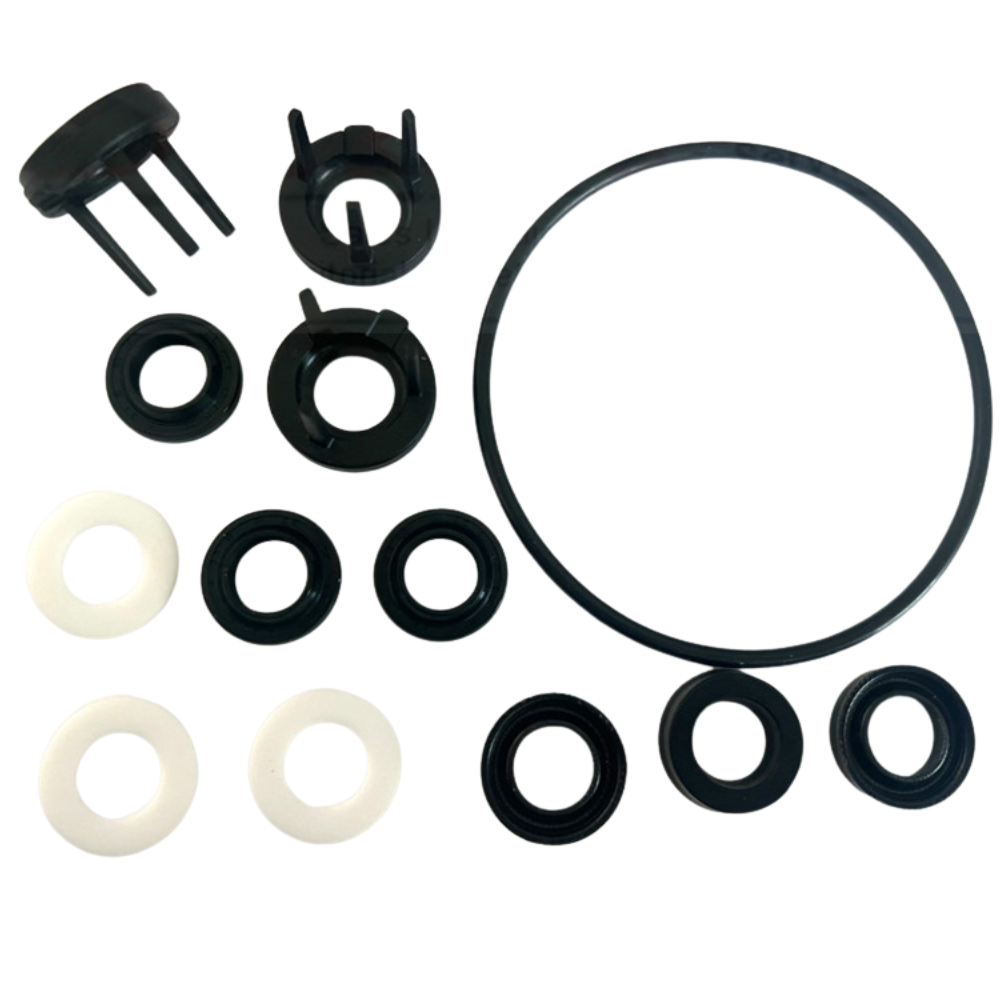
The parts that fail first on a pressure washer are the cheapest ones: nozzles, filters, seals, couplings and hoses. That is good news, because it means a modest spares holding converts most mid-job failures into a short change instead of a lost day. The parts to keep on the shelf are the ones the site uses most - the correct nozzle set for each machine, inlet filter elements, spare couplings and seals, and at least one spare hose of the same diameter, length and rating.
Pumps are the exception, because they fail as a consequence of something else. Cavitation from a starved inlet, running dry, scale, or a nozzle that is too small for the machine all shorten pump life, and every one of them is a maintenance issue rather than a pump design issue. That is why the daily filter check and the monthly review of the log matter: they are the cheapest pump insurance available.
Service access completes the picture. Confirm before purchase which wear parts the machine uses, how quickly they can be supplied locally, whether repairs happen on site or in a workshop, and what the typical turnaround is. Freshway Supplies stocks industrial pressure washers and cleaners, nozzles, hoses, filters and pump parts, and handles equipment service and repairs from Arncliffe in Sydney, so a machine that needs attention is not held up waiting for a part to be ordered from overseas.

What the Schedule Costs per Completed Task
Cost it per completed job, not per service invoice. The relevant comparison is between planned maintenance and unplanned failure: the cost of filters, seals and an hour of scheduled attention against the cost of a lost day, a missed schedule and an emergency pump replacement or repair.
On commercial contracts the arithmetic usually favours the schedule, because the dominant cost of a failure is not the part, it is the labour that stands idle and the client conversation that follows. A machine out of service for a day can cost more in wages than a year of filters. The same logic applies to consumables: a worn nozzle that extends every job by a few percent costs more across a contract than a complete set of replacement tips.
A Site-Trial Scorecard Before You Standardise
When a site decides to standardise on a machine or a maintenance routine, a short trial tells you more than a specification sheet. Score the machine and the routine together, using the same criteria on each site, so the comparison is honest.
- Reliability: unplanned stops per week, and the cause each time.
- Maintenance time: minutes per week actually spent on checks, and who performs them.
- Parts access: how long it takes to obtain a nozzle, filter, seal or hose locally.
- Operator response: whether the crew reports warning signs or works around them.
- Cost per task: water, chemical and wear parts against hours worked.
- Result quality: callbacks and revisits, which are usually the first sign that the machine is being pushed beyond its intended operating point.
Run the trial long enough to include a busy period, because failures cluster when the machine is working hard. Then write the outcome into the routine: which checks are daily, which are weekly, who owns each one, what spares are held, and what triggers a service booking. That document is the difference between a maintenance schedule and a good intention.
Questions we get asked most
- What should be on a daily pressure washer maintenance checklist?
- Check water supply and levels, clear the inlet filter and strainer, confirm the nozzle is correct and the spray pattern is even, and inspect the hose, couplings and machine for leaks, damage or unusual noise. Then confirm the trigger, safety catch and guards work. At the end of the job, flush detergent out, release pressure, drain and coil the hose, and store the machine dry.
- How often should a commercial pressure washer be serviced?
- It depends on duty cycle, water quality and the manufacturer's instructions rather than on the calendar alone. Machines running long shifts on tank or recycled water need shorter intervals than machines used briefly on mains water. Use the manual as the baseline, then shorten intervals where the log shows repeated faults, heavy use or poor water quality.
- Why does a pressure washer lose pressure during a job?
- The common causes are a partly blocked or worn nozzle, a restricted inlet filter, an air leak on the suction side, a supply that cannot deliver enough flow, or a worn pump valve or seal. Check the nozzle and filter first, then confirm the supply, then treat a persistent fault as a service item rather than continuing to run the machine.
- Which spare parts should a commercial site keep on the shelf?
- The parts that fail most often: the correct nozzle set for each machine, inlet filter elements, spare couplings and seals, and at least one hose of the same diameter, length and pressure rating. Match every part to the machine specification and label it, so a substitute with the wrong orifice or rating cannot be fitted accidentally during a busy shift.
Conclusion
A pressure washer maintenance schedule works when it is built around the failures that actually happen: water starvation, blocked filters, worn nozzles, tired seals and damaged hoses. Keep the daily checks short enough to be done, put the weekly and monthly items with someone who will do them, and hold the spares that make each check actionable.
The evidence that the schedule is working is straightforward - pressure and spray pattern that stay consistent, fewer mid-job stops, fewer revisits, and pumps that reach their expected service life. Record it per machine, review the intervals against duty cycle and water quality, and the equipment stops being the reason a contract runs late.
Compare industrial pressure washers, nozzles, hoses, filters and pump parts in the Freshway range, or ask the team to help build a maintenance and spares routine for your machines.