
Kärcher HDS 12/18-4 S Explained: The Specs That Matter for Heavy Fleet Wash Bays
Confirm three-phase power, burner exhaust and wash water capture before ordering.
Shop now
The Kärcher HDS 12/18-4 S EASY! is a hot water pressure cleaner to shortlist for a dedicated heavy fleet wash bay where oily road film and greasy equipment are part of the regular workload. It suits a depot that can supply three-phase power and water, manage diesel burner exhaust and capture its wash water. Before ordering, test it on a representative vehicle and confirm that the bay can support the machine while other equipment is running.
Where does the HDS 12/18-4 S fit in a fleet wash bay?
Start with the work that regularly holds up the bay. At a transport depot, that might be oily film around tractor units rather than loose dust on trailer panels. At a workshop, it might be a recurring washdown of externally greasy components before inspection. At an earthmoving depot, heavy clay can dominate the rinse, with oil concentrated on particular surfaces. Write down which vehicles arrive, which surfaces are approved for pressure washing and what the team must inspect before a vehicle can leave.
Trial the current wash process and the proposed machine against that same finish. Include vehicle positioning, preparation, wash time, any second pass and the time the bay takes to clear afterwards. Record detergent consumption and how many operators are involved. This gives a fleet manager a way to tell whether heated cleaning is helping with the actual bottleneck. Use Freshway’s fleet wash guide for transport depots when planning the broader site layout and workflow.

What do the model name and key specs tell you?
Use the full HDS 12/18-4 S EASY! designation and part number 1.071-916.0 from the Freshway Kärcher HDS 12/18-4 S product listing when requesting a quote. Use the Kärcher Australia technical sheet for that part number and have the supplier identify the working pressure with the standard nozzle and the supported pressure, flow and temperature for your proposed task.
Freshway lists water delivery at 600–1,200 litres per hour, equivalent to 10–20 litres per minute. That range is useful for assessing rinse work and planning the bay. Have the installer check the inlet supply at the proposed connection while the other equipment normally used on shift is drawing water. A quiet-bay test can miss supply problems that only appear when a second operator starts washing or another process draws from the same line.
The listing specifies a four-pole electric motor and a three-phase 400 V, 50 Hz supply. The burner uses diesel to heat the water. Check both services when choosing the operating position, including the electrical connection, ventilation and fuel handling. Freshway also lists an EASY!Force gun with Servo Control. Ask for the quoted gun and hose setup in the demonstration, then check usable reach around the longest vehicle from the intended machine position.
How do water quality and descaling affect the heating coil?
Ask the supplier to assess the water that will actually feed the cleaner. Mains, bore and treated water can call for different checks, and the feed available on a demonstration day may differ from your normal supply. Give the supplier the source and any recent hardness results. If the bay uses reclaimed water, get written confirmation that the proposed feed meets the machine’s inlet requirements before connecting it.
Mineral deposits can build up in a heated water circuit. Ask the service provider which water treatment or descaling procedure applies to the supplied unit, who should perform it and how the interval is determined. Include that work in the maintenance schedule alongside inlet checks and burner servicing. Record changes in heat performance and any fault messages so a technician can investigate them with the operating history. Freshway’s heat exchanger care guide has further background.
Where will the wash water go?
Trace the bay drain to its destination before the trial. A washdown can carry road grit, oil and detergent, and the drainage arrangement has to account for what enters the collection point across a full shift. Show the site’s plumber or hydraulic consultant where spray and runoff can leave the bay, where other equipment discharges and which vehicles bring the heaviest solids load. Ask how the bay’s collection and pre-treatment system will cope with simultaneous use.
Sydney Water says sites that service or clean vehicles may need consent to discharge commercial trade wastewater. Confirm which conditions apply to your site, including any required pre-treatment and detergent restrictions, before using an existing connection for the new process. The Sydney Water automotive wastewater guidance covers common pollutants and containment measures.
How should you compare it with the Nilfisk MH 7P 180/1260 FA?

Compare the two quoted configurations using the same vehicle, soil and inspection criteria. If possible, use comparable sections so that one machine does not inherit a surface already cleaned by the other. Ask both suppliers to record the settings used and any changes made for paintwork or other vulnerable surfaces.
| Decision point | Kärcher HDS 12/18-4 S | Nilfisk MH 7P 180/1260 FA |
|---|---|---|
| Water demand | Check the site supply against Freshway’s listed 600–1,200 L/h range. | Obtain the quoted configuration’s inlet requirements and check the same supply. |
| Working settings | Record the working pressure, flow and temperature used to pass inspection. | Record the same measurements at the equivalent finish. |
| Operator reach | Trial the quoted EASY!Force and hose setup around a typical vehicle. | Trial the quoted gun and hose setup from the same bay position. |
| Service and downtime | Ask for the coil care schedule and local service arrangements in writing. | Request the corresponding maintenance schedule and service arrangements. |
Use the full cycle time and post-wash inspection to compare the results. If the first pass looks similar, repeated work may expose practical differences in hose handling, refuelling or the time needed to return the bay to service. Have the operators record those differences before procurement weighs them alongside installation work and servicing.
Repeat the comparison on a vehicle with the contamination your team finds hardest to remove. Give both suppliers the same acceptable finish and record whether either trial needs extra preparation or manual work around fittings.
When would another cleaning method suit the job?
For a yard where the bulk of the work is rinsing loose soil, run a cold-water baseline before committing to a heated unit. For delicate finishes or vehicles with exposed electrical components, have the fleet team specify an approved cleaning method for each surface. Freshway’s cold and hot water pressure cleaner comparison can help frame that decision.
Food-plant managers assessing an equipment or loading-area washdown should have the hygiene team define compatible surfaces, chemical approvals and controls for splash. Use the plant’s validated procedure for sanitation. For sheltered or enclosed bays, have the site’s competent assessor review combustion exhaust and the proposed machine position before heated operation.
What should you have confirmed before ordering?
- Ask the supplier for the exact part number, electrical connection requirements and the distinction between working and maximum pressure.
- Give the installer the operating position, water source, other simultaneous loads and the route to the approved drain.
- Ask for the hose, gun and nozzle supplied, and have the team check reach and access during the demonstration.
- Agree who will look after inlet water quality, burner servicing and coil care, and discuss downtime with Freshway’s service and repairs team.
How should Sydney, Melbourne and Brisbane sites prepare?
For Sydney NSW, ask a licensed electrician to assess the proposed three-phase connection and verify any wiring work against the NSW Government electrical work requirements. For Melbourne VIC and Brisbane QLD, check the proposed connection with a locally licensed electrician and confirm discharge and pre-treatment conditions with the water utility responsible for your premises. Give each adviser a plan showing where the operator, vehicle, cleaner and wash water will be during use.
Frequently asked questions about the Kärcher HDS 12/18-4 S
Does the HDS 12/18-4 S run on diesel or electricity?
Freshway lists three-phase electricity for the machine and a diesel burner to heat the water. Assess both the electrical supply and the arrangements for fuel and exhaust.
What water flow should I allow for when assessing the wash bay?
Freshway lists 600–1,200 litres per hour. Ask the installer to verify the machine’s inlet requirements and test the available supply while other equipment draws water.
How often should the heating coil be descaled?
Ask the service provider to set a schedule based on the supplied machine’s instructions, your feed water quality and how often you use heat.
Can I use my existing fleet wash drain?
Have the drain traced and confirm with your water utility that the connection and any pre-treatment are suitable for the proposed process before using it.
Discuss your fleet wash bay with Freshway
For a hot water pressure washer enquiry in Sydney NSW, Melbourne VIC or Brisbane QLD, send Freshway the bay layout, vehicle types, usual contaminants and the available power, water and drainage details. Include the benchmark from your existing wash so the team can help you specify a trial and quote for the same workload. Click & Collect at 208 Princes Highway, Arncliffe NSW 2205 is by prior arrangement only.
Related articles
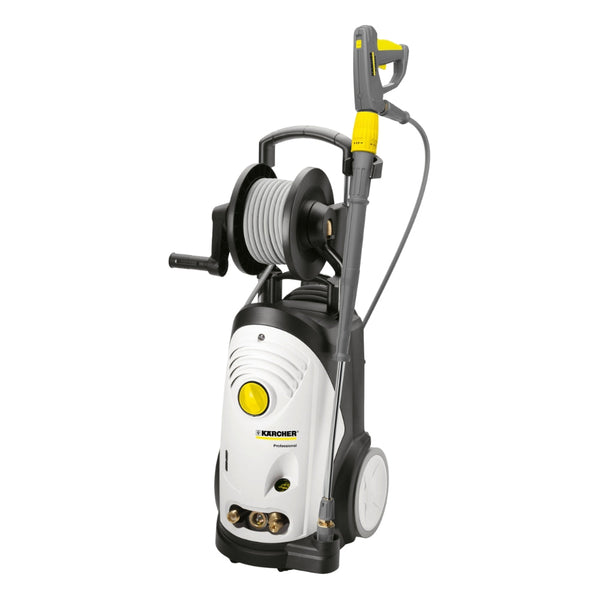 Kärcher HD 7/10 CXF: What the Food-Industry Variant Changes for Washdown ...
 Nilfisk GM80PR Industrial Dry Vacuum: Where an Aluminium Canister Fits
 XL61 Diesel Radiant Heater (17 kW): What to Check Before Approving a Work...
 Nilfisk IVB 965-2H/M SD XC: Choosing a Twin-Motor H/M Class Extractor for...