
Hako Sweepmaster B800: Choosing a Walk-Behind Sweeper for Car Parks
Time car park edges, tight turns and hopper trips before shortlisting a walk-behind.
Shop now
Car park sweeping often starts at the edges, where grit and litter gather around bays, stairs and pedestrian crossings. A ride-on can cover the main lanes quickly while a walking route may suit the short sections and tight turns between them. To decide whether the Hako Sweepmaster B800 belongs on your shortlist, time those sections and the trips to empty the hoppers, then compare the result with the current routine.
What sort of car park route suits the B800?
The Freshway Sweepmaster B800 listing identifies a battery-powered walk-behind sweeper with two debris containers. Consider it for regular dry sweeping where columns, bay edges and short links make a walking format worth trialling. Start with ordinary grit and wrappers and use the site's own inspection standard. If the floor has bonded marks or liquid spills, arrange the appropriate separate cleaning procedure.
Ask the supervisor to mark the route from the store to the first deck, between decks and back to the disposal point. Include any place the operator has to wait to cross a vehicle path. Check the machine's dimensions and operating limits for the unit on the quote. Verify the service route, stair entrances and lifts with the site before allowing access. The Freshway comparison of push, walk-behind and ride-on sweepers gives background for choosing between formats.

How should you test debris pickup and the twin hoppers?
Run a test along one open lane and one area where litter gathers at the boundary of parking bays. Check what remains after the machine has passed. Mark any extra work near columns or corners and note the time required to finish it. If the route repeatedly includes items that can jam the equipment or have special disposal requirements, agree the separate handling process before the trial begins.
Freshway lists two 25 litre hoppers for the B800. Compare the handling at the point where staff will normally empty them. The volume on the listing is only part of the decision. Dense grit and bulky dry litter can fill a container differently and can change how it should be handled. Ask the supplier to demonstrate the approved emptying method and have the site assess how the operator can carry out that task with the proposed bin and normal waste. Hako's B800 technical information can help the buyer confirm the equipment configuration.
Observe how the operator gets from the working deck to the bin. If the closest waste point is shared with the day crew, record the delay when both teams need it. If each level has a designated waste point, note which areas can be completed before an emptying trip. Confirm who handles spills, sharp debris or potentially hazardous dust using the site's own procedures.
What access and battery checks should go on the shift plan?
Measure the tightest doorway, turn and approved sweep route during the intended shift. Include parked vehicles and any doors or gates that will usually be closed. Arrange a work window in which the operator can move through the decks under the site's traffic controls. SafeWork NSW's mobile plant guidance gives examples of separating people and vehicles through layout and scheduling. Apply the rules for the site and provide training for everyone using the equipment.
Ask Freshway to confirm the battery and charger for the supplied B800. Time the route, observe charge remaining and record when the machine needs to be ready for the next shift. Include any travel to storage and the availability of a suitable place for charging. Check who is responsible for getting the machine ready again. A trial that uses the correct configuration and normal roster gives the buyer more information than a published duration from another use case.
Check access to routine wear parts and filter care. Ask for the maintenance instructions and confirm who will inspect the brush, filter and containers before the next shift. Have a person trained on the machine demonstrate the relevant checks in the approved area. Safe Work Australia's model code on managing plant risks provides context for equipment inspection, commissioning and operator instruction.
How do you compare the B800 with a ride-on option?
Use a repeatable route that combines the open lane, the tightest bays and an emptying trip. Give both operators the same handback deadline and floor standard. Keep notes on where each machine cannot complete the work safely and where a separate pass is needed. Compare accepted area over total elapsed time, including travel to the bin and repeated access waits. Freshway's car park and hardstand sweeper guide explains why site debris and traffic matter in that comparison.
| Site zone | What to record | What it helps decide |
|---|---|---|
| Covered deck with columns | Time at turns, remaining strips and any required detail work | Whether the walking route covers the narrow sections well |
| Long open lane | Accepted area, passes and disruption from moving vehicles | Whether the rider gives a meaningful improvement |
| Waste point and storage | Travel time, handling arrangements and access | How the equipment fits the normal roster |
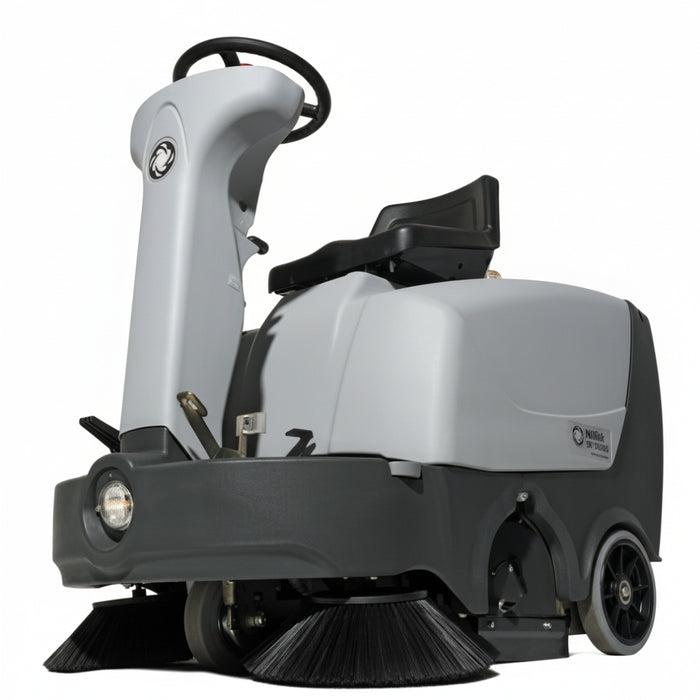
Have the supervisor review the work each machine leaves behind. In some facilities a walking machine can finish the route without a second operator. In others the main lanes justify a rider and a smaller machine remains useful for detail work. Add the time for both roles before deciding which equipment belongs at the site. If a deck is frequently unavailable at the intended time, check whether the cleaning schedule or access rules can change first.
At handback, ask the site representative to walk the route with the operator and mark any sections that did not meet the standard. Record whether a missed strip reflects equipment access, debris that needs a different method or the site returning an area to service early. The record helps distinguish which limits the buyer can solve by changing equipment and which should go back into the work plan.
How should a multi-deck site organise the trial?
Use a floor plan for each level. Mark the areas that can be closed in one stage, and record where the operator needs a site contact to open a store or release a section. Include the time between the first request to access a deck and actual handback. If the current route depends on an early window, confirm that the same access will be available after the equipment changes. A site that has an agreed pedestrian diversion on one level may need a separate arrangement on the next.
Pick one difficult section that normally receives detail work, such as the line of columns beside the payment area. Note any remaining debris, how long it took to collect and what access was required. If a separate worker normally clears that section for the sweeper, include that work in the comparison. Give the decision maker the elapsed time for each machine and the staff time that belongs to the entire route.
Inspect the broom and filter arrangements with the supplier. Ask which main and side broom are supplied for the surface, how the filter is serviced and which replacement parts need to be available locally. Put the supplied options on the quote so they can be matched to the trial. Confirm what the operator checks after finishing a deck and before moving the equipment back through a shared access point.
Finish one test in the same way a normal shift ends. Identify who accepts the clean deck, who empties the containers and who returns the machine to its storage or charging point. Record unresolved work by location and note whether the machine is ready for the next crew. If the work crosses several car parks, keep a separate entry for each site so its access limits and disposal routines remain clear.
Questions to settle before specifying a B800
Does a walk-behind fit every level of a car park?
Measure the actual route and confirm the machine's limits with the supplier. Ask the site to approve lift access, ramps, tight turns, working times and areas where an operator may encounter traffic.
How do you assess the two hoppers in practice?
Trial the machine with typical debris, count the stops and have the supplier demonstrate the approved method of emptying the containers at the normal waste point.
Will the battery fit a multi-deck shift?
Test the quoted battery and charger on a representative route. Record charge remaining, time to prepare the unit again and when the next shift needs it.
When is a ride-on also worth trialling?
Consider a ride-on for long open lanes. Compare both formats on the same floor, including the tight sections, waste trips and any detail work needed for handback.
Put the route measurements in your Freshway enquiry
For sites in Sydney NSW, Melbourne VIC or Brisbane QLD, bring the operating window, usual debris, narrowest access point and waste plan. Ask Freshway to confirm the battery, charger, supplied brushes and service details for the B800. Click & Collect at 208 Princes Highway, Arncliffe NSW 2205 is by prior arrangement only.
Related articles
 Kärcher HD 7/10 CXF: What the Food-Industry Variant Changes for Washdown ...
 Nilfisk GM80PR Industrial Dry Vacuum: Where an Aluminium Canister Fits
 XL61 Diesel Radiant Heater (17 kW): What to Check Before Approving a Work...
 Nilfisk IVB 965-2H/M SD XC: Choosing a Twin-Motor H/M Class Extractor for...