Pads Brushes and Drivers: Consumables Planning for Scrubber Fleets
Plan pads from square metres cleaned, and brushes from measured bristle length.
Shop now
2,300 square metres. That is the low end of the life one Australian distributor publishes for a black, brown or green floor pad before it needs replacing. For a crew deep-scrubbing a large retail floor, that can mean more than one heavy-duty pad in a single shift, and nobody notices until the cupboard is empty at 11 pm.
This guide treats pads, brushes and pad drivers the way a maintenance engineer would: as wear parts with measurable lives, predictable usage and a stock level that can be calculated. It covers published wear figures, the colour system at a high level, min/max stock maths, compatibility checks and where the money actually goes.
Floor scrubber pads, brushes and consumables: the short answer
Plan floor scrubber pads, brushes and consumables from square metres cleaned, not guesswork. Convert weekly floor area into pads using published pad-life ranges, replace brushes by measured bristle length, keep a spare pad driver for each deck size, and hold a minimum stock that covers the supplier lead time plus a safety week.
Everything below is a way of putting numbers on those four habits. The figures are ranges, not promises, so the real goal is a system that you correct with your own usage records after a month or two.
Wear rates: what the published figures say
Pad life depends on the job the pad is doing. Central Cleaning Supplies' Glomesh pad FAQ gives these ranges per pad: around 2,300 to 4,600 m² for stripping and heavy scrubbing pads (black, brown, green), and around 7,000 to 9,300 m² for buffing and polishing pads (red, white, some blue). It adds that actual life depends heavily on pad type, floor type, machine speed and how well pads are cleaned after use.
Brushes have no published area figure, so they are planned by inspection instead. Capital Equipment's scrubber brush guide says a brush usually needs replacing when the bristles have worn down to approximately 10 mm, that this can vary by brush type, and that the operator's manual should be checked. It also notes that heavy-duty, more abrasive brushes typically last longer than softer bristles, and that the wrong brush wears faster, giving a soft brush on hard concrete as the example.
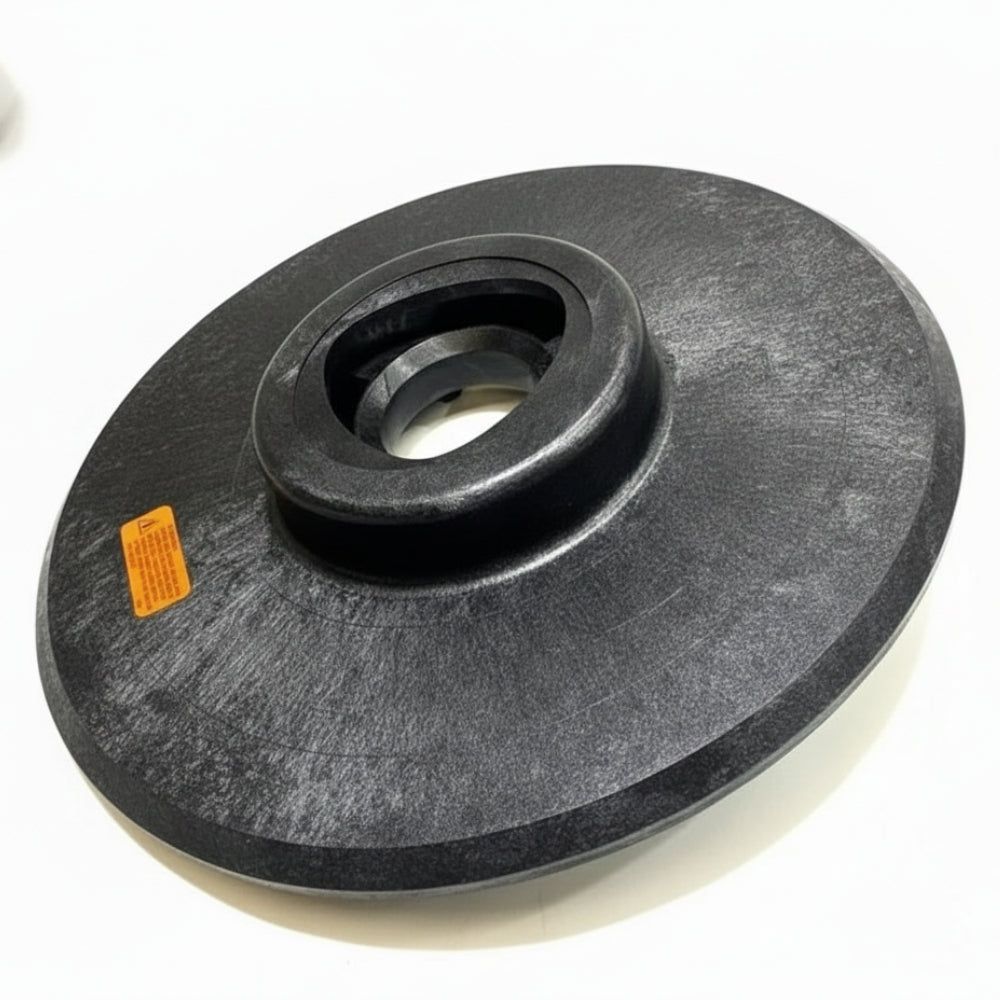
Pad drivers wear more slowly but fail in a more expensive way. Freshway's listing for the Nilfisk 432 mm flat pad holder says a warped or worn pad holder causes severe machine vibration, rapid uneven pad wear and poor cleaning results.
| Consumable | Wear indicator | Published guide | Planning basis |
|---|---|---|---|
| Stripping and heavy scrubbing pads | Worn thin, glazed or clogged | About 2,300 to 4,600 m² per pad | m² per week ÷ 2,300 for a cautious count |
| Light cleaning and polishing pads | Worn smooth, uneven finish | About 7,000 to 9,300 m² per pad | m² per week ÷ 7,000 for a cautious count |
| Disc and cylindrical brushes | Bristle length | Replace at about 10 mm, or per manual | Monthly measurement and log |
| Pad holders and drivers | Warping, vibration, uneven pad wear | No area figure published | One spare per deck size in service |
Colour systems at a high level
Most Australian ranges follow the same light-to-dark logic. Central Cleaning Supplies summarises the Glomesh scale: white for super polish, red for spray buff or light clean, blue for cleaning or light scrubbing, green for heavy-duty scrubbing or cutting back, brown for dry stripping or very aggressive scrubbing, and black for stripping. Regular-speed pads are made for roughly 150 to 350 rpm, and ultra high-speed pads for much faster burnishers.
For a fleet plan, colour is a consumption decision as much as a cleaning one. Darker pads sit in the shorter-life group above, so a site that defaults to green when red would do the job uses pads roughly two to three times faster. For choosing the right colour floor by floor, see Freshway's commercial floor pad colour guide, and for when a brush beats a pad, floor scrubber brush vs pad.
That "two to three times" is the published ranges divided against each other: 7,000 ÷ 2,300 = 3.0 at the low ends and 9,300 ÷ 4,600 = 2.0 at the high ends.
Stock min/max: the maths for a scrubber fleet
A worked example makes the method clear. The floor areas, lead time and order size below are assumptions for illustration only; swap in your own.
- Weekly area. Three walk-behind scrubbers each clean 4,000 m² a night, five nights a week: 3 × 4,000 × 5 = 60,000 m² a week.
- Weekly pad use. Using light cleaning pads at the cautious 7,000 m² figure: 60,000 ÷ 7,000 = 8.6, so plan on 9 pads a week. At the 9,300 m² upper figure it would be 6.5.
- Safety stock. One week of use: 9 pads.
- Reorder point (min). Usage during a one-week lead time plus safety stock: 9 + 9 = 18 pads.
- Order quantity and max. Ordering four weeks at a time is 36 pads, so the maximum on hand is safety stock plus one order: 9 + 36 = 45 pads.
Periodic work gets its own line. If the same three sites have a quarterly heavy scrub of 12,000 m² in total, that is 12,000 ÷ 2,300 = 5.2 heavy-duty pads at the cautious figure, so have six on the shelf before the deep-clean window opens.
Brushes and drivers are simpler. With no area figure, hold one spare of each brush and pad holder type in service, measure bristles monthly, and reorder as soon as the spare is fitted.
Compatibility: diameter, retention and deck
A consumables plan fails fastest when the wrong size arrives. Three checks prevent most of it:
- Diameter: the pad must match the holder, and the holder or brush must match the deck. Freshway's 432 mm flat pad holder listing describes it as holding standard 17-inch pads on scrubbers using 17-inch setups.
- Retention type: Freshway's listing for the Nilfisk 430 mm bristle pad holder describes short, stiff bristles that grip the fibrous backing of 17-inch pads, while the 432 mm holder uses a flat gripping face. Keep the type consistent across the fleet where you can.
- Speed: regular-speed pads belong on regular-speed machines. Freshway's listing for the Glomesh TK400 pad describes it as designed for regular-speed rotary machines.

Record the deck size and the part number from the machine's manual against each asset number. Ordering by part number rather than by model name removes most of the guesswork, especially in a mixed fleet.
Cost control: where consumable spend actually goes
Consumable cost has four drivers, and only one of them is the unit price on the product page.
- Aggression. Darker pads than the floor needs sit in the shorter-life group, and Central Cleaning Supplies recommends white and red pads rather than aggressive scrubbing or stripping pads on sealed, polished or high-shine floors.
- Mismatch. Capital Equipment's example of a soft brush on hard concrete shows the wrong tool wearing out early.
- Care. The Capital Equipment scrubber tips advise cleaning brushes under running water to clear debris that can scratch the floor, and rotating brushes or pads on dual-brush machines so they wear evenly.
- Knock-on damage. A warped driver wears pads unevenly and shakes the machine, so a cheap part creates an expensive problem.

Freshway's listing for the Nilfisk 430 mm blue Prolene brush describes medium-duty polypropylene bristles for routine daily washing on sealed concrete, tile, terrazzo, vinyl and epoxy. That is the kind of brush to standardise on for daily work, keeping harder brushes for the floors that genuinely need them.
Chemical choice sits in the same budget. SafeWork NSW's slips, trips and falls guidance lists slippery floors resulting from cleaning products or methods as a risk, and its checklist asks whether there is a build-up of polish or excessive detergent residue. Freshway's cleaning chemicals range sits alongside the pads on the same order.
Common mistakes to avoid
- Ordering by machine name. Order by deck size and part number.
- One colour for everything. Defaulting to aggressive pads multiplies pad use.
- No spare driver. One warped holder can stop a machine for a shift.
- Running brushes to the bare back. Measure, and replace at around 10 mm or as the manual says.
- Rinsing pads over a stormwater drain. The NSW EPA's stormwater guidance says washing runoff must not enter stormwater drains.
- Ignoring the operator. SafeWork NSW's hazardous manual tasks guidance lists bending, reaching and twisting as risk factors, so plan brush and pad changes as a task, not an afterthought.
Printable consumables sheet
Copy this table into a spreadsheet or print it for the cleaners' cupboard. Fill one row per item, per deck size.
| Item and size | Colour or type | Machines (asset no.) | Weekly use | Min | Max | On hand | Last checked |
|---|---|---|---|---|---|---|---|
| Floor pad, 17-inch | Red | ||||||
| Floor pad, 17-inch | Green | ||||||
| Disc brush, 430 mm | Medium duty | ||||||
| Pad holder, 432 mm | Flat | ||||||
| Squeegee blades | Per machine |
Review the weekly use column after four weeks. If real usage differs from the published ranges, trust your own records and reset min and max.
Frequently asked questions
How many floor pads should I keep in stock?
Enough to cover usage during the supplier lead time plus a safety margin. Divide weekly floor area by the pad's expected life, then set the minimum at lead-time usage plus one week of safety stock.
When should a scrubber brush be replaced?
Capital Equipment's guidance is to replace it when the bristles have worn down to around 10 mm, but the operator's manual for your machine takes priority.
Why do my pads wear unevenly?
A warped or worn pad holder is a common cause. Freshway's listing for the Nilfisk 432 mm flat pad holder links a damaged holder to vibration and rapid uneven pad wear.
Can floor pads be washed and reused?
Many can. Freshway's listing for the Glomesh TK400 pad describes it as washable and reusable, and pad life depends partly on how well pads are cleaned after use.
Next steps with Freshway
List every machine's deck size and part numbers, fill in the sheet above, and order consumables in one go each cycle. Freshway's floor scrubbers and wider commercial cleaning machines collections cover the machines themselves, while janitorial supplies covers everyday cupboard stock. Check product pages for current pricing and stock.