After-Hours vs Daytime: Matching Vacuum Format to Building Access
Pick the machine for the access window, not just the floor area.
Shop now
The contract said "after 6 pm". Nobody mentioned that security locks the cleaners' store at 10, that general power to half the floor is switched off overnight, or that a tenant on level four works late every Thursday and has already complained about the vacuum outside her door. The crew turned up with two corded canisters and a single lead. By the second week the cleaning company was renegotiating the start time and looking at different machines.
Vacuum format is an access decision as much as a cleaning one. This guide reads the Australian rules that shape daytime and after-hours work, including noise, isolated work, fatigue, lighting and electrical testing, and turns them into machine choices a buyer can defend.
After hours commercial vacuum: the short answer
Match the vacuum to the access window. For daytime work in occupied buildings, choose quiet, compact machines, often backpacks or battery units with low listed dB(A). For after-hours work in empty buildings, larger corded canisters cover more floor, but plan lighting, cord routes, secure storage and check-ins for anyone working alone.
Access windows: what the building actually allows
Before choosing machines, pin down the window in writing. The questions that change the format decision are practical ones:
- What hours can cleaners enter, and when do alarms arm and lifts lock out?
- Is power available to every zone after hours, or does the building switch circuits off?
- Where can machines be stored securely, and is there a power point there for charging?
- Will occupants be present, and in which areas, during the cleaning window?
- Are there apartments or other residences in or next to the building?
The answers usually sort sites into three groups: daytime in occupied space, early morning before opening, and after hours in an empty building. Each points to a different machine mix.
Noise rules: what the 85 dB(A) standard does and doesn't cover
SafeWork NSW's code of practice on managing noise and preventing hearing loss explains that the WHS Regulation sets the noise exposure standard at an LAeq,8h of 85 dB(A), with a peak of 140 dB(C). As a guide, if you need to raise your voice to talk to someone about one metre away, the noise is likely to be hazardous to hearing. The code also gives an example of how the scale works: 85 dB(A) for eight hours delivers the same noise energy as 88 dB(A) for four hours, so every 3 dB doubles the energy.
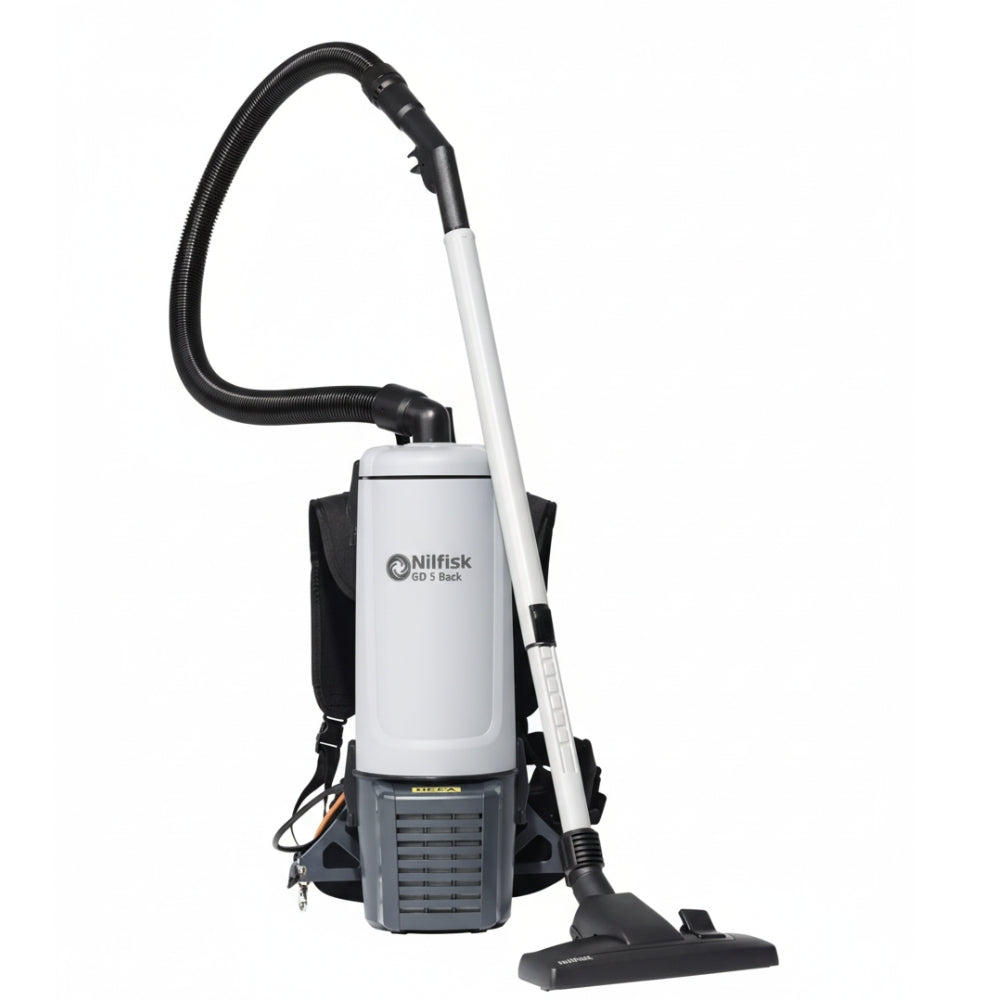
Freshway lists commercial vacuums well below that standard: 57 dB(A) for the Nilfisk VP400, 62 dB(A) for the Nilfisk GD5 HEPA and 66 dBA for the Pacvac Superpro 700. For most vacuuming, then, the daytime issue is disturbance to occupants rather than the exposure standard. SafeWork NSW's guidance on controlling hazardous noise recommends a "buy quiet" policy and getting noise emission data before purchasing, and suggests scheduling hazardous noise outside normal hours or on shifts with fewer workers. That last point is written for hazardous noise, but the same logic is why noisier floor care often moves to the night shift.
After hours brings neighbours into it. The NSW EPA notes that many calls to its Environment Line are about noise near homes or workplaces, especially late at night and in the early morning, and that noise can disturb sleep and interrupt work. In mixed-use buildings, the quietest machine belongs on the overnight shift too.
Security: machines and people
Machines need a home. Plan a lockable store on each floor, or at least each zone, so canisters are not wheeled through secured areas or carried between levels. Label every machine and battery, keep a sign-out sheet, and put charging points where cordless units are stored.
People matter more. SafeWork NSW's guidance on remote or isolated work states that a cleaner working at night in a city office is considered an isolated worker, even if people may be close by outside. It lists risks including violence and aggression from members of the public and poor access to emergency assistance, and requires a system of work that ensures effective communication, along with an emergency plan. For after-hours vacuuming, that means a check-in routine, a way to call for help, and a clear exit plan when alarms and lifts lock out.
Productivity: what changes when the building is empty
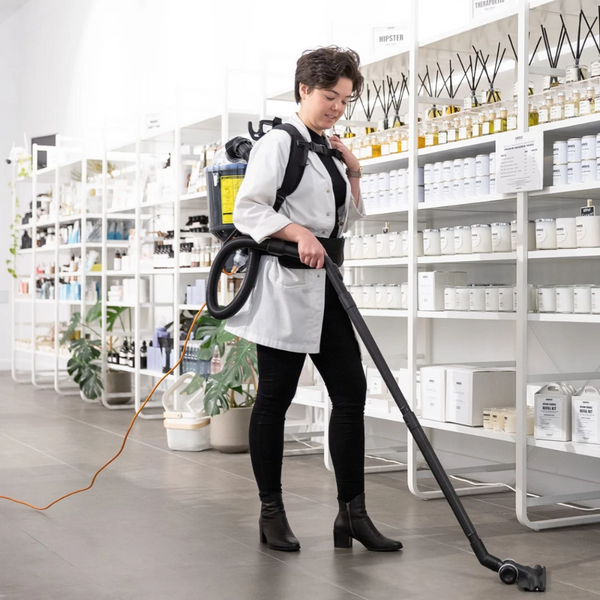
An empty building lets a crew run long, uninterrupted passes. Large-capacity corded canisters suit that: Freshway lists the VP400 with a 15 L dust bag, an H13 HEPA filter and a 10 m cable that its listing describes as giving a 20 m operational diameter. Daytime work is the opposite: short bursts between meetings and people, where a backpack moves with the operator and a battery unit avoids cords altogether.
Night work has its own limit. SafeWork NSW lists shift and night work among the causes of fatigue and names night workers among those at higher risk. It notes that being awake for 17 hours impairs performance to the same level as a 0.05 blood alcohol content. Put the heaviest vacuuming early in a night shift, and do not count on the same output at 3 am as at 9 pm.

Format picks by access window
| Access window | Main constraint | Format pick | Example from Freshway listings |
|---|---|---|---|
| Daytime, occupied offices | Noise, people moving, cords | Quiet corded or battery backpack | Nilfisk GD5 HEPA: 62 dB(A), 4.4 kg, 15 m detachable cord |
| Daytime spot cleans | No time to run cords | Battery backpack | Pacvac Velo Go: up to 50 minutes from two 18 V batteries, under 69 dB |
| Early morning before opening | Short window, staff arriving | Backpack for speed, canister for open floors | Pacvac Superpro 700: 66 dBA, 18 m cord |
| After hours, empty building | Large areas, lone workers, lighting | Large-capacity corded canister | Nilfisk VP400: 15 L bag, 57 dB(A), 10 m cable |
| Overnight near residences | Neighbours sleeping | Quietest available machines | VP400 at 57 dB(A); noisier tasks scheduled earlier |
Lighting and cords
After hours, the building may be dark in places and partly without power. SafeWork NSW's guidance on slips, trips and falls lists poorly lit areas and loose cords and cables among common sources of risk, with improved lighting and more power outlets among the controls. WorkSafe Victoria's cleaning injury hotspots page also suggests installing more power points to eliminate long power leads, and buying the quietest vacuum cleaners available.
Confirm with building management which lights and circuits stay live in each zone. Where cords are used, check them first: SafeWork NSW requires plug-in equipment used in conditions likely to damage it to be regularly inspected and tested by a competent person, with AS/NZS 3760 covering the methods. Inspect and tag any leads along with the machines.

Checklist for site supervisors
- Access hours, alarm times and lift lock-outs confirmed in writing.
- Power and lighting checked for each zone during the cleaning window.
- Machine mix matched to the window: quiet backpacks for daytime, canisters for empty floors.
- Listed dB(A) figures compared before purchase, and machines trialled in the space.
- Tag dates current on machines and leads.
- Lockable storage and charging points on each floor or zone.
- Check-in system and emergency plan for anyone working alone.
- Heaviest tasks scheduled early in night shifts.
Worked scenarios
Daytime office floor with tenants. The choice is between a GD5 HEPA at 62 dB(A) and a Superpro 700 at 66 dBA. The 4 dB gap is more than one 3 dB doubling, so the Superpro emits roughly two and a half times the sound energy by the listed figures (10 to the power 0.4 is about 2.5). That comparison only holds if both were measured the same way, so trial both near meeting rooms before deciding.
After-hours open-plan floor, one cleaner. The VP400's listing describes a 20 m operational diameter from its 10 m cable. On a floor 40 m long, that means at least two outlet positions along its length (40 divided by 20), before counting hose reach. The 15 L bag cuts emptying trips, and the cleaner is an isolated worker, so a check-in routine is part of the job.
Daytime spot cleaning with a battery backpack. Freshway lists the Velo Go at up to 50 minutes of runtime and a 1 hour 45 minute charge. One machine therefore runs a cycle of about 155 minutes (50 plus 105), or about three cycles in an eight-hour day (480 divided by 155 is about 3.1), giving at most around 150 minutes of vacuuming. Plan rounds around that, or keep a corded backup.
Frequently asked questions
Is after-hours cleaning safer than daytime cleaning?
Not automatically. It removes occupants from the work area, but SafeWork NSW treats a cleaner working at night in a city office as an isolated worker, which brings its own risks to manage.
Do commercial vacuums exceed the 85 dB(A) noise exposure standard?
The machines in this guide are listed by Freshway at under 70 dB, well below the 85 dB(A) eight-hour standard. If people must raise their voices at about one metre, get the noise assessed.
Which vacuum format suits daytime office cleaning?
Usually a quiet backpack, corded or battery, because it moves easily around people and furniture. Check the listed dB(A) figure and trial the machine in the space.
What should a supervisor check before a night shift?
Access and alarm times, lighting and power in each zone, tag dates on machines and leads, secure storage, and a check-in system for anyone working alone.
Next steps with Freshway
Write down each site's access window, then build the machine mix around it. For daytime work, compare the HEPA backpack vacuums and battery backpack vacuums; for after-hours floors, the canister and barrel vacuum range. The full backpack vacuum and commercial vacuum ranges list noise, weight and cord details on each product page, along with current pricing. Cleaning companies buying for several sites can apply for a business account with 30-day terms through Freshway's B2B wholesale page.