End-of-Lease Make-Good Scrubbing Scope for Commercial Tenancies
Write the hard-floor make-good as a restoration brief, not a daily mop.
Shop now
The agent walks the tenancy with a torch and stops at a pale line in the vinyl, exactly where a partition once sat. The open floor has been mopped, but the track residue and the traffic film in the tea-room still show. In a Sydney end-of-lease inspection, that is often enough for the make-good to be sent back, even when the carpets were vacuumed to the scope.
What should an end-of-lease make-good scrubbing scope include?
A make-good scrubbing scope should state the areas to be scrubbed, whether a strip and reseal is required, how partition-track lines will be removed, which machine and chemistry will be used, and what photo evidence will be handed over. It is a restoration brief, not a daily mop. Vacuum make-good is a separate scope.
This article is for facility managers and outgoing tenants scoping the hard-floor work. Freshway's guide to tenant-vacate office make-good vacuum scope covers the dry and carpet side of a handover; this piece is the scrubbing, strip and reseal side of the same inspection.
Make-good versus maintenance scrub
A maintenance scrub keeps a living floor looking even between recoats. A make-good scrub has to satisfy the lease, the condition report and the agent's inspection, including areas that were under workstations, along skirtings and in the tea-room that daily cleaning may have skipped. The Queensland Small Business Commissioner's make good factsheet describes a make-good clause as the tenant's obligation to return the premises to their original condition, or as the lease specifies. The NSW Small Business Commissioner's guide to what to do at the end of the lease says make-good provisions typically require the premises to be returned in a similar condition to the start of the lease, and that some leases require a strip back to base building or bare shell, plus redecoration. Unless the lease says otherwise, fair wear and tear is usually allowed. Read the clause and the entry condition report before anyone puts a pad on the floor.
If the parties agree a payment in lieu of physical works, the scrubbing scope may shrink or disappear. Confirm that in writing before you book machines and chemistry.
Strip and reseal decision points
Not every vacate needs a full strip. If the finish is intact, even and only soiled, a scrub and rinse may be enough. If the film is yellowed, worn through in walkways, or built up in a different colour where a partition used to sit, a strip and reseal is the path that usually satisfies a base-building or "as at commencement" clause.
Freshway lists Actichem Instastrip as a heavy-duty alkaline floor-finish remover at pH 12, Class 8 corrosive, ammonia-free, ultra-low foam, and suitable for vinyl, rubber, linoleum, natural stone, ceramic, porcelain, concrete and masonry, but not for sealed timber. Dilution is listed at 1:10 for light build-up and 1:4 to 1:5 for heavy build-up and UHS burnished coatings. After a successful strip of a porous floor, Actichem Instaseal is listed as a water-based base coat, pH 7.5, with coverage of 50 m² to 80 m² per litre per coat on natural stone, concrete, terrazzo, terracotta and slate. Do the arithmetic from the listed coverage and the measured floor area; do not invent a drum count. Chemistry in this group is also listed under floor strip, buff and sealers and the Actichem collection.
WorkSafe Victoria's page on safety data sheets and SafeWork NSW's page on hazardous chemicals are the documents to hold on site with Instastrip: it is listed as Class 8 corrosive, so PPE, ventilation and spill control come from the SDS, not from habit.

Partition track lines
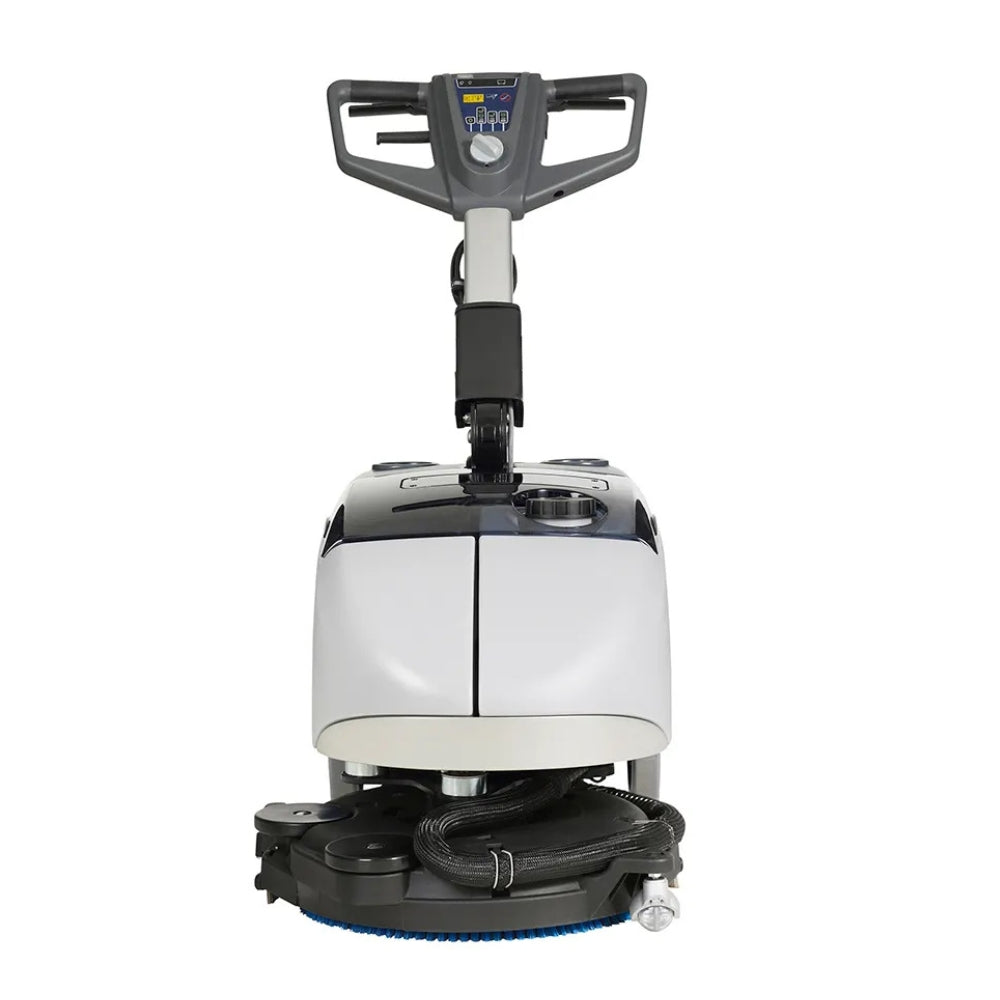
The pale or dark line left when a partition is pulled is the classic make-good fail. The floor under the track was not trafficked, not recoated, and sometimes not even cleaned for years. After the track is lifted, scrub that line as its own task: apply the listed Instastrip dilution, allow the contact time the method requires, and work it with a pad that can reach the edge of the skirting. A walk-behind scrubber with a narrow path helps in the leftover rooms. Freshway lists the Nilfisk SC351 at a 37 cm cleaning path, 11.5 litre solution and 11.5 litre recovery tanks, up to 1,360 m²/hour, 65 dB(A), 80 kg including battery, and a rotating deck that allows forward and reverse scrubbing under furniture and around obstacles. Use it on the open plate after the furniture is out; do not expect it to replace hand detailing in the last 50 mm against a wall.
Photo standards for landlords
Agents inspect what they can see in a photo and on the floor together. Shoot a wide shot of each room after the furniture is out, then close shots of the former partition lines, tea-room, entries, and any area the condition report flagged. Take the same frames in the same light after the scrub or reseal. Timestamp them and keep them with the scope, the SDS and the machine list. If the lease talks about base building, photograph the floor after the strip, before the first coat, so a later colour difference is not argued as a missed patch.
Crew and machine sizing
Size the crew from the open floor area, the amount of edge work, and whether a full strip is in the scope. The SC351's listed 1,360 m²/hour is a productivity figure for the machine, not a promise that a make-good with partition lines will run at that rate. Edge work, rinse passes and drying time dominate a vacate.
Where the finish has to be cut back and then polished, a dual-speed rotary is the other machine on the docket. Freshway lists the Polivac PV25TS at 188 RPM for scrubbing and 375 RPM for polishing, with a 40 cm pad holder, a 100 W vacuum motor, a 15 metre lead and 46 kg including brush and handle, and motor power listed at 0.56 kW / 1.1 kW. Use the 188 RPM setting with a stripping pad for the chemical cut; do not run the 375 RPM polish pass on a floor that is still wet with stripper. Machines of this type sit in the floor scrubbers and burnishers and polishers collections.

Timing with carpet, paint and other trades
Scrubbing and stripping put water and chemistry on the floor. They should not run while painters are cutting in skirtings, or while the carpet crew is still lifting tiles that will leave a dusty edge. Sequence the job as: furniture and partitions out; vacuum the open plate (see the vacuum make-good article); then hard-floor strip or scrub; then rinse and dry; then sealer if required; then a final vacuum of edges. Leave drying time in the programme, especially before a landlord walk-through. Wet residue is both a finish risk and a slip risk. SafeWork NSW lists liquids among common slips, trips and falls hazards, and WorkSafe Victoria treats wet walking surfaces the same way. Keep a dry path for anyone still in the tenancy.
Handover checklist
- Lease clause, condition report and agreed scope, including whether a cash settlement replaced physical works.
- Floor type and finish, and a written strip-or-scrub decision for each area.
- Machine list (path width, tank size, pad size and speed) and the Instastrip dilution actually used.
- SDS and PPE for every chemical on site.
- Photo set: before, after strip if applicable, and after final rinse or coat.
- Confirmation that slurry was collected and not put to stormwater. NSW EPA's industrial waste pages are the starting point for how liquid wastes must be handled; do not improvise a drain disposal.
Spec for aggressive restoration passes
When the finish is heavy, plan from the listed figures rather than from hope.
| Decision | Listed figure to plan from | What it means on a vacate |
|---|---|---|
| Instastrip, light build-up | Dilute 1:10 | A lighter film; not a heavy UHS coat |
| Instastrip, heavy or UHS build-up | Dilute 1:4 to 1:5 | Worn, burnished or partition-line finish |
| Instaseal base coat | 50–80 m² per litre per coat | Porous stone, concrete, terrazzo, terracotta or slate |
| Nilfisk SC351 open-floor pass | 37 cm path, 11.5 L / 11.5 L, 65 dB(A) | After furniture is out; still detail the last edge |
| Polivac PV25TS cut or polish | 188 RPM scrub, 375 RPM polish, 40 cm pad | Chemical cut on low speed; do not polish a wet strip |
Keep Instastrip wet for the method time and recover it with a low-foam machine such as the SC351 so the 11.5 litre recovery tank is not filled with suds. Cut stubborn edges with the PV25TS at 188 RPM. Rinse, then, on a porous floor that the scope says must be resealed, calculate Instaseal from 50–80 m² per litre per coat. A 400 m² floor at the conservative 50 m² per litre needs 8 litres per coat, before any second coat the specification requires. If the floor is vinyl and the sealer type is not Instaseal's listed stone and masonry group, do not force that product onto it; stay with a finish the product page actually names, or ask Freshway to match a vinyl finish from the range.
Frequently asked questions
Does every end-of-lease hard floor need a full strip and reseal?
No. Read the lease and the condition report first. A scrub and rinse may be enough if the finish is intact; a strip is for worn, yellowed or partition-line floors, or where the clause requires a return to base building.
Can we rely on the daily mop as the make-good scrub?
No. Make-good includes areas under former furniture and partition tracks that maintenance mopping often missed. Scope those areas as restoration work.
Is Instastrip suitable for every hard floor in a tenancy?
Freshway lists it for vinyl, rubber, linoleum, stone, ceramic, porcelain, concrete and masonry, and says not to use it on sealed timber. Check the floor type and the SDS before you dilute.
What if the landlord agrees a cash settlement instead of a strip?
Confirm it in writing, then shrink or cancel the scrubbing scope so chemistry and machines are not booked for work the parties have already settled.
Make-good scrubbing supply across Sydney, Melbourne and Brisbane
Bring the lease clause, the floor type and the inspection date, and Freshway can help match a compact scrubber, a dual-speed rotary and the strip or sealer chemistry the scope actually needs. Freshway supplies floor scrubbers and restoration chemistry to businesses in Sydney NSW, Melbourne VIC and Brisbane QLD. Same-day delivery is available in Sydney; Melbourne and Brisbane receive fast delivery. Call 1300 567 002, or start with the floor scrubbers collection.