Tile and grout are treated as one surface and behave like two. Tile is hard, glazed and easy to clean when the soil is on the surface. Grout is porous, cementitious and absorbs whatever sits on it, which is why a floor can look clean and still have dark grout lines that no amount of mopping changes. This commercial tile and grout cleaning guide separates the two jobs, because the chemistry, the tools and the result are different for each.
It is written for facility managers, cleaning contractors and supervisors responsible for tiled floors and walls in washrooms, kitchens, retail, education and healthcare buildings, and it covers the surface clean, the grout problem, and the restoration work that sits beyond routine cleaning.
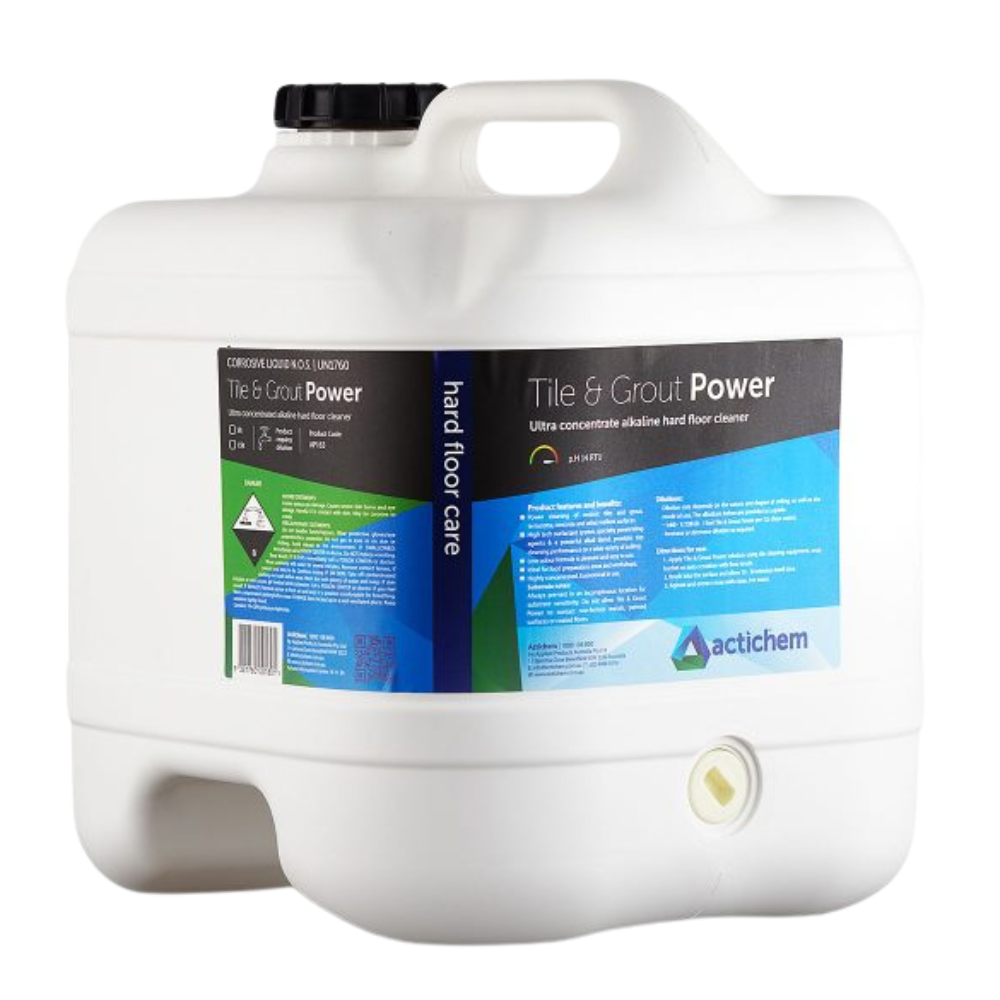
Commercial Tile and Grout Cleaning Guide: Two Different Jobs
Cleaning the tile removes soil from a hard, usually glazed surface: grease, dust, body oils, food residue and the film left by detergent. It is a straightforward chemical and mechanical task, and on most sites it is what the daily and periodic clean achieves.
Cleaning the grout addresses a porous material. Grout lines collect soil in their texture, absorb oils and grease, and stain with minerals and effluent. Removing that soil means reaching into the joint rather than across it, which is why grout work needs different tools - a narrow brush or a machine with a grout-capable deck - and often a different chemistry with more dwell time.
The third situation is restoration, where the grout is not dirty but damaged: eroded, cracked, stained permanently by a substance that has penetrated, or coated with a sealer that has failed. Cleaning will not fix any of those, and the site needs regrouting, resealing or replacement rather than another pass with a brush.
Start With the Decision This Searcher Is Trying to Make
Establish what the site is trying to achieve before choosing anything. The common goals are: restoring appearance to grout that looks grey in traffic lanes and washrooms; removing grease and food soil from kitchen floors and walls; removing mineral scale and effluent staining in washrooms; and maintaining a floor that is already in good condition. Each goal points to a different product and method.
Next, identify the tile and the grout. Glazed ceramic and porcelain are tolerant of most alkaline cleaning but sensitive to acids where the glaze is worn, and to aggressive abrasives. Natural stone - marble, travertine, limestone and slate - is acid-sensitive, which rules out most descalers and many tile cleaners. Unglazed porcelain and quarry tile are more porous and hold soil deeper. Grout can be cementitious or epoxy; epoxy is chemically resistant and needs its own method, while cementitious grout absorbs soil and can be damaged by acid used too often.
Then decide the standard. A washroom that has to look presentable between periodic restorations needs a daily product that removes soil without leaving residue, plus a scheduled deep clean. A kitchen floor that must meet a hygiene standard needs a degreasing product and a method that removes the fat rather than spreading it. Getting the standard agreed first avoids the common outcome of a site buying a strong product for a maintenance problem.
Match Chemistry and Tools to Tile and Grout
Three product families do most of the work. Neutral and mildly alkaline cleaners lift everyday soil from tile and are safe on most surfaces, including sealed and polished finishes. Strongly alkaline degreasers cut kitchen grease, food oil and the polymer films left by some cleaning products, and they need dwell time to work. Acidic descalers dissolve mineral scale, cement residue, rust and effluent staining, and their use is limited by the substrate: never on acid-sensitive stone, and not routinely on cementitious grout because repeated acid exposure erodes the joint.
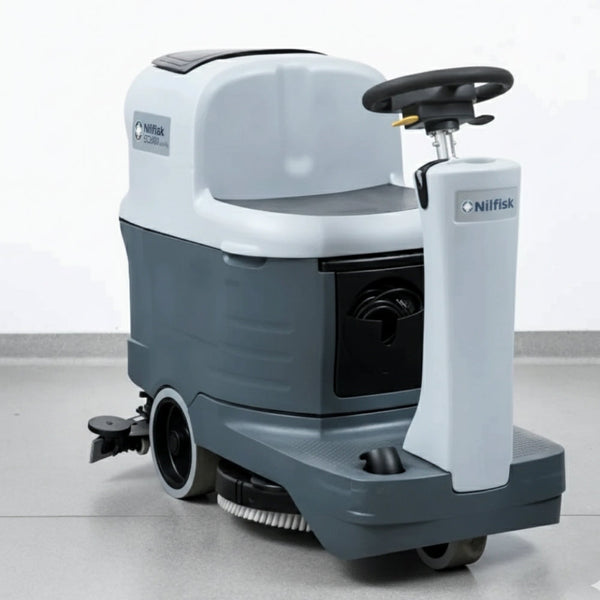
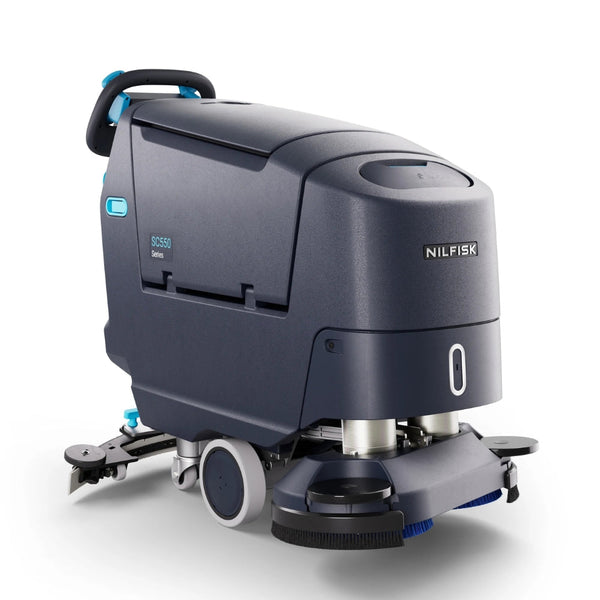
Tools follow the soil. A flat mop or a scrubber with a soft to medium pad cleans tile surfaces efficiently. Grout lines need a narrow brush, a grout brush attachment, or a machine deck designed to work into joints; on large areas a cylindrical deck machine cleans tile and grout in one pass and picks up the debris. On walls, hand work with a soft brush and adequate rinsing is usually the practical method, with care to keep product off adjacent surfaces and out of the ceiling grid.
Sealer is the maintenance variable. Sealed grout resists staining and is easier to keep clean, but a sealer that has worn through in traffic lanes leaves those lanes absorbing soil faster than the rest of the floor. Where a site reseals, the sealer product, the drying time and the coverage need to be part of the method, and where a site has never sealed a porous grout, the difference in cleaning effort is usually worth the conversation. Freshway Supplies stocks tile and grout chemistry alongside floor machines and brushes, and the practical guides to cleaning grout and to cleaning floor tiles cover the method in more detail.


Why Does Grout Stay Dark After Cleaning?
Because the soil is inside the joint, not on it.
Dark grout lines after a clean usually mean the soil has penetrated the porous grout, a polymer film has built up over it, or the grout was never sealed and has been absorbing oils and minerals for years, so the surface clean removes the tile soil and leaves the staining behind.
Diagnosing which of those is happening is straightforward. Rub a small area of grout with a clean cloth and a neutral cleaner: if the colour lifts easily, the soil is on the surface and the issue is the method rather than the product. If nothing lifts, apply an alkaline product with a short dwell, agitate with a brush and see whether the grout lightens, which indicates an oil or polymer film. If the stain remains, test an acidic descaler on an inconspicuous joint to see whether it is mineral in nature, and check a second area to confirm the grout is cementitious rather than epoxy.
What cannot be fixed by cleaning is grout that is eroded or permanently stained, and the honest answer for a site is regrouting or replacement. Where the site has a mix - some joints stained beyond cleaning, others simply dirty - the practical approach is to clean the floor properly first, then report the joints that need restoration rather than repeating a clean that will not change them. Where a product claims to restore colour, read what it actually does: a colour sealant changes appearance, while a cleaner removes soil, and the two are sold for different reasons.
Water Recovery and Wet-Floor Controls
Tile cleaning uses more water than carpet or vinyl work, and on commercial sites the water carries soil that has to be recovered rather than pushed into drains or onto adjacent surfaces. Machines with solution feed and recovery in one pass reduce the volume and the number of passes, and they leave less water for the next person to walk through.
Signage and barriers should cover the routes people use, and on tiled floors they matter more than on other surfaces because tile stays wet and slippery until it is recovered or evaporates. Kitchen and washroom work adds its own considerations: the soil being removed may be grease or effluent, so the water needs to go where the drainage arrangements permit, and the NSW EPA water guidance explains what should not enter stormwater.
Grout cleaning in particular leaves dirty water in the joints, which then dries and re-stains. Rinsing with clean water and recovering it properly, rather than wiping with the same solution, is the step that makes the difference between grout that dries lighter and grout that dries back to its original colour.
Equipment, Access and Productivity
Productivity on tiled floors comes from covering area quickly without missing joints. A scrubber with a cylindrical deck cleans tile and grout in one pass and suits large open floors. A flat machine with a pad cleans tile well but leaves the joints to a brush. Hand work suits washroom walls, small rooms, staircases and textured surfaces where machines cannot go, and it is labour-intensive by nature.
Access decides the machine more often than floor area does. Tile frequently appears in corridors, washrooms, kitchens and service areas with doorways, changes of level, fixtures and drains, and a machine that cannot reach the edges leaves those areas to hand work regardless of its size. Where the site runs both tile and carpet or vinyl, the machine specification has to cover each surface, which usually means interchangeable decks or a separate machine per surface.
Noise matters on occupied sites, and washroom and kitchen cleaning often happens in trading hours. Where the work is daytime, quieter machines and hand methods are worth considering, even at the cost of some productivity, because cleaning that cannot be done during the shift gets deferred, and deferred grout cleaning becomes grout restoration.
Maintenance That Keeps Grout Presentable
Grout appearance is a frequency problem as much as a chemistry problem. Where the floor is mopped daily with a residue-leaving product and deep cleaned rarely, the film builds faster than the periodic clean removes it, and the grout darkens progressively. The cycle that works is daily removal of fresh soil with a neutral product, regular deep cleaning with an alkaline product and agitation into the joints, and periodic work with a descaler or a sealer on the areas that need it.
Machine maintenance follows the water. Squeegees, filters and recovery tanks are the parts that suffer in a tiled environment, particularly where grit and grout residue are part of the soil. Flushing the machine after use, cleaning strainers and checking the squeegee before each job are what keep recovery consistent.
Consumables are part of the cycle: brushes wear and lose their ability to reach into joints, pads load with mineral and polymer residue, and descaler used more often than the label recommends erodes the grout it is meant to be protecting. Stocking the specified products and brushes, rather than substituting what is available, is what keeps the floor improving rather than degrading slowly.
Approval Checklist for the Final Specification
Before committing to a tile and grout program, confirm the following in writing so the method survives a change of supervisor or supplier.
- Substrate: tile type, grout type and whether either is sealed, recorded per area.
- Soil: the soils present - grease, mineral scale, effluent, polymer film - recorded per area.
- Purpose: which areas are being cleaned, and which are being restored by regrouting or resealing.
- Chemistry: products and dilutions, with the surfaces each one must not touch.
- Tools: brush grades, pad grades and machine decks to be used on each surface.
- Water: recovery method, disposal route and the controls that keep adjacent areas dry.
- Cycle: daily, periodic and restoration frequencies, with the inspection that confirms the standard.
That checklist is what separates a cleaning program from a sequence of attempts. Where the site can name the substrate, the soil and the cycle for each area, the results become predictable, and the joints that genuinely need restoration get reported instead of being cleaned again.
Questions we get asked most
- Why does grout stay dark after cleaning?
- Because the soil is inside the joint rather than on it. Grout is porous, so oils and minerals penetrate and a polymer film can build over the top; surface cleaning removes the tile soil and leaves the staining behind. Grout needs a brush or a machine deck that reaches into the joint, with chemistry and dwell matched to the soil.
- Can I use bleach on grout?
- Chlorine products destain grout lines and control surface growth, and they affect some metals, sealants and coloured grout if used repeatedly. They must never be mixed with acid or ammonia products. For oil and grease, an alkaline product with dwell and agitation is usually the better first step, with chlorine reserved for staining and hygiene tasks.
- What is the best way to clean tile floors?
- Remove dry grit first, apply the right chemistry at the labelled dose, agitate with a pad or brush suited to the tile, and recover the water completely, paying particular attention to the joints where dirty water collects. Rinsing with clean water rather than the working solution is what stops grout drying back to its original colour.
- Should grout be sealed?
- Sealing porous cementitious grout makes it resist staining and easier to keep clean, and the sealer has to be reapplied as it wears, particularly in traffic lanes. Where grout has never been sealed, sealing after a proper clean is usually the single improvement that reduces cleaning effort the most. Epoxy grout does not need it.
Conclusion
Tile is a surface clean and grout is a restoration problem. Identify the substrate and the soil first, choose chemistry that the tile and the grout will tolerate, and use tools that reach into the joint rather than across it.
Then set the cycle, recover the water, and report the joints that cleaning cannot fix. Done that way, a tiled floor improves with every clean; done as mopping alone, the grout darkens until the only remaining answer is replacement.
Manufacturer technical information: Agar cleaning chemicals and Karcher Australia. Work health and safety framework: the Work Health and Safety Regulations 2011 and SafeWork NSW.
Compare tile and grout cleaners, brushes and floor machines in the Freshway range, or ask the team to help specify a cycle for your tiled areas.