Work Boots and Gloves for Cleaning and Trade Work: An Australian Buying Guide
Cheap boots cost you a week. Steel toe and slip resistance are the minimum.
Shop now
For most cleaning and trade businesses, boots and gloves are the two items that get bought on price and then replaced early. Both are specified by standards rather than by brand, and understanding the standard is what stops you paying twice.
Start here: specify by standard, then by fit and comfort
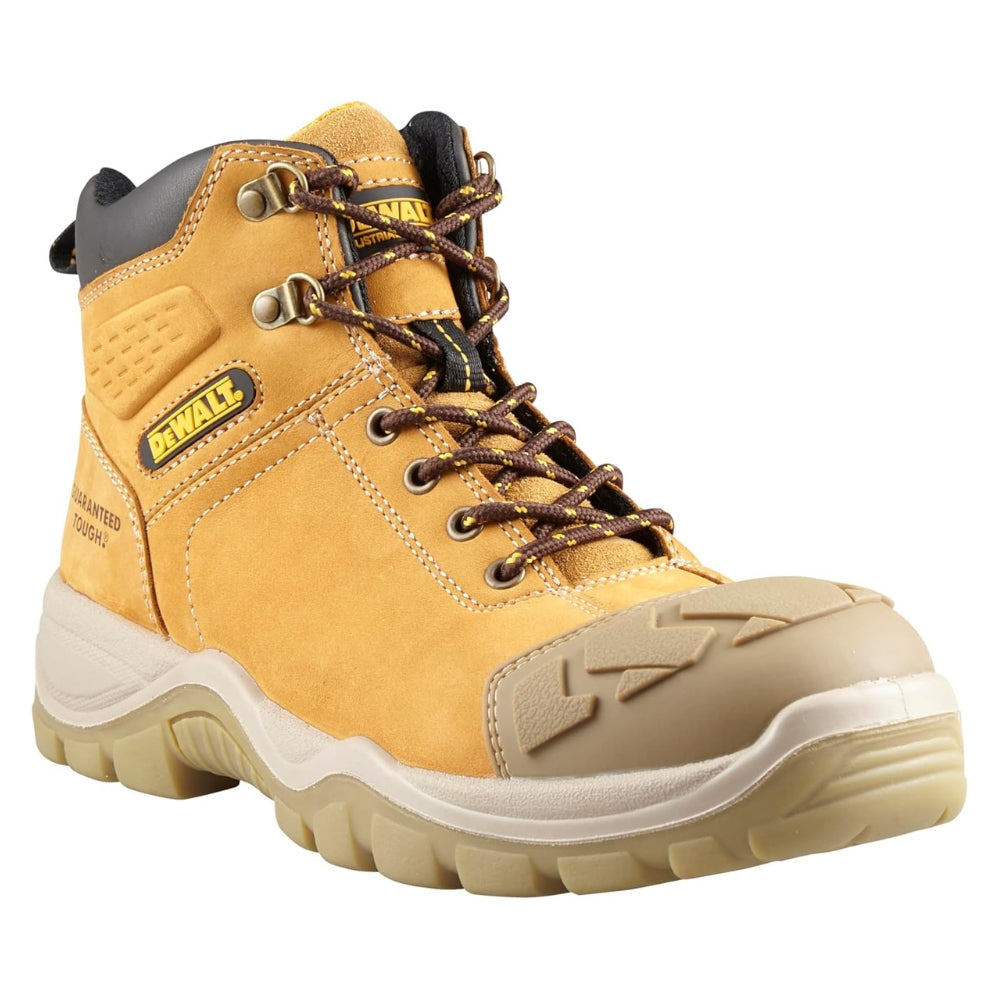
Safety footwear is specified by its toe protection type, slip resistance and any electrical or puncture protection required — not by brand or price. Gloves are specified by the chemical or mechanical hazard they resist. Once the standard is met, choose on fit and comfort, because boots that are uncomfortable do not get worn.
Where sites specify footwear or hand protection, the specification comes from a risk assessment under work health and safety duties rather than from a supplier. What we can do is match the product to that specification, and be clear about what each product does and does not cover.
Prices are Freshway catalogue prices as at 16 September 2026 and are subject to change. Confirm the current price, and whether GST applies, before quoting.

Gloves: match the glove to the hazard
The single most common error in glove purchasing is using a mechanical-handling glove for chemical work, or vice versa. They are different products and neither substitutes for the other.
| Type | Resists | Does not resist |
|---|---|---|
| Rubber, silverlined, reusable | Prolonged water and detergent contact; light chemical splash | Solvents; mechanical abrasion at high level |
| Nitrile disposable | Chemical splash; food handling; hygiene tasks | Prolonged immersion; sharp or abrasive materials |
| Latex disposable | Water-based solutions; food handling | Many solvents; unsuitable for latex allergy |
| Vinyl disposable | Light-duty hygiene and food handling | Chemical permeation; sharp objects |
| Nitrile-coated handling (ATG, Stanley Gripper) | Mechanical handling, grip, light oil | Chemical immersion; heat |
| Cut-resistant (ATG MaxiFlex Cut) | Cut and laceration risk from glass, blades, metal | Chemical permeation; puncture |
| Product | Type | Pack | Price |
|---|---|---|---|
| Edco Merrishine rubber gloves, silverlined, blue | Reusable rubber | Pair | A$3.50 |
| Bastion rubber gloves, honeycomb grip | Reusable rubber | Pair | A$4.50 |
| Apollo vinyl clear powder-free | Disposable vinyl | Carton | A$7.50 |
| Vitals vinyl powder-free, standard cuff | Disposable vinyl | 100 | A$8.45 |
| ATG MaxiFlex Ultimate, yellow | Coated handling | Pair | A$9.50 |
| SafeTouch Advanced Guard nitrile examination | Disposable nitrile | 100 | A$10.00 |
| Apollo latex premium powder-free examination | Disposable latex | 100 | A$11.95 |
| ApolloBlue nitrile powder-free, TGA approved | Disposable nitrile | 100 | A$12.50 |
| BlackNite nitrile black powder-free | Disposable nitrile | 100 | A$14.50 |
| STANLEY Gripper work gloves, nitrile-coated anti-slip palm | Coated handling | Pair | A$18.00 |
| ATG MaxiFlex cut-resistant | Cut-resistant | Pair | A$18.00 |
A powder-free, TGA-approved nitrile examination glove at A$12.50 per 100 is the specification to compare against when a site requires food-grade or medical-grade hand protection. Reusable rubber gloves at A$3.50 to A$4.50 are the cheaper option for extended wet work, and they are the ones that get thrown away too early — they last for many uses if they are hung to dry rather than left in a bucket.
Safety boots: what the specification actually covers
Australian safety footwear is marked with the protection it provides, and the marking is what a site audit looks at.
- Toe protection — steel or composite. Composite is lighter and does not conduct heat or cold, which matters in Australia; steel is generally more durable against impact.
- Slip resistance — the rating matters most in cleaning work, where floors are routinely wet.
- Puncture resistance — relevant where screws, glass or sharps are present.
- Electrical protection — antistatic or electrical hazard rated footwear where the risk assessment calls for it.
Comfort is not a soft criterion. A boot that is not comfortable is a boot that gets left in the van, which makes the specification irrelevant. Where a site is doing long shifts on hard floors, sole cushioning and boot weight determine compliance in practice more than the certification label does.
Replacement cycles and what to check
Neither boots nor gloves have a fixed replacement date; both are replaced on condition.
- Boot soles — once the tread pattern is worn smooth, slip resistance is gone even though the boot still looks serviceable.
- Toe caps — any deformation after impact means the boot must be replaced, not repaired.
- Glove permeation — a chemical glove that has been used beyond its breakthrough time may look intact and no longer protect. This is why chemical gloves are replaced on a schedule rather than on appearance.
- Rubber glove interiors — once the lining stays damp, the glove is a hygiene problem rather than protection.
The practical rule for a cleaning business is to hold a minimum stock per worker: one pair of boots in use, one reusable glove per task type, and a disposable glove box per vehicle. Our workwear and boots ranges cover the footwear side, and gloves and PPE the hand protection.

Hand protection for chemical work: the breakthrough question
A glove that resists a chemical for ten minutes and one that resists it for four hours look identical. The difference is the breakthrough time, and it is stated on the glove’s specification rather than on the packaging summary.
The practical consequence for a cleaning business is that chemical gloves must be replaced on a schedule rather than on appearance. A reusable rubber glove used daily with a strong alkaline degreaser has a working life measured in weeks, not years, and it gives no visual warning when that life is over.
- Match the glove family to the chemistry — nitrile for most solvents and oils, rubber for water-based detergents and prolonged wet work.
- Check the breakthrough time against your longest exposure, not your average one.
- Replace on schedule, and keep a written interval so it is not left to judgement.
High-visibility requirements
Where cleaning or grounds staff work near vehicles or plant, high-visibility clothing is usually specified by the site, and the specification is a class rather than a colour. Two practical points come up repeatedly.
First, fluorescent and retroreflective properties both degrade with washing, and garments washed with fabric softener or industrial detergent lose them faster. Second, a garment that meets the class when new does not stay compliant indefinitely — replacement intervals matter as much as the original purchase. Our workwear range covers garments across the classes.
Buying for a team rather than for one person
Equipping a single person is straightforward. Equipping a crew introduces two problems that do not appear on the product listing.
- Sizing spread. Boots need to be tried, and a sizing chart does not replace that. Where a team is spread across sites, holding a fitting set at the depot is faster than individual ordering.
- Glove sizing. A glove that is too large is a dexterity and safety problem, not just a comfort one, and it is the most common reason a supplied glove is not worn.
The practical approach is to hold a stock range of glove sizes rather than issuing per person, and to replace boots on condition against a written standard so the decision does not depend on who is asking.
Frequently asked questions
- Which are the most comfortable safety boots?
- Comfort is individual, but the factors that matter most on long shifts are weight, sole cushioning and the fit across the instep. Composite toe caps reduce weight noticeably, and a boot with a cushioned midsole suits hard floors far better than a rigid work boot.
- What are the most comfortable safety boots in Australia?
- The ones matched to the floor and the shift length. On hard commercial floors, a lighter boot with a cushioned sole and good slip resistance outperforms a heavier, stiffer boot — even though the heavier boot has the higher impact rating, which hard floors do not require.
- Are Stanley work boots good?
- They are a reasonable mid-range option and are widely used in trade and cleaning work. As with any boot, check the specific model against your site’s requirements for toe protection and slip resistance rather than relying on the brand.
- Can I use disposable gloves for cleaning chemicals?
- Only for brief splash contact, and only with a glove suited to the chemical. Disposable nitrile is the common choice for light chemical handling. For prolonged contact or immersion, a reusable rubber or specifically rated chemical glove is required, and it needs a replacement schedule based on breakthrough time rather than appearance.
- How often should work boots be replaced?
- On condition rather than on time. Replace when the tread is worn smooth, because slip resistance is lost before the boot looks worn out; immediately after any impact that deforms the toe cap; and when the upper no longer supports the foot.
Equipping a team?
Tell us the work the crew does and what each site requires, and we will put together a boot and glove specification with a replacement schedule rather than a single order. Browse workwear or ask us to spec a team.