Builders' cleans are judged on what is left in the air, not what is left on the floor. Dust from cutting, grinding, chasing and demolition is fine enough to hang in a room long after the broom has been put away, and the vacuum that removes it is not the same machine as the one that empties a bin. Choosing a vacuum cleaner for builders dust Australia wide starts with the contaminant: what the dust is, how fine it is, whether it carries silica or another regulated substance, and what has to happen to that dust after it is collected.
This guide is written for site supervisors, cleaning contractors and facility teams specifying machines for construction, fit-out and remediation work. It covers the dust streams that turn up on Australian sites, how filtration class, airflow and disposal fit together, and how to trial a machine before it is rolled out across a project.
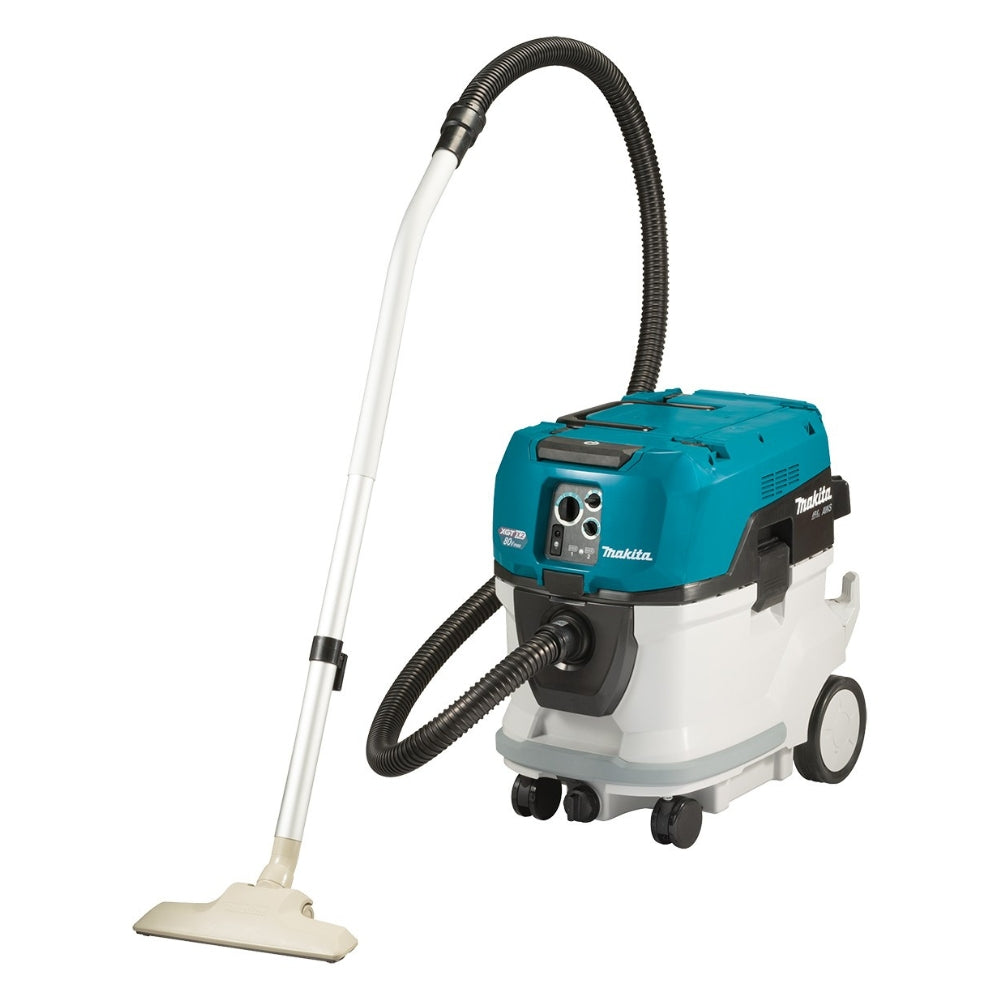
Vacuum Cleaner for Builders Dust Australia: Start With the Contaminant
The label on the machine is the last decision, not the first. Two builders' cleans with identical floor areas can require completely different equipment, because one produces brick and tile dust while the other produces dust from a product containing crystalline silica, or from an older building that may contain asbestos-containing material.
Write down four things before looking at catalogues: the material being worked, the process creating the dust, whether the work is dry or wet, and where the collected dust will go. Those answers set the filtration class, the bag system, the tooling and the disposal routine. Where the dust is unknown, the next step is identification through the site risk assessment rather than an assumption based on appearance.
The second decision is how the machine will be used. Tool-attached extraction, where the machine connects to a saw, grinder, sander or drill, is a dust control measure and depends on airflow at the tool. Standalone cleaning, where the operator works a surface directly, is a cleaning task where capacity and hose length matter more. Most projects need both, and expecting one machine to do both well is how sites end up with dust control that looks compliant and does not work.
Identify the Dust or Liquid Before Choosing Filtration
Mineral dust from concrete cutting, grinding and demolition is the most common stream on construction sites, and it can contain crystalline silica, which is regulated because of the risk to lungs. Brick, tile, render and mortar dust behaves similarly: fine, abrasive and easy to re-suspend. Timber dust varies with species and process, and it is a health hazard in its own right as well as a fire risk when it accumulates.
Refurbishment and demolition add the most serious variable. Buildings constructed before the asbestos ban can contain asbestos-containing material in sheeting, insulation, adhesives and textured coatings, and disturbing it requires a different class of machine and a different procedure, not simply a different filter. Where a building register exists, read it before work starts.
Liquids change the machine again. Slurry from wet cutting, spills and wet debris need a wet-and-dry configuration, and a wet environment affects filter media and bag systems. Where both wet and dry work happens on the same project, the practical answer is usually two machines, or a machine with a genuinely separate wet and dry setup and a managed changeover.
Airflow, Suction and Tool Performance
Airflow captures dust; suction holds the tool against the surface. On site the useful number is the air the machine moves at the tool, because dust has to be captured at the point of generation before it becomes airborne. A machine can feel powerful with a sealed nozzle and still underperform on dust control if the volume of air moving through the hose and tool is too low.
Everything downstream of the motor affects that airflow: hose diameter and length, the adapters and shrouds connecting to the tool, the tool's own extraction port, and the state of the bag and filter. A restricted adapter or a full bag can halve effective capture without the machine sounding any different.
The routine that keeps performance stable is short. Change bags before they are full, clean or replace filters on the manufacturer's interval, check hoses for blockages and couplings for leaks, and confirm the tool is the one the machine was specified with. Where several tools are in use, standardising the hose and coupling system makes those checks quick enough to happen.
Dust Class, Containment and Disposal
Dust class describes what a machine is designed to collect and how well it retains it. In Australia, class claims for commercial wet and dry vacuum cleaners reference the standard published by Standards Australia and listed as AS/NZS 60335.2.69, with the class requirement itself set by the risk assessment.
The practical split on builders' work is straightforward. General trade clean-up and non-hazardous dust usually sit in the lower classes. Where dust is finer, where exposure limits are lower, or where the client or principal contractor specifies a higher class, the specification moves up. Where asbestos-containing material is involved, the machine must be of the class the procedure requires, and the removal and disposal arrangements are part of the job rather than an afterthought.
Containment extends past the machine into filling, transport, emptying and disposal, which is where well-specified equipment most often fails. The controls are the bag system and its seal, where emptying happens, what the operator wears, and where the waste goes. On hazardous dust, all of that belongs in the method statement. The regulators publish the duty and the practical expectations, including WorkSafe Victoria's material on crystalline silica, its asbestos guidance and its hazardous substances guidance, inside the framework set by the Work Health and Safety Regulations 2011. SafeWork NSW publishes equivalent material for New South Wales sites.

Bags, Filters and Sealed Handling
Bags and filters are consumables with intervals, and treating them as consumables with arbitrary replacement is the most common way a class-rated machine stops performing like one. Use the correct part for the model, change bags before they are full, follow the manufacturer's guidance where filter cleaning is permitted, and treat a damaged seal or latch as a defect to fix before the machine goes back to work.
Sealed handling is the operator behaviour that makes the design work: removing and closing a bag without releasing dust, emptying in a controlled location, wearing the protection the risk assessment requires, and cleaning the housing in a way that does not aerosolise what has been collected. Where a machine moves between floors or buildings, changing the bag before transport keeps the dust contained.
Stocking is a control, not a convenience. Consumables that run out at inconvenient times get substituted, and substitution is where class compliance quietly disappears. Keeping the correct bags and filters on site, with a reorder point based on real usage, is cheaper than the alternative. Freshway Supplies stocks hazardous dust vacuums with matching filters and bags, and the guide to matching vacuum bags and filters to the right machine shows how to confirm part numbers.
Noise, Ergonomics and Route Design
On occupied sites noise decides when the work can happen. Hospitals, schools, aged care and offices restrict noisy work to defined windows, and a machine that cannot be used during the day ends up being run at night with a smaller crew. Where noise is a constraint, the machine has to be matched to the schedule rather than to the specification sheet.
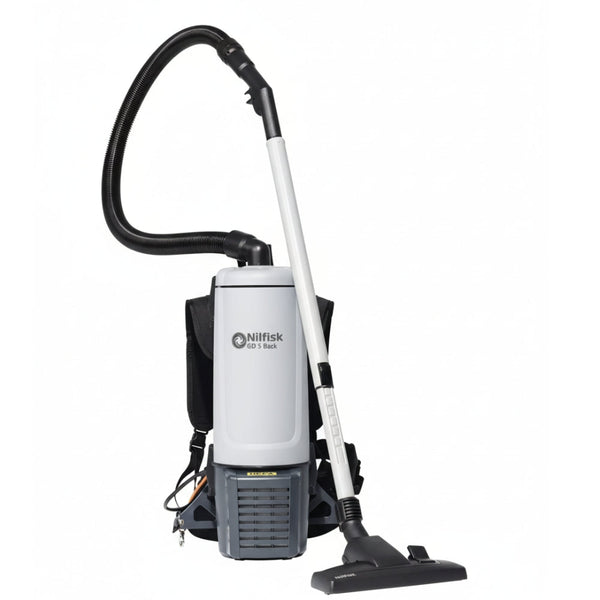
Ergonomics decides how long the operator can work safely. Extraction work often means holding a hose in position while operating a tool, or carrying a machine through doorways and up stairs. Backpack machines suit some routes and canister machines with wheels suit others, and the deciding factor is the route rather than the specification. Weight, wheel type, stair handling and hose management all change how much of the shift is spent working rather than moving equipment.
Route design finishes the picture. A machine that has to be carried through a finished area to reach the work can be specified correctly and still defeat the plan. Deciding where the machine sits, which direction the work moves, where bags are changed and where the machine is stored keeps dust from being tracked between zones.
Inspection, Testing and Filter Replacement
Inspection is what keeps a class-rated machine working like one. Before use, check the bag, the filter, the seals, the hose and the tool connection. During use, watch for the signs that airflow is falling: reduced pick-up at the tool, a machine that sounds strained, or dust escaping around a housing. After use, empty and close the bag properly, clean the housing without aerosolising dust, and store the machine so the filter is not damaged.
Where a site's procedure requires testing or documentation, record it against the machine's service history so a degrading filter shows up as a trend rather than as a surprise. Replacement intervals should follow the manufacturer's guidance for the filter type and the duty, shortened where the machine collects fine or hazardous dust, or where it is used for long shifts.
The parts that fail are predictable: bags, filters, seals, hoses and couplings. Holding a spare set of each, matched to the class and the model, converts a stopped job into a short change and removes the temptation to fit whatever is on the shelf. Confirm with the workshop that repairs are refitted with the correct class parts, because a machine that comes back with a generic filter no longer meets the specification it was bought for.

How Do You Score a Site Trial Before You Buy?
Score capture at the tool, airflow over a shift and disposal time.
A trial is only useful if it measures the work rather than the machine, so run the same operator, the same tool and the same material, and score each machine against the same list using the bags and filters it actually ships with.
Capture at the tool is the first column: does visible dust reduce at the source while cutting or grinding? Airflow over a shift is the second, because a machine that only performs with a new filter is the wrong specification for a full day's work. Disposal time and containment is the third: how long does emptying take, and does dust escape while it happens. Operator feedback on noise, weight, hose management and how easy the machine is to clean at the end of the shift predicts whether the crew will look after it.
Close the comparison with cost per completed task rather than purchase price: hours on the job, consumables used, downtime, and the cost of the bags and filters the machine consumes in a normal week. Confirm the support side as well, including parts availability, service response and whether the supplier can supply the class and model consistently across projects, because a specification that cannot be repeated is not a specification.
Questions we get asked most
- What vacuum cleaner do I need for builders dust in Australia?
- It depends on the dust and the task, not on the brand. Identify the material first: general trade dust, fine mineral dust that may contain crystalline silica, timber dust, or asbestos-containing material in older buildings. The class required is set by the site risk assessment, and tool-attached capture with enough airflow at the tool matters as much as the filtration rating.
- Is an M-class vacuum enough for concrete dust?
- M-class suits many dusts where greater filtration is required, but the requirement for a specific task comes from the risk assessment and any client or principal contractor specification. Where fine silica dust is generated, tool-attached extraction, correct airflow and a controlled disposal routine matter alongside the class rating. Confirm the requirement before buying, not after.
- Can I use a wet and dry shop vacuum for a builders clean?
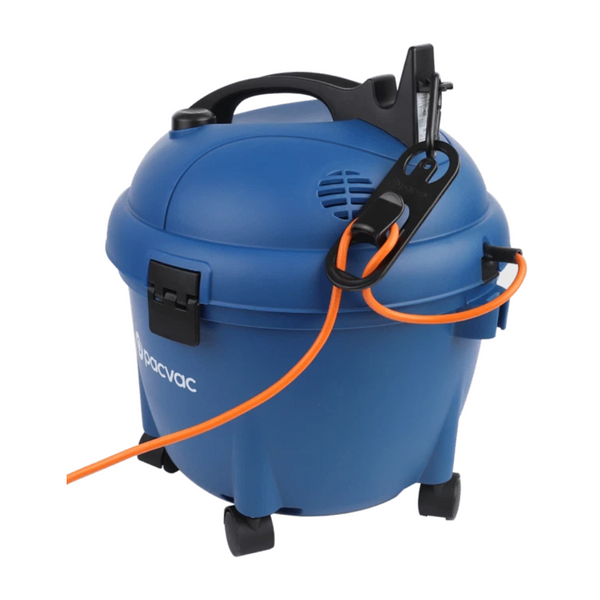
- Only where the dust is not hazardous and the capture requirement is modest. A general shop vacuum collects debris, but it usually lacks the class-rated filtration, sealed bag system and sustained airflow needed for tool-attached capture of fine or regulated dust. Where the work generates silica or involves older buildings, specify a class-rated extractor and keep bags and filters to specification.
- Why does my dust extractor lose suction during a shift?
- Airflow falls as the bag fills and the filter loads, so capture at the tool drops before the motor sounds any different. The usual causes are a full bag, a clogged filter, a blocked hose or tool, or a leaking coupling. Change bags before they are full, follow the filter interval, and keep the hose and tool connection to the machine's specification.
Conclusion
Builders' dust control starts with the contaminant. Identify the material, decide whether the machine is capturing dust at the tool or cleaning settled surfaces, then set the class, the bag system and the disposal route from that decision rather than from the shelf label.
Match airflow to the tool, keep consumables in stock so substitution never looks attractive, and trial the machine on real work with a scorecard that measures capture, airflow over a shift and disposal time. That is what separates a vacuum that meets the requirement from one that only looks like it does.
Compare class-rated dust extractors and hazardous dust vacuums with matching filters and bags in the Freshway range, or ask the team which class suits the dust on your site.