Mould on a commercial site is three different problems wearing the same name. There is the surface stain that a cleaner can remove in one visit, the recurring growth that returns because moisture was never addressed, and the contamination that has spread into porous materials and requires remediation rather than cleaning. Buying a commercial mould remover without deciding which of the three the site is facing is how budgets get spent on product that never solves the problem.
This guide is written for facility managers, building managers and cleaning contractors dealing with mould in washrooms, kitchens, plant rooms, ceilings, window frames and air-conditioned spaces. It covers how to tell the three situations apart, what chemistry suits which surface, and where cleaning ends and remediation begins.
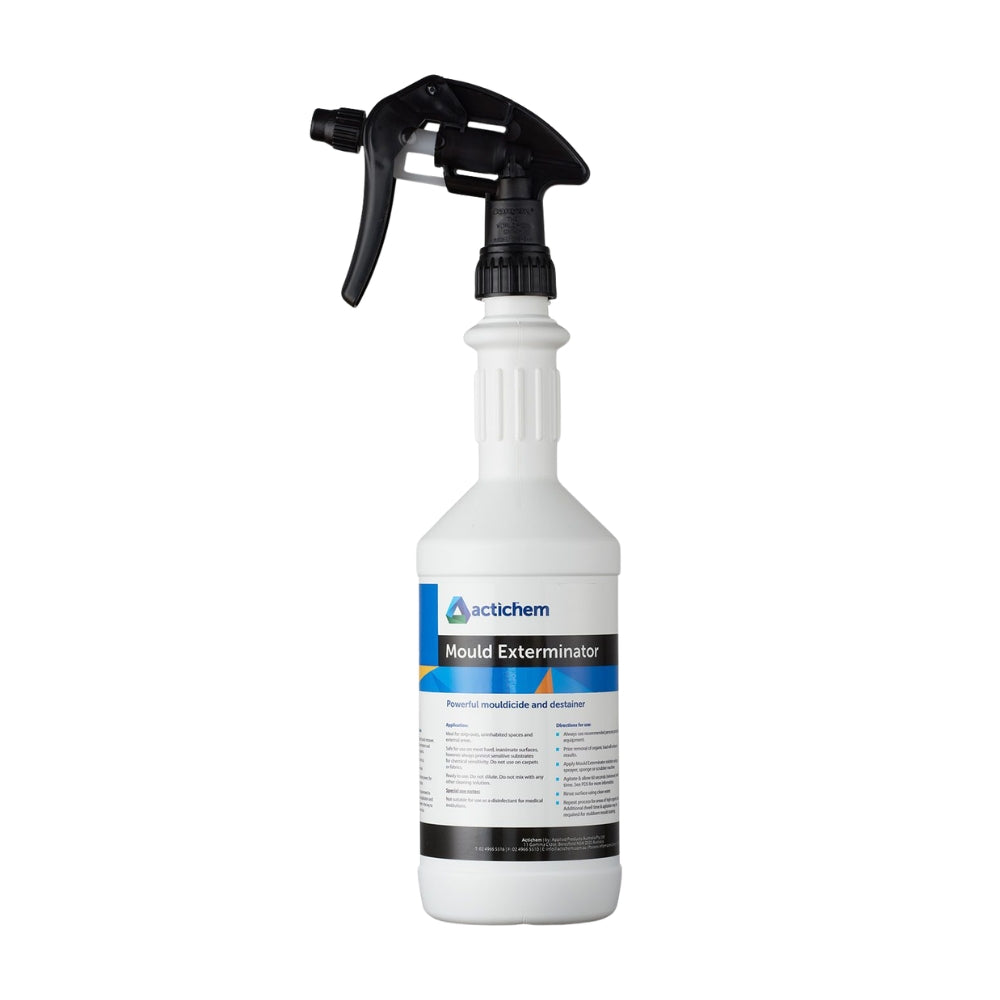
Commercial Mould Remover Guide: Separate Cleaning From Remediation
Cleaning removes what is on the surface. Remediation removes what has grown into it, and that normally means removing the affected material, controlling the area, protecting the people doing the work and fixing the moisture source. The two are different jobs with different equipment, different personal protective equipment and, on a commercial site, different documentation.
The deciding factor is the substrate. Mould on glazed tile, glass, stainless steel, sealed concrete or painted metal that is sound is a surface problem: the growth sits on top, and cleaning chemistry can remove it. Mould on plasterboard, ceiling tiles, carpet, insulation, timber framing or porous sealant has penetrated the material, and cleaning the visible face leaves the growth inside where it will return.
The second factor is the extent. A patch in a shower corner is a cleaning task with a moisture fix. Growth that has spread across a ceiling, tracked along a wall cavity or returned repeatedly after cleaning is a sign that the water source has not been found, and repeating the cleaning step simply adds cost to an unresolved problem.
Find the Moisture Before Choosing the Product
Mould needs moisture, and every site has a mechanism. Common causes include a leaking fitting or waste, failed waterproofing behind a shower or sink, condensation from poor ventilation, a dripping air-conditioning drain, a roof or window leak, rising damp, and warm humid air meeting a cold surface. Until the mechanism is identified and controlled, the growth returns on a schedule that no product can break.
Practical diagnosis is straightforward if it is done deliberately: check the humidity and the ventilation in the affected room, look for staining or swelling that indicates water behind the surface, check the plant or air-conditioning drain above the affected area, and note whether the growth follows a pattern that matches a pipe run, an external wall or a cold bridge. Where water is entering a cavity, the repair is a building task, and cleaning is a temporary measure.
Record what was found. On commercial sites the moisture record is what distinguishes a maintenance issue from a cleaning issue, and it is the evidence that protects both the cleaning contractor and the facility manager when growth returns.
Which Product Suits Which Scenario?
Match the product to the surface and the size of the problem, then confirm with a test patch.
On non-porous surfaces such as tile, glass, stainless steel and sealed coatings, a dedicated mould cleaner or a diluted chlorine-releasing product will remove surface growth and destain the substrate, while porous materials need removal or specialist treatment rather than cleaning in place.
Where the approach is cleaning, three product families do the work. Chlorine-releasing cleaners are the traditional choice for washroom grout, silicone and tile, effective at destaining and controlling surface growth, with the caveats that they affect some metals and fabrics, degrade in storage and must never be mixed with acid or ammonia products. Oxygen-based and percarbonate products are less aggressive on coloured grout and some surfaces and suit areas where chlorine is undesirable. Dedicated mould removers formulated for commercial use combine a cleaning action with a destaining action, and their label states the surfaces and dwell they are designed for.
Products that claim to leave a protective residue or inhibit regrowth should be read carefully, because the claim depends on the surface, the application and the conditions. Even where the claim is sound, it is a supplement to moisture control rather than a substitute for it. Use a test patch on coloured grout, sealant, painted surfaces and anything recently coated, and check the result after it dries, because bleaching and surface damage often appear afterwards. Freshway Supplies lists mould cleaners and chemical products by task, and the practical guides to removing mould from walls and to mould removal and remediation principles cover the method side in more detail.

Read the Label and the Current Australian SDS
Mould products are among the more hazardous chemicals in a cleaning cupboard, and the two documents that matter are the label and the safety data sheet. The label carries the surfaces, the dilution, the contact time and the ventilation requirements. The sheet carries what the product contains, the personal protective equipment the manufacturer expects, the incompatibilities and the first aid instructions.
Three rules follow. Ventilate the area and use the protection the sheet requires, because chlorine-based and some solvent-based products produce vapour that is a respiratory irritant in enclosed rooms. Never mix products, particularly chlorine with acid or ammonia, because the result is a hazardous gas rather than a stronger cleaner. And never decant into unlabelled bottles, because the next operator needs the product name and the hazard information that the original label carried.
Freshway Supplies publishes safety data sheets by brand through its SDS library so the current sheet can be checked against the product on the shelf rather than against a filing cabinet copy. Australian chemical safety duties sit in the Work Health and Safety Regulations 2011, with practical guidance published by the regulators including WorkSafe Victoria's hazardous substances material and the resources at SafeWork NSW.
Dilution, Dwell and Mechanical Action
Mould cleaning rewards patience more than strength. Dilute to the label, apply to the surface, and leave the product in contact for the time the label specifies, because the destaining action is a chemical process rather than a scrubbing one. Mechanical action should be matched to the surface: a soft brush or pad on tile and grout, a cloth on sealed surfaces, and no abrasive action at all on finishes that scratch.
The sequence that produces a result is: ventilate and protect, remove loose material, apply at the labelled dilution, allow the dwell, agitate where the surface allows, rinse or wipe the residue, and dry the area. Where growth is heavy, two applications at the correct dilution generally outperform one strong application, both for the result and for the surface.
Disinfection is a separate question. Cleaning removes the growth and the stain; where the site's procedure requires a disinfection step, it comes after the cleaning, at the dilution and contact time the disinfectant label states. Mould products that also carry a sanitising claim should be read for what the claim covers at the stated dose.
Claims That Require Regulatory Evidence
Mould products are marketed with claims about killing spores, preventing regrowth and eliminating mould, and the strength of the claim varies enormously. Where a product claims an antimicrobial action, that claim depends on the organisms, the surface, the dilution and the contact time stated on the label, and the evidence sits with the supplier.
The practical position for a facility manager is to separate what is being claimed from what is being done. A product can legitimately clean and destain a surface; that is a cleaning outcome and can be documented with before-and-after inspection. Claiming that a surface has been remediated or that growth will not return requires the moisture problem to be fixed, and no product overcomes an ongoing water source.
Where a building has a documented mould issue, health guidance is the appropriate reference. The environmental health material published by NSW Health covers the public health principles that commercial cleaning programs sit within, and where waste from remediation contains contaminated material, disposal arrangements follow the site's procedures and state requirements.
Storage, Dispensing and Staff Training
Mould chemistry needs the same discipline as any other hazardous product: labelled containers, separation from incompatible chemicals, ventilation in the store, current safety data sheets accessible, and rotation of stock because chlorine-based products lose strength over time. Where the site keeps a range of chemicals for washrooms, kitchens and floors, keeping the mould products in their own labelled position prevents the mixing that causes incidents.
Training should cover the four points specific to mould work: the areas and surfaces where cleaning is appropriate and where remediation is required instead; the ventilation and personal protective equipment the product needs; the dilution and dwell; and what to do when growth returns, which is to record it and escalate rather than to clean it again. The operator is the person who sees the recurring patch first, and the report is more valuable than the second clean.
Where work involves contaminated porous material, the task moves into the site's remediation procedure, with the containment, protection and disposal arrangements that procedure requires. Cleaning chemistry has no role inside a wall cavity.

A Site-Trial Scorecard for the Shortlist
Before a mould product is adopted across a portfolio, trial it on a representative problem area and score it against the alternatives with the same operator, the same substrate and the same dwell time.
- Stain removal: how much of the surface staining is gone after one application at the labelled dose.
- Surface condition: any bleaching, discolouration, etching or damage to grout, sealant or coating, checked after drying.
- Dwell and labour: the contact time required and the total minutes per square metre including preparation and rinsing.
- Residue: whether the residue rinses cleanly or leaves a film that affects the finish.
- Recurrence: whether the same patch returns, which is the moisture question rather than a product question, and the most useful column on the sheet.
- Handling: ventilation, protection and odour, which decide how the product can be used in occupied buildings.
Score recurrence honestly. A product that removes the stain quickly but leaves the site with the same problem in a month has not solved anything, and the record is what justifies spending on the moisture repair instead of another case of chemical.
Questions we get asked most
- Can I clean mould off plasterboard?
- Cleaning removes surface growth from sound, non-porous surfaces, and plasterboard is porous, so growth has usually penetrated the material and the affected section needs removal rather than cleaning. Cleaning a stained ceiling tile or plasterboard face leaves the growth inside, which is why those tasks belong in the site's remediation procedure rather than on a cleaning trolley.
- Why does mould come back after cleaning?
- Because the moisture source was never controlled. Leaking fittings, failed waterproofing, condensation and blocked air-conditioning drains all keep feeding the growth, so the cleaning result lasts only until conditions return. Finding and fixing the water is what stops the cycle, and that finding belongs in the maintenance record rather than the cleaning log.
- What is the strongest mould remover I can buy?
- Stronger is not the right question. A dedicated mould cleaner used at the labelled dilution with the labelled dwell, on a surface it is designed for, outperforms a harsher product applied and rinsed immediately. Chlorine-based products are effective on washroom grout and silicone but affect some metals and finishes, and they must never be mixed with acid or ammonia products.
- Do I need to ventilate when using mould remover?
- Yes. Chlorine-based and solvent-based products produce vapour that irritates the respiratory system in enclosed rooms, and the safety data sheet states the ventilation and personal protective equipment the manufacturer expects. Where an area cannot be ventilated adequately, the task should be rescheduled rather than worked around.
Conclusion
Decide first whether the site has a stain, a maintenance problem or a remediation job. Non-porous surfaces can be cleaned with the right product at the labelled dose and dwell; porous materials need removal; and recurring growth needs the water source found and fixed.
Then control the chemistry as you would any other hazardous product: ventilate, protect, dilute to the label, allow the dwell, rinse, and never mix products. The product removes what is visible; the moisture repair is what stops it coming back.
Disposal and environmental guidance: NSW EPA water guidance.
Compare mould removers, washroom chemicals and sanitisers with the safety data sheets you need on site in the Freshway chemical range.