Training Script: Switching Staff Between Backpack and Canister Vacuums
Twenty minutes, both machines and one signed sheet before the first solo shift.
Shop now
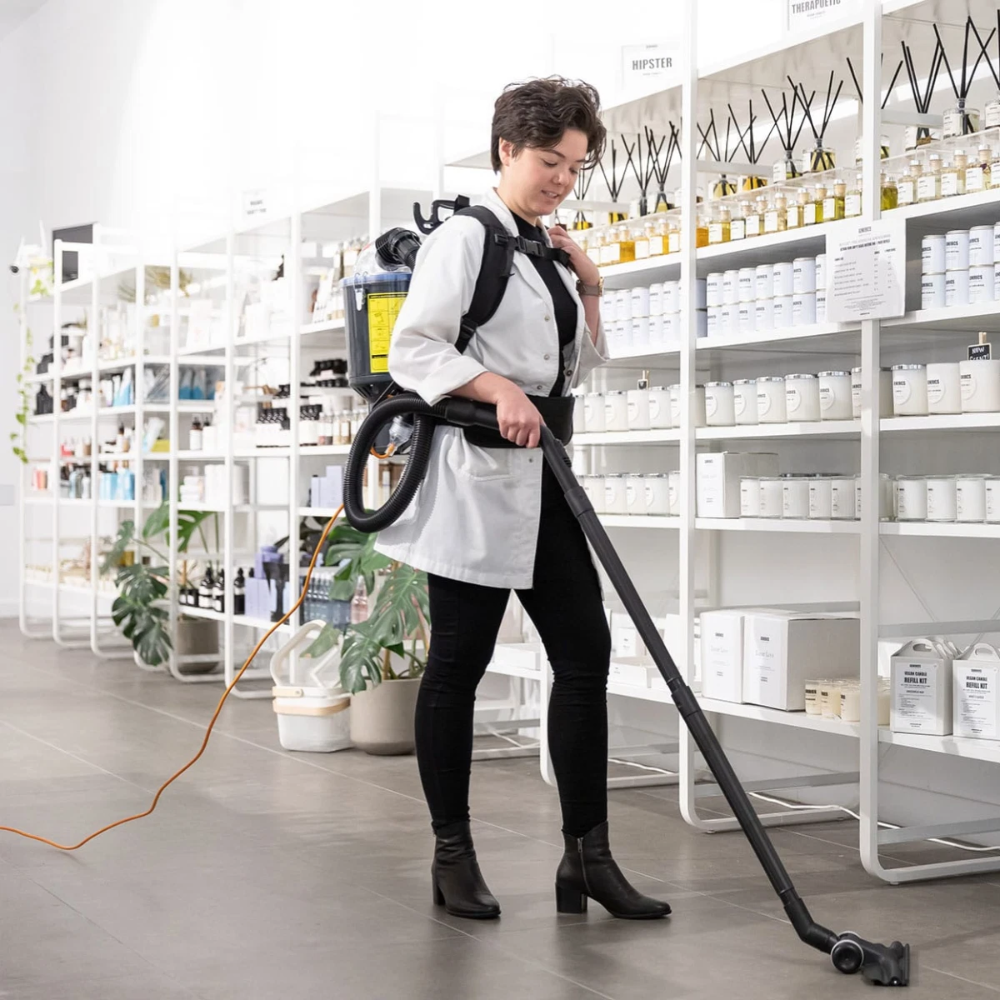
18 metres. Freshway lists that cord length for both the Pacvac Thrift 650 backpack and the Pacvac Glide 300 canister, and it is close to the only thing a cleaner can assume stays the same when they swap from one to the other. The Thrift is listed at 4.8 kg, machine only, and rides on the operator's back. The Glide is listed at 5.8 kg, rolls on castors and holds 15 litres. How the machine is carried, steered, emptied and stored all changes, and a cleaner who has only used one format makes predictable mistakes on the other.
This is a training script for supervisors and trainers: a 20-minute module that cross-trains staff on both formats, set out as the questions trainees actually ask on site, followed by a sign-off sheet. It sits alongside the site induction, safe work procedures and each machine's own instructions, not in place of them.
Commercial vacuum training for backpack and canister: the short answer
Cross-train every operator on both formats in one short, hands-on module: fit the backpack harness, set up and steer the canister, match floor tools and wand length, handle bags and filters, and route cords safely. Finish with a supervised run and a signed checklist, then refresh the training whenever the machine, site or task changes.
Why cross-train staff on both formats
Rosters rarely keep a cleaner on one machine. Stairwells and tight desk pods suit a backpack, long corridors and back-of-house suit a canister, and absences mean people cover each other's runs. Cross-training also supports rotation: WorkSafe Victoria's cleaning injury hotspots page recommends job rotation and work variation so employees are not exposed to repetitive work for long periods, and it calls for training in the selection and use of mechanical equipment and aids.
There is a duty behind it as well. SafeWork NSW's guidance on slips, trips and falls states that a business must provide workers with information, instruction, training and supervision on the work processes and equipment relevant to their task. WorkSafe Victoria's vacuuming guidance goes further for this job, recommending that workers are trained to select the right vacuum equipment for the task by considering the surface type and area.
The 20-minute module
Run the module on a quiet floor with both machines, a mix of carpet and hard floor, some furniture and, ideally, a short flight of stairs. Times are a guide; give new starters longer.
| Minutes | Block | Trainer demonstrates | Trainee shows |
|---|---|---|---|
| 0 to 3 | Pre-use checks | Test tag, cord and plug check on both machines | Reads the tag date and checks the cord for damage |
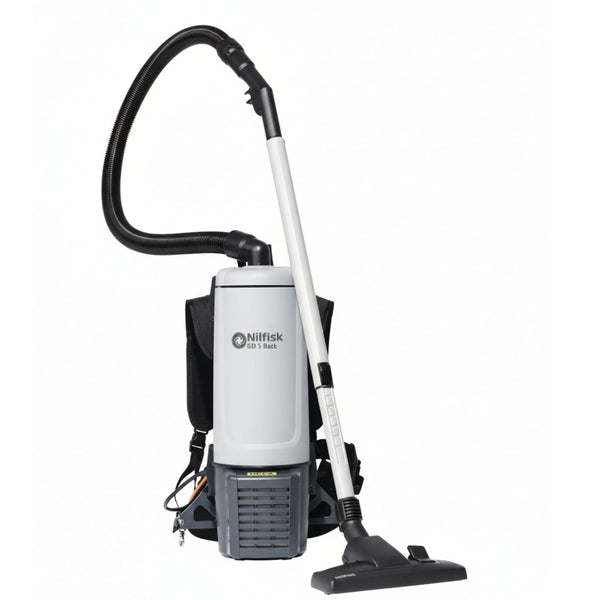
| 3 to 7 | Backpack fit | Harness fit routine and wand adjustment | Fits the harness, sets the hip belt, adjusts the wand |
| 7 to 11 | Backpack run | Technique on carpet, under furniture and on stairs | Vacuums a marked area facing the work, cord behind |
| 11 to 15 | Canister set-up and steering | Hose and tool fitting, cord routing, moving the machine | Steers around furniture without yanking the hose |
| 15 to 18 | Bags and filters | Fill check and bag change on each machine | Checks and changes a bag on each machine |
| 18 to 20 | Quick check and sign-off | Asks the questions in the sections below | Answers, then signs the sheet with the trainer |
Harness fit: what trainees ask
"Where should the weight sit?" On the hips, not the shoulders. Freshway's Thrift 650 listing describes a fully adjustable harness designed to shift the load onto the hips, and the Superpro 700 listing describes its Ecoharness transferring the machine's weight to the hips. Have the trainee do the hip belt up first.
"How tight do the shoulder straps go?" Snug enough that the machine sits close and does not swing when they turn, but not so tight that the hip belt lifts.
"How long should the wand be?" Long enough that they are not stooping. WorkSafe Victoria recommends training workers to adjust the wand length so the shoulder and elbow stay in a natural position close to the body. Its manual handling guidance describes the working zone as between shoulder and mid-thigh height, with the elbows close to the body.
"Is it fine on stairs?" That is where a backpack helps. WorkSafe Victoria suggests light backpack vacuum cleaners with adequate lumbar support and cushioning for stairways and elevated surfaces such as windowsills and doorways.

Canister set-up: what trainees ask
"How do I move it without dragging?" Keep the machine close and move it with you rather than hauling it from the far end of the hose. WorkSafe Victoria lists training on technique, such as "walking" the vacuum cleaner, as a control for pushing and pulling. Freshway lists the Glide 300 on non-marking castor wheels, so the trainee should check they roll freely before starting.
"Where do I plug in?" Plan the run so the cord trails behind and away from doorways. Starting at the far end of a room and working back towards the outlet keeps the lead out of the path.
"What if suction drops suddenly?" Switch off and check the hose and bag before carrying on. Freshway's Glide 300 listing describes a built-in pressure relief valve that opens to let cool air into the motor if the hose becomes completely blocked, which protects the motor but does not clear the blockage.
"Which floor tool do I use?" Match it to the surface. WorkSafe Victoria's guidance pairs bristles extended for low carpets or hard floors, smooth heads for thick carpets and combined heads for both.

Filter discipline
Both formats lose performance when bags and filters are neglected, but trainees need to see the differences. Freshway lists the Thrift 650 with a 5 L capacity, sealed SMS bags and four-stage filtration, supplied with two disposable SMS bags and one reusable dust bag. The Glide 300 is listed with a 15 L capacity and three-stage filtration made up of a reusable SMS bag, a disposable dust bag and a pre-motor filter.
- Check the bag at the start of the shift and at each break.
- Empty or change it before it is full. WorkSafe Victoria notes that vacuum cleaners should be emptied frequently to reduce weight, which matters most on a backpack.
- Never run either machine with a filter or bag missing.
- Report damaged bags or filters rather than improvising.
For a full routine, use Freshway's commercial vacuum maintenance checklist and its comparison of filters, bags and motors on backpacks and canisters.
Safety notes for Australian sites
- Test and tag. SafeWork NSW requires plug-in equipment used in conditions likely to damage it to be regularly inspected and tested by a competent person, with AS/NZS 3760 setting out the methods. Operators should still check the tag and cord before each use.
- Cords and floors. SafeWork NSW lists loose cords and cables, and slippery floors from cleaning products or methods, among common slip and trip risks.
- Manual tasks. SafeWork NSW says "how to lift" training is not an effective way to protect workers on its own; training should cover the specific task risks and controls, which is what this module does.
- Induction. Each site's own induction and procedures apply on top of this module.
Sign-off sheet
Record the trainee's name, the date, the trainer and a review date, then mark each item.
| Competency | Backpack | Canister | Trainer initials |
|---|---|---|---|
| Checks tag, cord and plug before use | Yes / Not yet | Yes / Not yet | |
| Fits harness or sets up hose and tools correctly | Yes / Not yet | Yes / Not yet | |
| Adjusts wand length to their height | Yes / Not yet | Yes / Not yet | |
| Selects the floor tool for the surface | Yes / Not yet | Yes / Not yet | |
| Keeps the cord behind and out of doorways | Yes / Not yet | Yes / Not yet | |
| Moves the machine without twisting or yanking | Yes / Not yet | Yes / Not yet | |
| Checks and changes the bag | Yes / Not yet | Yes / Not yet | |
| Stores the machine and reports faults | Yes / Not yet | Yes / Not yet |
Common errors on the first solo shift
- Wearing the backpack at the previous operator's harness settings.
- Pulling the canister around corners by the hose.
- Leaving the wand short and stooping for the whole run.
- Running the cord across a doorway or corridor.
- Waiting until the bag is full before checking it.
- Picking up liquid with a machine that is not rated for wet pick-up.
Quick-fire FAQ
How long does cross-training take?
The core module runs about 20 minutes per operator, followed by a supervised first shift. New starters may need longer.
Do experienced cleaners still need it?
Yes, if they are new to one format. Harness fit and canister steering are different skills, even for a cleaner with years on the other machine.
Should vacuum training include lifting technique?
Not on its own. SafeWork NSW says how to lift training is not an effective way to protect workers. Train the specific task and the controls in place.
Who does the test and tag?
A competent person, using the methods in AS/NZS 3760. Operators should still check the tag date and the cord before each use.
Next steps with Freshway
Print the module table and sign-off sheet, book 20 minutes per operator, and train on the machines your crews actually use. To compare harness and weight details, see the backpack vacuum range; for capacity and castor details, the canister and barrel vacuum range; or browse all commercial vacuum cleaners. Check each product page for current pricing and stock.